Source Hand-Made Recording and Repeating Plush Toy for Gifts, Play, and Education
Find and compare 30 Hand-Made Recording and Repeating Plush Toy options from verified suppliers. Evaluate features like CE and En71 certifications, various animal styles, and customizable designs to select the best fit for your retail inventory.
Key considerations
Products List


New Adorable Recording and Repeating Plush Rabbit Animal Plush Toy Stuffed Bunny
$3.00 - $5.00
MOQ: 2000 Pieces

2 Christmas Gift Recording Repeating and Walking Stuffed Green Monsters Plush Toy
$4.00 - $5.50
MOQ: 1000 Pieces


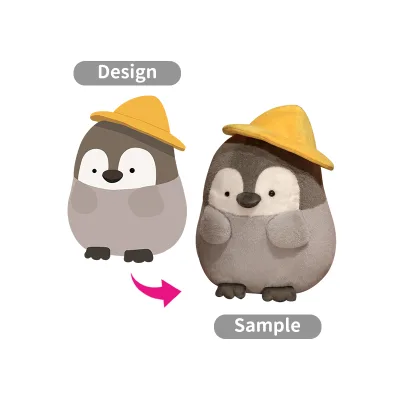

Custom Different Kind of Handcraft Plush Puppet Toy for Christmas Festival
$1.35 - $1.78
MOQ: 1000 Pieces


Comprehensive Sourcing Guide
Hand-Made Recording and Repeating Plush Toy Sourcing Guide
Sourcing hand-made recording and repeating plush toys requires a nuanced understanding of the intersection between artisanal craftsmanship and electronic functionality. These products are not merely static stuffed animals; they are interactive devices designed to capture, store, and playback audio, often triggered by squeezing or pressing a specific part of the toy. For procurement professionals, the primary challenge lies in verifying that the "hand-made" designation reflects genuine quality control rather than inconsistent manufacturing, while ensuring the electronic components meet rigorous safety standards for children’s products. The market offers a variety of styles, including standing animals, sitting animals, and even specific character interpretations like green monsters or lions, each presenting unique engineering and aesthetic considerations.
The decision to source this category of toy hinges on balancing the emotional appeal of a soft, tactile product with the technical reliability of its recording mechanism. Buyers must recognize that "hand-made" often implies a higher degree of customization and attention to detail, which can impact lead times and unit costs. However, it also introduces variability that must be managed through strict quality assurance protocols. Understanding the specific age ranges targeted, such as 3+ or 3-8 years, is critical because it dictates the complexity of the recording interface and the safety features required, such as button size and battery compartment security.
Product Scope and Observed Listing Signals
The observed product landscape for recording and repeating plush toys reveals a diverse range of specifications that buyers must navigate carefully. Listings indicate a wide variety of styles, from standing and sitting animals to more abstract designs like green monsters, with modeling sources ranging from real animals to cartoon characters. The physical dimensions vary significantly, with observed standard sizes including 15 cm, 16 cm, 17 cm, 20 cm, and 25 cm, catering to different grip preferences and display needs. Materials are predominantly plush, often filled with PP cotton, and the toys are described as colorful, with specific variants noted in brown or other hues. This variety suggests that buyers should not assume uniformity across suppliers and must define their exact aesthetic and dimensional requirements early in the sourcing process.
Technical attributes observed in the market highlight the functional diversity available to buyers. Many products are described as "talking back" or featuring music and recording functions, powered by alkaline batteries. The production models identified, such as 0479MJR-22, 0236MTD-15, and 0873MFY-16, suggest that different internal mechanisms may be used for similar external appearances. Buyers should note that while some products are labeled as "hand-made," others may be mass-produced with minor manual finishing touches. The presence of customization options indicates that suppliers can likely adapt the recording message, animal type, or color scheme, but this capability must be explicitly confirmed with the supplier to avoid assumptions about standard inventory availability.
Technical Specifications to Verify
When evaluating technical specifications, the first priority is verifying the integrity of the recording and playback mechanism. Buyers must confirm the recording duration, clarity, and trigger method, whether it is a squeeze sensor, a button press, or a touch-sensitive area. The battery type is a critical specification; while alkaline batteries are commonly observed, buyers should verify if the toy comes with batteries included or if they are sold separately, as this affects the initial user experience and packaging weight. Additionally, the durability of the electronic component within the plush shell is paramount; the circuit board must be securely encased to prevent damage from rough play, which is typical for the target age group of 3+ years.
The physical construction and material quality are equally important technical considerations. Buyers should verify the stitching density and seam strength, especially around high-stress areas like limbs and the head, to prevent stuffing leakage or detachment. The "hand-made" aspect should be assessed in terms of consistency; buyers need to understand if the supplier uses templates and jigs to ensure uniformity or if each unit is entirely unique, which could lead to significant variation in size and shape. Furthermore, the plastic components, such as the recording module housing or button covers, should be checked for material type and finish to ensure they are smooth and free of sharp edges that could pose a choking or injury hazard.
Compliance and Safety Documentation
Compliance with international safety standards is non-negotiable for children’s toys, particularly those with electronic components. Buyers must verify that suppliers hold valid certifications such as CE, EMC, RoHS, EN71, ASTM, and REACH, as these are frequently cited in product listings. However, the presence of a certificate number is not enough; buyers should request copies of the test reports to ensure they are from accredited laboratories and are current. The EN71 standard, in particular, is crucial for the European market and covers mechanical, physical, flammability, and chemical safety requirements. Similarly, ASTM F963 is the mandatory standard for the US market, covering hazards such as small parts, sharp points, and toxic materials.
Battery safety is a specific area of concern for recording toys. Buyers must ensure that the battery compartment is secured with screws or a complex closure mechanism that cannot be easily opened by a child, preventing access to alkaline batteries which can be hazardous if ingested. The supplier should provide documentation confirming that the batteries used meet relevant safety standards and that the toy’s electrical system includes protections against short circuits, overheating, and excessive current. Additionally, buyers should verify that the plush materials and dyes used in the toy are free from harmful chemicals, as indicated by REACH compliance, to protect children from skin irritation or long-term health risks.
Cost Drivers and Commercial Terms
The cost of hand-made recording and repeating plush toys is influenced by several key factors, including the complexity of the electronic module, the quality of the plush materials, and the level of manual labor involved in assembly. Suppliers offering true hand-made craftsmanship may charge a premium due to the time-intensive nature of the work, whereas semi-automated production might offer lower prices but less consistency. Buyers should also consider the impact of customization; adding custom recording messages, specific animal designs, or unique packaging can increase the unit cost and potentially raise the minimum order quantity (MOQ). The observed MOQ range of 1-2000 units suggests flexibility, but buyers should negotiate based on their volume commitments to secure better pricing tiers.
Commercial terms such as lead times and sample policies are critical for effective supply chain planning. Buyers should clarify the sample time, which is often around 7 days, and the cost of samples, which may be refundable upon placing a bulk order. Lead times for production can vary significantly depending on the season and the supplier’s capacity, so buyers should establish clear delivery schedules in the contract. Payment terms should be structured to mitigate risk, such as using a deposit with the balance paid upon inspection or before shipment. Additionally, buyers should inquire about the packaging details, as the observed standard of 1 PC/Polybag may need to be upgraded to retail-ready packaging, which will add to the overall cost.
Supplier Qualification and Quality Control
Qualifying a supplier for hand-made electronic toys requires a thorough assessment of their manufacturing capabilities and quality control processes. Buyers should verify the supplier’s experience in producing similar products and request references from previous clients. It is essential to conduct a factory audit, either in person or through a third-party agency, to inspect the production line, check the condition of the equipment, and evaluate the working conditions. The supplier should have a robust quality management system in place, with clear procedures for incoming material inspection, in-process quality checks, and final random inspection before shipment.
Quality control for recording toys should include functional testing of every unit to ensure the recording and playback mechanisms work correctly. Buyers should specify the acceptance quality limit (AQL) for both critical defects, such as non-functional electronics or safety hazards, and minor defects, such as loose threads or minor cosmetic blemishes. Given the "hand-made" nature of the product, buyers should also establish clear criteria for aesthetic consistency, such as acceptable variations in color or shape, to avoid disputes upon delivery. Implementing a pre-shipment inspection is highly recommended to catch any issues before the goods leave the factory, reducing the risk of receiving defective inventory.
Long-Term Procurement Checks
Long-term procurement success depends on establishing a continuous improvement loop with the supplier. Buyers should regularly review performance metrics, such as on-time delivery rates, defect rates, and responsiveness to issues, to ensure the supplier remains reliable. Feedback from end-users, particularly regarding the durability of the recording mechanism and the comfort of the plush material, should be shared with the supplier to drive product improvements. Regular communication about market trends and new design ideas can help the supplier stay competitive and offer innovative solutions that meet evolving consumer demands.
Supply chain resilience is another critical aspect of long-term procurement. Buyers should diversify their supplier base to mitigate risks associated with single-source dependencies, especially for high-volume or critical products. It is also important to stay updated on changes in international trade regulations, safety standards, and environmental requirements that may impact the sourcing of these toys. By maintaining a proactive approach to supplier management and staying informed about regulatory changes, buyers can ensure a stable and compliant supply of hand-made recording and repeating plush toys for their customers.
FAQs
What certifications do these toys have?
The toys carry CE, EMC, RoHS, and En71 certifications. Some listings also include REACH, ENCPsIA, and ASTM standards. These ensure safety compliance for children aged 3 and above.
Can I customize the plush toy design?
Customization is available for specific product models. However, some items are listed as non-customized. Buyers should verify the customization status for each specific model before ordering.
What is the typical sample time for orders?
The sample time is typically 7 days. This duration applies to standard requests for the hand-made recording and repeating plush toys. Lead times may vary based on order volume.
Which battery type powers these toys?
These toys use Alkaline Batteries for operation. The battery type is specified for the recording and repeating functions. Users must provide or purchase compatible batteries separately.
What materials are used in the plush toys?
The toys are made from Plush material with PP Cotton filling. Some variations may include Plastic components. The construction ensures durability and softness suitable for children.
Are these toys suitable for all age groups?
The toys are suitable for children aged 3 to 8 years. Some listings indicate suitability for ages 0 and up. Always check the specific age range for the selected model.
What styles of animals are available?
Available styles include Standing Animals, Sitting Animals, and Talking Back Animals. Specific models feature Lions or Green Monsters. The styles vary by product model and design source.
How are the toys packaged for shipping?
Each toy is packed as 1 PC per Polybag. This packaging protects the item during transit. The standard packing method applies to the listed product models.