Source Hand Made Plush Slippers for Winter, Christmas, and Indoor Use
Find 30 Hand Made Plush Slippers with customizable designs for winter, Christmas, and indoor comfort. Buyers can compare models, materials, and production times to select the best options for their needs.
Key considerations
Products List









Comprehensive Sourcing Guide
Strategic Sourcing Guide for Hand Made Plush Slippers
The global market for home footwear has seen a sustained shift toward comfort-oriented products, with hand-made plush slippers emerging as a distinct category that blends artisanal craftsmanship with modern material science. For B2B procurement professionals, sourcing these items requires a nuanced understanding of the intersection between manual production techniques and industrial supply chain logistics. The following guide provides a structured approach to evaluating suppliers, verifying technical specifications, and ensuring compliance for hand-made plush slippers, based on observed market data and industry standards.
Understanding Product Attributes and Material Composition
The primary differentiator for hand-made plush slippers lies in the upper material and the construction method. Unlike mass-produced synthetic footwear, these products often utilize "super soft plush" or cotton fabric as the primary upper material. The tactile quality is paramount; the "Plush" attribute observed in high-confidence data suggests a pile height and density that provides warmth and softness, making these items particularly suitable for winter and spring/autumn seasons.
When evaluating a potential supplier, buyers must distinguish between products that are truly hand-assembled and those that are merely machine-stitched with a "hand-made" label. The data indicates a split in the market: some models are explicitly "Hand Made," while others are "Not Handmade" despite similar visual appearances. This distinction significantly impacts the cost structure and the consistency of the final product. The upper material is frequently paired with a TPR (Thermoplastic Rubber) outsole, which offers flexibility and durability. The combination of a plush upper and a TPR sole creates a slipper that is both warm and slip-resistant, suitable for indoor environments.
Buyers should verify the specific "Plush Length" and the density of the fabric. While the observed data lists "Slippers" under plush length specifications, this is a category descriptor rather than a measurement. Procurement teams must request physical samples to measure the pile height, as this directly correlates to the thermal insulation properties and the perceived luxury of the product. Furthermore, the "Hand Made" attribute often implies that the stitching, stuffing, and finishing are done by skilled laborers rather than automated assembly lines, which can lead to slight variations in symmetry that are characteristic of artisanal goods but may require tolerance adjustments in quality control protocols.
Technical Specifications and Sizing Standards
Technical specifications for hand-made plush slippers vary significantly based on the target demographic and the specific model number. The observed product models, such as LB-1012, LB-1059, and TS-1019, indicate a diverse portfolio where each SKU may have unique dimensional requirements. A critical aspect of sizing is the range of available sizes. The data confirms a standard size range of 36 to 42, covering most adult foot sizes. However, some specifications list a narrower range of 36-41, which may indicate a specific fit for female demographics or a particular style constraint.
The "Gender" attribute is another technical variable. While many plush slippers are marketed as "Unisex," the data also highlights specific "Female" models. This distinction affects the last used in the mold and the overall shape of the slipper. A unisex model typically features a more neutral toe box and width, whereas a female-specific model may have a narrower heel and a more contoured arch. Buyers must ensure that the size chart provided by the supplier aligns with the target market's regional sizing standards, as a size 38 in one region may differ from a size 38 in another.
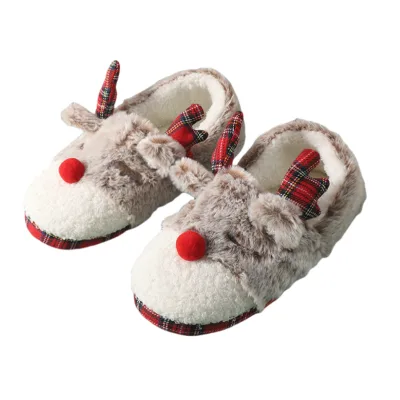
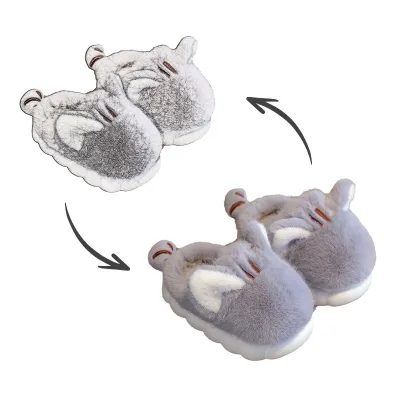
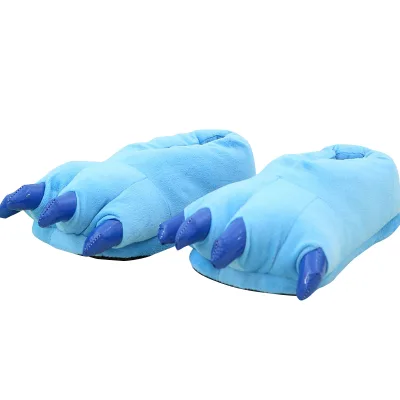
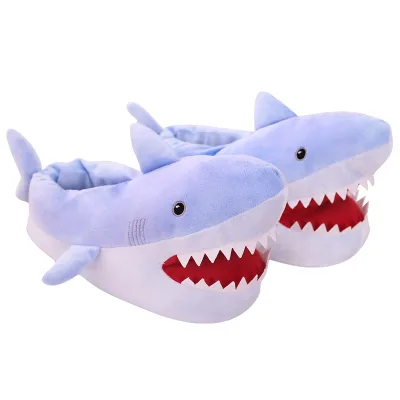
The "Toe" design is another technical specification to verify. The data indicates a "Close" toe design, which is standard for indoor slippers to provide full coverage and warmth. However, open-toe variations exist in the broader market and may be relevant for specific seasonal collections. The "Modelling Source" for some designs is listed as "Animals," suggesting that the slippers may feature animal-shaped embellishments or patterns. This requires precise attention to the "Toy Design" aspect, which is noted as "Custom Made" in some contexts. If the design includes animal motifs, the supplier must demonstrate the ability to replicate these details accurately without compromising the structural integrity of the slipper.
Compliance, Certification, and Safety Standards
Safety and compliance are non-negotiable when sourcing hand-made plush slippers, particularly when the product is marketed for children or intended for use in environments with strict safety regulations. The observed data lists several critical certifications, including CE, EN71, ASTM, and CPSIA. These certifications are essential for products intended for the European and North American markets.
The CE mark indicates conformity with health, safety, and environmental protection standards for products sold within the European Economic Area. EN71 is the specific European standard for toy safety, which is relevant if the slippers are marketed as toys or have detachable parts that could be considered toys. ASTM and CPSIA are American standards; ASTM covers various safety aspects of consumer products, while CPSIA (Consumer Product Safety Improvement Act) specifically addresses lead content and phthalates in children's products.
Buyers must verify that the supplier holds valid, current certificates for these standards. The presence of these certifications in the data suggests that the supplier has the capacity to meet international safety requirements. However, buyers should not assume that every model in a supplier's catalog is certified. The "Certification" attribute is often linked to specific product lines or models. It is crucial to request the actual test reports for the specific SKU being ordered. The "Disposable" attribute is listed as "Non-Disposable," which implies the product is durable and intended for repeated use, further reinforcing the need for long-term safety compliance.
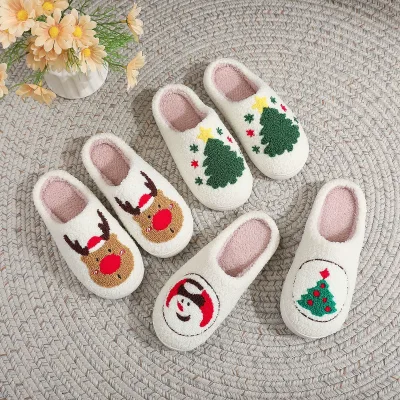
Additionally, the "Occasion" attribute lists "Christmas," indicating that these products are often seasonal. Seasonal products may have different regulatory scrutiny regarding packaging and labeling, especially if they are marketed as gifts. Buyers should ensure that the supplier's compliance documentation covers the specific packaging requirements for the target market, including language requirements and warning labels.
Cost Drivers and Production Economics
The cost of hand-made plush slippers is driven by several factors, with labor intensity being the most significant. The "Hand Made" attribute inherently increases production costs compared to machine-made alternatives. The "Production Time" for these items ranges from 25 to 35 days, reflecting the time required for manual assembly, stitching, and finishing. This extended lead time is a direct result of the labor-intensive nature of the process.
The "MOQ" (Minimum Order Quantity) is another critical cost driver. The observed data shows a wide range, from 1 to 2000 units. However, specific models like PW-232172 have an MOQ of 1200 pairs. This high MOQ for certain models suggests that the supplier may require a larger volume to justify the setup costs for custom designs or to maintain efficiency in the hand-assembly process. Buyers with smaller order volumes may need to negotiate with suppliers who offer lower MOQs, potentially at a higher unit price, or consider joining a group buy to meet the minimum threshold.
Material costs also play a significant role. The use of "super soft plush" and high-quality TPR soles adds to the base cost. The "Customization" attribute is available, which allows buyers to tailor the product to their brand. However, customization often incurs additional costs for mold development, pattern making, and the setup of specialized stitching machines or manual workstations. The "Sample Time" of 5-8 days and the "Sample Revised" option of "Unlimited" suggest that the supplier is flexible with prototyping, but each revision cycle adds to the overall project timeline and cost.
Supplier Evaluation and Quality Control Protocols
Evaluating a supplier for hand-made plush slippers requires a focus on their ability to maintain consistency in a manual production environment. The "Place of Origin" data points to regions like Zhejiang and Shanghai in China, which are known for their textile and footwear manufacturing capabilities. Buyers should verify the supplier's location and visit the facility if possible to assess the working conditions and the skill level of the artisans.
Quality control (QC) is paramount for hand-made products. The "Packing" specification varies, with some models using "One Pair in a Polybag, 12 Pairs/CTN" and others using "Carton" or "Polybag, Carton." This variation affects the protection of the product during shipping. Buyers should establish clear QC standards that address common issues in hand-made slippers, such as uneven stitching, loose threads, or inconsistent plush density. The "Surface finishing" attribute, listed as "Matte Varnishing" in some contexts, indicates a specific aesthetic finish that must be consistent across the batch.
The "Shipping" options of Ocean/Air and the availability of "Door to Door Service" provide flexibility in logistics. However, the "Delivery" lead time of 25-35 days must be factored into the overall supply chain plan. Buyers should implement a rigorous inspection process, including pre-production sample approval, in-line quality checks during the hand-assembly phase, and final random inspection before packing. The "Sample Revised" unlimited option is a valuable tool for ensuring that the final product meets the buyer's expectations before mass production begins.
Long-Term Procurement and Market Applications
The long-term viability of sourcing hand-made plush slippers depends on the supplier's ability to scale while maintaining quality. The "Custom Made" nature of the "Toy Design" and "Modelling Source" suggests that these products are often part of a broader strategy to differentiate a brand in a crowded market. The "Function" attribute listed as "COMFORTER" highlights the primary value proposition: providing warmth and comfort.
Applications for these slippers extend beyond domestic use. The "Occasion" of "Christmas" indicates a strong seasonal demand, but the "Spring / Autumn" and "Winter" attributes suggest year-round potential. Buyers should consider diversifying their product line to include models suitable for different seasons and occasions. The "Age" attribute of "> 8 Years" indicates that these products are generally intended for older children and adults, though specific designs may vary.
For long-term procurement, buyers should build a relationship with suppliers who offer "Unlimited" sample revisions and flexible customization options. This flexibility allows for continuous product improvement and adaptation to market trends. The "Production Time" of 30-35 days for some models suggests that the supplier can handle larger orders, but buyers must plan their inventory accordingly to avoid stockouts during peak seasons.
In conclusion, sourcing hand-made plush slippers requires a balanced approach that values the unique qualities of artisanal production while adhering to strict quality and compliance standards. By carefully evaluating technical specifications, verifying certifications, understanding cost drivers, and implementing robust quality control measures, buyers can successfully integrate these products into their B2B procurement strategies. The data provided offers a solid foundation for making informed decisions, but the final selection should always be based on physical samples and direct communication with the supplier to ensure alignment with specific business needs.
FAQs
Are Hand Made Plush Slippers available for winter use?
Yes, these slippers are designed for winter use. They feature plush uppers and TPR outsoles to provide warmth and slip resistance in indoor environments during colder seasons.
What certifications do the Hand Made Plush Slippers hold?
The products hold CE, EN71, ASTM, and CPSIA certifications. These standards ensure safety compliance for European and North American markets, particularly for items intended for children over eight years old.
Can I customize the design and packaging of these slippers?
Yes, customization is available for both design and packaging. Buyers can request custom toy designs and specific packing arrangements, such as one pair per polybag or carton options, to meet brand requirements.
What is the minimum order quantity for these slippers?
The minimum order quantity ranges from 1 to 2000 pairs depending on the model. Some specific models like PW-232172 require a higher MOQ of 1200 pairs to justify production setup costs.
How long does production take for custom orders?
Production time typically takes between 25 to 35 days. This duration accounts for the manual assembly process and ensures quality control for hand-made items before shipping via ocean or air freight.
Which materials are used for the upper and sole?
The uppers are made from super soft plush or cotton fabric. The outsoles are constructed from TPR material, which offers flexibility and durability suitable for indoor wear and various seasonal conditions.