Source Hand Painted Ceramic Dinnerware for Kitchen, Serving, and Daily Use
Explore 30 listings of Hand Painted Ceramic Dinnerware suitable for kitchen, serving, and daily use. Buyers can compare specifications like size, material, and certification to find options from suppliers in China.
Key considerations
Products List


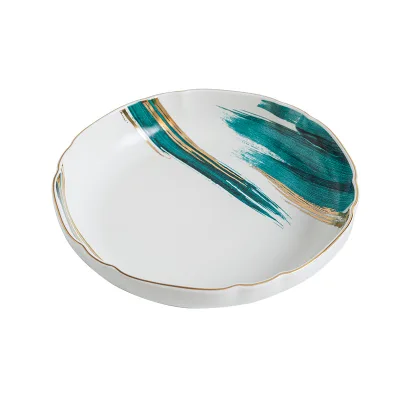


Porcelain Dinner Set Premium Blue Art Tableware for Middle East Home Decor
$23.00 - $30.00
MOQ: 1000 Sets


Comprehensive Sourcing Guide
Strategic Sourcing Guide for Hand Painted Ceramic Dinnerware
Understanding Product Variations and Technical Specifications
The market for hand-painted ceramic dinnerware presents a complex landscape defined by diverse manufacturing techniques and material compositions. When initiating a procurement strategy, buyers must first distinguish between the specific attributes observed in available inventory. The core material for these products is consistently identified as ceramic and porcelain, with specific listings noting the use of raw porcelain. This distinction is critical because the firing temperature and clay composition directly influence the final product's durability and thermal resistance.
Technical specifications vary significantly across different product models. For instance, specific models such as 9004, 9046, and 1751 represent distinct design iterations, while others are categorized by functional descriptions like "Ceramic Bowl" or "Ceramic Dinner Plate." A key technical differentiator is the production method; many high-end items in this category are explicitly marked as handmade, which implies a variation in weight, shape, and glaze thickness that automated mass production cannot replicate. The finishing technique is predominantly glazed, which provides the necessary surface for the hand-painted designs to adhere and remain durable during use.
Capacity and dimensions are also variable parameters that buyers must verify against their specific needs. Observed specifications indicate a volume range from 240ml to 400ml for certain vessel types, while standard dimensions for other items are cited as 20x20x2.5cm. Packaging standards further reflect this diversity, ranging from bulk packaging to individual boxes or cartons. Some listings specify a "Fob" packing method, which may refer to a specific logistical standard rather than a physical box type, requiring clarification during the negotiation phase. The presence of accessories, such as handles on cups, and the shape, which is frequently round, are additional technical details that define the utility of the dinnerware set.
Compliance, Certification, and Regulatory Standards
Navigating the regulatory landscape is a non-negotiable aspect of sourcing ceramic dinnerware, particularly when the target market includes North America, the European Union, or other regions with strict food safety laws. The available product data highlights a robust array of certifications that suppliers may claim. These include CE/EU, FDA, CIQ, LFGB, and EEC. The presence of these certifications suggests that the products are designed to meet international safety standards regarding heavy metal leaching and thermal shock resistance.
Buyers must exercise caution when interpreting these certifications. While the data lists "CE/EU, FDA, CIQ, LFGB, EEC" as a collective attribute for certain items, it is essential to verify that these certifications apply to the specific batch or model being ordered. For example, one listing notes "FDA, CE/EU" specifically, while another includes "SGS" alongside the standard set. The FDA certification is particularly vital for products intended for the US market, ensuring the materials do not leach harmful substances like lead or cadmium into food. Similarly, LFGB (German Food and Feed Code) and CE/EU standards are critical for European distribution, covering migration limits and material safety.
The "CIQ" (China Inspection and Quarantine) certification indicates that the product has passed Chinese export quality controls, which is a baseline requirement for international trade. However, buyers should not assume that a general certification claim covers every SKU in a supplier's catalog. The procurement process must include a request for valid, up-to-date test reports from accredited laboratories for the specific model numbers, such as 96C-016 or 5411/1813/1814. Relying solely on the supplier's general claim without verifying the specific test documentation for the ordered batch poses a significant compliance risk.
Cost Drivers and Pricing Structures
The pricing structure for hand-painted ceramic dinnerware is influenced by a combination of material costs, labor intensity, and order volume. The observed price range in the market spans from $0.39 to $39.00 USD. This wide disparity is not merely a reflection of brand value but is driven by the complexity of the hand-painting process, the quality of the porcelain, and the scale of the order.
Minimum Order Quantity (MOQ) is a primary driver of unit cost. The data indicates an MOQ range from 2 to 5,000 pieces, with a specific high-confidence observation of 3,000 pieces for certain customized items. Hand-painted products inherently require more labor hours per unit compared to machine-printed alternatives. Consequently, suppliers often set higher MOQs to amortize the setup costs for custom designs and the labor costs for artisans. Buyers requesting "Custom Logo" or "Customized" designs, which are available in this category, will likely face higher per-unit costs and stricter MOQ requirements than those purchasing standard "Stocked" items.
The "Customized" attribute extends beyond just the logo. It can encompass custom shapes, specific color palettes (ranging from "Unicolor" to "Multicolor"), and unique glazing techniques. The "Fancy" attribute, noted as "Colored," suggests that specific aesthetic choices may incur additional costs. Furthermore, the origin of the product, primarily from Liling, Hunan, and Chazhou, Guangdong, China, influences logistics costs. While these regions are known for ceramic production, the distance from the buyer's location and the chosen shipping method (e.g., Fob packing) will impact the final landed cost. Buyers should analyze the total cost of ownership, including freight and duties, rather than focusing solely on the unit price.
Typical Applications and Functional Performance
Hand-painted ceramic dinnerware is versatile, serving a wide array of applications from daily household use to specialized serving occasions. The functional attributes observed in the product data highlight several key use cases. The "Use" category explicitly lists Kitchenware, Dinnerware, and Bakeware, indicating that many of these pieces are designed for both preparation and consumption. A critical functional feature is the suitability for various appliances; products are frequently noted as safe for use in ovens, microwaves, dishwashers, and freezers.
However, the "Handmade" nature of the production introduces nuances in performance. While the "Glazed" technique and "Ceramics" material provide a base level of durability, the thermal stability of hand-painted items can vary. The "Thermostability" function is listed as a feature, but buyers should verify the specific thermal shock resistance limits for each model, especially when using the items in high-temperature ovens. The "Discoloring" feature mentioned in the data requires careful interpretation; in some contexts, this may refer to a design element, but in others, it could imply a susceptibility to staining or fading if not properly glazed.
The "Ideal for: Serving" attribute suggests that these products are often marketed for entertaining or special occasions. The "Eco-Friendly" and "Health Care" features align with modern consumer trends, positioning the dinnerware as a sustainable and safe alternative to plastic or low-quality ceramics. The "Non-Disposable" attribute reinforces the long-term value proposition of these items. Whether for "Daily Use" or "Serving," the functional design must balance aesthetic appeal with practical utility, ensuring that the hand-painted designs do not compromise the structural integrity or safety of the vessel.
Supplier Evaluation and Quality Control Protocols
Evaluating suppliers for hand-painted ceramic dinnerware requires a rigorous approach to quality control, given the inherent variability of handmade goods. The "Customization" and "Custom Logo" options available in the market mean that the final product is a direct result of the supplier's craftsmanship. Buyers should prioritize suppliers who demonstrate a clear understanding of the "Handmade" process and can provide samples that reflect the consistency of their production line.
Quality control should focus on several key areas. First, the visual inspection of the hand-painted designs is paramount. Buyers must verify that the "Multicolor" or "Colored" patterns are applied evenly and that there are no smudges or inconsistencies in the glaze. Second, the structural integrity of the ceramic must be tested. This includes checking for cracks, chips, or warping, which are common defects in handmade pottery. The "Round" shape and specific dimensions (e.g., 20x20x2.5cm) should be measured against the provided specifications to ensure they meet the buyer's requirements.
The "Feature: Stocked" attribute indicates that some items are available for immediate shipment, which can be advantageous for reducing lead times. However, for customized orders, the lead time must be clearly defined. The "prod_packing" attribute, which ranges from "Carton" to "Box" to "Bulk Packaging," is a critical quality control point. Proper packaging is essential to prevent breakage during transit, especially for fragile ceramic items. Buyers should request detailed packaging diagrams and test the packaging for drop resistance. Additionally, verifying the "prod_origin" (Liling, Hunan, or Chazhou, Guangdong) can help buyers assess the supplier's regional expertise and reputation in the ceramic industry.
Long-Term Procurement and Supply Chain Considerations
Sourcing hand-painted ceramic dinnerware is not just a transactional activity but a long-term partnership that requires strategic planning. The "Customized" nature of the products means that once a design is established, it becomes a unique asset for the buyer. However, this also creates a dependency on the specific supplier's ability to maintain the quality and consistency of the hand-painting process over time.
Buyers should consider the scalability of the supply chain. The observed MOQ of 3,000 pieces for customized items suggests that suppliers may have capacity limits for large orders. As demand grows, buyers must ensure that the supplier can scale production without compromising the "Handmade" quality. The "Standard: accpet customized" attribute indicates flexibility, but it is crucial to establish clear communication channels for design changes and quality feedback.
Sustainability and ethical sourcing are also becoming increasingly important. The "Eco-Friendly" feature suggests that some suppliers are adopting greener practices, but buyers should verify these claims through third-party audits or certifications. The "Raw Material: Porcelain" and "Making Method: Handmade" aspects imply a lower carbon footprint compared to mass-produced alternatives, but the energy consumption of kiln firing remains a factor.
Finally, the "Feature: Eco-Friendly" and "Health Care" attributes position these products in a premium market segment. Buyers should develop a brand narrative that highlights the craftsmanship and safety of the hand-painted dinnerware. By maintaining a consistent supply chain and adhering to strict quality control measures, buyers can ensure that their product offerings remain competitive and aligned with consumer expectations for high-quality, safe, and aesthetically pleasing ceramic dinnerware.
FAQs
What certifications do Hand Painted Ceramic Dinnerware products have?
Products typically hold CE/EU, FDA, CIQ, LFGB, and EEC certifications. Buyers must verify that these specific certifications apply to the ordered batch, as claims may vary by model and supplier.
Can I request a custom logo on these ceramic items?
Yes, customization including custom logos is available for these products. However, custom designs often require higher minimum order quantities and may involve longer lead times than stocked items.
Which materials are used to make this dinnerware?
The primary materials are ceramic and porcelain, with some items using raw porcelain. These materials are chosen for their durability and ability to withstand high temperatures during the glazing process.
What is the minimum order quantity for customized sets?
The minimum order quantity for customized items is often 3000 pieces. This high threshold helps suppliers amortize the labor costs associated with hand-painting and custom design setup.
Where are these ceramic dinnerware products manufactured?
Products originate from Liling, Hunan, and Chazhou, Guangdong in China. These regions are established hubs for ceramic production, offering specialized expertise in handmade glazing techniques.
Are these dinnerware pieces suitable for microwave and oven use?
Many items are suitable for use in ovens, microwaves, dishwashers, and freezers. Buyers should confirm thermal stability limits for specific models to ensure safe usage in high-temperature appliances.