Source Handheld Signal Analyzer for Telecom, Testing, and Maintenance
Explore 30 verified listings for the Handheld Signal Analyzer to compare specifications like frequency range and display types. Buyers can evaluate models such as RH712 and HSA870 from Chinese manufacturers with customizable options and short lead times; compare the available evidence and request quotations based on your requirements.
Key considerations
Products List


5kHz-8GHz Handheld Spectrum Analyzer RF Spectrum Analyzer Spectrum Monitoring
$9050.00 - $9200.00
MOQ: 1 sets


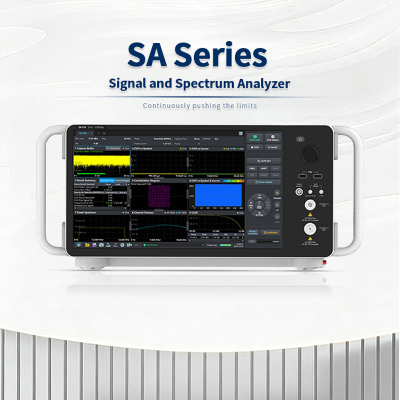


Wholesale Professional High Quality Practical Dynamic Signal Analyzer
$1430.00 - $2000.00
MOQ: 1 Pieces


Professional Handheld Wireless Signal Analyzer for Global Cellular & RF Detection
$9800.00 - $10000.00
MOQ: 1 Pieces


Handheld Signal Analysis Instrument HSA870 for Frequency Testing 9kHz~7.5GHz
$6779.00 - $8474.00
MOQ: 1 pcs


HSA870 Handheld Spectrum Analyzer with Field Strength Features Included
$7459.00 - $9320.00
MOQ: 1 pcs

Comprehensive Sourcing Guide
Handheld Signal Analyzer Sourcing Guide
Handheld signal analyzers serve field technicians, RF engineers, and industrial maintenance teams who need spectrum visibility away from the bench. When sourcing these instruments from Chinese marketplaces and manufacturer listings, buyers face a wide spread of product types—from true handheld spectrum analyzers to portable analyzers designed for other measurement tasks—so disciplined evaluation matters more than in mature, single-brand channels. This guide walks through the decisions that separate a workable purchase from an expensive mistake: scoping the product category, verifying specifications, confirming compliance paperwork, understanding commercial terms, qualifying suppliers, and planning for long-term ownership.
The listings observed for this category span a wide price range, from roughly one thousand dollars to tens of thousands, which signals that "Handheld Signal Analyzer" covers instruments of very different capability tiers. Entry-level units may suit education, basic interference hunting, or quick field checks, while higher-priced instruments target engineering-grade measurement work. Because MOQs observed in these listings start at a single set, buyers can often order one evaluation unit before committing to volume—a practice strongly recommended in this category, where specification claims deserve bench-level confirmation before fleet deployment.
Product Scope and Observed Listing Signals
The observed listings mix several product families under adjacent keywords. Some entries are clearly RF spectrum analyzers, with attributes such as a 9 kHz–3.6 GHz frequency range, 10 Hz to 3 MHz video bandwidth, N-type 50-ohm RF connectors, and 10/100 Base-T LAN with RJ-45. Others carry model series names (such as RH712, HSA870, HSA830, 4024E, PSA080, SA series, JX6, and TrueX 800) and describe features like 6.5-inch displays, digital readouts, and semi-automatic operation. Buyers should read each listing carefully to determine whether the instrument is genuinely an RF signal analyzer or a handheld analyzer for another measurand.
Listing signals worth noting include condition (new), packaging (carton boxes, standard packing, or carrying case inside carton), origin (China), and customization availability. Some listings state certifications such as CE or CE/ISO/RoHS, while others do not mention certification at all. Warranty statements also vary, from "with warranty" to "greater than one year." These signals are observations about individual listings, not guarantees across the category, so treat each product page as a separate claim set requiring its own verification before purchase.
Technical Specifications to Verify
Frequency-related parameters deserve first attention. Verify the covered frequency span against your actual signals—one observed listing cites 9 kHz to 3.6 GHz, which suits many common RF bands but excludes higher-frequency work. Confirm video bandwidth resolution (10 Hz to 3 MHz appears in one listing), resolution bandwidth options, phase noise behavior, and dynamic range. Request the full datasheet rather than relying on headline attributes, and ask whether published figures are typical or guaranteed specifications. For field use, confirm battery operation, weight (one listing states 0–10 kg), and display usability—6.5-inch screens appear in observed listings—in the lighting conditions your technicians actually face.
Connectivity and data handling matter for workflow integration. Verify RF connector types and impedance—one listing specifies N-type negative 50-ohm connectors—and confirm interface options such as the cited 10/100 Base-T LAN with RJ-45 for remote control or data export. Ask about software support: whether a PC application, SDK, or standard SCPI-style command set exists for automation. Power input ranges (one listing cites AC 85V–265V) should match your deployment regions. Finally, request calibration certificates and ask whether the instrument ships with traceable calibration, since field measurement credibility depends on it.
Compliance and Safety Documentation
Certification claims in observed listings are inconsistent: some products state CE, one lists CE with ISO and RoHS, and many list nothing. Do not assume certification from category membership. For each shortlisted unit, request copies of the actual certificates—CE Declaration of Conformity, RoHS documentation, and any EMC test reports—rather than accepting a logo on the product page. Verify that certificate numbers reference the correct product model and that the issuing body is legitimate. For instruments used in regulated industries, ask whether additional local approvals apply in your destination market before shipment, since retroactive compliance work is costly.
Safety documentation extends beyond electromagnetic compliance. Because these are AC-powered measurement instruments (with observed inputs of AC 85V–265V), request insulation and electrical safety test documentation, user manuals in your required language, and warnings about maximum RF input levels to prevent front-end damage. If you plan to customize the instrument, confirm that customization does not void the stated certification scope—modified hardware may fall outside the original approval. Keep all compliance documents on file, as customs clearance, insurance claims, and audits may require them years after purchase.
Cost Drivers and Commercial Terms
Observed prices range from about $1,020 to $55,000, reflecting genuine capability differences as well as differences in what is included. When comparing quotes, decompose the price: base instrument, frequency range upgrades or software options, calibration certificate, battery packs, antennas and cables, carrying case, and shipping. A low headline price with costly required accessories can exceed a complete higher quote. Ask which software functions are standard versus licensed, since spectrum analyzer options (tracking generators, advanced measurements) are common upsell points in this category. Confirm whether the listed price covers one set, as MOQs of one are typical in observed listings.
Commercial terms to clarify before ordering include lead time (observed at 2 weeks, or 1–2 weeks, but confirm per order), Incoterms and who handles freight and insurance, accepted payment methods and whether escrow or trade assurance is available, and warranty scope. Because customization is listed as available on some products, ask how customization affects lead time, price, and return rights. For first orders, prefer payment structures that protect the buyer, order one evaluation unit, and confirm packing quality (carton box versus carrying case inside carton) meets your transit expectations before repeat volume purchases.
Supplier Qualification and Quality Control
Qualify suppliers as instrument manufacturers or authorized dealers, not merely listing holders. Request the company's business registration, years in the measurement instrument business, and evidence of production or service capability—especially for customized units. Model numbers alone (RH712, HSA830, PSA080, TrueX 800) do not establish pedigree; ask which products the factory builds itself and which are sourced. Check whether the supplier offers after-sales repair, firmware updates, and spare parts, since handheld instruments experience drops, connector wear, and battery aging. Suppliers claiming "high sensitive" advantages should substantiate them with spec sheets, not marketing copy.
Quality control before shipment protects your investment. Request pre-shipment functional testing with a documented test report covering frequency accuracy, displayed signal behavior, and screen and connector condition. For evaluation units, plan your own incoming inspection: verify the delivered model matches the listing, test against a known reference signal, and check the packing contents against the order. Ask about the supplier's calibration source—whether the factory calibrates in-house with traceable standards or uses a third-party lab. Document everything in writing, since dispute resolution on cross-border orders depends heavily on the paper trail you establish at order time.
Long-Term Procurement Checks
Plan instrument lifecycle costs before scaling purchases. Handheld signal analyzers require periodic calibration—typically annual, but confirm the supplier's recommendation—so ask whether recalibration services are available from the supplier or a local lab, and at what cost. Confirm battery availability as a consumable part, since sealed battery packs often become the first failure point and may be unavailable years later. Request a commitment on firmware support and ask how long the model will remain serviced. For fleets, standardize on one model to simplify calibration, accessories, and technician training.
Finally, build the relationship deliberately. Start with a single-set order (MOQs of one are common in observed listings), evaluate field performance for a realistic period, and only then negotiate volume pricing, spare-unit stocking, or customization. Maintain a supplier file with certificates, calibration records, test reports, and warranty terms so audits and insurance claims stay simple. Re-verify compliance documentation when customization or model revisions occur, and monitor whether the supplier continues to honor stated warranties ("with warranty," ">1 year" appear in listings) in practice. Treat the first successful order as the start of supplier qualification, not its conclusion.
FAQs
What models of handheld signal analyzers are available?
Several models are available including RH712, HSA870, 4024E, HSA830, PSA080, TrueX 800, SA series, and JX6. These units vary in specifications such as video bandwidth and frequency range. Buyers can select based on specific industrial or metal analysis needs. Each model offers distinct features like digital displays or large screens to suit different operational requirements.
Can these devices be customized for specific applications?
Yes, customization is available for certain Handheld Signal Analyzer models. Some units are explicitly marked as customized, while others are non-customized. Buyers requiring specific configurations should verify the customization status for each model. This flexibility allows for tailored solutions in industrial applications, ensuring the equipment meets precise operational standards and functional requirements.
What certifications do these handheld signal analyzers hold?
Certifications include CE and ISO RoHS for specific models like PSA080. Other models may carry CE certification. These standards ensure compliance with safety and environmental regulations. Buyers should check the certification details for each specific model number. Compliance is critical for industrial use, ensuring the devices meet necessary regulatory requirements for operation in various global markets.
What is the typical lead time for these analyzers?
The lead time is typically one to two weeks for most models. Some specific units may have a lead time of two weeks. This timeframe allows for efficient procurement planning. Buyers should confirm the exact lead time for their selected model. Quick turnaround supports timely project deployment and minimizes operational downtime for industrial teams requiring these specialized analysis tools.
What is the minimum order quantity for these devices?
The minimum order quantity is one set or one unit for most models. This low MOQ allows for easy sampling and small-scale procurement. Buyers can order single items without bulk commitments. This flexibility is ideal for testing equipment performance before larger purchases. It supports efficient inventory management and reduces initial investment risks for new buyers.
How are these handheld signal analyzers packaged?
Packaging varies by model, including carton boxes, standard packing, and carrying cases. Some units come with a carrying case inside and a carton outside. Proper packaging ensures safe transit and protection of sensitive components. Buyers should verify the packing details for their chosen model. Secure packaging is essential for maintaining device integrity during shipping and handling in industrial supply chains.