Source Handmade Acrylic Countertop Storage Shelf for Exhibitions
Explore 30 options for the Handmade Acrylic Countertop Storage Shelf designed for exhibitions, specialty stores, and home use. Buyers can compare specifications, customization levels, and pricing to find the ideal solution for their display needs.
Key considerations
Products List


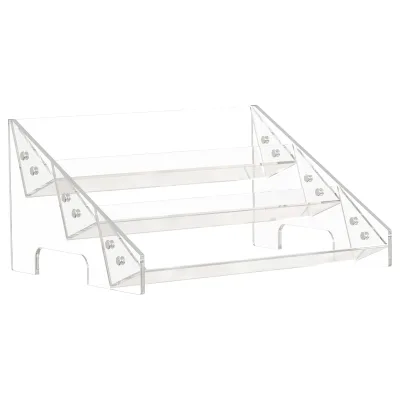


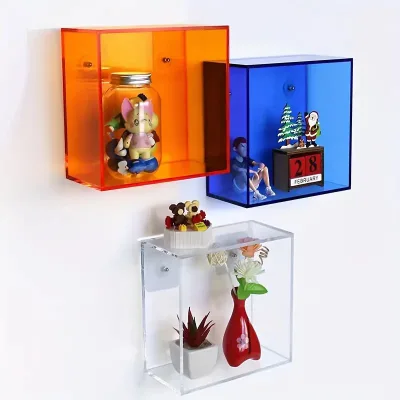


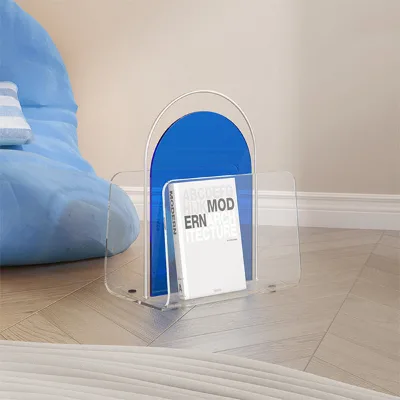


Kitchen Plastic Rack Shelf. Shelf Plastic, Closet Storage Plastic Shelf
$2.99 - $3.05
MOQ: 2000 Pieces
Comprehensive Sourcing Guide
Sourcing Guide for Handmade Acrylic Countertop Storage Shelves
Understanding Product Definitions and Material Composition
When sourcing a "Handmade Acrylic Countertop Storage Shelf," buyers must first distinguish between mass-produced injection-molded units and those crafted through manual processes. The core keyword implies a specific intersection of material, fabrication method, and application. Based on available market data, the primary material for these units is Acrylic, chemically identified as Polymethyl Methymethacrylate (PMMA). This material is noted for its transparency, often described as "Transparent Clear," though suppliers frequently offer the option to customize the color to match specific branding or interior design requirements.
The term "handmade" in this context refers to the fabrication technology. Unlike automated laser cutting or CNC routing, the "Pure Handmade" process involves manual assembly, polishing, and finishing. This method is often associated with a "Simple" style or "Irregular" shapes that might be difficult to achieve with standard automated tooling. The product is frequently categorized as a "Desktop" unit or a "L Stand" type, designed specifically for "Indoor" display environments. It is crucial to verify that the "Build Method" aligns with the intended countertop application, as some units are designed as "Upright Column" structures while others function as flat shelving units.
The distinction between a "Display Shelf" and a "Display Stand" is also significant. While both serve storage and presentation purposes, the former often implies a horizontal surface for holding items, whereas the latter may refer to a vertical support structure. In the context of countertop storage, the product often functions as a "Decoration" item as well as a utility piece. Buyers should be aware that while the material is consistent, the "Shape" can vary from "Round" and "Hexagon" to "Custom Shapes," requiring careful specification during the procurement phase to ensure the unit fits the physical constraints of the retail or home environment.
Technical Specifications and Customization Parameters
Technical specifications for handmade acrylic shelves are rarely one-size-fits-all. The market data indicates a strong emphasis on "Customized Sizes" and "Customized Finishing." This flexibility is a primary driver for sourcing handmade units, as it allows retailers to tailor the storage solution to unique product dimensions. The "Standard" for these products is often listed as "Customized," meaning there is no universal ISO or ANSI dimension that applies to every unit. Instead, the buyer must provide specific length, width, and height requirements.
The "Surface Finishing" is another critical technical parameter. Handmade units often undergo specific treatments to enhance durability and aesthetics. The "Processing" method may include "Painted" finishes, although the base material remains clear acrylic. For countertop applications, the "Installation" process is typically designed to be "Easily Instal," suggesting a design that minimizes the need for complex hardware or professional fitting services. However, the "Folded" status of the product is generally "Unfolded," indicating that these are rigid structures rather than collapsible units, which is vital for stability on a countertop.
A comparison of common configuration types helps clarify the technical landscape:
| Feature | Standard Mass-Produced | Handmade Custom Unit |
|---|---|---|
| Material | Acrylic (PMMA) | Acrylic (PMMA) |
| Fabrication | Automated Laser/CNC | Pure Handmade |
| Shape | Standard Rectangular | Irregular, Hexagon, Round, Custom |
| Size | Fixed SKU Sizes | Customized Sizes |
| Finish | Standard Clear or White | Custom Color, Painted, Customized Finishing |
| Installation | Screw/Adhesive | Easily Instal (Design Dependent) |
| Application | General Display | Specialized Countertop/Exhibition |
Buyers must also consider the "Molecular Principal Chain" of the material, which is the Acrylic Box structure. This ensures the structural integrity of the shelf. The "Product Name" may vary between "Acrylic Display Shelf" and "Acrylic Display Stand," but the underlying technical requirements for countertop usage remain similar. The "Type" of the unit, such as "L Stand" or "Decorative Item," dictates the load-bearing capacity and the method of attachment to the counter surface.
Compliance, Certification, and Safety Verification
When dealing with acrylic products for commercial or home use, compliance and safety are paramount. While the supplied data mentions "CE" as a background certification, it is marked as low-confidence and should not be assumed as a standard for all products. Buyers must independently verify if the specific supplier holds valid CE certification or other relevant regional safety standards, particularly if the product is intended for export to the European Union or other regulated markets.
The "Antitheft" attribute is explicitly noted as "Not Antitheft" for many acrylic display units. This is a critical compliance and security consideration for high-value items like cosmetics or electronics. If the countertop shelf is intended for a high-theft environment, the buyer must determine if additional security measures, such as locking mechanisms or separate security tags, are required, as the shelf itself does not provide theft deterrence.
Regarding material safety, the chemical composition is Polymethyl Methacrylate. While generally safe for indoor use, buyers should request Material Safety Data Sheets (MSDS) to confirm that the "Painted" or "Customized Finishing" processes do not introduce hazardous volatile organic compounds (VOCs) that could affect indoor air quality. The "Standard" of "Customized Sizes" implies that quality control varies by order, so verifying that the finished product meets the specific safety requirements of the destination market is essential.
Cost Drivers and Pricing Dynamics
The pricing for handmade acrylic countertop storage shelves is influenced by several distinct factors. The observed price range in the market spans from $0.32 to $150, a wide variance that reflects differences in size, complexity, and customization level. The "Handmade" nature of the production is a primary cost driver. Manual labor is significantly more expensive than automated manufacturing, leading to higher unit costs for bespoke designs.
The "Custom-Make" attribute is often listed as "No" for standard SKUs but is the defining feature of the "Handmade" category. When a buyer requests "Custom Shapes" or "Customized Finishing," the cost increases due to the setup time and the skilled labor required. The "Process" of "Pure Handmade" also implies a lower production volume, which reduces economies of scale.
The "MOQ" (Minimum Order Quantity) is another significant cost factor. The observed MOQ range is 1 to 2000 units. For buyers seeking a single custom unit, the unit price will be at the higher end of the spectrum. Conversely, ordering in bulk (e.g., 1000+ units) can lower the per-unit cost, though the "Handmade" constraint may still limit the extent of this reduction. The "Packing" method, such as "Individual Cartons" or "Carton Packing," also adds to the overall cost, as custom packaging requires additional materials and labor.
Buyers should be aware that the "Location" of the supplier, such as Zhejiang or Shandong in China, influences logistics costs. While these regions are manufacturing hubs, the specific distance to the buyer's warehouse will impact the final landed cost. Additionally, the "Lead Time" for handmade items is typically longer than for stock items, as the production cannot be rushed without compromising quality.
Typical Applications and Usage Scenarios
The versatility of handmade acrylic shelves makes them suitable for a wide array of applications. The "Usage" category includes "Exhibition Show," "Speciality Stores," "Supermarkets and Stores," and "Home." For countertop storage, the "Home" application is particularly relevant, where the shelf serves as a "Daily Use" or "Collection" organizer. The "Style" is often "Simple," fitting modern interior design trends, but the "Customized" nature allows for more ornate designs for "Gift" or "Decoration" purposes.
In a commercial setting, the "Function" of the shelf is to enhance product visibility. The "Display Products" listed include "Ornaments" and "Cosmetics," indicating that the shelf is well-suited for small, high-value items that require clear visibility. The "Indoor" display place is a strict requirement, as acrylic can degrade under prolonged UV exposure or harsh weather conditions.
The "Shape" of the shelf plays a role in its application. A "Round" or "Hexagon" shape might be used for decorative corners or specific product displays, while an "Irregular" shape could be designed to fit unique countertop layouts. The "Build Method" as an "Upright Column" suggests a vertical storage solution, ideal for maximizing vertical space on a crowded counter.
Supplier Evaluation and Quality Control
Evaluating suppliers for handmade acrylic products requires a focus on craftsmanship and consistency. Since the "Process" is "Pure Handmade," the skill level of the artisans is the most critical quality metric. Buyers should request samples to inspect the "Surface Finishing" for scratches, bubbles, or uneven polishing. The "Color" consistency, whether "Transparent Clear" or a "Customized Color," must be verified against the buyer's brand standards.
The "Packing" method is a key indicator of supplier professionalism. "Packaged in Individual Cartons" suggests a higher level of care to prevent damage during transit, which is crucial for fragile acrylic items. Buyers should also verify the "Standard" of the product, ensuring that the "Customized Sizes" are manufactured to the exact tolerances specified.
Quality control checks should include:
- Visual Inspection: Checking for clarity, color consistency, and surface defects.
- Dimensional Verification: Measuring the "Customized Sizes" to ensure they match the order specifications.
- Structural Integrity: Testing the stability of the "Upright Column" or "L Stand" design.
- Finish Durability: Assessing the adhesion of any "Painted" finishes or "Customized Finishing."
Buyers should avoid suppliers who cannot provide detailed information about their "Handmade" process or who claim to offer "Custom-Make" services without a clear workflow. The "Location" of the supplier, such as "Zhejiang, China" or "Shandong China," should be verified to ensure it aligns with the buyer's logistics strategy.
Long-Term Procurement and Maintenance Considerations
For long-term procurement, buyers must consider the maintenance requirements of acrylic shelves. While the material is "Waterproof," it is susceptible to scratching and chemical damage from harsh cleaners. The "Installation" method should be reviewed to ensure it allows for easy cleaning and repositioning if necessary. The "Folded" status being "Unfolded" means the shelf is a permanent fixture, so the durability of the adhesive or mounting hardware is critical.
The "Customized" nature of the product means that replacement parts or matching units may be difficult to source later. Buyers should maintain a record of the specific "prod_model" (e.g., AC030001, AC040001) and the exact "Customized Sizes" for future reordering. The "Standard" of "Customized Sizes" implies that each order is unique, so maintaining a digital archive of the design specifications is essential for consistency.
Furthermore, the "Antitheft" attribute being "Not Antitheft" suggests that long-term security strategies must be separate from the shelf design. Buyers should plan for additional security measures if the shelf is used in high-traffic retail environments. Finally, the "Lead Time" for handmade items should be factored into inventory planning, as the "Pure Handmade" process cannot be accelerated without risking quality.
FAQs
What materials are used for handmade acrylic countertop storage shelves?
The primary material is Acrylic, chemically identified as Polymethyl Methacrylate. While standard units are Transparent Clear, suppliers offer customized colors to match specific branding or interior design requirements for the product.
Can I order custom sizes for these acrylic display shelves?
Yes, the product standard explicitly supports customized sizes and shapes. Buyers must provide specific length, width, and height requirements since there is no universal dimension that applies to every unit in this category.
How are these handmade acrylic shelves typically installed?
Installation is designed to be easy and does not usually require complex hardware. The units are rigid structures that remain unfolded, ensuring stability on countertops without the need for professional fitting services.
What is the minimum order quantity for these storage units?
The minimum order quantity ranges from 1 to 2000 units depending on the supplier. Single custom units are possible but will be priced higher due to the manual labor involved in the pure handmade production process.
Are these acrylic shelves suitable for indoor cosmetic display?
Yes, they are explicitly designed for indoor display of cosmetics and ornaments. The material is waterproof and the build method supports upright column or desktop styles suitable for exhibition shows and specialty stores.
Do these shelves come with anti-theft features?
No, the standard product attribute indicates they are not anti-theft. Buyers must determine if additional security measures are required for high-value items, as the shelf itself does not provide theft deterrence.
Where are these handmade acrylic shelves manufactured?
The products originate from manufacturing hubs in China, specifically Zhejiang and Shandong provinces. This location influences logistics costs and lead times, which are typically longer for handmade items compared to mass-produced stock.