Source Handmade Custom Luxury Soy Candles for Home Lighting, Weddings, and Decor
Find 30 listings for Handmade Custom Luxury Soy Candles designed for home lighting, weddings, and decoration. Buyers can compare customization options, scents, and packaging details from verified suppliers.
Key considerations
Products List




Comprehensive Sourcing Guide
Strategic Sourcing Guide for Handmade Custom Luxury Soy Candles
Understanding Product Attributes and Material Composition
When sourcing Handmade Custom Luxury Soy Candles, the primary differentiator lies in the material composition and the customization capabilities offered by the manufacturer. The core material identified in the market is soybean wax, which is distinct from paraffin due to its renewable nature and cleaner burn profile. Buyers must verify that the supplier explicitly lists "Soybean Wax" as the primary fuel source, as this is a non-negotiable attribute for products marketed as "luxury" and "natural." The customization options are extensive, allowing for bespoke formulations that cater to specific brand identities.
The processing method is a critical technical specification to observe. The supply chain data indicates that "Filling" is the standard processing technique used to assemble these candles. This implies a manufacturing workflow where the wax is melted, scented, and poured into pre-selected containers. For a luxury positioning, the precision of this filling process is paramount to ensure uniform weight and aesthetic consistency. The product models available range from specific identifiers like "TBHK191003" and "TB-GLAS005" to generic descriptors such as "Soy Wax Candles" and "Dried Flower Scented Candles With Gift Box." This variety suggests that suppliers can accommodate both standardized SKUs and highly customized orders.
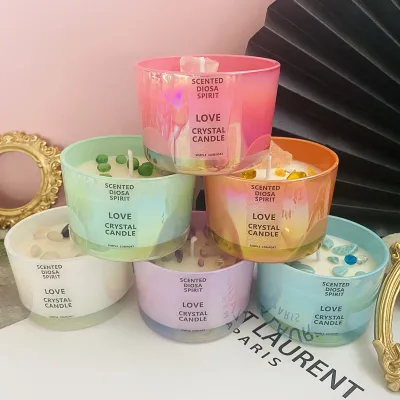
The physical dimensions of the candles vary significantly based on the intended use. Observed specifications include a standard size of 8.58cm for certain models, while others are listed as 7.55.2cm or 6.3*4.2cm. Specific product lines, such as the "Dried Flower Scented Candles," may feature a diameter of 7cm and a height of 5cm. Buyers should not assume a single standard size applies to all luxury offerings; instead, they must request detailed dimension sheets for the specific model they intend to procure. The color options are equally diverse, ranging from "Multi-Colored" variants to specific scent-driven hues like "Soy Wax: Gardenia," "Soy Wax: Lavender," and "Cristal: Coconut Milk Scent." This allows for a granular approach to product design where the visual appearance aligns perfectly with the olfactory profile.
Technical Specifications and Container Engineering
The engineering of the container is as vital as the wax itself for a luxury product. The data highlights "Glass Jar," "Ceramic Vessel," and "Tin Container" as the primary container types available. For a luxury positioning, glass jars are often preferred for their ability to showcase the wax color and the embedded wick, while ceramic vessels offer a tactile, premium feel. The "Scented Candle" models frequently utilize glass containers, with specific observations noting "Glass" as the container material for high-end variants.
The wick type is another critical technical specification. The available data specifies "Cotton" as the wick material, which is the industry standard for clean burning and minimal soot. Buyers must ensure that the cotton wicks used are treated or sized appropriately for the specific diameter of the candle to prevent tunneling or excessive smoking. The scent strength is categorized as either "Moderate" or "Strong," depending on the formulation. For luxury applications, a "Strong" scent throw is often desired to ensure the fragrance is noticeable upon entering a room, whereas "Moderate" strength may be preferred for smaller spaces like bathrooms or bedrooms.
The burn duration is listed as "Short-Term" or "Medium-Term," which suggests that buyers need to clarify the expected burn hours based on the weight of the candle. The weight range observed is around 100g, which serves as a baseline for smaller luxury units. However, larger "Large" size options are also available, which would naturally extend the burn duration. The fragrance components are derived from "Essential Oils" and "Fragrance Oils," offering flexibility in scent profiles that include Floral, Fruity, Woody, Spicy, Herbal, and Fresh notes. Specific scents mentioned include "Wormwood," "Vanilla," "Tea Tree," "Sandalwood," "Rose," "Peppermint," "Ocean," "Lemon," "Lavender," "Jasmine," "Frankincense," "Eucalyptus," "Coconut," "Cinnamon," "Chamomia," and "Agalloch." This extensive palette allows for the creation of complex, multi-layered scent experiences that define the luxury category.
Compliance, Certification, and Safety Standards
In the realm of luxury candles, compliance and safety are paramount. While the provided data does not confirm specific certification statuses for every listed product, it mentions "CE" and "ROHS" as background certifications that may be relevant to the market. Buyers should treat these as potential verification points rather than guaranteed attributes for every SKU. The primary safety claim observed is "No Smoke No Toxic," which is a critical performance metric for consumer health. This claim implies that the wax, wick, and fragrance oils are selected to minimize particulate matter and toxic emissions during combustion.
The product origin is consistently listed as "China," with specific regions like "Hebei" noted. This geographic concentration suggests a mature supply chain with established logistics, but it also necessitates rigorous quality control to ensure that the "No Smoke No Toxic" claim holds true across all batches. Buyers should verify that the supplier adheres to international safety standards for candles, such as ASTM or ISO standards, even if these are not explicitly listed in the product description. The "Standard Specifications or Customized" nature of the products indicates that while there are baseline safety requirements, custom formulations may require additional testing to ensure they meet the same safety thresholds.
The packaging standards are also part of the compliance picture. Products are shipped in "Carton" packaging, with specific configurations like "4/6/8 Pieces Per Gift Box." This packaging must be robust enough to prevent breakage during transit, especially for glass containers. The "Custom" standard for product models and packaging suggests that suppliers can tailor the outer packaging to meet specific retail or gifting requirements, which is essential for luxury branding. Buyers should ensure that the packaging materials used are sustainable and align with the eco-friendly image of soy wax candles.
Cost Drivers and Pricing Dynamics
The pricing for Handmade Custom Luxury Soy Candles is influenced by several key factors, including material quality, customization level, and order volume. The observed price range in the market spans from $0.39 to $45.60 USD. This wide disparity indicates that the cost is not solely determined by the candle itself but by the level of luxury, packaging, and branding involved. The lower end of the range likely corresponds to basic, mass-produced units with minimal customization, while the higher end reflects premium designs, complex scents, and elaborate gift packaging.
The Minimum Order Quantity (MOQ) is a significant cost driver, with observed ranges from 5 to 3000 units. This flexibility allows buyers to start with small test orders or scale up to large production runs. However, the data also notes specific MOQs such as "500 PCS" and "1000 PCS" for certain high-quality or customized items. Buyers should be aware that lower MOQs often come with a higher unit cost due to the setup and handling overheads associated with smaller batches. Conversely, larger orders can leverage economies of scale to reduce the per-unit price.
Customization is a major cost factor. The "OEM & ODM Custom" capability allows for tailored scents, colors, and packaging, but these services typically incur additional costs. The "Custom" label on the product model and standard further reinforces that bespoke requests will deviate from the baseline pricing. Buyers should budget for the development of custom molds, scent blending, and packaging design. The "Ship in Carton" and "Standard Packaging or Customized" options also impact the final cost, as custom gift boxes and protective wraps require more materials and labor than standard bulk packaging.
Typical Applications and Market Segmentation
The versatility of Handmade Custom Luxury Soy Candles makes them suitable for a wide array of applications. The observed usage categories include "Home Lighting," "Wedding," "Party," "Funeral," "Birthday," "Religion," "SPA," "Decoration," and "Holiday." This broad spectrum indicates that these products can serve both functional and ceremonial purposes. For instance, "Home Lighting" and "Decoration" suggest a focus on ambient aesthetics, while "Wedding" and "Birthday" point to gifting and event-specific branding opportunities.
The "Suitable for" attributes further refine the application scope, listing "Prayer Room," "Home," "Gymnasium," "Car," "Travel," "Odor Removal," "Meditation," "Health Care," "Fresh Air," "Everyday Use," and "Beauty." This diversity allows buyers to target niche markets, such as wellness centers, automotive retailers, or religious institutions. The "Aromatherapy" type and "Primary Functions" like "Ambiance Creation" and "Odor Elimination" highlight the therapeutic value of these candles, making them ideal for the growing wellness and self-care sectors.
The style is described as "Modern," which aligns with current design trends favoring clean lines and minimalist aesthetics. This style can be adapted to various themes, from rustic to contemporary, depending on the container and packaging choices. The "Scent Profiles" of Floral, Fruity, Woody, Spicy, Herbal, and Fresh allow for targeted marketing to specific consumer preferences. For example, "Lavender" and "Chamomile" are popular for relaxation, while "Lemon" and "Peppermint" are favored for energy and freshness.
Supplier Evaluation and Quality Control Protocols
Evaluating suppliers for Handmade Custom Luxury Soy Candles requires a multi-faceted approach. Buyers should prioritize suppliers who demonstrate transparency in their "Processing" methods and "Material" sourcing. The explicit mention of "Soybean Wax" and "Cotton" wicks is a positive indicator, but buyers should request documentation to verify the source of these materials. The "Customization" availability is a strong selling point, but it requires a robust communication channel to ensure that the final product matches the design specifications.
Quality control is essential to maintain the "No Smoke No Toxic" claim. Buyers should implement a sampling process that includes burn tests to check for soot, tunneling, and scent throw. The "Burn Duration" and "Scent Strength" should be verified against the supplier's claims. The "Weight Range" of 100g should be consistent across all units in a batch to ensure fairness and quality. The "Container Types" should be inspected for defects such as cracks, bubbles, or uneven surfaces, particularly for glass and ceramic vessels.
The "OEM & ODM Custom" capability suggests that the supplier can handle complex requests, but this also increases the risk of errors. Buyers should establish clear quality control checkpoints at the design, production, and packaging stages. The "Standard Specifications or Customized" nature of the products means that buyers must define their own quality standards if they are not provided by the supplier. The "Ship in Carton" and "Gift Box" packaging should be tested for durability to prevent damage during shipping.
Long-Term Procurement and Strategic Sourcing
Long-term procurement of Handmade Custom Luxury Soy Candles requires a strategic approach that balances cost, quality, and supply chain stability. The "MOQ" flexibility allows for agile sourcing, but buyers should plan for volume increases to secure better pricing. The "Custom" options provide a competitive advantage, but they also require long-term planning to ensure that the supply chain can handle the complexity of bespoke orders.
The "Product Origin" of China offers a cost-effective manufacturing base, but buyers should consider the risks associated with geopolitical factors and logistics. Establishing a relationship with a supplier in "Hebei, China" can provide access to a specialized cluster of candle manufacturers, but it is essential to have a backup plan for supply chain disruptions. The "Standard Specifications" and "Customized" options allow for a hybrid approach, where standard products are used for volume sales and custom products are reserved for high-margin, niche markets.
Sustainability is a key consideration for long-term success. The use of "Soybean Wax" and "Essential Oils" aligns with eco-friendly trends, but buyers should verify the sustainability of the packaging materials. The "Gift Box" and "Protective Wrap" options should be evaluated for their environmental impact. By focusing on high-quality, sustainable, and customizable products, buyers can build a strong brand identity and foster long-term customer loyalty in the luxury candle market.
FAQs
What materials are used for Handmade Custom Luxury Soy Candles?
The primary material is soybean wax, often paired with cotton wicks and glass, ceramic, or tin containers. Suppliers offer customization for scents like lavender or vanilla and can adjust dimensions to specific requirements such as 8.5 by 8 cm.
How can I customize the scent and color of these candles?
Customization is available for scents including floral, fruity, and woody profiles, with color options ranging from multi-colored to natural wax hues. Buyers can request specific fragrance components like essential oils and choose from various dye options to match brand identity.
Which packaging options are available for shipping these candles?
Products are typically shipped in cartons with gift box configurations of 4, 6, or 8 pieces per box. Standard packaging is available, but suppliers also accept custom packaging requests to align with specific retail or gifting needs.
Can I order small quantities of Handmade Custom Luxury Soy Candles?
Yes, the minimum order quantity ranges from 5 to 3000 units depending on the specific product and customization level. Some high-quality or customized items may require a higher MOQ of 500 or 1000 pieces to proceed with production.
What are the typical specifications for the candle dimensions?
Standard sizes include 8.5 by 8 cm, 7.5 by 5.2 cm, and 6.3 by 4.2 cm, with specific models like dried flower candles measuring 7 cm in diameter and 5 cm in height. Custom dimensions are also available to meet unique product requirements.
Where are these Handmade Custom Luxury Soy Candles manufactured?
The products originate from China, with specific manufacturing regions noted as Hebei. This location supports a mature supply chain capable of handling both standardized SKUs and highly customized orders with consistent quality.