Source Handmade Luxury Velvet Jewelry Box for Gifts, Cosmetics, and Storage
Compare 30 listings of handmade luxury velvet jewelry boxes featuring customizable sizes, magnetic lids, and eco-friendly materials. Buyers can evaluate options for packing, storage, and collection across various industries including cosmetics and garments.
Key considerations
Products List


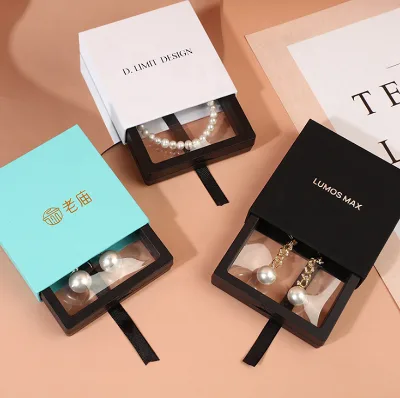
Luxury Customized Logo High-End Handmade Paper Packaging Jewelry Folding Box
$0.50 - $5.00
MOQ: 500 Pieces


Comprehensive Sourcing Guide
Strategic Sourcing Guide for Handmade Luxury Velvet Jewelry Boxes
Defining Technical Specifications and Material Standards
When sourcing handmade luxury velvet jewelry boxes, the primary objective is to align technical specifications with the expectation of premium quality and aesthetic appeal. The core product category relies heavily on the structural integrity of the base material, which is typically identified as cardboard or grey board combined with art paper. In high-end applications, the material composition often involves a grey board core to ensure rigidity, wrapped in art paper to provide a smooth, printable surface for branding and design. For specific luxury variations, wood materials may be observed, offering a distinct tactile experience that differentiates the product from standard paper-based packaging.
The dimensions of these boxes vary significantly based on the intended usage. Standardized configurations observed in the market include specific model dimensions such as 30×21×7.5cm, 55×55×32mm, and 34.3×25.4×10.2cm. However, the market also supports fully customized sizing, allowing buyers to tailor the internal volume to specific jewelry items. The shape of the box is a critical design element, with square and rectangular forms being the most prevalent. The "Type" is generally categorized as a jewelry set box, designed to hold multiple pieces securely.
The opening mechanism is another vital technical specification. The industry standard for luxury presentation often involves a magnetic lid combined with a side drawer, providing a dual-layer access system that enhances the unboxing experience. Alternative opening methods include clamshell designs or pull-out mechanisms. The internal environment is equally important; the inner lining is frequently specified as velvet or felt, providing a soft, non-abrasive surface that protects delicate gemstones and metals. Decorative elements such as handmade lace and fabric flowers are often applied to the exterior to elevate the perceived value, distinguishing these items from mass-produced alternatives.
Compliance, Certification, and Quality Assurance Protocols
For B2B procurement, verifying the compliance and certification status of a supplier is non-negotiable, particularly when targeting markets in Europe, North America, and Australia. The supply chain for luxury packaging must adhere to rigorous safety and ethical standards. Reputable manufacturers in this sector often hold certifications such as BSCI (Business Social Compliance Initiative), Sedex, ISO9001, and Reach. These certifications indicate adherence to international labor standards, quality management systems, and chemical safety regulations, which are essential for maintaining brand reputation and ensuring market access.
Quality control (QC) protocols must be explicitly defined in the procurement agreement. While some suppliers offer standard internal checks, advanced buyers should mandate third-party inspections. The availability of custom third-party inspection is a critical factor in supplier evaluation. Buyers should verify if the supplier accepts inspections from recognized agencies such as BV (Bureau Veritas) or SGS. The acceptance of these external audits serves as a strong indicator of a manufacturer's confidence in their production consistency and transparency.
It is important to note that while certain background data may suggest FSC certification, this should not be assumed as a universal attribute for all listed products. Buyers must explicitly request proof of FSC or equivalent sustainable forestry certifications if environmental sustainability is a core requirement for their brand. The absence of such documentation should not be overlooked, as it may impact the ability to sell the product in regions with strict environmental regulations.
Cost Drivers and Pricing Dynamics
Understanding the cost structure of handmade luxury jewelry boxes requires an analysis of several variable factors. The observed price range in the market spans from approximately $0.10 to $32.50 USD per unit. This wide disparity is driven by the complexity of the design, the quality of materials, and the extent of customization. Basic cardboard boxes with simple printing will naturally fall at the lower end of this spectrum, while boxes featuring wood construction, intricate handmade lace, velvet linings, and advanced printing techniques will command higher prices.
The Minimum Order Quantity (MOQ) is a significant cost driver. The observed MOQ range for these products is between 50 and 5,000 units. A lower MOQ of 50 units may be suitable for prototyping or small boutique launches but often results in a higher unit cost due to setup fees and lower economies of scale. Conversely, an MOQ of 1,000 units or more, which is common for established manufacturers, typically yields a more competitive per-unit price. Buyers must balance their inventory needs with their budget constraints, understanding that larger volumes generally reduce the average cost but increase the total capital outlay.
Customization is a primary driver of cost. Attributes such as logo printing, hot stamping, silk screen, embossing, and UV printing add value but also increase production complexity. The "Reusable & Eco-Friendly" feature, while desirable, may require specific material sourcing or structural engineering that impacts the final price. Additionally, the "Handmade" aspect of the decoration, such as fabric flowers, introduces labor-intensive processes that are less scalable than automated manufacturing, further influencing the cost structure.
Typical Applications and Market Usage
The versatility of handmade luxury velvet jewelry boxes allows them to serve a broad spectrum of applications across various industries. The primary usage is for the packaging, storage, and collection of jewelry, ensuring that items are presented elegantly and protected during transit. However, the application extends beyond jewelry. These boxes are frequently utilized for electronic products, cosmetics, health care products, and garments and shoes. The "Luxury" style and "Square" or "Rectangle" shapes make them suitable for high-end gift packaging in sectors like food and greeting cards.
The "Reusable" and "Eco-Friendly" attributes make these boxes particularly valuable for brands focused on sustainability. Consumers increasingly prefer packaging that can be repurposed for storage or collection, extending the lifecycle of the product beyond the initial purchase. This feature is particularly relevant for the "Arts and Crafts" sector, where the aesthetic appeal of the box itself is part of the product value. The ability to include a custom insert allows for the secure storage of specific items, making the box a functional storage solution for the end-user.
The target markets for these products are global, with significant demand in Europe, North America, Australia, Asia, the UAE, and Russia. The "Main Market" data suggests a strong presence in regions with high purchasing power and a demand for premium packaging solutions. The "Company Type" of 20-year manufacturers and exporters indicates a mature supply chain capable of meeting the diverse needs of international clients.
Supplier Evaluation and Operational Capabilities
Evaluating a supplier for luxury packaging requires a deep dive into their operational capabilities and service offerings. The ideal supplier should be a manufacturer with a proven track record, ideally boasting over two decades of experience in the industry. This longevity often correlates with refined production processes and a stable supply chain. The supplier should offer comprehensive OEM (Original Equipment Manufacturer) and ODM (Original Design Manufacturer) services, allowing buyers to leverage their expertise for custom designs or to have their own designs manufactured.
Lead time is a critical operational metric. For sample production, the standard lead time is typically 3 to 5 working days, which allows for rapid prototyping and design validation. However, bulk lead times are variable and must be confirmed based on the specific order quantity. Observed bulk lead times can range from 20 to 25 days, depending on the complexity of the order and the current production schedule. Buyers must account for these timelines in their supply chain planning to avoid stockouts.
The packaging of the product itself is also a consideration. Standard export cartons with damp-proof bags are commonly used to ensure the goods arrive in pristine condition. The dimensions of the export carton, such as 40×40×40cm, should be considered when calculating shipping costs and storage requirements. The "Standard Export Carton" format suggests a robust packaging solution designed to withstand international logistics.
Long-Term Procurement and Relationship Management
Sourcing handmade luxury jewelry boxes is not merely a transactional activity but a strategic partnership that requires long-term planning. The ability to customize the "Insert" and the "Logo Craft" allows for brand differentiation over time. Buyers should establish clear communication channels regarding quality control, ensuring that third-party inspections remain a standard part of the process for every batch. The willingness of the supplier to accept third-party inspections from agencies like BV and SGS is a strong indicator of a reliable long-term partner.
Sustainability and compliance should remain a priority throughout the procurement lifecycle. As regulations evolve, the supplier's ability to adapt and maintain certifications like ISO9001 and Reach will be crucial. Buyers should regularly review the supplier's material sourcing, particularly regarding the "Paper/Card Board" and "Wood" components, to ensure they meet evolving environmental standards.
Finally, the flexibility of the supplier in handling varying order volumes is essential. The ability to accommodate MOQs ranging from 50 to 5,000 units allows buyers to scale their operations efficiently. Whether launching a new product line with a small batch or replenishing stock for a major retail season, a supplier that can adapt to these needs ensures business continuity. By focusing on these long-term considerations, buyers can secure a reliable supply of high-quality, luxury packaging that enhances their brand value and meets the demands of the global market.
Comparative Analysis of Product Models
To assist in the selection process, the following table compares key specifications of observed product models. This comparison highlights the diversity in dimensions, materials, and features available in the market.
| Model ID | Standard Dimensions | Material | Shape | Opening Type | Key Features |
|---|---|---|---|---|---|
| AR-JB255 | 30×21×7.5cm or Custom | Paper/Card Board | Square | Magnetic Lid + Side Drawer | Velvet/Felt Lining, Handmade Lace |
| AR-JB089 | 55×55×32mm or Custom | Grey Board + Art Paper | Square | Clamshell | Custom Insert, Luxury Style |
| AR-JB263 | 34.3×25.4×10.2cm or Custom | Paper/Card Board | Rectangle | Clamshell | Reusable & Eco-Friendly |
| AR-JB081 | 50×50×40mm | Wood | Square | Pull-out | High-End Finish |
| AR-JB082 | 60×60×42mm | Wood | Square | Magnetic Lid | Decorative Elements |
| JY-JB30 | 50×50×40mm | Grey Board | Rectangle | Clamshell | Standard Export Packing |
| JY-JB485 | 60×60×42MM | Wood | Square | Magnetic Lid | Custom Logo Printing |
This table illustrates that while the core function remains consistent, the specific configuration of dimensions, materials, and opening mechanisms varies significantly. Buyers should select the model that best aligns with their specific product requirements and brand identity. The availability of custom sizes across all models ensures that unique jewelry sets can be accommodated without compromising on the luxury aesthetic.
FAQs
What materials are used for handmade luxury velvet jewelry boxes?
These boxes typically use grey board or cardboard combined with art paper, though some luxury variants feature wood. The inner lining is often velvet or felt to protect delicate items, and the exterior may include handmade lace and fabric flowers for decoration.
Can I customize the size and logo on these jewelry boxes?
Yes, customization is available for both dimensions and branding. You can request standard sizes like 30×21×7.5cm or fully custom dimensions, and apply logos via hot stamping, silk screen, embossing, or UV printing to match your brand identity.
How long does it take to receive samples of these boxes?
Sample lead times are typically 3 to 5 working days for rapid prototyping. Bulk order lead times vary and must be confirmed based on the specific quantity and complexity of the customization required for your order.
What certifications do manufacturers of these boxes usually hold?
Reputable manufacturers often hold certifications such as BSCI, Sedex, ISO9001, and Reach to ensure compliance with international standards. Buyers should verify these credentials to meet safety and ethical requirements for markets in Europe and North America.
What is the minimum order quantity for these jewelry boxes?
The minimum order quantity ranges from 50 to 5,000 units depending on the supplier and customization level. Lower MOQs suit small boutique launches, while larger volumes of 1,000 units or more often yield more competitive per-unit pricing.
Which opening types are available for luxury velvet jewelry boxes?
Common opening mechanisms include magnetic lids with side drawers, clamshell designs, and pull-out styles. These features enhance the unboxing experience and provide secure storage for jewelry, cosmetics, and other high-value items.
Can I request third-party inspection for quality control?
Yes, custom third-party inspections are welcome and often accepted from agencies like BV and SGS. This quality control protocol ensures production consistency and transparency, which is critical for maintaining brand reputation in international markets.