Source Heating Air Compressor Massager for Home, Gym, and Spa
Explore 30 options for the Heating Air Compressor Massager designed for residential and commercial use. Buyers can compare models featuring electric heating, air pressure therapy, and customizable settings to find the right fit for blood circulation improvement.
Key considerations
Products List




Comprehensive Sourcing Guide
Sourcing Guide for Heating Air Compressor Massagers
The global market for therapeutic devices has seen a significant shift toward home-based wellness solutions, with the Heating Air Compressor Massager emerging as a prominent category. For B2B buyers, sourcing these devices requires a disciplined approach that balances technical specifications with regulatory compliance and supply chain reliability. This guide synthesizes observed product attributes and industry standards to provide a framework for evaluating potential suppliers and products. The focus remains on air compression therapy systems that integrate electric heating elements, designed for both residential and commercial applications.
Technical Architecture and Functional Specifications
Understanding the mechanical and electrical architecture of a Heating Air Compressor Massager is the first step in defining procurement requirements. The core working principle of these devices is typically mechanical, utilizing air pressure to simulate massage motions. The primary actuation method observed in the market is air pressure, where inflatable chambers or sleeves compress and release to stimulate blood circulation. This mechanism is distinct from vibration or percussion massagers and is particularly effective for lymphatic drainage and muscle recovery.
A critical differentiator in this category is the integration of heating modes. The supplied data indicates that electric heating is a standard feature, with specific temperature settings often ranging from 50°C to 60°C. This thermal component is designed to relax muscles and enhance the efficacy of the compression therapy. Buyers must verify the specific temperature range and control mechanisms, as some models offer multiple heat settings while others provide a fixed temperature. The power consumption for these units varies, with observed values ranging from 14W to 26W depending on the inclusion of heating elements and the number of active chambers.
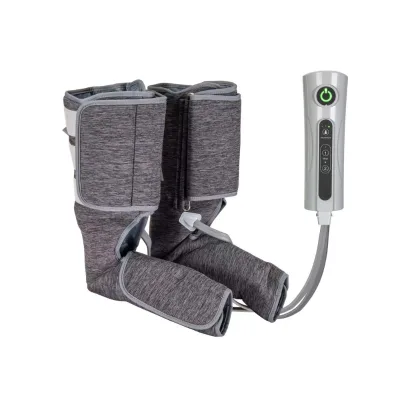
The physical configuration of the massager is another vital technical consideration. Products are often categorized by their application area, such as leg, arm, or waist systems. The observed product models include specific configurations like "foot and leg massager" and "Air Leg Massager," with cuff materials typically made from TPU (Thermoplastic Polyurethane) for durability and comfort. The sizing of these cuffs is crucial for user compatibility; leg sizes have been observed ranging from 91cm to 125cm, while arm sizes vary between 87cm and 90cm. The number of compression chambers also varies, with some systems featuring 6-chamber sleeves to ensure a sequential compression effect that mimics a professional massage.
Compliance, Certification, and Regulatory Standards
Navigating the regulatory landscape is essential for importing and distributing medical or wellness devices. The supplied product facts highlight several certifications that are frequently associated with these devices, including FDA, ISO, and CE marks. Specifically, the data references "ISOCE" and "Certificate: ISO CE FDA," indicating that compliant products often hold multiple certifications simultaneously. Buyers should treat these as indicators of a supplier's commitment to quality but must verify the validity of each certificate for the specific market of destination.
The standard certifications mentioned in the context include ISO 13485 for medical device quality management and IEC60601 for electrical safety, though these are listed as background knowledge rather than explicit claims for every listed product. Therefore, procurement teams must request current, valid certificates from suppliers rather than assuming compliance based on general market trends. The presence of FDA certification is particularly significant for the North American market, while CE marking is mandatory for the European Union. Additionally, standards such as ISO10993 for biocompatibility may be relevant if the device involves prolonged skin contact, though this requires specific verification from the manufacturer.
It is important to distinguish between general wellness claims and medical device classifications. While some products are marketed for "improving blood circulation," the regulatory status depends on the intended use claims made by the manufacturer. Buyers should ensure that the supplier provides documentation that aligns with the regulatory requirements of the target country. The absence of specific certification claims in a product listing should not be interpreted as a lack of compliance, but rather as a need for direct inquiry and document verification.
Cost Drivers and Pricing Dynamics
The pricing of heating air compressor massagers is influenced by a complex interplay of factors, including the complexity of the air compression system, the inclusion of heating elements, and the quality of materials used. The observed price range for these products spans from $14 to $188 USD, a wide spectrum that reflects the diversity in product tiers. Lower-priced units may be basic models with fewer chambers, no heating capability, or simpler packaging, while higher-priced units likely feature advanced controls, multiple heating modes, and premium materials.
Minimum Order Quantity (MOQ) is another significant cost driver. The observed MOQ range is between 1 and 1000 units, offering flexibility for both small startups and large distributors. However, the unit price often decreases as the order volume increases. Buyers should analyze the total cost of ownership, which includes not only the unit price but also shipping, tariffs, and potential customization costs. Customization options, such as branding on the device or packaging, are available and can impact the final cost. The "Customized" attribute suggests that suppliers are willing to tailor products, but this typically requires higher MOQs and longer lead times.
Packaging also plays a role in cost. Products are observed to come in various packaging types, including cartons, color boxes, carry bags, and backpacks. The choice of packaging affects the unit weight and volume, which directly influences shipping costs. For instance, a product packaged in a backpack may have different logistical requirements compared to one in a standard carton. Buyers should request detailed packaging specifications to accurately calculate freight costs and ensure the product arrives in optimal condition.
Typical Applications and Target Markets
The versatility of heating air compressor massagers allows them to serve a broad range of applications. The primary use cases identified include residential use and commercial use. In a residential setting, these devices are marketed towards individuals seeking relief from leg fatigue, improved circulation, or post-exercise recovery. The compact nature of many models, with weights as low as 0.65kg, makes them suitable for home environments.
Commercial applications are equally significant. These devices are increasingly found in hotels, spas, physiotherapy clinics, and wellness centers. The ability to treat multiple body parts, including legs, arms, and waists, makes them adaptable to various therapeutic protocols. The "Air Compression Leg Massager Pants" and similar systems are designed for professional use where durability and consistent performance are paramount. The treating time options, which range from 10 to 60 minutes, allow for customization based on the specific needs of the user or the protocol of the facility.
The target demographic is primarily adults, as indicated by the "Group: Adult" attribute. However, the specific sizing of the cuffs (e.g., sizes L, M, XL, XXL) ensures that a wide range of body types can be accommodated. This inclusivity is a key selling point for B2B buyers looking to serve diverse customer bases. The modes of operation, often ranging from 5 to 6 distinct modes (labeled A through G in some models), provide users with the ability to select different compression patterns and intensities, enhancing the therapeutic experience.
Supplier Evaluation and Quality Assurance
Evaluating suppliers for heating air compressor massagers requires a rigorous assessment of their manufacturing capabilities and quality control processes. The origin of these products is predominantly China, a major hub for electronics and medical device manufacturing. Buyers should verify the supplier's production capacity and their ability to maintain consistent quality across large batches. The "Standard Set" attribute, which often includes "1 machine + 2 leg" units, indicates that suppliers should provide complete kits rather than just the main unit.
Quality control should focus on the durability of the TPU material, the reliability of the electric heating elements, and the precision of the air pressure system. The pressure range is a critical specification, with observed values ranging from 30-250mmHg and 60-160mmHg depending on the model. Buyers must ensure that the supplier can consistently meet these pressure specifications and that the devices have appropriate safety mechanisms to prevent over-pressurization. The noise level is another factor that affects user experience, and suppliers should provide data on the acoustic performance of their units.
Certification verification is a non-negotiable part of the supplier evaluation process. Buyers should request copies of current FDA, ISO, and CE certificates and verify their authenticity with the issuing bodies. The presence of "ISOCE" in the data suggests that some suppliers may bundle certifications, but each must be valid for the specific product model. Additionally, suppliers should be able to provide test reports for electrical safety and biocompatibility if the product is intended for medical use.
Long-Term Procurement and Strategic Considerations
For B2B buyers, long-term procurement strategies should focus on building relationships with suppliers who can support scalability and continuous improvement. The availability of customization options, such as branding and packaging, allows buyers to differentiate their products in the market. However, these customizations often require longer lead times and higher initial investments. Buyers should plan their inventory accordingly to avoid stockouts during peak demand periods.
The evolution of technology in this sector is rapid, with new features like USB charging and rechargeable power supplies becoming more common. While the observed data includes models with "Without USB" and "Rechargeable" power supplies, the trend is toward more versatile power options. Buyers should stay informed about technological advancements and consider future-proofing their product lines. The "Mode Type" variations, such as A, B, C, D, E, F, G, suggest that software and control logic are areas of ongoing development.
Sustainability is also becoming a key consideration in procurement. The materials used, such as TPU and plastic, should be evaluated for their environmental impact. Buyers should inquire about the recyclability of the product components and the packaging materials. The "prod_packing" attributes, including color boxes and carry bags, offer opportunities to reduce waste through eco-friendly design choices.
In conclusion, sourcing heating air compressor massagers requires a comprehensive understanding of technical specifications, regulatory requirements, and market dynamics. By focusing on verified certifications, robust quality control, and strategic supplier relationships, B2B buyers can successfully navigate this complex market and deliver high-value products to their customers. The wide range of observed specifications and price points offers ample opportunity for differentiation, provided that buyers maintain a disciplined approach to due diligence and compliance.
FAQs
What certifications do heating air compressor massagers typically have?
These devices often hold FDA, ISO, and CE certifications. Buyers must verify specific certificates for their target market, as compliance varies by model and region.
How does the heating mode function in these massagers?
Electric heating is a standard feature with temperatures ranging from 50°C to 60°C. This thermal function relaxes muscles while air pressure stimulates circulation.
Which pressure ranges are available for leg massager systems?
Observed pressure ranges vary between 30-250mmHg and 60-160mmHg depending on the specific model. Users should select a device that matches their therapeutic needs.
Can these massagers be customized for branding and packaging?
Yes, customization is available for branding and packaging options like color boxes or backpacks. Custom orders typically require higher minimum order quantities and longer lead times.
What power consumption levels are common for these units?
Power consumption ranges from 14W to 26W depending on the model and heating features. Some units use DC12V power supplies while others may be rechargeable.
How many compression chambers do these air massagers include?
Systems often feature 6-chamber sleeves to ensure sequential compression. This design mimics professional massage techniques for improved blood flow and muscle recovery.