Source Transparent Polished Crystal Award for Souvenirs, Gifts, and Collections
Find 30 Transparent Polished Crystal Award options for souvenirs, business gifts, and art collections. Compare models like LSCT-027 and HLY0013, noting materials such as K9 crystal and artificial crystal, along with customization and engraving services.
Key considerations
Products List


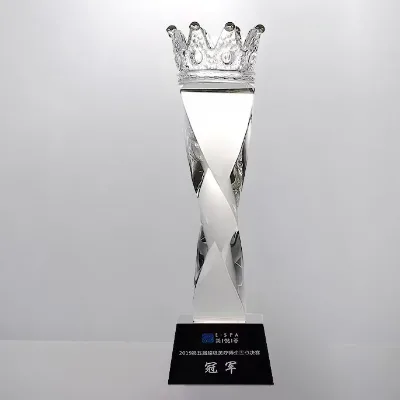

Symbol of Honor Custom Stereoscopic Transparent Crystal Glass Award Trophy
$5.00 - $30.00
MOQ: 20 Pieces


Comprehensive Sourcing Guide
Transparent Polished Crystal Award Sourcing Guide
Sourcing transparent polished crystal awards requires a disciplined approach to distinguishing between generic glass and high-clarity K9 or artificial crystal materials. The market offers a wide array of options ranging from standard souvenir items to high-end art collections, with specific product models like LSCT-027 and HLY0013 indicating distinct design variations. Buyers must prioritize the clarity grade, observing that some listings specify VVS (Very Very Slightly Included) clarity while others simply note a transparent appearance, which directly impacts the perceived value and light-refracting quality of the final trophy.
The procurement process is further complicated by the diverse customization capabilities available, including sandblasting, 3D laser engraving, and various printing techniques. While the core material is consistently identified as either Artificial Crystal or K9 Crystal, the finishing techniques such as polishing are critical for achieving the desired aesthetic. Understanding these material and finish distinctions is essential before engaging with suppliers, as the choice between a standard gift box and a customized package can significantly alter the presentation and perceived prestige of the award.
Product Scope and Observed Listing Signals
The product scope for transparent polished crystal awards spans multiple usage categories, including souvenirs, home decoration, holiday gifts, and business recognition. Listings indicate that these items are frequently marketed as trophies or art collections, with specific models like DT-R202 and AWT-210 serving different market segments. The observed range of applications suggests that buyers should verify the intended use case, as a trophy designed for a corporate business gift may require different structural integrity and branding options compared to a souvenir intended for holiday distribution.
Listing signals reveal significant variation in minimum order quantities (MOQ), ranging from as low as 2 pieces to 100 pieces, with some specific models requiring a baseline of 50 pieces. This disparity in commercial thresholds means that small-batch buyers must identify suppliers capable of handling low-volume orders, while larger procurement teams can leverage higher volume tiers for better unit economics. Additionally, the presence of specific model numbers and size standards, such as 228cm or 195160*40mm, provides concrete data points for verifying that the supplier's catalog aligns with the physical dimensions required for the event or award ceremony.
Technical Specifications to Verify
Verifying the technical specifications of crystal awards begins with confirming the material composition, as the distinction between K9 Crystal and general Artificial Crystal affects both weight and optical clarity. Buyers should request detailed material certificates or samples to ensure the product meets the VVS clarity standard observed in high-end listings, rather than accepting generic transparent descriptions that may imply lower quality glass. The polishing technique is another critical specification, as it determines the surface finish and the ability of the crystal to refract light effectively, which is a primary aesthetic driver for trophy buyers.
Dimensional accuracy and standardization are equally vital, with observed standards ranging from specific centimeter measurements like 17.515cm to complex millimeter-based profiles such as 215172*40mm. Procurement teams must cross-reference the requested dimensions against the supplier's standard offerings, noting that some models are defined by fixed sizes while others offer customization. Furthermore, the logo application method, whether through sandblasting, 3D laser engraving, or print, must be validated against the material hardness to ensure the branding remains durable and does not compromise the structural integrity of the crystal.
Compliance and Safety Documentation
While the supplied data does not explicitly list specific safety test results, buyers must ensure that the crystal awards comply with general safety standards for glass and crystal products intended for human interaction. The origin locations, including Zhejiang, China, and Yangzhou, suggest a manufacturing base that should adhere to local export regulations, but international buyers should verify that the products meet destination-specific safety requirements for glassware. This includes checking for lead content limits if the crystal is intended for use in environments where food or drink might be served, although these awards are primarily decorative.
Documentation regarding the packaging and shipping methods is also a key component of compliance, as the fragile nature of crystal requires robust protection to prevent damage during transit. The observed packing options, ranging from standard gift boxes to carton boxes and customized packages, must be evaluated for their ability to withstand the rigors of air, sea, or courier shipment. Buyers should request proof of packaging testing or damage rates from previous shipments to ensure that the supplier's logistics partners can deliver the awards in pristine condition, minimizing the risk of returns and replacement costs.
Cost Drivers and Commercial Terms
The cost of transparent polished crystal awards is driven by several factors, including the material grade, the complexity of the customization, and the chosen shipping method. The observed price range of 2 to 45 USD reflects the spectrum from simple, unbranded items to highly customized, large-scale trophies with intricate laser engraving. Buyers should analyze the cost structure to understand how much of the price is attributed to the raw material versus the value-added services like 3D laser engraving or specialized packaging, ensuring that the budget aligns with the desired quality level.
Commercial terms such as payment methods and minimum order quantities play a significant role in the overall procurement strategy. The availability of payment options like T/T, Western Union, and Paypal offers flexibility, but buyers must assess the security and convenience of each method relative to their internal financial policies. Additionally, the MOQ of 50 pieces for some models versus 2 pieces for others dictates the inventory strategy; buyers with fluctuating demand may prefer suppliers with lower MOQs to reduce holding costs, while those with stable, high-volume needs can negotiate better pricing tiers.
Supplier Qualification and Quality Control
Supplier qualification for crystal awards requires a thorough vetting of their manufacturing capabilities, particularly regarding their ability to maintain consistent clarity and polishing standards across large batches. The presence of multiple product models and origin locations, such as Baoying and Yangzhou, indicates a supply chain that may involve different production facilities. Buyers should verify that the specific facility producing their order has the necessary equipment for high-precision laser engraving and polishing to ensure that the final product matches the visual samples provided.
Quality control processes must be explicitly defined, focusing on the inspection of clarity, surface finish, and the accuracy of the logo application. Since the observed standards include specific dimensions and clarity grades like VVS, the supplier should have a documented QC protocol that checks these attributes before packaging. Buyers should request a quality control report or a sample inspection process to confirm that the supplier can consistently deliver products that meet the specified technical requirements, reducing the risk of receiving substandard awards that could damage the reputation of the awarding organization.
Long-Term Procurement Checks
Establishing a long-term procurement relationship for crystal awards involves regular performance reviews of the supplier's ability to meet delivery timelines and maintain quality consistency. The observed lead times and shipping methods, including air, sea, or courier, should be monitored to ensure that the supplier can adapt to changing logistical needs and urgent order requirements. Buyers should track the supplier's performance against key metrics such as on-time delivery rates and the frequency of quality issues to identify any trends that might indicate a need for process improvements or supplier changes.
Continuous improvement in the product line is another critical aspect of long-term procurement, as the market for awards evolves with new design trends and customization technologies. Buyers should engage with suppliers to explore new models, such as the various LSCT and HTH series, to ensure that the award offerings remain fresh and relevant. By maintaining open communication and regularly reviewing the supplier's catalog and capabilities, procurement teams can ensure that their crystal awards continue to meet the evolving needs of their organization and the expectations of their recipients.
FAQs
What customization options are available for the crystal trophy?
Customization is available for this artificial crystal trophy. You can choose from sandblasting, 3D laser engraving, or print techniques to add your logo. The product standard is fully customized to meet specific buyer requirements for souvenirs or business gifts.
Which models are available for the Transparent Polished Crystal Award?
Several models are available including LSCT-027, LSCT-049, LSCT-006, and HLY0013. These models come in various sizes such as 150mm, 180mm, 210mm, and specific dimensions like 29.5 by 8cm. Each model supports different usage scenarios like holiday gifts or art collections.
Can I order small quantities of the crystal trophy?
Yes, you can order small quantities as the minimum order quantity ranges from 2 to 100 pieces depending on the specific model. Some items like the crown crystal trophy have an MOQ of just 2 pieces, while others may require 50 pieces for production.
How is the crystal trophy packed for shipment?
The crystal trophy is typically packed in a gift box or a carton box. Some models offer customized packaging options to suit your needs. This ensures the Transparent Polished Crystal Award arrives safely for use as a souvenir, home decoration, or business gift.
What payment methods are accepted for the crystal award?
Accepted payment methods include T/T, Western Union, and Paypal. These options provide flexibility for international buyers sourcing from manufacturers in Zhejiang or Yangzhou, China. Payment terms are standard for B2B transactions involving artificial crystal or K9 crystal products.
Where are the crystal trophy manufacturers located?
Manufacturers are located in Zhejiang, China, Yangzhou, and Baoying, China. These regions are known for producing high-quality artificial crystal and K9 crystal trophies. The products are shipped via air, sea, or courier to global destinations for various award and collection purposes.
What is the clarity rating of the crystal material?
The crystal material features high clarity ratings such as IColor Transparent and VVS. Made from artificial crystal or K9 crystal, the product is polished to ensure transparency. This makes it ideal for use as a trophy, souvenir, or art collection piece.