Source Heavy-Duty 4000psi Pressure Washer Pump for Industrial, Car Washing, Floor Clean
Source 30 Heavy-Duty 4000psi Pressure Washer Pump options from verified Chinese manufacturers. Buyers can compare specifications including pressure ratings, flow rates, and pump structures to find suitable units for industrial, car washing, and floor cleaning applications.
Key considerations
Products List


40000psi Heavy Duty High-Pressure Washer & Pumps for Heat Exchanger Cleaning
$15000.00 - $90000.00
MOQ: 1 Pieces


2000bar Industrial Diesel Power High Pressure Pump & High Pressure Washer
$15000.00 - $90000.00
MOQ: 1 Pieces


1400bar Diesel/Electric High Pressure Pump for Pressure Washer System
$15000.00 - $45000.00
MOQ: 1 Sets


1000bar Diesel Driven Washer High Pressure Water Washer High Pressure Pump for Sale
$15000.00 - $45000.00
MOQ: 1 Sets

20000psi High Pressure Pump/Water Blaster Pump for Cleaning Sewer Lines
$15000.00 - $45000.00
MOQ: 1 Pieces
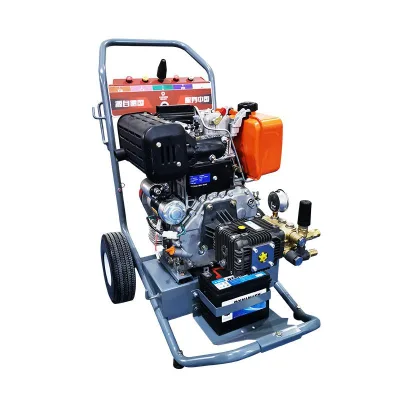


New Cleaning Machine Car Washer Pump 280bar Large Engine High Pressure Cleaner
$500.00 - $850.00
MOQ: 1 Pieces

Car Washer Cleaning 170bar High Pressure Washer Pump Engine for The Car
$112.00 - $138.00
MOQ: 5 Pieces


Comprehensive Sourcing Guide
Strategic Sourcing Guide for Heavy Duty 4000psi Pressure Washer Pumps
Technical Specifications and Performance Verification
When sourcing a heavy-duty 4000psi pressure washer pump, buyers must first establish a clear baseline for technical performance. The term "4000psi" translates to approximately 276 bar, which serves as a critical benchmark for the maximum operating pressure required for industrial and heavy-duty applications. However, the supplied product data indicates a diverse range of pressure capabilities, with observed maximum pressures ranging from 105-139 bar up to 180 bar in specific listings. This discrepancy highlights the necessity for buyers to verify that the specific unit selected meets the 276 bar requirement, as many standard models in the market may operate at lower pressures suitable for lighter tasks.
The flow rate is equally critical. The observed data shows a flow range of 26-40 liters per minute (lpm) for certain high-pressure units, while other entries list a maximum output water flow of 25 lpm. For a true heavy-duty application, the pump must balance high pressure with sufficient volume to maintain cleaning efficiency. Buyers should scrutinize the "Output Water Flow" specifications to ensure the unit does not suffer from cavitation or insufficient cleaning power at the target pressure. Additionally, the driving type is predominantly listed as "Motor" or "Electric," indicating that these units are designed for continuous operation rather than manual or hydraulic drive systems. The structure of the pump is another vital factor; the data reveals both "Single-stage Pump" and "Radial Plunger Pump" configurations. For 4000psi applications, a Radial Plunger Pump is generally preferred due to its ability to handle higher pressures and provide a more consistent flow compared to single-stage centrifugal designs.
The nozzle type also dictates the application's effectiveness. The observed market includes both "Fan-Shaped Nozzle" and "Round Water Column Nozzle" options. A fan-shaped nozzle is typically required for broad surface cleaning, while a round column nozzle is better suited for spot cleaning or cutting through tough stains. Buyers must ensure the pump's output pressure is compatible with the intended nozzle type to prevent equipment damage or ineffective cleaning. Furthermore, the "Condition" of the product is consistently listed as "New," which is a standard expectation for industrial procurement, but buyers should verify the "Service Life" claims, with some data suggesting a potential lifespan of 30,000 hours for specific pump assemblies, provided they are maintained correctly.
Compliance, Certification, and Safety Standards
Navigating the regulatory landscape is essential for international procurement. The supplied facts confirm the presence of CE certification and ISO 9001:2015 certification for certain products in the category. These certifications are not merely marketing terms but indicate that the manufacturing processes and product safety have been audited against European standards and international quality management systems. For a heavy-duty pump intended for industrial use, the CE mark is often a mandatory requirement for entry into the European market, ensuring compliance with machinery directives and low-voltage safety standards.
However, the presence of these certifications in the general product list does not guarantee that every specific unit meets these standards. Buyers must explicitly request the certificate of conformity for the specific model number they intend to purchase. The data also mentions a "Protection Level" of IP68 for certain pump assemblies. This rating signifies that the unit is dust-tight and can be immersed in water beyond 1 meter, which is a significant advantage for pumps used in wet environments or submersible applications. Buyers should verify if the specific 4000psi pump they are sourcing carries this IP68 rating, as many standard industrial pumps may only be rated IP54 or IP55.
In addition to electrical and mechanical safety, the "Standard" specifications for the product dimensions are listed as 460x280x310mm for certain models. While this is a specific observation, it underscores the importance of verifying physical dimensions to ensure the pump fits within the designated machinery housing or transport container. The "Origin" of the products is consistently listed as China, with specific mentions of Zhejiang, China (Mainland). While this provides a geographic context, buyers should not assume that all products from this region automatically meet specific international safety standards without individual verification. The "Industry" classification for some pumps is listed as "Air Conditioning Pump" or "Submersible Pump," which suggests that the market includes specialized variants. Buyers must ensure the pump selected is specifically rated for "High Pressure Cleaner" applications and not a general-purpose pump repurposed for cleaning, as the internal tolerances and materials differ significantly.
Cost Drivers and Pricing Dynamics
The pricing landscape for heavy-duty pressure washer pumps is highly variable, with observed listed prices ranging from $4 to $90,000 USD. This wide range reflects the disparity between small, low-power units and large, industrial-grade systems. For a buyer targeting a 4000psi pump, the lower end of this spectrum likely represents smaller, less durable units or components, while the higher end may include complete systems with advanced controls or specialized materials. The "MOQ" (Minimum Order Quantity) ranges from 1 to 50 units, offering flexibility for both small-scale procurement and large industrial contracts.
Several factors drive the cost of these pumps. First, the material composition is a primary cost driver. Heavy-duty pumps designed for 4000psi often require high-grade brass, stainless steel, or ceramic components to withstand the intense pressure and prevent corrosion. Second, the complexity of the pump design, such as the "Radial Plunger Pump" versus "Centrifugal Pump," significantly impacts the price. Plunger pumps generally command a higher price due to their precision engineering and ability to handle higher pressures. Third, the "Customization" options available, such as OEM and ODM acceptance, add to the cost. Buyers seeking specific branding, custom packaging, or modified specifications should anticipate a price premium over standard off-the-shelf models.
The "Packing" method also influences the final cost. Options range from "Carton Box" and "Carton" to "Wooden Case" and "Standard Export Packing." Wooden cases provide superior protection for heavy, high-value pumps during international shipping but add to the overall cost. Additionally, the "Service Life" and "Performance" claims, such as the "Wear Pump" designation, suggest that higher-quality pumps with longer lifespans will have a higher upfront cost but a lower total cost of ownership over time. Buyers should evaluate the total cost of ownership, including maintenance, spare parts availability, and energy consumption, rather than focusing solely on the initial purchase price.
Typical Applications and Operational Context
Understanding the intended application is crucial for selecting the right pump. The observed data lists applications ranging from "Home Cleaning, Car Washing, Floor Clean, Remove Stain" to broader "Industrial" uses. While 4000psi pumps are versatile, they are particularly effective in industrial settings where heavy soil, grease, and industrial residues are common. The "Operation Type" is listed as "Movable," indicating that these units are designed for portability, allowing operators to move the equipment to different work sites. This is a key feature for cleaning large facilities, construction sites, or agricultural equipment.
The "Usage" categories highlight the versatility of these pumps. For instance, "Car Washing" and "Floor Clean" suggest that the pump can be used in commercial cleaning services, while "Remove Stain" implies effectiveness on tough, adhered contaminants. The "Type" of cleaner is specified as both "Hot Water High Pressure Cleaner" and "Cold Water High Pressure Cleaner." Hot water systems are generally more effective for removing oil and grease, which are common in industrial environments, while cold water systems are suitable for general dirt and dust removal. Buyers must determine whether their specific application requires the added efficiency of hot water or if a cold water system suffices.
The "Assembly" type is listed as "Liquid Pumps," and the "Theory" is described as "Centrifugal Pump" for some models, though others are "Radial Plunger Pump." This distinction is vital for application matching. Centrifugal pumps are typically used for high-flow, lower-pressure applications, whereas radial plunger pumps are ideal for the high-pressure, lower-flow requirements of 4000psi cleaning. The "Structure" being "Single-stage" or "Multi Cylinder" also affects the application. Multi-cylinder pumps provide smoother flow and higher pressure stability, making them better suited for continuous, heavy-duty industrial use.
Supplier Evaluation and Selection Criteria
Evaluating suppliers for heavy-duty pressure washer pumps requires a rigorous approach to ensure reliability and quality. The data indicates that "OEM & ODM" services are accepted, suggesting that many suppliers are capable of custom manufacturing. Buyers should prioritize suppliers who demonstrate transparency in their manufacturing processes and provide detailed technical documentation. The "Customization" availability, including both "Customized" and "Non-Customized" options, allows buyers to tailor the product to their specific needs, but it also requires careful management of the specification process to avoid errors.
The "Origin" of the products, specifically "China" and "Zhejiang, China (Mainland)," provides a geographic context but does not guarantee quality. Buyers should verify the supplier's track record, including their experience with international clients and their ability to meet specific certification requirements like CE and ISO 9001:2015. The "Condition" of the product being "New" is a baseline expectation, but buyers should also inquire about the supplier's quality control processes and their history of handling returns or defects.
A critical aspect of supplier evaluation is the "Product Packing" and logistics capability. Suppliers offering "Standard Export Packing" or "OEM Packing" demonstrate an understanding of international shipping requirements, which is essential for protecting high-value equipment during transit. The "Lead Time" and "MOQ" are also important factors; while the observed MOQ ranges from 1 to 50, buyers should negotiate terms that align with their inventory management strategies. Additionally, the "Service Life" claims, such as the 30,000-hour figure, should be backed by warranty terms and after-sales support. Buyers should assess the supplier's ability to provide spare parts and technical support over the long term.
Quality Control and Long-Term Procurement Considerations
Ensuring the quality of heavy-duty pressure washer pumps requires a robust quality control (QC) strategy. The "Protection Level" of IP68 and the "Certification" of CE and ISO 9001:2015 are strong indicators of quality, but buyers should not rely solely on these labels. Instead, they should implement a multi-stage QC process that includes pre-shipment inspections, material verification, and performance testing. The "Work Pressure" range of 105-139 bar and "Max. Pressure" of 172 bar observed in the data suggest that buyers must verify the actual pressure ratings of the specific unit to ensure they meet the 4000psi requirement.
Long-term procurement considerations extend beyond the initial purchase. The "Service Life" of the pump, potentially up to 30,000 hours, is a key metric for evaluating the durability of the product. Buyers should inquire about the maintenance requirements and the availability of replacement parts, such as seals, valves, and nozzles. The "Structure" of the pump, whether "Single-stage" or "Radial Plunger," also influences maintenance needs. Radial plunger pumps, for instance, may require more frequent inspection of the plunger and cylinder components to ensure optimal performance.
The "Customization" aspect offers opportunities for long-term optimization. Buyers can work with suppliers to develop pumps that are specifically tailored to their operational environment, such as enhanced corrosion resistance for marine applications or specialized cooling systems for high-temperature environments. The "OEM & ODM" acceptance by suppliers allows for branding and design modifications that can enhance the product's marketability and operational efficiency. However, buyers must ensure that any customization does not compromise the structural integrity or safety of the pump.
Finally, the "Standard" dimensions and "Packing" methods should be considered in the context of long-term logistics. Consistent packaging standards facilitate easier storage and handling, while standardized dimensions ensure compatibility with existing machinery and transport systems. By focusing on these long-term factors, buyers can build a sustainable procurement strategy that minimizes downtime and maximizes the return on investment for their heavy-duty pressure washer pump assets.
| Feature | Observation from Data | Procurement Verification Requirement |
|---|---|---|
| Max Pressure | 172 bar (observed), 180 bar (observed) | Verify specific unit reaches 276 bar (4000 psi) |
| Flow Rate | 26-40 lpm, Max 25 lpm | Confirm flow matches cleaning efficiency needs |
| Certification | CE, ISO 9001:2015 | Request valid certificates for specific model |
| Protection | IP68 (observed) | Verify IP rating for intended wet/dry environment |
| Pump Type | Radial Plunger, Centrifugal, Single-stage | Select Radial Plunger for high-pressure durability |
| Origin | China, Zhejiang | Assess supplier reputation and export experience |
| Customization | Available, OEM/ODM Accepted | Define clear specs to avoid manufacturing errors |
| Packing | Carton, Wooden Case, Standard Export | Ensure packaging protects high-value equipment |
FAQs
What certifications do heavy duty 4000psi pressure washer pumps have?
These pumps often carry CE certification and ISO 9001:2015 standards for quality management. Buyers must verify specific model certificates as not all units automatically include these marks despite general listings.
How does the pump structure affect 4000psi performance?
Radial plunger pumps are preferred for high pressure compared to single-stage centrifugal designs. The multi-cylinder structure provides smoother flow and better stability for continuous industrial cleaning applications.
Can I find pumps with IP68 protection level?
Yes, some pump assemblies feature an IP68 protection level for dust tightness and water immersion. This rating is critical for submersible applications but requires verification against specific product specifications.
What is the typical flow rate for these high pressure units?
Observed flow rates range from 26 to 40 liters per minute for high pressure models. Some specific listings indicate a maximum output water flow of 25 liters per minute for certain configurations.
Which nozzle types are compatible with heavy duty cleaners?
Both fan-shaped nozzles and round water column nozzles are available in the market. The fan type suits broad surface cleaning while the round column is better for spot cleaning or stain removal.
Are customization options available for these pressure washer pumps?
Customization is available with OEM and ODM services accepted by many manufacturers. Buyers can request specific branding or packaging, though some standard models remain non-customized.
What is the expected service life of these industrial pumps?
Certain pump assemblies claim a service life of up to 30,000 hours with proper maintenance. This longevity depends on the specific construction materials and operating conditions within the industrial environment.