Source Heavy Duty Adjustable Weight Stack for Gym, Home, and Park
Compare 30 verified listings for Heavy Duty Adjustable Weight Stack options suitable for commercial gyms, home setups, and community parks. Buyers can evaluate steel construction, customization availability, and delivery timelines from Chinese manufacturers.
Key considerations
Products List





Comprehensive Sourcing Guide
Strategic Sourcing Guide for Heavy Duty Adjustable Weight Stacks
Understanding Technical Specifications and Material Integrity
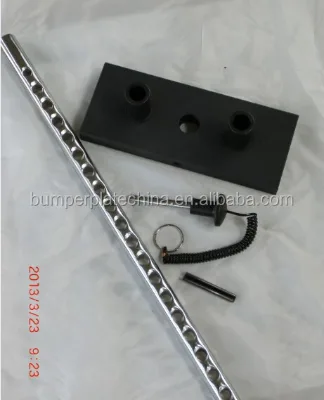
When sourcing heavy-duty adjustable weight stacks, the primary focus must be on the structural integrity and material composition that define the equipment's longevity and safety. Based on the available product data, the core material for these units is consistently identified as steel. This choice is critical for heavy-duty applications where the equipment must withstand significant repetitive loading without deformation. The steel components are typically finished with a powder-coated paint layer, which serves a dual purpose: protecting the metal from corrosion in humid gym environments and providing a durable aesthetic finish that resists chipping.
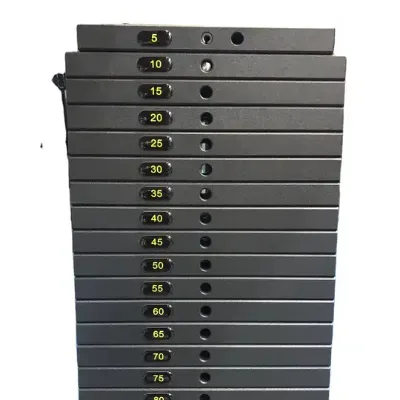
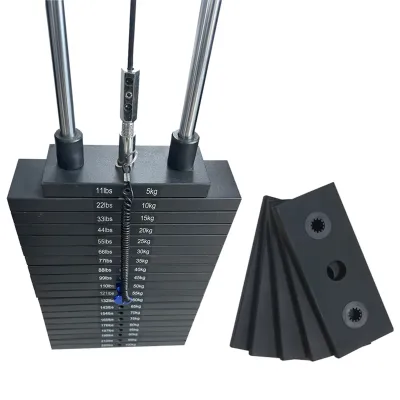
The physical dimensions and weight capacities are vital parameters for procurement. The observed specifications indicate a range of weight options, specifically listing individual plate weights of 5kg, 10kg, 15kg, and 20kg, with total unit weights varying significantly from 150kg to 500kg, and in some heavy-duty configurations reaching up to 2000kg. This variance suggests that buyers must clearly define their intended load requirements before engaging with suppliers. The standard dimensions for the plates are noted as 25.4mm in thickness and 101.6mm in width, a specification that ensures compatibility with standard guide rods and pulley systems.
Mobility and adjustability are key functional attributes for modern weight stacks. The observed product attributes highlight features such as adjustable, combined, and rotary mobility, allowing the equipment to be reconfigured for different exercises or user heights. The closure mechanisms are described as available in closed, open, or semi-closed configurations, which impacts the safety profile and the ease of loading plates. Furthermore, the guide holes and center distances are not fixed; they are customizable according to the buyer's specific engineering requirements, necessitating a detailed technical dialogue during the sourcing phase to ensure the final product fits the intended facility layout.
Compliance, Certification, and Safety Standards
In the B2B procurement of fitness equipment, compliance with international safety and quality standards is non-negotiable. The observed product data confirms that suppliers in this sector often hold multiple certifications, including CE, ISO, and RoHS. The CE marking indicates conformity with health, safety, and environmental protection standards for products sold within the European Economic Area. The ISO certification, specifically ISO9001 mentioned in the data, validates that the manufacturer has a quality management system in place to ensure consistent product quality and operational efficiency. Additionally, RoHS compliance ensures that the materials used do not contain hazardous substances, which is increasingly important for global supply chains.
Beyond the certifications listed, buyers must verify the HS code classification for import purposes. The data points to HS code 95069190, which categorizes these items under sports equipment, specifically general sports goods. Correct classification is essential for accurate duty calculation and customs clearance. The standard for these products is often referenced as "PCS" (pieces), but the specific manufacturing standard for the steel plates is defined by the thickness and width measurements (25.4mm x 101.6mm).
It is crucial for buyers to understand that while certifications like CE and ISO9001 are observed in the market, they are not universal guarantees for every single unit listed. Buyers should request valid, up-to-date certification documents from the specific supplier they are evaluating. The "Good for Body Building" and "Perfect" effectiveness claims found in product descriptions should be treated as marketing observations rather than verified performance metrics. Instead, procurement teams should rely on the physical certifications and material specifications to assess safety and quality.
Cost Drivers and Pricing Dynamics
The pricing structure for heavy-duty adjustable weight stacks is influenced by several variables, including material costs, customization levels, and order volume. The observed price range in the market spans from $1.05 to $1,350 USD. This wide disparity is likely due to the difference between individual components, such as single weight plates, and complete, fully assembled gym units. The lower end of the spectrum may represent accessories or smaller components, while the higher end reflects comprehensive systems with advanced mobility features and heavy-duty frames.
A significant cost driver is the level of customization. The data indicates that customization is available, including customized logos, specific dimensions for guide holes, and tailored center distances. OEM and ODM services are explicitly offered, meaning buyers can have the equipment branded as their own or engineered to specific design specifications. These customizations inevitably increase the unit cost and may affect the minimum order quantity (MOQ). The observed MOQ ranges from 1 unit to 2,000 units, suggesting that suppliers are flexible but may offer better pricing tiers for larger volumes.
Supply chain logistics also play a role in the final landed cost. The products originate from Shandong, China, with a primary dispatch port in Qingdao. Buyers must factor in shipping costs, insurance, and potential tariffs. The production capacity is substantial, with some suppliers reporting a daily capacity of 5,000 pieces and a monthly supply ability of 100,000 tons. This high capacity suggests that supply shortages are less likely, but lead times must be carefully managed. The observed delivery time is around 20 days, with a load time of 7 days, though these figures can vary based on the complexity of the order and current factory schedules.
Typical Applications and Usage Scenarios
Heavy-duty adjustable weight stacks are designed for versatility, making them suitable for a wide array of environments. The product attributes list applications in homes, gymnasiums, parks, and community centers. This broad applicability means that the equipment must be robust enough for high-traffic commercial use while also being safe and user-friendly for individual home users. The target audience is universal, with the equipment being unisex and suitable for adults.
The primary function of these units is body building and arm exercise, focusing on strength training. The "Exercise Part" is specifically noted as the arm, indicating that these stacks are often used in conjunction with pulley systems for tricep extensions, bicep curls, and other upper-body resistance exercises. However, the "Function" is also broadly categorized as "Body Building Arm Exercise" and "Strength Exercise," implying their utility in comprehensive fitness routines.
The packaging details provide insight into how the equipment is prepared for transport and installation. The standard packaging involves bubble wrap, cartons, wooden pallets, and rope, ensuring that the steel components are protected during transit. The units are often packed in quantities of 5 pieces per carton, which facilitates handling and inventory management. For large-scale installations in parks or community centers, the "Folded" attribute indicates that some models may be delivered in an unfolded state, requiring on-site assembly, while others might offer modular designs for easier transport.
Supplier Evaluation and Capacity Assessment
Selecting the right supplier requires a rigorous evaluation of their production capabilities and operational history. The data indicates that suppliers are located in Shandong, China, a region known for its manufacturing base. When evaluating potential partners, buyers should verify the supplier's actual production capacity against their claims. For instance, a reported capacity of 5,000 pieces per day and a monthly supply ability of 100,000 tons are significant metrics that suggest the supplier can handle large orders without compromising on delivery schedules.
The ability to handle small orders is another critical factor. The data confirms that small orders are accepted, which is beneficial for buyers testing the market or those with limited initial budgets. However, the MOQ can go up to 2,000 units, so buyers must clarify the specific thresholds for their desired customization level. The availability of OEM/ODM services allows for branding and design flexibility, but it requires a higher level of trust and communication with the supplier.
Buyers should also assess the supplier's logistical capabilities. With a dispatch port in Qingdao, the supplier has access to major shipping lanes, which is advantageous for international buyers. The lead time of 20 days is a standard benchmark, but buyers should confirm if this includes the 7-day load time or if it is an additional factor. Consistency in quality is paramount, and the presence of ISO9001 certification is a strong indicator of a supplier's commitment to quality control processes.
Quality Control and Long-Term Procurement Considerations
Ensuring the long-term reliability of heavy-duty weight stacks requires a proactive approach to quality control. The steel construction and powder-coated finish are the first lines of defense against wear and tear. Buyers should request samples or detailed specifications regarding the thickness of the steel and the quality of the powder coating to ensure they meet the required durability standards. The "Perfect" effectiveness claim should be validated through independent testing or third-party reviews rather than accepted at face value.
For long-term procurement, the availability of spare parts and the ease of maintenance are crucial. The modular nature of the weight stacks, with individual plates of 5kg, 10kg, 15kg, and 20kg, allows for easy replacement of damaged components. The customizable guide holes and center distances mean that the equipment can be adapted to future needs, extending its useful life. However, buyers must ensure that the supplier can support these customizations over the long term, including the availability of replacement parts that match the original specifications.
Sustainability and environmental compliance are also becoming increasingly important. The RoHS certification ensures that the products do not contain restricted hazardous substances, aligning with global environmental standards. Additionally, the use of steel, a highly recyclable material, supports sustainable procurement goals. Buyers should consider the end-of-life disposal options for the equipment and ensure that the supplier adheres to responsible manufacturing practices.
In conclusion, sourcing heavy-duty adjustable weight stacks involves a careful balance of technical specifications, compliance verification, cost management, and supplier evaluation. By focusing on the core attributes of steel construction, powder coating, and customizable dimensions, and by verifying certifications like CE and ISO9001, buyers can secure high-quality equipment that meets the demands of diverse fitness environments. The wide price range and flexible MOQs offer opportunities for both small and large-scale procurement, provided that the buyer conducts thorough due diligence to ensure the selected supplier can deliver on their promises of quality and reliability.
FAQs
What certifications do heavy duty adjustable weight stacks have?
These units typically hold CE, ISO, and RoHS certifications to ensure safety and quality. Some models also feature ISO9001 certification for quality management systems. Buyers should verify specific documents from the supplier before purchase.
Can I get customized logos on these weight stacks?
Yes, customized logos are available for heavy duty adjustable weight stacks. Suppliers offer OEM and ODM services to tailor branding and design. This customization requires a clear specification of the logo placement and size during the ordering process.
What is the standard material used for these weight stacks?
The primary material is steel, finished with a powder-coated paint layer for durability. This construction ensures the equipment withstands heavy loads in gym environments. The plates often feature a chrome finish on the first plate for added protection.
How long is the delivery time for these fitness products?
The standard delivery time is approximately 20 days from order confirmation. This period includes a 7-day load time for preparation. Actual lead times may vary based on order volume and specific customization requirements.
Where are these heavy duty weight stacks manufactured?
These products originate from Shandong, China, with dispatch from the Qingdao port. The manufacturing capacity can reach 5,000 pieces per day. Buyers should confirm the specific factory location to ensure alignment with their logistics needs.
What are the available weight options for the plates?
Individual plates are available in 5kg, 10kg, 15kg, and 20kg sizes. Total unit weights can range from 150kg to 2000kg depending on the configuration. The standard plate thickness is 25.4mm with a width of 101.6mm.
Is customization available for guide holes and center distances?
Yes, guide holes and center distances are customizable according to buyer requirements. This flexibility allows the equipment to fit specific facility layouts. Buyers must provide detailed engineering specifications to the manufacturer for accurate production.