Source Heavy-Duty Brushless Motor Demolition Hammer for Construction
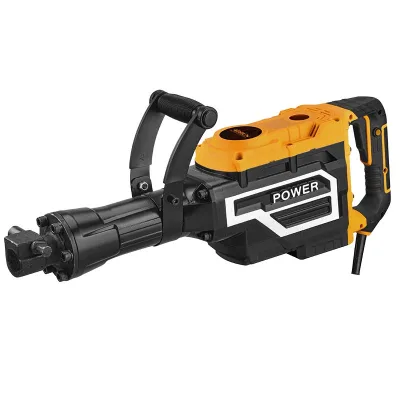
Find and compare 30 heavy-duty brushless motor demolition hammer options from verified manufacturers. Evaluate key specifications such as impact rate, voltage, and chuck type to select the right tool for industrial and household applications.
Key considerations
Products List




Cordless Hammer Drill for Construction Projects with Battery and Charger
$25.00 - $90.00
MOQ: 500 Pieces


Cordless Power Tools Industrial Electric Tool Hammer Drill Machine Battery Hammer
$20.69 - $37.61
MOQ: 10 Pieces


Comprehensive Sourcing Guide
Heavy-Duty Brushless Motor Demolition Hammer Sourcing Guide
Procuring heavy-duty demolition hammers requires a precise understanding of the distinction between traditional brushed motor tools and modern brushless variants, particularly when evaluating industrial-grade equipment. While the core keyword emphasizes brushless technology, current market observations indicate a mixed inventory where many heavy-duty units, such as the 0860 and 3066 models, operate on standard AC power with specific impact rates like 3800 BPM and no-load speeds around 850 RPM. Buyers must carefully verify whether a listed "heavy-duty" unit actually incorporates brushless motor architecture, as this significantly affects maintenance intervals, torque consistency, and overall tool longevity. The presence of features like flat drill functions and customizable voltage inputs (110V/220V) suggests these tools are designed for versatile, high-intensity construction environments, but the motor type remains a critical differentiator that requires explicit confirmation from the supplier.
The sourcing landscape for these tools is characterized by a wide range of specifications, from compact electric hammers weighing 4.42kg to massive demolition hammers exceeding 46kg in gross weight. This variance indicates that "heavy-duty" is not a monolithic category but rather a spectrum of capabilities tailored to specific project demands, such as household renovations versus large-scale industrial demolition. Buyers should note that while some models offer speed control functions, others do not, which directly impacts the precision of drilling operations in hard materials. Understanding these operational nuances is essential for aligning procurement with actual job site requirements, ensuring that the selected tool provides the necessary impact energy and chuck compatibility without over-specifying or under-performing in critical applications.
Product Scope and Observed Listing Signals
The observed product listings reveal a diverse array of demolition hammers and rotary hammers, with models ranging from the 0855 to the 3069 series, each tailored to different operational scales. Key attributes such as chuck types (Hex-17, Hex-28, Hex-30, and SDS-PLUS) and impact energies (e.g., 15J) provide tangible signals about the tool’s intended use case, with larger chucks and higher impact energies typically correlating with more robust, heavy-duty applications. The presence of accessories like two chisels in some listings suggests a ready-to-use configuration for immediate deployment, while the variation in packing methods, from standard carton boxes to BMC boxes, indicates differing levels of protection and logistics optimization required for international shipping. Buyers should interpret these signals as indicators of the tool’s physical robustness and included value, rather than assuming all listed models share identical performance characteristics.
Voltage and power supply configurations further define the scope of these tools, with many units supporting both 110V and 220V inputs to accommodate global market standards. The availability of customized plug types and OEM/ODM services highlights the flexibility of manufacturers to adapt products for specific regional regulations or corporate branding needs. However, the coexistence of models with and without speed control functions underscores the importance of verifying operational features against specific task requirements. For instance, a model with a 2-speed mode for hammer drill and flat drill functions offers greater versatility for complex masonry work, whereas a fixed-speed unit may be sufficient for straightforward breaking tasks. This diversity in listing signals necessitates a thorough review of technical datasheets to ensure the selected tool matches the intended application’s precision and power demands.
Technical Specifications to Verify
When evaluating heavy-duty demolition hammers, verifying the motor type is paramount, especially given the emphasis on brushless technology in the core keyword. Buyers must explicitly confirm whether the unit utilizes a brushless motor, as this feature directly influences efficiency, heat management, and maintenance requirements. In the absence of clear confirmation, buyers should assume the tool may employ a traditional brushed motor, which, while robust, requires periodic brush replacement and may generate more heat during extended use. Additionally, the no-load speed, typically observed around 850 RPM for many heavy-duty models, should be cross-referenced with the required drilling speed for specific materials, ensuring that the tool can maintain consistent performance under load without stalling or overheating.
Chuck compatibility and impact rate are other critical technical specifications that must be verified to ensure seamless integration with existing tooling and optimal performance. The observed listings show a range of chuck types, including Hex-17, Hex-28, Hex-30, and SDS-PLUS, each suited to different bit sizes and application types. Buyers should select a chuck type that aligns with their standard bit inventory to avoid unnecessary adapter costs and potential compatibility issues. Furthermore, the impact rate, often cited as 3800 BPM or 4400 RPM in the listings, should be evaluated in conjunction with the impact energy (e.g., 15J) to assess the tool’s breaking power. A higher impact rate combined with sufficient energy ensures efficient material removal, but buyers must also consider the tool’s weight and ergonomics, as heavier units (e.g., 23kg or 46kg) may require additional handling precautions and operator strength.
Compliance and Safety Documentation
Compliance with international safety standards is non-negotiable for heavy-duty power tools, particularly those intended for industrial use. Buyers should request documentation confirming adherence to relevant electrical safety standards, such as EN 60745-2-6, which governs the safety of portable electric tools with electric motors. While some listings mention CE and ROHS certifications, these should be treated as background indicators rather than guaranteed compliance, and buyers must verify the validity of these certifications with the supplier. Ensuring that the tool meets the specific regulatory requirements of the destination country is essential to avoid customs delays, legal liabilities, and potential safety hazards on the job site.
In addition to electrical safety, buyers should verify the tool’s mechanical safety features, including overload protection, anti-restart mechanisms, and ergonomic design elements that reduce operator fatigue and injury risk. The gross weight of the tool, ranging from 4.42kg to 46kg, significantly impacts operator handling and safety, so buyers should assess whether the tool includes features like vibration reduction systems or balanced weight distribution. Furthermore, the scope of application, whether household or industrial, should be clearly defined in the product documentation to ensure that the tool is used within its intended limits. Misuse of a heavy-duty demolition hammer in inappropriate environments can lead to premature failure or safety incidents, making clear documentation a critical component of the procurement process.
Cost Drivers and Commercial Terms
The cost of heavy-duty demolition hammers is influenced by several key factors, including motor type, build quality, and customization options. Brushless motors, if present, typically command a premium due to their superior efficiency and durability, while traditional brushed motors may offer a more budget-friendly alternative. The gross weight and material grade (e.g., industrial, professional) also contribute to the cost, as heavier, more robust tools require more raw materials and advanced manufacturing processes. Buyers should consider the total cost of ownership, including maintenance, spare parts, and energy consumption, rather than focusing solely on the initial purchase price, as a higher-quality tool may offer better long-term value through reduced downtime and lower operating costs.
Commercial terms, such as MOQ (Minimum Order Quantity) and lead times, vary significantly across suppliers and should be negotiated based on the buyer’s volume requirements and project timelines. The observed MOQ range of 1-500 units suggests flexibility for both small-scale and large-scale procurement, but buyers should confirm these terms early in the sourcing process to avoid delays. Additionally, the availability of OEM/ODM services allows for customization, which may incur additional costs but can provide competitive advantages through branded or specialized tool configurations. Buyers should also consider the packaging method, as BMC boxes may offer better protection for heavy tools during transit, potentially reducing the risk of damage and associated replacement costs.
Supplier Qualification and Quality Control
Selecting a reliable supplier for heavy-duty demolition hammers requires a thorough evaluation of their manufacturing capabilities, quality control processes, and track record. Buyers should verify the supplier’s production facilities, particularly their ability to handle heavy-duty tool manufacturing with consistent quality standards. The place of origin, often Zhejiang, China, indicates a concentration of manufacturing expertise in this region, but buyers should still conduct due diligence to ensure that the supplier adheres to international quality management systems. Requesting samples for testing is a critical step in verifying the tool’s performance, durability, and compliance with specified technical parameters before committing to a large order.
Quality control measures, such as pre-shipment inspections and third-party testing, should be mandated to ensure that each unit meets the agreed-upon specifications. Buyers should inquire about the supplier’s defect rate and warranty policies, as these factors provide insight into the supplier’s confidence in their product quality. Additionally, the availability of after-sales support, including spare parts and technical assistance, is essential for maintaining tool performance and minimizing downtime in the field. By prioritizing suppliers with robust quality control systems and comprehensive support services, buyers can mitigate risks and ensure a reliable supply of heavy-duty demolition hammers for their operations.
Long-Term Procurement Checks
Long-term procurement success depends on establishing a continuous feedback loop between the buyer and the supplier to monitor tool performance and address emerging issues. Buyers should track key performance indicators, such as tool failure rates, maintenance frequency, and operator feedback, to assess the suitability of the demolition hammers in real-world applications. This data can inform future purchasing decisions, allowing buyers to refine their specifications and negotiate better terms based on actual usage patterns. Regular communication with the supplier regarding product updates, technological advancements, and potential improvements ensures that the procurement strategy remains aligned with evolving industry standards and operational needs.
Furthermore, buyers should periodically review their supplier base to ensure continued compliance with safety standards and quality expectations. The power tool market is dynamic, with new technologies and regulations emerging regularly, so staying informed about industry trends is crucial for maintaining a competitive edge. By fostering strong relationships with reliable suppliers and maintaining rigorous quality control standards, buyers can secure a steady supply of high-performance heavy-duty demolition hammers that meet their long-term operational goals. This proactive approach to procurement management helps mitigate risks, optimize costs, and enhance overall project efficiency.
FAQs
What is the impact rate of the demolition hammer?
The impact rate is 3800 bpm for the 0860 and 3066 models. Some variants like the Electric Hammer reach 4400 bpm. This high frequency ensures efficient concrete breaking during heavy-duty operations.
Which chuck types are available for these hammers?
Available chuck types include Hex-17, Hex-28, Hex-30, and SDS-PLUS. The specific type depends on the model, such as the 0860 using Hex-17 or the 3301 using SDS-PLUS. Always verify compatibility with your drill bits.
Can I request custom voltage and plug configurations?
Yes, customization is available for voltage and plug types. Products support 110V/220V with plugs as required by the buyer. OEM and ODM services allow tailoring these electrical specifications to your local standards.
What is the no-load speed of the demolition hammer?
The no-load speed is typically 850 rpm for models like the 0860 and 3066. The Electric Hammer model operates at 800 rpm. This speed range balances power delivery with control for demolition tasks.
How much does the 0855 demolition hammer weigh?
The 0855 Demolition Hammer has a gross weight of 46kg. This substantial weight provides stability during heavy impact operations. Other models like the 3069 weigh 21kg, offering lighter alternatives for different applications.
What accessories are included with the rotary hammer?
The rotary hammer typically includes two chisels as standard accessories. These tools are essential for immediate use upon delivery. Packaging varies by model, with some units shipped in BMC boxes or carton boxes.
Is speed control function available on all models?
Speed control function availability varies by model. Some units are equipped with speed control, while others operate without it. The Electric Hammer features a 2-Speed Mode for versatile drilling and hammering applications.