Source Heavy Duty Floating Shelf Bracket for Furniture, Wall, and Projector
Explore 30 Heavy Duty Floating Shelf Bracket options to compare metal materials, sizes, and customization features. This guide helps buyers evaluate specifications for furniture hardware and wall mounting applications; compare the available evidence and request quotations based on your requirements.
Key considerations
Products List


Comprehensive Sourcing Guide
Heavy Duty Floating Shelf Bracket Sourcing Guide
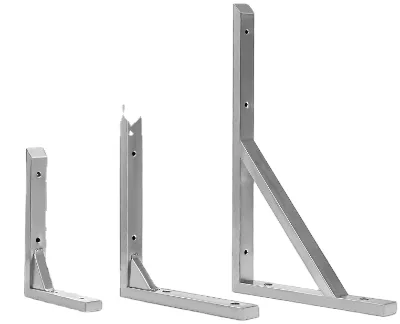
Buyers must first distinguish between single-side and triangle bracket structures when evaluating heavy-duty floating shelf options, as the structural integrity varies significantly by design. The observed market data indicates that suppliers offer both single-side brackets and triangle configurations, with some products explicitly labeled as heavy-duty models designed for substantial load-bearing requirements. Understanding this structural distinction is critical before requesting quotes, as the load capacity and mounting hardware requirements differ between a simple L-shaped support and a reinforced triangular assembly.
Procurement teams should also verify the specific finish and material composition, as the observed listings include carbon steel and metal options with powder coating or polishing treatments. These surface treatments are essential for durability in high-traffic environments, yet the specific thickness of the metal and the quality of the coating are not standardized across all listings. Buyers need to request detailed material certificates and finish specifications to ensure the selected bracket will withstand the intended weight and environmental conditions without corrosion or structural failure over time.
Product Scope and Observed Listing Signals
The product scope for heavy-duty floating shelf brackets encompasses a wide range of customization options, including specific dimensions, colors, and logo placement. Market observations reveal that suppliers offer custom sizes ranging from common dimensions to fully bespoke measurements, with color options spanning from pure black and white to colorful finishes. This flexibility allows buyers to match the brackets to specific interior design aesthetics, but it also requires precise communication of requirements to avoid receiving generic stock items that do not meet the project's visual or functional needs.
Listing signals indicate that packaging and branding are significant variables in the procurement process, with options ranging from neutral brown boxes to customized packaging solutions. Some suppliers provide products with specific branding like Xunengsun or Youjiang, while others offer neutral packaging suitable for private label distribution. Buyers must clarify their branding requirements early in the negotiation, as the inclusion of custom logos or specific packaging types can impact the unit cost and the minimum order quantity thresholds required by the manufacturer.
Technical Specifications to Verify
Technical verification must begin with the physical dimensions and load-bearing capacity, as the observed listings include models with specific measurements like 16 inches by 6 inches alongside fully customizable size options. Buyers should demand engineering data or test results that confirm the bracket can support the intended weight, particularly since the term "heavy duty" is not a regulated standard and may be used loosely by different manufacturers. Relying solely on marketing terms without verifying the actual load limits can lead to installation failures and potential safety hazards in commercial or residential settings.
The adjustment capabilities and folding mechanisms are another critical technical specification that requires careful validation, as the market shows a mix of adjustable and unadjustable models. Some products are listed as having adjustable features, while others are strictly fixed or designed to be folded for shipping efficiency. Procurement teams must determine if the installation environment requires on-site adjustability for leveling or if a fixed, rigid structure is preferred, as this decision directly impacts the installation labor time and the final aesthetic alignment of the shelving unit.
Compliance and Safety Documentation
Compliance documentation should focus on material safety and structural integrity standards, as the supplied facts do not confirm specific certifications like FSC for all listed products. Buyers must request material safety data sheets and structural load test reports to ensure the carbon steel or metal components meet local building codes and safety regulations. Without explicit certification data in the product listings, assuming compliance based on general market knowledge is risky, and formal verification is necessary to protect against liability in case of shelf collapse or material failure.
Safety considerations also extend to the installation process and the hardware included with the brackets, which may vary by supplier. The observed listings mention various packing methods, but they do not guarantee the inclusion of all necessary mounting screws or anchors required for specific wall types. Buyers should verify that the supplier provides a complete installation kit with hardware rated for the specific wall material, such as drywall, concrete, or wood studs, to ensure the heavy-duty bracket is securely anchored and does not pose a falling hazard.
Cost Drivers and Commercial Terms
Cost drivers for heavy-duty floating shelf brackets are heavily influenced by the level of customization, including custom sizes, colors, and logo printing. The observed data shows that while standard sizes are available, fully customized orders often incur higher unit costs and may require different minimum order quantities. Buyers should anticipate that requests for specific powder coating colors, unique dimensions, or private branding will increase the base price and potentially extend the production timeline compared to ordering standard black or white models.
Commercial terms regarding payment and lead times are critical variables that must be negotiated before finalizing an order, as the observed listings indicate a lead time of 15 to 25 working days. Payment structures often involve a deposit, such as 30% upfront with the balance due before delivery, which is a standard practice for custom manufacturing but requires careful cash flow planning. Buyers must align their project schedules with these lead times and payment milestones to avoid delays in installation and to ensure that the supplier has the necessary capital to source raw materials and maintain production quality.
Supplier Qualification and Quality Control
Supplier qualification should prioritize manufacturers with established production capabilities in regions like Hebei, China, where the observed listings indicate a concentration of metal bracket factories. Buyers must verify the supplier's capacity to handle large order volumes, as the observed minimum order quantities range from single units to 100,000 pieces, suggesting a wide range of production scales. It is essential to confirm that the supplier has the infrastructure to maintain consistent quality across large batches, especially when dealing with custom specifications that require precise tooling and finishing processes.
Quality control protocols must be explicitly defined in the purchase agreement, focusing on the consistency of the powder coating, polishing, and structural welding. Since the observed listings mention various finishes and materials, buyers should request pre-shipment inspections to verify that the finished products match the approved samples in terms of color, texture, and structural strength. Implementing a rigorous quality control plan that includes random sampling and load testing can prevent the receipt of substandard brackets that might fail under the intended heavy-duty usage conditions.
Long-Term Procurement Checks
Long-term procurement checks should include regular audits of the supplier's ability to maintain consistent lead times and quality standards over multiple production cycles. The observed lead time of 15 to 25 working days is a baseline that may fluctuate based on raw material availability or production demand, so buyers must establish clear communication channels to monitor potential delays. Maintaining a relationship with a supplier who can provide consistent updates and adhere to agreed-upon timelines is crucial for ensuring that large-scale shelving projects remain on schedule.
Buyers should also plan for ongoing product lifecycle management, including the availability of replacement parts and the consistency of future orders. As the market offers various styles from new classical to simple modern, ensuring that the supplier can replicate the exact finish and dimensions for future reorders is vital for maintaining a uniform look across different installations. Establishing a long-term partnership with a supplier who understands the specific requirements of heavy-duty floating shelf brackets will facilitate smoother scaling and reduce the risk of quality inconsistencies in future procurement cycles.
FAQs
How long is the typical lead time for heavy duty floating shelf brackets?
Lead time is typically 15 to 25 working days after order confirmation. The exact schedule depends on order quantity, chosen finish such as powder coating or polishing, and whether custom sizes are required. Buyers needing customized dimensions or packaging should confirm the timeline with the factory before placing a deposit so production can be scheduled accordingly.
What customization options are available for heavy duty floating shelf brackets?
Customization is available, and OEM and ODM services are acceptable. Buyers can request all sizes, custom logos, and shapes such as L or other designs. Materials like metal and carbon steel, finishes including powder coating and polishing, and packaging options such as a neutral brown box or a customized box can all be specified to match your project requirements.
What materials and finishes are commonly used for these brackets?
These brackets are generally made from metal, with carbon steel being a common material choice. Typical finishes include powder coating and polishing, which protect the bracket and give it a clean appearance. Colors such as black and white are available, and finish selection can usually be customized when you confirm specifications with the factory during the ordering process.
Can heavy duty floating shelf brackets be made in custom sizes?
Yes, custom sizes are offered, with listings indicating all sizes and customized sizes are available. Common models include sizes like 16 inches by 6 inches, and Heavy Duty Floating Shelf Bracket models are listed. Buyers should provide required dimensions, load expectations, and wall type so the factory can confirm feasibility and quote accurately before production begins.
What packaging options are offered when ordering these brackets?
Packaging options include a neutral brown box, a customized box, carton box, or standard box packing, with some listings noting 2 pieces per box. Buyers ordering for retail can choose customized boxes with their own logo, while wholesale buyers often prefer neutral cartons. Confirm the packing method and quantity per box when finalizing your purchase order with the supplier.
What are typical payment terms for custom bracket orders?
A common payment arrangement is a 30 percent deposit with the remaining 70 percent due before delivery. This structure lets factories begin production of customized heavy duty floating shelf brackets while protecting both parties. Payment terms can vary by order size and negotiation, so buyers should confirm the agreed terms in the purchase contract before transferring the deposit.
Where are these heavy duty floating shelf brackets produced?
The product origin is China, with factory information pointing to Hebei province. Hebei is a known region for metal hardware and furniture accessory manufacturing, which supports customization and volume production. When sourcing, buyers should verify each factory's production capacity, export experience, and quality control practices for heavy duty floating shelf brackets before committing to an order.
Which structures and mounting styles do these brackets come in?
Available structures include single-side brackets and triangle brackets, in wall bracket form for floating shelves. Some designs are foldable while others are unfolded, and adjustability varies between unadjustable and adjustable models. Styles range from simple modern to new classical, so buyers can match the bracket appearance to interior designs while confirming load capacity for each structure.