Find Heavy Duty Helical Pile Machine for Coastline, Soft Soil, Small Projects
Source 30 heavy duty helical pile machines from verified Chinese manufacturers. Compare hydraulic pile drivers, pile hammers, and foundation equipment with varying weights, dimensions, and certifications like ISO 9001 and CE for diverse construction needs.
Key considerations
Products List


Heavy-Duty Silent Pile Driving Machine for H-Pile and Round Piles
$125000.00 - $278697.00
MOQ: 1 Sets
Changsha Tianwei Engineering Machinery Manufacturing Co., Ltd.

Durable Heavy-Duty Pile Machine with Enhanced Operating Efficiency
$100000.00 - $200000.00
MOQ: 1 Sets
Changsha Tianwei Engineering Machinery Manufacturing Co., Ltd.

Heavy-Duty Static Pile Driving Machine with Extended Arm
$150000.00 - $178697.00
MOQ: 1 Sets
Changsha Tianwei Engineering Machinery Manufacturing Co., Ltd.


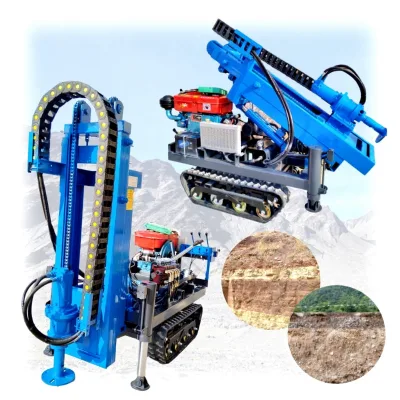


Thread Rolling Machine Price Threading Machine Steel Pile Thread Rolling Machine
$8300.00 - $9800.00
MOQ: 1 Pieces
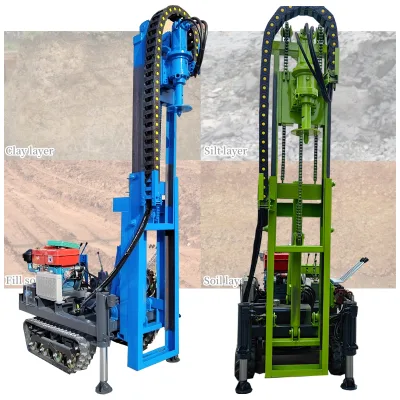

Comprehensive Sourcing Guide
Strategic Sourcing Guide for Heavy Duty Helical Pile Machines
The global infrastructure landscape demands robust foundation solutions, particularly in coastal regions and soft soil environments where traditional piling methods face significant challenges. For procurement professionals researching heavy duty helical pile machines, the market presents a complex array of hydraulic pile drivers designed to deliver high efficiency and substantial driving force. This guide synthesizes available product data to assist buyers in navigating technical specifications, compliance requirements, and supplier evaluation criteria without relying on unverified claims. The focus remains on objective observations of machinery attributes, ensuring that procurement decisions are grounded in verifiable facts rather than marketing assertions.
Technical Specifications and Operational Capabilities
Understanding the mechanical architecture of heavy duty pile drivers is the first step in effective sourcing. The observed product data highlights a specific class of machinery identified as hydraulic pile drivers and hydraulic hammers. These units are engineered with diesel power sources, a critical factor for remote or off-grid construction sites where electrical infrastructure is unavailable. The core components listed for these machines include PLC systems, engines, bearings, gearboxes, motors, and pressure vessels. This combination suggests a sophisticated control system integrated with heavy-duty mechanical transmission to handle the immense forces required for pile driving.
Dimensional variations are evident across different models, indicating that buyers must match machine size to project constraints. For instance, specific models are documented with dimensions of 13 meters by 7.4 meters by 3.25 meters, while others measure 14 meters by 8.32 meters by 3.15 meters. Weight specifications vary significantly, with some entries noting a weight of 460 kilograms, while others reference weights up to 120 tons or 700,000 kilograms. This disparity suggests a wide range of product scales, from smaller, portable units to massive industrial installations. Buyers must verify the actual operational weight and dimensions of the specific unit under consideration, as these factors directly impact transport logistics and site accessibility.
The suitability of these machines for specific pile types is a key technical differentiator. The data indicates compatibility with H-piles, sheet piles, concrete piles, and steel tubes. Furthermore, the machines are designed to accommodate various pile shapes, including round, square, H-pile, and triangle configurations. A critical specification for many models is the maximum suitable pile size, which is listed as 600mm for round piles and 550mm for square piles. This limitation is vital for engineers to ensure the selected machine can handle the structural requirements of the foundation project. Additionally, the piling speed is observed at 7.0 meters per minute for certain models, with efficiency ratings cited as high as 98% or generally described as "high efficiency."
Compliance, Certification, and Safety Standards
In the B2B machinery market, certification serves as a proxy for quality management and safety compliance. The supplied product facts reveal that ISO 9001 is a recurring certification, with specific mentions of ISO 9001:2000 and ISO 9001:CE. The presence of CE marking indicates compliance with European health, safety, and environmental protection standards, which is often a prerequisite for international trade. Additionally, the SGS standard is referenced, suggesting that third-party inspection and verification processes are part of the product's quality assurance framework.
Buyers must exercise caution when interpreting these certifications. While the data lists these standards, it does not confirm that every listed product in the market holds valid, current certification. Procurement teams should request current, verifiable certificates from the supplier for the specific serial number or batch of equipment being purchased. The condition of the machinery is consistently listed as "New," which implies that the certifications apply to newly manufactured units rather than refurbished stock. However, the absence of specific safety test results or noise emission data in the provided facts means that buyers should independently verify noise levels, as one entry mentions "Without Noise" while others do not specify this attribute. Relying solely on the "Without Noise" claim without independent acoustic testing data is risky, as heavy machinery inherently generates significant sound pressure levels.
Cost Drivers and Pricing Structures
The pricing landscape for heavy duty pile drivers is characterized by extreme variance. The observed listed price range spans from 0.8 USD to 800,000 USD. This vast range reflects differences in machine capacity, brand positioning, customization levels, and the inclusion of ancillary services. A unit priced at 0.8 USD is likely a component or a symbolic listing, whereas the 800,000 USD figure represents a fully equipped, high-capacity industrial system. Buyers should not assume that a lower price point equates to a smaller machine; rather, the price is a function of the total value proposition, including the motor power, which is noted as 90kw for certain models, and the complexity of the hydraulic system.
Minimum Order Quantity (MOQ) also plays a significant role in cost dynamics. The observed MOQ ranges from 1 to 7,500 units. For a single-unit procurement, the buyer must navigate the lower end of this spectrum, but the unit price may be higher due to the lack of economies of scale. Conversely, large-scale infrastructure projects might leverage the higher MOQ tiers to negotiate better rates. The supply ability is noted as 300 sets per year for some suppliers, which acts as a capacity constraint. If a project requires more than this annual output, the buyer must assess the lead time implications and the supplier's ability to ramp up production.
Typical Applications and Site Suitability
The operational context of heavy duty pile drivers is heavily influenced by the geological and environmental conditions of the job site. The product data explicitly identifies these machines as suitable for "Coastline Cities" and "Soft Soil" environments. This suggests that the machinery is particularly effective in areas where soil stability is low, and the foundation must withstand corrosive or shifting conditions. The "New Foundation Machine" is described as embracing a "Pile Driving Method," which implies a modern approach to foundation construction that may offer advantages over traditional methods in these specific terrains.
One specific attribute notes that certain models are designed "for Small Piling Project But Big Piling Force." This indicates a specialized niche where the physical footprint of the machine is constrained, perhaps due to urban density or limited access, yet the driving force required remains substantial. This capability is crucial for projects in dense urban areas or confined industrial sites. The suitability for H-piles, sheet piles, and concrete piles further broadens the application scope, making these machines versatile for various infrastructure types, including bridges, ports, and high-rise building foundations.
Supplier Evaluation and After-Sales Support
Selecting a supplier involves more than just comparing technical specifications; it requires a thorough assessment of the supplier's ability to support the machine throughout its lifecycle. The data highlights that "Engineers Available to Service Machinery Overseas" is a key attribute for some suppliers. This is a critical differentiator for international buyers, as heavy machinery often requires specialized maintenance and troubleshooting that cannot be handled by local general contractors. The availability of overseas engineering support ensures that downtime is minimized, and operational efficiency is maintained.
Packaging and logistics are also essential considerations. The product data mentions "Nude Package" and "Dismantling for Nude Package," indicating that machines are often shipped in a disassembled state to optimize container space and reduce shipping costs. However, "Key Parts" are noted to be packed separately, suggesting that while the main body is exposed, critical components receive additional protection. Buyers must verify the packaging details to ensure that the machine arrives in a condition that allows for immediate assembly and operation. The "Video Outgoing-Inspection" feature is another valuable tool, allowing buyers to visually verify the condition and configuration of the machine before it leaves the factory, reducing the risk of receiving non-compliant goods.
Quality Control and Long-Term Procurement Considerations
Quality control in the heavy machinery sector relies on a combination of factory standards and post-delivery verification. The mention of "Video Outgoing-Inspection" provides a layer of transparency, but it should be complemented by a clear definition of acceptance criteria. Buyers should establish a protocol for verifying the "Core Components" such as the PLC, engine, and pressure vessel upon arrival. The consistency of the "New" condition and the presence of certifications like ISO 9001 and SGS provide a baseline for quality, but they do not guarantee performance in the field.
Long-term procurement considerations include the availability of spare parts and the durability of the machine. The "After-Sales Service Provided" attribute suggests that suppliers are willing to engage in long-term relationships, but the specific terms of service agreements should be negotiated explicitly. The "Customization: Available" attribute is a significant advantage for buyers with unique project requirements, allowing for modifications to the machine's color, dimensions, or functional capabilities. However, customization can impact lead times and cost, so buyers must balance the need for specific features against the timeline of their project.
Comparative Analysis of Key Models
To facilitate decision-making, the following table summarizes the key technical attributes observed in the product data. This comparison helps buyers identify which models align with their specific project requirements regarding size, capacity, and certification.
| Attribute | Model ZYC460 | Model ZYC600B-B1 | Model ZYC600 | Model ZYC360 | Model ZYC260 |
|---|---|---|---|---|---|
| Weight | 460 Kg | 700,000 kg | 120t | N/A | N/A |
| Dimensions (LWH) | 137.43.25 | 148.323.15 | N/A | N/A | N/A |
| Max Pile Size | 600mm (Round), 550mm (Square) | N/A | N/A | N/A | N/A |
| Certification | ISO 9001:Condition:New | N/A | N/A | ISO 9001:2000 And SGS | ISO 9001:ISO 9001:CE |
| Power Source | Diesel | N/A | N/A | N/A | N/A |
| Suitable Piles | H-Pile, Sheet Pile, Concrete, Steel Tube | Concrete, Sheet, H-Pile, Steel Tube | N/A | N/A | N/A |
| Efficiency | 98% | High Efficiency | N/A | N/A | N/A |
| Origin | China | Henan, China | N/A | N/A | N/A |
Note: Data points are derived from the supplied product facts and may not apply to all listed models. Buyers must verify specific attributes for the exact unit under consideration.
In conclusion, sourcing heavy duty helical pile machines requires a meticulous approach that balances technical specifications with logistical and compliance realities. The available data provides a solid foundation for understanding the capabilities of hydraulic pile drivers, particularly their suitability for coastal and soft soil environments. By focusing on verified certifications, clear specifications, and robust after-sales support, buyers can mitigate risks and ensure the successful execution of their foundation projects. The variability in price, weight, and dimensions underscores the importance of detailed due diligence before finalizing any procurement contract.
FAQs
What certifications do heavy duty helical pile machines have?
These machines commonly hold ISO 9001 and CE certifications. Some models also meet the SGS standard. Buyers should verify current certificates for specific batches before purchase.
Which pile sizes are suitable for these hydraulic drivers?
Suitable pile sizes include round piles up to 600mm and square piles up to 550mm. The machines also handle H-piles, sheet piles, concrete piles, and steel tubes effectively.
Can these machines operate in soft soil environments?
Yes, they are specifically designed for soft soil and coastline city projects. The high driving force allows them to function effectively in challenging geological conditions without excessive noise.
How much does a Heavy Duty Helical Pile Machine cost?
Listed prices range widely from 0.8 USD to 800,000 USD depending on capacity. The final cost depends on motor power, customization, and included after-sales service packages.
What is the minimum order quantity for these machines?
Minimum order quantities vary from 1 unit up to 7,500 units. Buyers should check specific supplier supply abilities, which may be limited to 300 sets per year.
Do suppliers offer overseas engineering support for these machines?
Yes, engineers are available to service machinery overseas for many models. This support ensures operational efficiency and helps minimize downtime during critical foundation construction projects.
How are these machines packaged for shipping?
Machines are typically shipped as a nude package or dismantled for nude packaging. Key parts are packed separately to ensure protection during transit to the destination site.