Source HEPA Transfer Boxes for Cleanrooms, Labs, and Industries
Compare 30 HEPA Transfer Box options featuring customizable dimensions, SS304 or SS201 materials, and H13/H14 filtration grades. Buyers can evaluate noise levels, UV sterilization accessories, and interlock safety features for industrial dust removal applications.
Key considerations
Products List


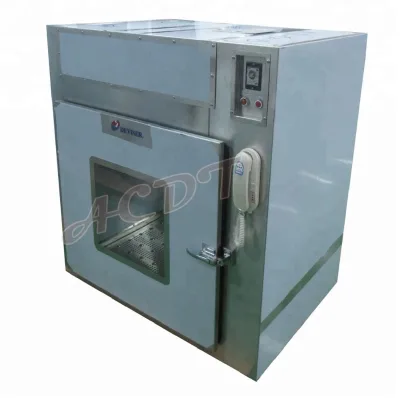
HEPA H13 / H14 Galvanized Steel Transfer Window Pharmaceutical Pass Box
$300.00 - $1000.00
MOQ: 1 Pieces

Customized Pass Box Transfer Window Transfer Box for Clean Room Dynamic
$300.00 - $400.00
MOQ: 1 Pieces




Comprehensive Sourcing Guide
Strategic Sourcing Guide for HEPA Transfer Boxes
Understanding Technical Specifications and Configuration Options
When sourcing a HEPA Transfer Box, buyers must first navigate a complex landscape of technical specifications that vary significantly between manufacturers. The core function of these units is to facilitate the safe transfer of materials between cleanrooms of different classifications while maintaining air purity. Based on available market data, the internal dimensions of these units are not uniform; observed specifications include an inside diameter of 600600600mm and alternative configurations measuring 400400400mm. This variance indicates that "one-size-fits-all" solutions are rare, and procurement strategies must prioritize custom sizing capabilities.
The structural composition of the transfer box is equally critical. Materials typically range from SS304 stainless steel to Ss201, with some options offering 304 Stainless Steel powder-coated steel plates or ABS materials. The choice of material directly impacts corrosion resistance and durability, particularly in environments with high humidity or chemical exposure. Furthermore, the filtration system is a primary differentiator. While some units utilize HEPA filters with grades ranging from H13 to H14, others may specify a Clean Grade of Class 100 or an ISO5 to ISO8 cleanliness grade. Buyers should verify the specific filter grade required for their application, as H13 and H14 filters offer higher retention rates for sub-micron particles.
The operational mechanism of the transfer box also dictates its suitability for specific workflows. Observed data highlights two distinct types: "Self-Cleaning" units and those utilizing an "Electronic Chain" drive mode. The self-cleaning feature often integrates UV lamps, with specific configurations noting the presence of two PS UV lamps to ensure sterilization during idle periods. In contrast, the electronic chain mechanism may be paired with a rated speed of 0.45±25% M/S, suggesting a motorized transfer system for heavy or automated loads. Additionally, the drive mode is frequently described as "No Built-in Fan External Ahu Air Supply," meaning the unit relies on the facility's central air handling unit for airflow rather than an internal blower. This distinction is vital for integration into existing HVAC systems.
Compliance, Certification, and Safety Standards
Navigating the regulatory landscape for HEPA transfer boxes requires rigorous verification of certifications and standards. While general market knowledge often references CE marking, specific product data indicates the presence of ISOCE certification for certain models. Buyers must treat this as a specific attribute of the listed products rather than a universal guarantee for all units in the category. The standard dimensions provided in the source data, such as 8006601000mm or 620×460×950mm, serve as reference points for compliance with spatial constraints in cleanroom facilities, but these are not universal standards.
Safety interlocks are a non-negotiable feature in modern transfer boxes to prevent cross-contamination. The data confirms the availability of an "Interlock" system, which ensures that the doors on both sides of the box cannot be opened simultaneously. This mechanical or electronic lock is essential for maintaining the integrity of the cleanroom environment. Furthermore, the inclusion of a "Pressure Gauge" as a device attribute allows operators to monitor the differential pressure across the unit, ensuring that the airflow direction remains correct and that the HEPA filter is functioning within expected parameters.
For facilities requiring rigorous validation, the availability of a "Pao Aerosol Leak Test" function is a significant indicator of quality. This test verifies the integrity of the HEPA filter and the housing seals, ensuring that no leaks exist that could compromise the cleanroom classification. Buyers should explicitly request documentation proving that the specific unit they are purchasing has passed or supports this specific test. Additionally, the surface treatment process, often identified as "Electroplating," plays a role in the unit's longevity and resistance to bacterial growth, which is a critical factor for pharmaceutical and biotechnology applications.
Cost Drivers and Pricing Dynamics
The pricing for HEPA transfer boxes exhibits a wide spectrum, with observed ranges extending from $2.07 to $456,000. This vast disparity is not indicative of a single product line but rather reflects the diversity of configurations, materials, and customizations available in the market. The lowest price points likely correspond to basic, non-customized units with standard dimensions and minimal accessories. Conversely, the higher price brackets are driven by complex customizations, such as specific internal diameters, advanced drive modes like the electronic chain, and the inclusion of premium accessories.
Several specific factors drive the cost upward. First, the material selection is a primary cost variable; SS304 stainless steel is generally more expensive than Ss201 or powder-coated steel plates. Second, the filtration grade significantly impacts price; H14 filters are more costly than H13, and units designed to meet ISO5 standards require tighter manufacturing tolerances than those for ISO8. Third, the inclusion of optional accessories adds to the total cost. The data lists floodlights, sterilization lamps, timer switches, and intercoms as optional fittings. A unit equipped with a full suite of these accessories, including a timer switch for automated UV cycles and an intercom for communication between rooms, will command a premium price.
The Minimum Order Quantity (MOQ) also influences the unit economics. Observed MOQs range from 1 to 1000 units. Buyers purchasing a single unit for a pilot project or a small facility may face a higher per-unit cost compared to those placing an order for 1000 units, which allows for economies of scale in manufacturing and shipping. Additionally, the packaging method, whether a plywood case, wooden pallet, or wooden box, can affect the final landed cost, especially for international shipments where packaging must meet specific export standards.
Typical Applications and Operational Environments
HEPA transfer boxes are primarily designed for industrial applications where dust removal and air purity are paramount. The data explicitly categorizes the usage under "Dust Removal" and "Industrial" sectors. These units are indispensable in environments such as pharmaceutical manufacturing, biotechnology laboratories, semiconductor fabrication, and medical device production. In these settings, the transfer box acts as a barrier to prevent the ingress of contaminants from the outside or the egress of hazardous materials from the cleanroom.
The specific application dictates the required specifications. For instance, a facility requiring a "Class 100" clean environment will need a transfer box with a high-grade HEPA filter and a robust interlock system to maintain that classification. In contrast, a facility operating under ISO5 to ISO8 standards may have more flexibility in filter selection but must still ensure the air speed is adjustable via an air damper to maintain the correct pressure differential. The noise level is another consideration for the operational environment; observed noise ranges from 20-40db to 60-70db. For office-adjacent cleanrooms or areas requiring quiet operation, the lower noise range is preferable, whereas industrial settings may tolerate higher decibel levels.
The "Blow Time" feature, adjustable from 0 to 99 seconds, suggests an automated cleaning cycle that can be tailored to the specific contamination load of the facility. This is particularly useful in high-traffic areas where the transfer box is used frequently. The illumination level, noted as 300lx, ensures that operators can clearly see the contents being transferred, reducing the risk of errors or dropped items. The "Cabinet Diffuser Plate HEPA Filter" structure indicates a design that promotes uniform airflow, which is critical for maintaining the laminar flow required in sensitive manufacturing processes.
Supplier Evaluation and Origin Verification
When evaluating potential suppliers for HEPA transfer boxes, the origin of the product is a key data point. The provided information identifies Jiangsu, China, and China generally as the locations of production. While this does not preclude other origins, buyers should verify the specific manufacturing location of the unit they are purchasing, as regional differences in manufacturing standards and labor costs can affect quality and price. The "prod_model" identifiers, such as KW-PB-LB, ZPB-N040404, and LHB5-046.046D, serve as unique references for specific configurations. Buyers should use these model numbers to cross-reference technical datasheets and ensure they are comparing equivalent products.
Supplier reliability is further assessed through their customization capabilities. The data confirms that "Customization" is available, with specific mentions of "Custom Sizes Available." This indicates that suppliers are capable of tailoring the unit to the buyer's specific cleanroom dimensions. However, buyers must verify the lead time for these custom orders, as they will inevitably be longer than for standard off-the-shelf units. The "prod_packing" details, ranging from plywood cases to wooden boxes, also reflect the supplier's attention to logistics and protection during transit. A supplier that offers robust, industry-standard packaging is more likely to deliver the unit in pristine condition.
Quality Control and Testing Protocols
Ensuring the quality of a HEPA Transfer Box requires a proactive approach to quality control and testing. The presence of a "Test Function" supporting Pao Aerosol Leak Test is a critical indicator of a supplier's commitment to quality. This test is the industry standard for verifying the integrity of the HEPA filter and the seal of the housing. Buyers should insist on a certificate of conformance that includes the results of this specific test for the batch of units they are purchasing.
In addition to leak testing, the structural integrity of the unit must be verified. The "Surface Treatment" of electroplating should be inspected for uniformity and thickness to ensure long-term resistance to corrosion. The "Cleanliness Grade" of the unit, whether Class 100 or ISO5-8, must be validated through independent testing or a comprehensive factory acceptance test (FAT). The "Noise Level" should also be measured in the actual operating environment to ensure it meets the facility's acoustic requirements. The "Air Speed" being adjustable by an air damper provides a mechanism for fine-tuning the performance, but the baseline speed and the range of adjustment must be clearly defined in the technical specifications.
Long-Term Procurement and Maintenance Considerations
Procuring a HEPA Transfer Box is not a one-time transaction but the beginning of a long-term relationship with the supplier. The "Optional Accessory" list, which includes floodlights, sterilization lamps, timer switches, and intercoms, highlights the potential for future upgrades or replacements. Buyers should ensure that the supplier has a reliable supply chain for these accessories to avoid downtime if a component fails. The "Sterilization Lamp" is particularly important for maintaining the hygiene of the transfer box, and its lifespan and replacement cost should be factored into the total cost of ownership.
Maintenance of the HEPA filter is another critical long-term consideration. The "Filter Grade" of H13 or H14 indicates a high-efficiency filter that will require periodic replacement. Buyers should inquire about the filter's service life and the ease of replacement. Units with a "Cabinet Diffuser Plate HEPA Filter" structure may offer easier access for maintenance compared to more complex designs. The "Drive Mode" of "No Built in Fan External Ahu Air Supply" simplifies maintenance by reducing the number of moving parts inside the unit, but it places a higher burden on the facility's central air handling system to maintain the correct pressure differential.
Finally, the "Standard" dimensions and "prod_standard" values provided in the data should be used as a baseline for planning future expansions or modifications. If a facility plans to expand its cleanroom area, ordering transfer boxes with "Custom Sizes Available" ensures that new units will integrate seamlessly with existing infrastructure. By focusing on these long-term factors, buyers can ensure that their investment in HEPA transfer boxes remains a reliable and effective component of their cleanroom operations for years to come.
FAQs
What customization options are available for hepa transfer boxes?
Custom sizes are available for these units to fit specific cleanroom dimensions. Buyers can request tailored inside diameters such as 600x600x600mm or 400x400x400mm to match their facility requirements.
Which materials are used to construct the HEPA Transfer Box?
Manufacturers typically use SS304 stainless steel or Ss201 for the main structure. Some options also include 304 Stainless Steel powder-coated steel plates or ABS materials for specific durability needs.
How does the interlock system prevent cross-contamination?
The interlock system ensures that doors on both sides cannot be opened simultaneously. This mechanical or electronic lock maintains the integrity of the cleanroom environment during material transfer.
Can the unit support Pao aerosol leak testing?
Yes, the device supports Pao aerosol leak testing to verify filter integrity. This function confirms that no leaks exist in the housing seals that could compromise the cleanroom classification.
What is the noise level of the HEPA Transfer Box?
Noise levels vary between 20-40db and 60-70db depending on the model. Lower noise options are suitable for office-adjacent areas, while industrial settings may tolerate higher decibel levels.
Which certifications are associated with these transfer boxes?
Some models carry ISOCE certification as a specific product attribute. Buyers should verify this certification for the specific unit rather than assuming it applies to all products in the category.
How is the air speed controlled in the system?
Air speed is adjustable by an air damper to maintain correct pressure differentials. This feature allows operators to fine-tune airflow for specific ISO5 to ISO8 cleanliness grade requirements.