Source Hidden Wall Switch Socket Panel for Home Hotel Commercial
Find and compare 30 Hidden Wall Switch Socket Panel options featuring rocker, capacitive, and resistive principles. Buyers can evaluate specifications like 10A and 16A ratings, various colors, and certifications including CE and CCC for residential and industrial applications.
Key considerations
Products List


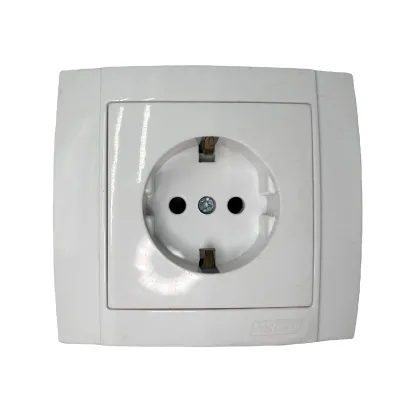


Wall Socket and Switch Waterproof Switch Outdoor Socket Waterproof Sockets
$0.30 - $5.50
MOQ: 500 pieces

Wall Socket and Switch Switch Electric Plugs and Sockets Switch Hotel Switch
$0.80 - $3.00
MOQ: 500 pieces


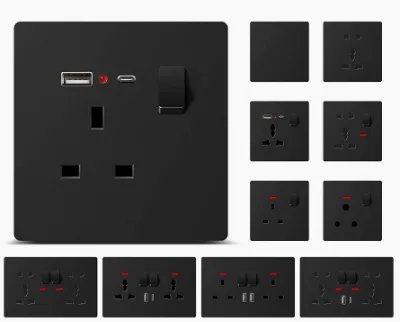


Comprehensive Sourcing Guide
Strategic Sourcing Guide for Hidden Wall Switch Socket Panels
The global demand for integrated electrical control solutions has driven the evolution of wall switch socket panels from simple mechanical components to sophisticated, multi-functional interfaces. For B2B procurement professionals, sourcing "hidden wall switch socket panels" requires a nuanced understanding of technical variances, compliance landscapes, and supply chain dynamics. This guide synthesizes observed market data and established industry standards to provide a disciplined framework for evaluating potential suppliers and products. The focus remains on evidence-based criteria, ensuring that procurement decisions are grounded in verifiable specifications rather than marketing assertions.
Technical Architecture and Functional Specifications
The technical architecture of hidden wall switch socket panels varies significantly based on the intended application and the underlying switching principle. Buyers must first distinguish between resistive and capacitive technologies, as these dictate the user experience and installation requirements. Market observations indicate that resistive principles are common in standard control buttons, often paired with a single live line wiring configuration. These units typically function as single-pole on-off switches, utilizing a rocker feature for tactile feedback. In contrast, capacitive principles are emerging in more advanced units, often requiring a null line and live line configuration to support touch-sensitive interfaces.
The physical dimensions and gang configurations are critical for compatibility with existing wall infrastructure. Standard panel sizes observed in the market include 86mm x 86mm, which aligns with many international mounting standards. However, variations exist, such as specific models adhering to 118mm x 75mm dimensions or compact units measuring 43mm x 35mm x 24mm. The "gang" configuration, referring to the number of independent switches or sockets on a single faceplate, ranges from single-gang to triple-gang (3 gang 1 way) setups. Procurement teams must verify the specific gang count against the project's electrical layout to avoid retrofitting issues.
Electrical ratings are another non-negotiable technical parameter. Observed data points to voltage ratings of 250V~, suitable for standard residential and commercial AC power systems. Current ratings vary, with common specifications including 10A and 16A capacities. The "Normal Open" type is frequently cited for standard switching applications, ensuring the circuit is open when the switch is in the off position. Additionally, the inclusion of USB sockets alongside ordinary sockets is a growing trend, particularly in commercial and hospitality sectors, requiring careful verification of the internal power structure and grounding standards.
Compliance, Certification, and Safety Standards
Navigating the regulatory landscape is paramount for B2B buyers, as non-compliant products can lead to significant legal liabilities and project delays. The supplied data highlights a diverse array of certifications, including CE, ISO, CCC, and TUV. These certifications are not merely labels but indicators of adherence to specific safety and quality benchmarks. For instance, the presence of CE and TUV standards suggests compliance with European safety directives, while CCC certification is essential for products intended for the Chinese market.
Buyers must verify that the specific product model carries the necessary certifications for the target export destination. A product listing might mention "CE, ISO" in one instance and "CCC, CE" in another, indicating that certification status is model-specific rather than universal across a supplier's entire catalog. The "prod_standard" field often references physical dimensions or specific compliance frameworks, such as the 118*75mm standard, which may imply adherence to regional mounting norms.
Safety features such as "Durable" protection and "Standard Grounding" are critical for preventing electrical hazards. The IP rating, often noted as "IPNumber of Holes:Porous" in raw data, requires clarification. Buyers should explicitly request the specific IP rating (e.g., IP20, IP44) to determine the product's resistance to dust and water ingress, which is vital for applications in bathrooms, kitchens, or industrial environments. Without a confirmed numerical IP rating, the product's suitability for wet or dusty locations remains unverified.
Cost Drivers and Pricing Dynamics
The pricing structure for hidden wall switch socket panels is influenced by a complex interplay of factors, including material costs, technological complexity, and order volume. The observed price range spans from $0.16 to $7,000, a disparity that reflects the difference between a single component and a complete, high-end system or bulk industrial order. This wide range underscores the importance of defining the exact scope of procurement before requesting quotes.
Minimum Order Quantity (MOQ) is a significant cost driver. The market data indicates an MOQ range of 1 to 3,000 units. Suppliers offering low MOQs (e.g., 1 unit) are typically suited for sample acquisition or small-scale projects but may carry higher per-unit costs. Conversely, suppliers requiring MOQs of 3,000 units often provide more competitive unit pricing, suitable for large-scale construction or manufacturing contracts. Buyers should align their order volume with their projected demand to optimize the cost per unit.
Additional cost factors include customization availability and packaging requirements. The "Customization: Available" attribute suggests that buyers can request tailored solutions, such as specific colors (Black, Brown, White) or branding, which may incur additional tooling or setup fees. Packaging specifications, such as "1PC/Poly Bag 10PCS/Inner Box 100PCS/Outer Carton," also impact logistics costs. Bulk packaging reduces shipping volume and handling time, whereas individual poly-bagging increases freight expenses.
Application Scenarios and Market Segmentation
The versatility of hidden wall switch socket panels allows them to serve a broad spectrum of applications. The observed usage categories include Home, Commercial, Hotel, Apartment/Villa, Industrial, Lighting, Electronics, and Home Appliance. This diversity requires buyers to match product specifications to the specific demands of the end-use environment.
In residential settings, such as apartments and villas, the aesthetic and functional integration of the panel is crucial. Features like "Rocker" switches and specific colors (Black, Brown, White) allow for seamless interior design integration. In commercial and hotel environments, durability and high usage frequency are paramount. Products rated for 16A and featuring "Durable" protection are better suited for high-traffic areas. Industrial applications demand robust wiring configurations, such as those supporting "Null Line and Live Line," and may require specific grounding standards to ensure worker safety.
Lighting control is another significant application segment. Single-pole on-off switches with "Single Control Switch" functionality are ideal for basic lighting circuits. However, for more complex lighting systems, capacitive switches with "Retro-reflective Mode" detection might be necessary to support smart lighting integration. The "Function: Ordinary Socket, USB Socket" attribute highlights the growing demand for multi-functional panels that combine power delivery with data connectivity, particularly in modern office and hospitality spaces.
Supplier Evaluation and Sourcing Strategy
Evaluating suppliers for hidden wall switch socket panels requires a rigorous due diligence process. The supply base is geographically concentrated, with "Wenzhou Zhejiang" and "China" identified as key origins. While these regions are known for electrical manufacturing, buyers must verify the specific capabilities of each supplier. The "prod_packing" details, such as "1PC/Plastic Bag, 10PCS/Inner Box, 100PCS/CTN," provide insight into a supplier's logistical maturity and ability to handle bulk orders efficiently.
When assessing potential partners, buyers should prioritize suppliers who can provide clear documentation for all certifications and standards. The variation in certification lists (e.g., CE vs. CCC) suggests that not all products from a single supplier may meet all international requirements. A reliable supplier will be transparent about which models carry which certifications and can provide valid test reports.
Furthermore, the "Customization: Available" attribute indicates that some suppliers offer flexible production lines. Buyers should evaluate the supplier's capacity to handle custom orders without compromising quality or lead times. The ability to produce specific models like HA131, HA010, or VT202 suggests a diverse manufacturing portfolio. However, buyers must confirm that the supplier has the necessary tooling and quality control processes to maintain consistency across different model numbers.
Quality Control and Long-Term Procurement Considerations
Quality control is the backbone of a successful procurement strategy for electrical components. Given the wide range of observed specifications, buyers must implement a robust inspection regime. Key quality checkpoints include verifying the "Principle" (Resistive vs. Capacitive), ensuring the "Wiring" configuration matches the design intent, and confirming the "Voltage" and "Current" ratings are accurate. The "Type: Normal Open" or "Type: With Switch" attributes must be physically verified to ensure the product functions as specified.
Long-term procurement considerations extend beyond the initial purchase. Buyers should assess the supplier's ability to maintain consistent quality over time, especially for large orders with extended lead times. The "prod_packing" standards, such as "144PCS/Inner Box," suggest that some suppliers have optimized their packaging for long-distance shipping, reducing the risk of damage. However, buyers should still request samples to test the durability of the packaging and the product itself.
Sustainability and lifecycle management are also becoming relevant. While specific environmental data is not provided in the source material, buyers should inquire about the recyclability of materials and the supplier's adherence to environmental standards. The "Durable" protection feature implies a longer product lifespan, which can reduce waste and replacement costs over time.
Comparative Analysis of Product Attributes
To facilitate decision-making, the following table summarizes key observed attributes across different product models and categories. This comparison highlights the diversity in specifications and helps buyers identify the most suitable options for their specific needs.
| Attribute Category | Observed Variations | Key Considerations for Buyers |
|---|---|---|
| Switching Principle | Resistive, Capacitive | Resistive is standard for mechanical feel; Capacitive for touch/smart integration. |
| Wiring Configuration | Single Live Line, Null Line + Live Line | Verify compatibility with existing wall wiring and switch type. |
| Voltage/Current | 250V~, 10A, 16A | Ensure ratings match the local grid and load requirements. |
| Physical Dimensions | 86mmx86mm, 11875mm, 4335*24 | Match to wall box dimensions and aesthetic requirements. |
| Certifications | CE, ISO, CCC, TUV | Confirm specific certifications for the target market. |
| Color Options | Black, Brown, White | Select based on interior design and branding guidelines. |
| Functionality | Ordinary Socket, USB Socket, With/Without Switch | Define the required interface mix for the application. |
| Packaging | 1PC/Poly Bag, 10PCS/Inner Box, 100PCS/CTN | Optimize for shipping efficiency and damage prevention. |
Conclusion
Sourcing hidden wall switch socket panels is a multifaceted process that demands a deep understanding of technical specifications, regulatory requirements, and market dynamics. By adhering to the evidence-based criteria outlined in this guide, B2B buyers can navigate the complexities of the supply chain with confidence. The wide range of observed attributes, from resistive to capacitive principles and various certification standards, underscores the importance of precise product selection. Buyers must rigorously verify all claims against the supplied data, ensuring that every procurement decision is grounded in factual accuracy and aligned with the specific needs of their projects. Through careful evaluation of suppliers, quality control measures, and long-term strategic planning, organizations can secure reliable, high-performance electrical solutions that meet the evolving demands of the global market.
FAQs
What certifications are available for hidden wall switch socket panels?
Available certifications include CE, ISO, CCC, and TUV depending on the specific model. Buyers must verify the certification status for each product model like HA131 or VT202 to ensure compliance with target export regulations before placing orders.
Which wiring configurations support these switch panels?
Wiring options include single live line configurations for resistive switches and null line plus live line setups for capacitive types. The correct configuration depends on whether the product uses a rocker switch or a touch-sensitive capacitive principle for operation.
Can buyers customize the color and packaging of these panels?
Customization is available for colors such as black, brown, and white. Packaging can also be tailored, with standard options ranging from single poly bags to bulk cartons containing 144 pieces per inner box for efficient shipping.
What are the standard electrical ratings for these panels?
Standard ratings typically include 250V voltage and current capacities of 10A or 16A. These specifications ensure suitability for residential, commercial, and industrial applications while maintaining safety standards for general-purpose power distribution.
How do physical dimensions vary across different models?
Dimensions vary significantly, with common sizes including 86mm by 86mm or compact units measuring 43mm by 35mm by 24mm. Some models adhere to specific standards like 118mm by 75mm, requiring verification against existing wall infrastructure.
What is the minimum order quantity for sourcing these products?
Minimum order quantities range from 1 unit for samples up to 3,000 units for bulk industrial orders. Lower MOQs often carry higher per-unit costs, while larger volumes typically secure more competitive pricing for large-scale projects.
Where are these hidden wall switch socket panels manufactured?
Manufacturing origins are primarily located in Wenzhou, Zhejiang, and other regions within China. Buyers should confirm the specific origin for each model to assess logistics costs and ensure alignment with regional supply chain expectations.