Find Compare Source High Accuracy Stick Labeling Machine for Seasoning Drinks Cosmetics
Source 30 high accuracy stick labeling machines for seasoning, drinks, and cosmetics. Compare semi-automatic and automatic models with varying speeds and bottle types to find the right adhesive sticker labeling solution for your production line.
Key considerations
Products List


High Quality Penicillin Bottle Labeling Machine Sticker Labeling Machine
$10000.00 - $60000.00
MOQ: 1 set


Automatic Positioning Labeling Machine Label Stick Machine for Glass Bottle
$4350.00 - $4850.00
MOQ: 1 Pieces


Automated Top Flat Labeling Machine for Precise and Efficient Labeling/Automatic Labeling Machine
$4300.00 - $9700.00
MOQ: 1 Pieces
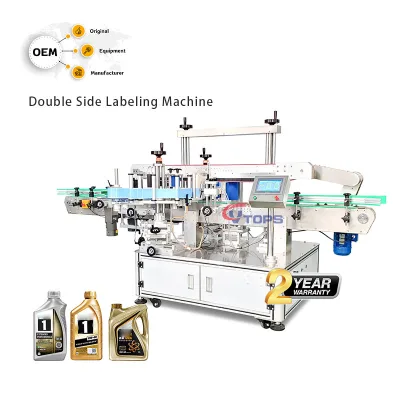
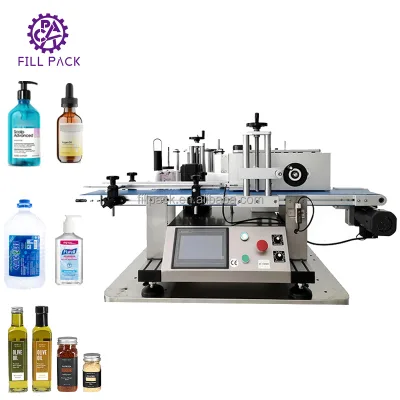

Comprehensive Sourcing Guide
Strategic Sourcing Guide for High-Accuracy Stick Labeling Machines
Understanding the Technical Landscape of Labeling Precision
When sourcing a high-accuracy stick labeling machine, buyers must first distinguish between the broad categories of labeling equipment and the specific mechanical requirements that define precision. The market presents a spectrum of solutions ranging from semi-automatic plane labelers to fully automatic vertical round bottle labeling machines. The core keyword "high accuracy" implies a specific tolerance level for label placement, which is a critical performance metric for industries such as cosmetics, dairy, and pharmaceuticals where brand presentation is paramount.
Based on observed industry data, the labeling accuracy for advanced units in this category is typically specified at ±1mm. This specification represents the maximum allowable deviation from the intended position on the product surface. For buyers evaluating potential machinery, it is essential to verify that the machine's mechanical design supports this tolerance under continuous operation. The classification of these machines often includes "Plane Labeling Machine" and "Automatic Labeling Machine" types, which utilize different application methods. The "Plane" classification often refers to machines that apply labels to flat or slightly curved surfaces, while "Automatic" units may utilize rotary or linear motion systems to handle round bottles, jars, and cans.
The driven type for these high-precision units is predominantly electric, ensuring consistent power delivery to the labeling head and conveyor systems. The application scope is extensive, covering sectors such as seasoning, snacks, tea, drinks, dairy products, hair care, skin care, cosmetics, oil, and cleaning detergents. The versatility of the machine is further enhanced by its ability to handle various bottle types, including round bottles, jars, and cans. When assessing a specific unit, buyers should confirm that the "Automatic Grade" matches their production needs, as the market offers both "Semi-Automatic" and "Automatic" configurations. The semi-automatic variants may require more operator intervention, potentially impacting the consistency of the ±1mm accuracy target, whereas fully automatic systems are designed to maintain this precision with minimal human error.
Critical Technical Specifications and Performance Metrics
To ensure the procurement of a machine that meets high-accuracy requirements, buyers must scrutinize specific technical specifications that directly influence performance. One of the most critical metrics is the labeling speed, which varies significantly across different models. Observed data indicates that labeling speeds can range from 25-60 pieces per minute for certain semi-automatic or entry-level automatic models, while other high-efficiency units can achieve speeds between 10-200 bottles per minute or 20-40 pieces per minute depending on the configuration.
The power requirements are another vital consideration. Units may operate with power ratings ranging from 400W to 1.5kW, with power supplies typically specified as AC220V at 0.5kW or 60Hz. Some advanced models support dual voltage inputs of 110V/220V with 50/60Hz compatibility, offering flexibility for international operations. The physical dimensions of the machine also play a role in the installation and operational workflow. Standardized dimensions observed in the market include configurations such as 1270800780mm, 2000X1300X1500mm, and 650450550mm. These dimensions dictate the floor space required and the integration of the machine into existing production lines.
Weight is a factor often overlooked but essential for stability, particularly when dealing with high-speed labeling that generates vibration. Weights observed range from 35kg for compact units to 180kg for larger, more robust systems. A heavier machine often correlates with better stability, which can contribute to maintaining the ±1mm accuracy target during high-speed operation. Additionally, the label roll outer diameter is a specification that affects the machine's capacity to run without frequent changeovers. A standard outer diameter of 350mm is common, allowing for extended production runs. The label height capability is another variable, with some machines supporting a range of 15-150mm, ensuring compatibility with various product packaging sizes.
| Specification Category | Observed Range/Value | Relevance to High Accuracy |
|---|---|---|
| Labeling Accuracy | ±1mm | Direct measure of placement precision |
| Labeling Speed | 20-200 Bottles/Min | Higher speeds require robust mechanics to maintain accuracy |
| Power Supply | AC220V / 110V-220V | Stable voltage prevents motor fluctuations affecting placement |
| Machine Weight | 35kg - 180kg | Heavier units offer better vibration damping |
| Label Roll Diameter | 350mm | Larger rolls reduce changeover frequency and potential misfeeds |
| Label Height Range | 15-150mm | Flexibility ensures proper alignment for different bottle sizes |
Compliance, Certification, and Safety Standards
In the context of B2B procurement, compliance and certification are non-negotiable elements that validate the safety and quality of the labeling machinery. While specific certification statuses for individual units may vary, the presence of recognized safety standards is a baseline expectation for reputable suppliers. Buyers should verify that the machinery adheres to relevant electrical and mechanical safety standards. The market often references CE certification as a standard for compliance with European health, safety, and environmental protection standards. However, buyers must treat this as a verification point rather than an automatic guarantee, as the presence of a CE mark on a product listing does not inherently validate the specific performance claims of that unit without supporting documentation.
The origin of the machinery is also a factor in compliance. Products observed in the market originate from regions such as Liaoning, China, and Henan, China (Mainland). While these regions are known for manufacturing capabilities, buyers should ensure that the specific supplier can provide evidence of compliance with the import regulations of their destination country. This includes verifying that the electrical components meet local voltage and frequency requirements, such as the 50Hz or 60Hz standards observed in different models.
Furthermore, the packaging and shipping standards are part of the compliance framework. The industry standard for exporting these machines often involves "Standard Exporting Wooden Case" or "Fumigation-Free Wooden Box Packaging." This ensures that the machinery is protected during transit and meets international phytosanitary regulations. Buyers should confirm that the packaging details align with their logistics requirements to prevent damage that could compromise the machine's precision mechanisms before installation.
Cost Drivers and Total Cost of Ownership Analysis
The cost of a high-accuracy stick labeling machine is influenced by several factors beyond the initial purchase price. The observed price range in the market is extensive, spanning from $240 to $500,000. This wide disparity reflects differences in automation levels, build quality, brand reputation, and the complexity of the labeling technology. Entry-level semi-automatic machines tend to be at the lower end of this spectrum, while fully automatic, high-speed units with advanced control systems command prices at the higher end.
Buyers must look beyond the sticker price to understand the Total Cost of Ownership (TCO). Key cost drivers include the power consumption, which varies from 400W to 1.5kW, and the maintenance requirements. Machines with higher labeling speeds and greater accuracy often require more frequent calibration and part replacement. The "Economy Labeling Machine" category suggests a focus on cost-efficiency, but buyers should weigh this against the potential for higher downtime or lower accuracy if the machine is not robust enough for their specific application.
The customization availability is another factor that can impact cost. Many suppliers offer customization options, which can increase the initial price but may reduce long-term operational costs by optimizing the machine for specific product shapes or label types. The classification of the machine, such as "Semi Automatic Labeler Plane" versus "Automatic Vertical Round Bottle Labeling Machine," also dictates the price point. Higher automation levels generally correlate with higher costs but offer better consistency and reduced labor expenses.
Typical Applications and Industry Suitability
The versatility of high-accuracy stick labeling machines makes them suitable for a wide array of industries. The observed applications include seasoning, rice, flour, snacks, fish, meat, vegetables, fruits, tea, drinks, dairy products, hair care products, skin care products, cosmetics, oil, cleaning, and detergents. This broad applicability indicates that the technology is adaptable to various product viscosities, shapes, and packaging materials.
For the cosmetics and personal care industry, the ±1mm accuracy is particularly critical, as these products often rely on precise label placement for brand aesthetics and regulatory compliance. Similarly, in the food and beverage sector, accurate labeling is essential for product identification, expiration dates, and nutritional information. The ability to handle round bottles, jars, and cans makes these machines ideal for the dairy and beverage industries, where cylindrical packaging is standard.
The "Key Selling Points" of these machines often include "Easy to Operate," which is a significant advantage for facilities with high labor turnover or limited technical expertise. However, buyers should ensure that the ease of operation does not come at the expense of precision. The "Advantage" of being an "Economy Labeling Machine" or offering "High Efficiency" and "Professional Supplier" support should be evaluated in the context of the specific production environment. For high-volume operations, the "High Efficiency" aspect, with speeds up to 200 bottles per minute, is a crucial driver for ROI.
Supplier Evaluation and Quality Control Protocols
Selecting the right supplier is as important as selecting the right machine. Buyers should evaluate suppliers based on their ability to provide detailed technical specifications and their track record in the industry. The presence of specific product models, such as TN-150DL, TN-200DH, TN-150K, HT-MT50C, and HT-TBJ260, suggests a range of options available from different manufacturers. However, buyers should not rely solely on model numbers but should request detailed performance data for each unit.
Quality control protocols are essential to ensure that the machine meets the promised accuracy standards. Buyers should inquire about the testing procedures used by the supplier to verify the ±1mm accuracy claim. This may include factory acceptance tests (FAT) where the machine is run with actual product samples to measure label placement consistency. The "Capacity" of the machine, often adjustable between 25-50 pieces per minute or higher, should be tested under load to ensure it maintains accuracy at full speed.
The "Classification" of the machine, whether it is a "Plane Labeling Machine" or an "Automatic Vertical Round Bottle Labeling Machine," should be matched to the buyer's specific product line. A mismatch in classification can lead to poor performance and increased waste. Buyers should also verify the "Automatic Grade" to ensure the level of automation aligns with their production goals. The "Function" of the machine, specifically "Adhesive Sticker Labeling," should be confirmed to ensure compatibility with the specific type of labels used in the production process.
Long-Term Procurement and Operational Considerations
Long-term procurement considerations involve planning for maintenance, scalability, and future-proofing. The "Advantage" of "Easy to Operate" is a significant factor in reducing training costs and minimizing operator error over the life of the machine. However, buyers should also consider the availability of spare parts and the technical support provided by the supplier. The "Standard Exporting Wooden Case" packaging ensures the machine arrives in good condition, but the long-term reliability depends on the quality of the internal components.
Scalability is another critical aspect. As production volumes increase, the machine's capacity to handle higher speeds without compromising accuracy becomes vital. The "Running Speed" of 10-200 bottles per minute offers a range of options, but buyers should select a unit that can grow with their business. The "Label Height" range of 15-150mm provides flexibility for future product line expansions, allowing the machine to handle different packaging sizes without requiring a new purchase.
Finally, buyers should consider the environmental impact and energy efficiency of the machine. With power supplies ranging from 400W to 1.5kW, energy consumption can add up over time. Selecting a machine with optimized power usage can contribute to lower operational costs and a smaller carbon footprint. The "Fumigation-Free Wooden Box Packaging" also reflects a commitment to environmental standards, which may be a requirement for certain international markets. By carefully evaluating these long-term factors, buyers can ensure a sustainable and efficient labeling solution that supports their business growth.
FAQs
What is the labeling accuracy for these machines?
The labeling accuracy is typically specified at ±1mm for high-precision units. This tolerance ensures correct placement on round bottles, jars, and cans during continuous operation.
Which bottle types can these machines handle?
These machines are designed to handle round bottles, jars, and cans. They support various applications including cosmetics, dairy products, and cleaning detergents.
Can the machine speed be adjusted for different needs?
Yes, running speeds are adjustable and can range from 10 to 200 bottles per minute depending on the model configuration. This flexibility allows adaptation to varying production volumes.
What power supply options are available for these units?
Power supplies typically include AC220V at 0.5kW or 60Hz, with some models supporting 110V/220V dual voltage. This ensures compatibility with different international electrical standards.
How are these machines packaged for shipping?
Machines are packed in standard exporting wooden cases or fumigation-free wooden boxes. This packaging protects the equipment during transit and meets international phytosanitary regulations.
Are customization options available for these labeling machines?
Customization is available to tailor the machine to specific product shapes or label types. Buyers should confirm specific requirements with the supplier to optimize operational efficiency.