Source High Borosilicate Glass Coffee Pot for Office, Home, and Retail
Find and compare 30 High Borosilicate Glass Coffee Pot options from China. Evaluate capacities ranging from 170ml to 1700ml, custom packaging, and eco-friendly features to match your specific sourcing needs.
Key considerations
Products List


Durable High Borosilicate Glass Handle Durable Glass Coffee Pot for Food
$1.33 - $6.89
MOQ: 1000 Pieces


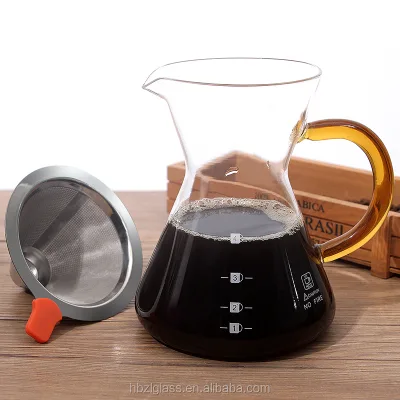
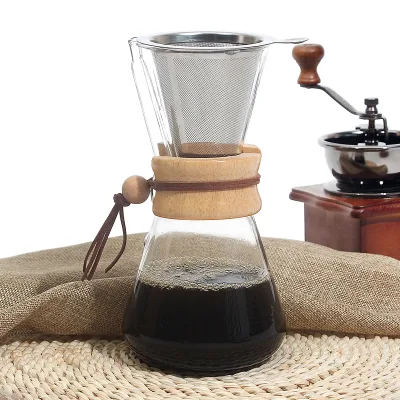


Three Size Heat Resistant High Quality Glass Coffee Pot with Filter Cup
$1.00 - $7.00
MOQ: 1000 Pieces


Comprehensive Sourcing Guide
High Borosilicate Glass Coffee Pot Sourcing Guide
The global market for high borosilicate glass coffee pots is defined by a distinct balance between thermal resilience and aesthetic clarity, making it a critical category for both commercial hospitality and specialized retail procurement. While the supplied product data highlights a diverse range of glass items including office cups, beverage containers, and food sauce vessels, the specific engineering required for a high borosilicate coffee pot demands rigorous verification of material composition beyond standard soda-lime glass. Buyers must distinguish between general glassware and specialized thermal glass, as the latter is engineered to withstand rapid temperature fluctuations without shattering, a non-negotiable trait for brewing equipment.
Procurement strategies for this category must account for the variability in observed listing signals, where product models range from single-piece office cups to multi-piece sets with capacities spanning from 170ml to 1700ml. The presence of specific attributes such as "Double Wall" construction and "Decal DECORATED" finishes in the available data suggests that suppliers often offer variations in insulation and surface treatment. A buyer seeking a high borosilicate coffee pot must therefore navigate a catalog that may include standard glassware alongside specialized thermal products, requiring a clear definition of the intended thermal load and usage environment to filter out unsuitable inventory.
Product Scope and Observed Listing Signals
The observed product landscape reveals a wide spectrum of glassware configurations, including single-piece units, sets ranging from 1 to 3 pieces, and specialized vessels with handles or specific packing requirements like Brown Boxes with EPE or Color Boxes with Bubble Bags. While the data confirms the availability of glass materials with features such as "Eco-Friendly" and "Recyclable" properties, the specific application of these items varies significantly from food sauce storage to beverage service and office use. Buyers must carefully map these observed attributes to the functional requirements of a coffee pot, ensuring that the selected model possesses the necessary structural integrity for hot liquid containment rather than merely serving as a cold beverage or food storage vessel.
Listing signals indicate that customization is a prevalent feature, with suppliers offering options for customized sizes, capacities ranging from 350ml to 1000ml or more, and specific packing solutions tailored to client needs. The presence of models like CM19, TP48, and TP70 alongside standard capacities suggests that manufacturers often operate with flexible production lines capable of adapting to specific volume requirements. However, the distinction between a standard glass cup and a high-performance coffee pot lies in the thermal specifications, which are not explicitly detailed in the general product attributes. Consequently, buyers must treat the observed "Glass Type: Clear Glass" and "Style: Simple" as baseline characteristics and demand specific technical data regarding thermal shock resistance to confirm suitability for brewing applications.
Technical Specifications to Verify
The primary technical differentiator for a high borosilicate coffee pot is its coefficient of thermal expansion, which must be significantly lower than that of standard glass to prevent failure under heat stress. While the supplied facts mention dimensional tolerances of less than ±1mm and weight tolerances of less than ±1%, these metrics apply to general manufacturing precision rather than thermal performance. Buyers must explicitly request verification of the borosilicate content percentage, as true high borosilicate glass typically contains at least 5% boron trioxide, a specification that is not guaranteed by the generic "Glass" material attribute found in the product list.
Further technical verification should focus on the construction method and wall thickness, particularly for models advertised with "Double Wall" features or specific capacities like 450ml, 600ml, or 1000ml. The data indicates that some products utilize "Handmade/Hand Blown" craft techniques, which can introduce variability in wall thickness and potential weak points if not strictly controlled. For a coffee pot, the uniformity of the glass wall is critical to ensure even heat distribution and prevent thermal stress fractures. Buyers should also verify the compatibility of the "Decal DECORATED" finish with high-temperature brewing processes, as some decorative techniques may degrade or release substances when exposed to boiling water, necessitating a review of the specific application method used on the selected model.
Compliance and Safety Documentation
Safety compliance for glassware intended for hot beverages requires adherence to strict food contact regulations, with the observed data confirming the availability of LFGB and FDA certifications for certain products. These certifications are essential indicators that the glass material and any applied decorations, such as decals or colored finishes, have been tested for leaching of heavy metals and other harmful substances under food contact conditions. However, the presence of these certifications in the general product attributes does not automatically extend to every model or capacity listed; buyers must ensure that the specific coffee pot model being sourced carries valid, current certification documents that cover the intended usage temperature range.
Beyond material safety, the documentation must address the structural integrity of the product under thermal cycling, a requirement that goes beyond standard food safety testing. While the data mentions "Eco-Friendly" and "Recyclable" features, these environmental claims do not substitute for safety testing regarding thermal shock resistance. Buyers should request third-party test reports that specifically evaluate the product's ability to withstand the transition from boiling water to ambient temperatures without cracking. Additionally, if the product includes accessories such as handles or lids, the safety documentation must cover the thermal properties of these components to ensure they do not become hazardous during the brewing process.
Cost Drivers and Commercial Terms
The commercial landscape for glass coffee pots is influenced by a wide range of Minimum Order Quantities (MOQs), with observed values spanning from 48 units to 5000 units, reflecting the diverse scale of supplier capabilities. The price range observed between 1 and 18.5 USD suggests significant variation based on factors such as glass thickness, customization level, and packaging complexity. Buyers must recognize that lower-priced items often correspond to standard, non-customized models with minimal packaging, while higher costs may be driven by specialized thermal engineering, custom branding, or complex assembly involving multiple components like handles and lids.
Packaging and logistics represent another critical cost driver, with observed options ranging from simple Brown Boxes to more protective Color Boxes with Bubble Bags, and even Pallets for bulk shipments. The choice of packaging directly impacts the unit cost and the risk of breakage during transit, particularly for fragile glass items. Buyers should evaluate the trade-off between protective packaging costs and potential loss rates, noting that some suppliers offer "Free Packing" options which may imply standard, less protective packaging. Furthermore, the availability of customization, such as specific capacities or decorative finishes, will invariably increase the unit price and may require higher MOQs to justify the setup costs for the manufacturer.
Supplier Qualification and Quality Control
Supplier qualification for high borosilicate glass products requires a deep dive into the manufacturer's production capabilities, specifically their ability to maintain consistent thermal properties across large batches. The observed data indicates that products originate from locations such as Hebei, China, and that some items are "Handmade/Hand Blown," which introduces a variable element that must be managed through rigorous quality control protocols. Buyers should verify the supplier's in-house testing procedures for thermal shock and dimensional consistency, ensuring that the claimed tolerances of ±1mm are maintained throughout the production run.
Quality control processes must also address the integrity of surface treatments and assembly, particularly for products featuring "Decal DECORATED" finishes or "Colored" glass types. The durability of these finishes under repeated heating and cooling cycles is a common failure point that requires specific inspection criteria. Buyers should request evidence of the supplier's defect rate management and their protocol for handling non-conforming units, especially given the fragility of glass products. Additionally, the supplier's ability to provide consistent lead times and manage the variability inherent in handmade processes is crucial for maintaining supply chain stability.
Long-Term Procurement Checks
Sustaining a successful procurement relationship for high borosilicate glass coffee pots requires ongoing monitoring of product consistency and supplier adaptability to changing market demands. Buyers should establish a schedule for periodic re-verification of material certifications and thermal performance tests, as manufacturing processes can drift over time even with established suppliers. The observed range of product models and capacities suggests that suppliers may frequently update their offerings; therefore, buyers must ensure that any new models introduced into the supply chain undergo the same rigorous qualification process as the initial products.
Long-term checks should also include an assessment of the supplier's responsiveness to quality issues and their capacity to scale production without compromising on safety or performance. Given the observed MOQ ranges and customization options, buyers must evaluate whether the supplier can accommodate fluctuating order volumes while maintaining the required quality standards. Regular audits of the supplier's quality control records and a review of customer feedback regarding product durability will help identify potential risks early. Finally, buyers should maintain a clear record of all technical specifications and compliance documents to ensure that the procurement remains aligned with safety standards and operational requirements over the life of the contract.
FAQs
What certifications do the glass coffee pots have?
The glass coffee pots hold LFGB and FDA certifications for safety. These standards ensure the products meet strict food contact requirements for international markets.
Can I request custom sizes for the glass cups?
Customization is available for various product models to meet specific needs. Buyers can specify requirements such as 350ml, 450ml, or other capacities based on their preference.
What is the minimum order quantity for these items?
Minimum order quantities range from 200 to 5000 pieces depending on the specific model selected. Some items require 200 units while others may need up to 5000 units.
How are the glass products packaged for shipping?
Packaging options include brown boxes with EPE, color boxes with bubble bags, or cartons. Specific models like TP48 use color boxes while others utilize brown boxes for protection.
Where are these glass coffee pots manufactured?
The products originate from Hebei, China, with some listings noting China as the general origin. This location serves as the primary manufacturing hub for the supplied glass items.
What features make these glass products eco-friendly?
The products are designed to be eco-friendly and recyclable for sustainable use. This feature aligns with modern environmental standards for glass beverage and food containers.