Source High Brightness LED Christmas Angel for Home, Commercial, Landscaping
Compare 30 listings of High Brightness LED Christmas Angel designed for indoor, outdoor, and commercial applications. Buyers can evaluate battery or electric power options, customization features, and certifications like CE and RoHS to find suitable festival decorations.
Key considerations
Products List


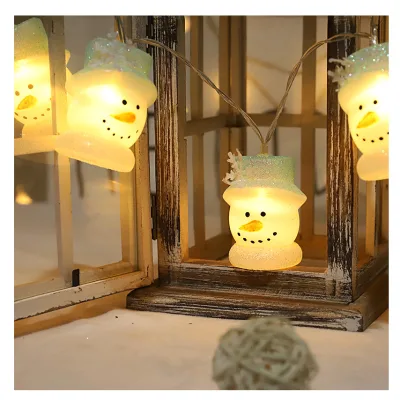
New Christmas LED Lights Christmas Tree Decoration Lights String Santa Claus
$0.49 - $0.54
MOQ: 1800 Pieces




Comprehensive Sourcing Guide
Strategic Sourcing Guide for High Brightness LED Christmas Angel Decorations
Understanding Product Attributes and Technical Specifications
When sourcing High Brightness LED Christmas Angel decorations, buyers must first navigate a complex landscape of product attributes that vary significantly across different listings. The core keyword implies a specific aesthetic and functional requirement: a luminous, high-intensity angel figure designed for festive illumination. However, the available market data reveals a diverse array of configurations that do not all align with a single "high brightness" definition. The product category encompasses items labeled as "Christmas Lights," "Christmas Decorations," and "Decoration Tree Light," indicating that the term "angel" may refer to a specific shape within a broader category of holiday lighting or a standalone decorative unit.
Technical specifications are critical for verifying the "high brightness" claim. The observed data indicates multiple power source configurations, including battery-operated units and electric-powered models. For high brightness applications, electric power sources are generally preferred to sustain the intensity required for outdoor visibility or large indoor displays. The voltage specifications observed include 220V/60Hz and lower voltage options such as 4.5V. Buyers must correlate the voltage and wattage with the intended application; for instance, a unit with a power consumption of less than 6W may be suitable for battery operation but might not meet the "high brightness" threshold for commercial landscaping without specific high-efficiency LED arrays.
The emitting color is another pivotal specification. While some listings specify "Multicolour" or "Changeable" emitting colors, others list "White" or "Single Color." A high brightness angel decoration often relies on white or warm white LEDs to create a glowing, ethereal effect, though multicolour options are available for more vibrant displays. The material composition is predominantly plastic, which is standard for mass-produced holiday lighting, but the quality of the plastic affects light diffusion and durability. The product models range from generic identifiers like "Festival light" to specific codes such as "WF-D25144" and "GP-SL-027," suggesting that buyers should request detailed datasheets for specific model numbers to confirm the lumen output and LED density.
Compliance, Certification, and Safety Standards
Safety and regulatory compliance are non-negotiable when importing electrical holiday decorations, particularly those intended for commercial or outdoor use. The observed product data highlights a mix of certification statuses, with some listings explicitly mentioning CE, RoHS, GS, BS, PS, and UL certifications. These standards are essential for ensuring that the electrical components, such as the LED drivers and wiring, meet international safety requirements. For example, CE certification indicates conformity with health, safety, and environmental protection standards for products sold within the European Economic Area, while UL certification is a benchmark for safety in North America.
Buyers must verify that the specific supplier and product model carry the necessary certifications for their target market. The data shows that some products adhere to "AS CUSTOMIZED" standards, while others list specific international standards like CE, RoHS, and GS. It is crucial to distinguish between products that are certified and those that are merely "customized" in design. A product claiming to be "High Brightness" must also demonstrate that the high current draw required for such brightness does not compromise safety standards. The IP rating is another critical factor; while one data point mentions "IPPower:<6W," which appears to be a formatting error regarding power rather than ingress protection, buyers should specifically request the IP rating (e.g., IP44, IP65) to ensure the product is suitable for outdoor exposure to rain and dust.
The origin of the products is also a factor in compliance. The data indicates origins in China, specifically from regions like Hangzhou/Zhejiang and Dongguan. While these are major manufacturing hubs, buyers should not assume that all products from these locations automatically meet specific international standards. The presence of certifications like GS (Geprüfte Sicherheit) and BS (British Standards) suggests a higher level of scrutiny, but verification through third-party testing reports is necessary. Buyers should request copies of the actual test reports rather than relying on the supplier's claim of certification, ensuring that the "High Brightness" claim does not come at the cost of electrical safety.
Cost Drivers and Pricing Dynamics
The pricing structure for High Brightness LED Christmas Angel decorations is influenced by several variable factors, including power source, customization level, and certification requirements. The observed price range in the market spans from $0.10 to $50,000, a vast disparity that reflects the difference between small, battery-operated novelty items and large-scale commercial installations. For a specific "angel" decoration, the cost will likely fall within the mid-to-high range if it requires high-brightness LEDs, complex molding, and robust electrical components.
One of the primary cost drivers is the power source and voltage requirements. Electric-powered units operating at 220V/60Hz generally involve more complex circuitry and safety components compared to battery-operated 4.5V units, which can increase the unit cost. Additionally, the "High Brightness" attribute often necessitates higher-quality LEDs and more efficient heat dissipation mechanisms, which adds to the manufacturing cost. The material used, primarily plastic, also affects pricing; higher-grade, UV-resistant plastics that maintain brightness and color over time are more expensive than standard, lower-grade plastics that may degrade quickly under sunlight.
Customization is another significant cost factor. The data shows that some products are "Customized" with OEM capabilities, while others are "Non-Customized." Custom molds for an angel shape, specific color configurations, and unique packaging designs will incur additional tooling and setup costs. The Minimum Order Quantity (MOQ) also plays a role in the unit price; observed MOQs range from 1 to 3000 pieces, with a specific listing showing an MOQ of 480 pieces. Buyers ordering smaller quantities may face higher per-unit costs, while larger orders can leverage economies of scale. The lead time, observed between 30-45 days, also impacts cost, as expedited shipping or rush production fees may apply if the standard timeline is not met.
Typical Applications and Usage Scenarios
The versatility of LED Christmas angel decorations allows them to be deployed in a wide range of applications, from residential holiday decorating to large-scale commercial events. The observed data lists applications including "Indoor," "Outdoor," "Commercial," "Home," "Landscaping," and "Festival." For high brightness models, outdoor and commercial applications are particularly relevant, as the intense illumination is required to be visible against the night sky or in large public spaces.
In residential settings, these decorations are often used as focal points on Christmas trees, as seen in listings labeled "Decoration Tree Light," or as standalone lawn ornaments. The "Suitable for: All" and "Suitable for: Children" attributes suggest that these products are designed to be safe and appealing for family environments. However, for outdoor use, the durability of the plastic casing and the weatherproofing of the electrical components become paramount. The "Usage: Holiday Decoration" and "Usage: Festival, Home, Commercial, Landscaping" tags indicate that these products are versatile enough to serve as temporary festive lighting or as part of a permanent landscaping plan.
Commercial applications, such as shopping malls, hotels, and public squares, often require high brightness to create a striking visual impact. The "Emitting Color: Changeable" feature is particularly valuable in commercial settings, where dynamic lighting effects can enhance the festive atmosphere. Buyers should consider the scale of the installation; a single angel light may be sufficient for a home garden, but a commercial landscape might require multiple units synchronized for a cohesive display. The "Product Packing" details, such as "1PC/PVC Tube" or "4PCS Color Box/Carton," also influence the logistics of installation and storage, with bulk packaging being more efficient for large commercial projects.
Supplier Evaluation and Sourcing Strategy
Evaluating suppliers for High Brightness LED Christmas Angel decorations requires a rigorous approach to ensure reliability and product quality. The data indicates that suppliers are located in China, with specific manufacturing hubs in Hangzhou/Zhejiang and Dongguan. Buyers should verify the supplier's capacity to handle the specific requirements of high brightness products, including their ability to source high-quality LEDs and manage complex electrical assemblies. The presence of OEM capabilities suggests that suppliers can tailor products to specific brand requirements, which is a positive indicator for buyers seeking unique designs.
When evaluating suppliers, buyers should look for evidence of consistent quality control and adherence to the certifications mentioned earlier. The "Lead Time: 30-45 days" and "Sample Time: 3-10 days" provide a baseline for production planning, but buyers should confirm these timelines with the specific supplier to avoid delays. The "MOQ: 480PCS" and other MOQ ranges indicate that suppliers may have different thresholds for custom versus standard orders. Buyers should negotiate terms that align with their inventory needs, balancing the cost benefits of larger orders with the flexibility of smaller batches.
The "Product Packing" methods, ranging from simple PVC tubes to color boxes and cartons, should be evaluated based on the fragility of the product and the shipping conditions. High brightness LEDs can be sensitive to physical shock, so robust packaging is essential. Additionally, buyers should assess the supplier's communication and responsiveness, as clear communication is vital for resolving any issues related to customization, certification, or shipping. The "Customized: Customized" and "Customized: Non-Customized" attributes highlight the importance of clarifying the level of customization required before placing an order to ensure the supplier can meet the specific design expectations.
Quality Control and Long-Term Procurement Considerations
Quality control is paramount when sourcing high brightness LED decorations, as the performance of the LEDs and the durability of the materials directly impact the product's lifespan and safety. Buyers should implement a comprehensive quality control strategy that includes pre-production sampling, in-process inspections, and final random inspections. The "Sample Time: 3-10 days" allows for the evaluation of product samples before mass production, which is a critical step in verifying the "high brightness" claim and the overall build quality.
Long-term procurement considerations involve building a sustainable relationship with suppliers who can consistently deliver high-quality products. The "Lead Time: 30-45 days" suggests a standard production cycle, but buyers should plan for potential delays due to seasonal demand spikes or supply chain disruptions. Establishing clear quality standards and inspection criteria is essential for maintaining product consistency over time. Buyers should also consider the environmental impact of the products, looking for suppliers who use eco-friendly materials and packaging, as indicated by the "RoHS" certification which restricts the use of hazardous substances.
The "Standard: 5m+30L" and "Standard: 24239" specifications provide insights into the physical dimensions and configurations of the products, which are important for planning installations. Buyers should ensure that the product dimensions and specifications align with their intended use cases. Furthermore, the "Certification: CE, RoHS, UL" and similar standards should be verified for each batch of products to ensure ongoing compliance. By focusing on these quality control and long-term factors, buyers can secure a reliable supply of High Brightness LED Christmas Angel decorations that meet their aesthetic and functional requirements while maintaining safety and compliance standards.
Comparative Analysis of Product Configurations
To assist buyers in making informed decisions, the following table summarizes the key variations observed in the product data, highlighting the differences in specifications, certifications, and applications.
| Feature Category | Configuration A | Configuration B | Configuration C |
|---|---|---|---|
| Power Source | Battery (4.5V) | Electric (220V/60Hz) | Electric (<6W) |
| Application | Indoor, Home | Outdoor, Commercial | Indoor, Festival |
| Color Output | Multicolour | White | Changeable |
| Certifications | CE, RoHS, GS | CE, RoHS, UL | None Listed |
| Origin | Hangzhou/Zhejiang | Dongguan | China (General) |
| MOQ | 480 PCS | Variable | 1-3000 PCS |
| Packing | PVC Tube | Color Box/Carton | Customised Design |
| Model Type | Decoration Tree Light | Festival Light | New Design |
This comparison underscores the diversity of the market. Buyers must carefully match their specific needs—such as the required power source, application environment, and certification requirements—with the appropriate configuration. For instance, a commercial outdoor installation would likely require Configuration B with its electric power and robust certifications, whereas a small indoor display might be better served by Configuration A with its battery operation and multicolour output. Understanding these distinctions is essential for effective sourcing and procurement planning.
FAQs
What power sources are available for these lights?
Both battery and electric power sources are available for these Christmas lights. Buyers can select models operating at 4.5V for battery use or 220V/60Hz for electric connections depending on the installation needs.
Which certifications are commonly listed for these products?
Common certifications include CE, RoHS, GS, BS, PS, and UL for safety compliance. Some products also adhere to customized standards, but specific models like WF-D25144 explicitly list CE and RoHS.
Can these lights be customized for specific designs?
Yes, customization is available with OEM capabilities for many listings. However, some specific models are listed as non-customized, so buyers must verify the customization status before ordering.
How long is the typical lead time for production?
The standard lead time ranges from 30 to 45 days for production. Sample times are shorter, typically taking between 3 to 10 days to prepare for buyer evaluation.
What is the minimum order quantity for these decorations?
The minimum order quantity varies, with observed ranges from 1 to 3000 pieces. One specific listing indicates an MOQ of 480 pieces, so buyers should check individual supplier requirements.
Where are these products typically manufactured?
Products originate from China, with specific manufacturing hubs in Hangzhou, Zhejiang, and Dongguan. Buyers should verify the exact origin for each supplier to ensure logistical planning.