Source High Efficiency Cassava Washing and Peeling Machine for Farms, Factories, and Starch Plants
Find and compare 30 High Efficiency Cassava Washing and Peeling Machine options from verified Chinese manufacturers. Evaluate models like the JM-QP and JH-MG based on capacity, automation, and stainless steel construction to suit commercial processing needs.
Key considerations
Products List


High Efficient Casava Cleaning Processing Machine Cassava Peeling and Washing Machine
$2700.00 - $3500.00
MOQ: 1 Pieces

Stainless Steel Cassava Washing Peeling Machine Best-Selling Cassava Peeling Machine
$2700.00 - $3500.00
MOQ: 1 Pieces


Cassava Peeling Machine Making Machine Washer Production Washing and Peeling Machine
$1800.00 - $2000.00
MOQ: 1 Pieces


Cassava Peeling Machine Cassava Peeler and Washer for Cassava Processing Plant
$2800.00 - $20000.00
MOQ: 1 Sets


Cassava Cutting Machine/Cassava Peeling Machine/Cassava Peeler and Slicer
$2800.00 - $20000.00
MOQ: 1 Sets


Industrial High Output Cassava Peeler Cassava Peeling Machine for Philippines
$2800.00 - $20000.00
MOQ: 1 Sets

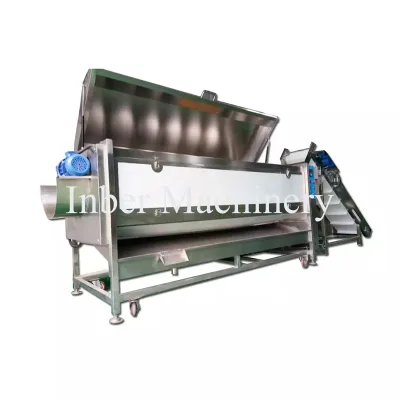


Industrial Cassava Peeling Slicing Machine Cassava Peeler and Cutter Machine
$800.00 - $885.00
MOQ: 1 set


Automatic Potato Cassava Vegetable Peeler Peeling and Washing Machine
$2000.00 - $4500.00
MOQ: 1 Pieces

High-Performance Cassava Peeling and Bubble Washing Machine for Vegetables
$3000.00 - $8000.00
MOQ: 1 Pieces


Comprehensive Sourcing Guide
High Efficiency Cassava Washing and Peeling Machine Sourcing Guide
Procuring industrial-grade washing and peeling equipment for cassava processing requires a disciplined approach to technical verification and supplier qualification. The market offers a variety of automatic peeling and washing lines, ranging from compact units suitable for small-scale farms to high-capacity systems designed for starch factories. Buyers must navigate a landscape where specifications such as power consumption, material grade, and automation level vary significantly between models. This guide provides a structured framework for evaluating these machines, ensuring that the selected equipment aligns with operational capacity, hygiene standards, and long-term maintenance requirements.
The following sections detail the critical evaluation points for sourcing high-efficiency cassava washing and peeling machinery. By focusing on observable listing signals, technical specifications, and commercial terms, procurement teams can mitigate risks associated with performance mismatches and after-sales service gaps. The guidance is grounded in typical industry practices and the specific attributes observed in current market listings, providing a robust basis for decision-making without relying on unverified claims or specific supplier endorsements.
Product Scope and Observed Listing Signals
The current market for cassava processing equipment includes a diverse range of automatic peeling and washing machines, often categorized by their specific application fields such as commercial catering, starch production, or farm-level processing. Listings frequently highlight key selling points like high efficiency, easy operation, and high productivity, which are critical for maintaining throughput in continuous processing environments. Buyers should observe that these machines are typically constructed from stainless steel, with grades such as SS304 or SUS 304 being common to ensure corrosion resistance and hygiene compliance. The presence of video outgoing inspections and online support services indicates a growing trend toward remote verification and digital after-sales engagement, which can be valuable for initial due diligence.
Observed product models and specifications suggest a variability in physical dimensions and power requirements, reflecting the modular nature of these production lines. For instance, some units are described with dimensions around 1.60.960.94m or 1400850800mm, while others may be customized to fit specific facility layouts. Power ratings observed in listings range from 1.1KW to 1.5KW, indicating that energy consumption is a variable factor that must be matched to the machine’s capacity and intended workload. The raw material input is consistently identified as fresh cassava or vegetables, with final products including cassava flour, chips, starch, or garri, confirming the machine’s versatility in handling different stages of cassava processing.
Technical Specifications to Verify
When evaluating technical specifications, buyers must prioritize the verification of core components and automation levels to ensure operational reliability. The presence of PLC (Programmable Logic Controller) systems and pressure vessels in some listings suggests a higher degree of automation and process control, which is essential for consistent peeling and washing results. It is crucial to confirm the degree of automation, as fully automatic systems reduce labor costs and minimize human error, whereas semi-automatic options may require more manual intervention. Additionally, the material of construction should be strictly verified as food-grade stainless steel, with SS304 being a standard benchmark for durability and ease of cleaning in wet processing environments.
Capacity and output metrics are another critical area for verification, as they directly impact the machine’s suitability for the buyer’s production volume. Listings indicate capacities ranging from 300-1500kg/H, but these figures should be treated as observations rather than guaranteed performance metrics. Buyers should request detailed performance data under specific operating conditions, including the type of cassava variety and moisture content, to validate the claimed throughput. Furthermore, the weight of the machine, which can vary from 150kg to 500kg depending on the model, is an important factor for facility planning, as it influences floor loading requirements and the need for specialized installation or foundation work.
Compliance and Safety Documentation
Compliance with food safety and electrical safety standards is non-negotiable for any machinery used in food processing. Buyers must ensure that the supplier provides documentation confirming that the machine’s materials, particularly the stainless steel components, meet relevant food contact regulations. While specific certification names are not universally listed, the use of SS304 material is a strong indicator of compliance with general hygiene standards. It is advisable to request material certificates or mill test reports to verify the grade and composition of the steel, ensuring that it is free from contaminants and suitable for direct contact with food products.
Electrical safety and operational safety features must also be thoroughly documented. Given that these machines operate at standard industrial voltages such as 380V, buyers should verify that the electrical systems comply with local and international safety standards, including proper grounding, insulation, and emergency stop mechanisms. The inclusion of PLC controls often implies the presence of safety interlocks, but these should be explicitly confirmed. Additionally, buyers should inquire about the availability of operation manuals, safety guidelines, and maintenance schedules, which are essential for training staff and ensuring safe daily operation.
Cost Drivers and Commercial Terms
The cost of high-efficiency cassava washing and peeling machines is influenced by several factors, including the degree of automation, material quality, and customization options. Listings show a price range that reflects the variability in specifications, with more advanced features such as PLC controls and higher capacity outputs commanding higher prices. Buyers should be aware that customization is often available, which can impact both the cost and the lead time. It is important to clarify whether the quoted price includes all necessary components, such as motors, pressure vessels, and control panels, to avoid hidden costs during the procurement process.
Commercial terms, including payment conditions, shipping, and after-sales service, play a significant role in the total cost of ownership. The observed MOQ (Minimum Order Quantity) ranges from 1 to 2 units, suggesting that these machines are often sold as individual units or small batches rather than in large volumes. Buyers should negotiate clear terms regarding packaging, which is typically described as wooden cases or standard export wooden cases, to ensure safe transit. Additionally, the availability of online support, spare parts, and layout assistance should be explicitly included in the contract, as these services are critical for minimizing downtime and ensuring long-term operational efficiency.
Supplier Qualification and Quality Control
Supplier qualification is a critical step in mitigating procurement risks, particularly when sourcing industrial equipment from international markets. Buyers should verify the supplier’s location and origin, as many listings indicate origins in China, including specific provinces like Henan and Shandong. While this information provides context, it is essential to conduct a thorough background check on the supplier’s manufacturing capabilities, quality control processes, and track record. Requesting video outgoing inspections, which are commonly offered, can provide valuable insights into the machine’s construction and functionality before shipment.
Quality control measures should be established both during manufacturing and upon delivery. Buyers should insist on pre-shipment inspections, either conducted by a third-party agency or by the buyer’s own representatives, to verify that the machine meets the agreed-upon specifications. This includes checking the material grade, electrical connections, and overall build quality. Additionally, buyers should confirm the supplier’s ability to provide installation guidance and layout planning, as these services can significantly impact the efficiency of the production line. Clear communication channels and defined response times for after-sales support are also essential for ensuring that any issues are resolved promptly.
Long-Term Procurement Checks
Long-term procurement success depends on the supplier’s ability to provide sustained support and spare parts availability. Buyers should verify the supplier’s commitment to after-sales service, including the availability of spare parts and technical support. The observed provision of online support and spare parts services is a positive indicator, but buyers should establish a clear protocol for requesting and receiving these services. It is also important to inquire about the warranty period and the scope of coverage, ensuring that any defects or malfunctions are addressed without additional cost to the buyer.
Regular maintenance and performance monitoring are essential for maximizing the lifespan and efficiency of the washing and peeling machine. Buyers should develop a maintenance schedule based on the manufacturer’s recommendations, which should include routine cleaning, lubrication, and inspection of critical components such as motors and PLC systems. Additionally, buyers should keep a record of all maintenance activities and any issues encountered, which can be valuable for troubleshooting and future procurement decisions. By establishing a proactive maintenance strategy and maintaining a strong relationship with the supplier, buyers can ensure that their cassava processing operations remain efficient and cost-effective over the long term.
FAQs
What is the power consumption of the machine?
The machine operates with a power consumption of 1.5KW or 1.1KW depending on the specific model configuration. This ensures efficient energy usage while maintaining high output for vegetable processing tasks.
Can the machine handle fresh cassava as raw material?
Yes, the equipment is designed to process fresh cassava into final products like flour, chips, starch, and garri. It is suitable for cassava farms and food factories requiring automated peeling and washing.
What material is used to construct the machine?
The machine is constructed from Stainless Steel 304 or SUS 304 to ensure durability and hygiene. This material choice supports the high efficiency and easy operation required for commercial catering and industrial applications.
How is the machine packed for shipping?
The unit is packed in a standard export wooden case or a wooden case to ensure safe transport. This packaging protects the heavy machinery, which can weigh up to 500kg, during international shipping.
What after-sales support is provided for the equipment?
Online support is provided to assist buyers with operational issues and maintenance. Additional services include spare parts supply, layout planning, and installation guidance for factories and farms.
What is the production capacity of the washing line?
The capacity ranges from 300 to 1500kg per hour depending on the specific model and customization. This allows the machine to meet varying demands in commercial catering and large-scale starch factories.
Is the machine fully automatic in operation?
Yes, the degree of automation is automatic, featuring core components like PLC and motors for streamlined processing. This design ensures high productivity and easy operation for vegetable peeling and washing tasks.