Source High Efficiency Paddy Separator for Wheat, Maize, and Beans
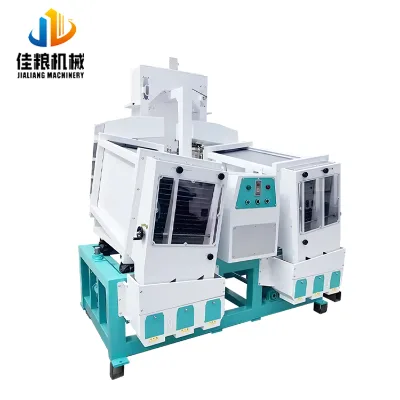
Find 30 High Efficiency Paddy Separator units suitable for processing wheat, maize, beans, sesame, and ground nuts. Buyers can compare vertical and horizontal models with capacities ranging from 3 to 10 tons per hour and various screen layer configurations.
Key considerations
Products List


Mgcz40*15*2 Minimal Downtime Paddy Rice Separator Machine Paddy Separator
$1999.00 - $5999.00
MOQ: 1 Sets


Mgcz100*16 Versatile Cheap Price Rice Mill Mini. Paddy Separator for Sale
$1800.00 - $4200.00
MOQ: 1 Sets

High-Quality Energy-Saving Gravity Paddy Separator for Farm Rice Processing
$2500.00 - $5000.00
MOQ: 1 Pieces

Consistent Quality Easy Maintenance Gravity Paddy Separator for Rice Processing
$2500.00 - $5000.00
MOQ: 1 Pieces

Hot-Selling Energy-Saving Paddy and Brown Rice Separator for Farm Rice Processing
$2500.00 - $5000.00
MOQ: 1 Pieces

Grain Separator Paddy Separator Rice Separator Seed Cleaning Machine
$5000.00 - $10000.00
MOQ: 1 Pieces


Gravity Separator for Wheat Maize Corn Paddy Rice Soybean Quinoa Sesame Chia Seed
$8500.00 - $18000.00
MOQ: 1 set


High Precision Gravity Separator with Stable Performance for Agriculture
$5000.00 - $13000.00
MOQ: 1 Pieces


Agricultural Seed Stone Separator for Miscellaneous Grains and Beans
$2000.00 - $4600.00
MOQ: 1 Pieces
Comprehensive Sourcing Guide
High Efficiency Paddy Separator Sourcing Guide
Selecting the right paddy separator is a critical decision for rice millers aiming to maximize yield and maintain grain quality. These machines are designed to separate unhusked paddy from husked rice using gravity and vibration, ensuring that only fully milled grains proceed to the polishing stage. By effectively recycling unhusked kernels back into the milling process, operators can significantly reduce waste and improve overall throughput. The market offers a variety of configurations, ranging from vertical to horizontal designs, each suited to specific factory layouts and capacity requirements.
Procurement teams must navigate a diverse landscape of manufacturers, primarily concentrated in regions like Shandong, China, where specialized agricultural machinery is produced. The observed product range includes models with capacities spanning from 3 to 10 tons per hour, allowing buyers to scale their operations according to demand. Understanding the technical nuances of these separators, such as screen layers, power consumption, and installation angles, is essential for making an informed purchase that aligns with both current production needs and future expansion plans.
Product Scope and Observed Listing Signals
The current market for high-efficiency paddy separators features a wide array of models tailored to different processing volumes and material types. Listings indicate a price range of $1,500 to $29,000 USD, reflecting the variance in capacity, automation level, and build quality. Minimum Order Quantities (MOQ) are consistently observed at one unit, suggesting that suppliers are accustomed to serving individual millers or small-to-medium enterprises rather than requiring bulk industrial orders. This flexibility allows buyers to test specific models or replace existing units without committing to large inventories.
Product attributes reveal distinct design philosophies, with options available in both vertical and horizontal appearances. Vertical models often utilize a compact footprint, while horizontal units may offer different vibration dynamics. The processing materials supported include wheat, maize, various beans, sesame, ground nuts, and specifically rice, indicating that many separators are versatile enough for multi-crop milling facilities. However, the core function remains focused on husk separation, with specific models highlighted for their ability to handle paddy with high efficiency and minimal grain breakage.
Technical Specifications to Verify
When evaluating technical specifications, buyers should prioritize capacity and power consumption to ensure the machine matches their daily processing goals. Observed capacities range from 3 to 10 tons per hour, with specific models like the 5XJC rated at 3 tons per hour and the 5XZC handling 5-10 tons per hour. Power requirements vary accordingly, with some units operating at 1.1 kW or 2.2 kW, while others may require higher voltage inputs such as 380V. Verifying the exact power draw is crucial for ensuring that the facility’s electrical infrastructure can support the equipment without overloading circuits.
The internal configuration of the separator, particularly the number of screen layers and the installation angles, directly impacts separation efficiency. Listings show configurations with 2-4 screen layers for some models, while others feature up to 15 layers for finer separation. The installation angle is a critical mechanical parameter, with horizontal units often requiring an angle of 6 to 6.5 degrees and vertical units needing 14 to 18 degrees. Additionally, spindle speeds exceeding 258 RPM are noted for certain models, which influences the vibration intensity and the rate at which paddy is processed through the screens.
Compliance and Safety Documentation
Safety and operational compliance are paramount when integrating heavy machinery into a rice mill environment. Buyers should request documentation that confirms the machine meets international quality standards, such as ISO9002, which indicates a robust quality management system. Additionally, third-party certifications like SGS may be provided to verify material integrity and manufacturing consistency. These documents serve as proof that the supplier adheres to recognized industry practices, reducing the risk of receiving substandard equipment that may fail prematurely or operate unsafely.
Beyond manufacturing standards, buyers must ensure that the electrical components and mechanical guards comply with local safety regulations in their country of import. While specific electrical codes vary by region, the presence of a 380V voltage rating suggests industrial-grade power requirements that must be matched with appropriate circuit breakers and grounding systems. It is also advisable to verify that the machine’s design includes necessary safety interlocks and protective covers to prevent operator injury during maintenance or routine cleaning procedures.
Cost Drivers and Commercial Terms
The final cost of a paddy separator is influenced by several factors, including capacity, customization options, and packaging requirements. Higher capacity models, such as those processing 10 tons per hour, naturally command higher prices due to the increased material and engineering involved. Customization is widely available, allowing buyers to specify colors like green or other custom shades, and to adjust screen layers based on their specific grain characteristics. These customizations can affect the lead time and final price, so buyers should clarify all requirements upfront to avoid unexpected charges.
Commercial terms also play a significant role in the total cost of ownership. Delivery times are typically observed between 5 and 15 days, which is relatively fast for industrial machinery, but this can vary based on the level of customization and current production loads. Packaging is designed for sea transportation, often using standard export packages or wooden cases to protect the equipment during transit. Buyers should negotiate shipping terms carefully, as the weight of these units, ranging from 800 kg to 1200 kg, can significantly impact freight costs.
Supplier Qualification and Quality Control
Evaluating supplier qualifications is essential to ensure long-term reliability and support. Buyers should verify the supplier’s origin, with many manufacturers located in Shandong, China, a hub for agricultural machinery production. It is important to confirm that the supplier provides comprehensive after-sales service, including online guidance and the option for engineer overseas guidance for installation and troubleshooting. This support is critical for minimizing downtime and ensuring that the machine is set up correctly, particularly regarding the precise installation angles and spindle speeds.
Quality control processes should be transparent, with suppliers willing to provide video inspections or detailed photos of the machine before shipment. The working life of these separators is estimated to be between 15 and 30 years, indicating that durable construction is a key selling point. Buyers should inquire about the warranty period, which is commonly offered at 2 years, and clarify what components are covered. Understanding the warranty terms helps in assessing the supplier’s confidence in their product and provides a safety net for potential manufacturing defects.
Long-Term Procurement Checks
To ensure sustained performance, buyers should establish a maintenance plan that includes regular cleaning and inspection of the screen layers. The air dust cleaning system, which may operate twice per cycle, helps prevent clogging and maintains separation efficiency over time. Buyers should verify the availability of spare parts, such as screens and vibration motors, to ensure that routine maintenance can be performed without significant delays. Having a reliable supply chain for consumables and replacement parts is crucial for keeping the milling operation running smoothly.
Finally, buyers should monitor the machine’s performance metrics, such as the percentage of unhusked paddy in the final rice output, to ensure it meets their quality standards. Regular calibration of the installation angle and spindle speed may be necessary as the machine ages or as grain characteristics change. By maintaining open communication with the supplier for technical support and staying informed about any updates or improvements in separator technology, buyers can maximize the return on their investment and maintain high-quality rice production for years to come.
FAQs
What is the capacity range for high efficiency paddy separators?
The capacity ranges from 3 to 10 tons per hour depending on the specific model selected. Some units offer capacities between 3.5 and 5.5 tons per hour, while others are rated at 3 to 4 tons per hour for different processing needs.
Can these machines be customized for specific requirements?
Yes, customization is available for color and other specifications based on buyer needs. The products can be customized to match specific operational demands while maintaining the core functionality of a High Efficiency Paddy Separator.
What certifications do the manufacturers hold for these machines?
The products hold ISO9002 and SGS certifications to ensure quality and safety standards. These certifications verify that the manufacturing processes meet international requirements for agricultural machinery production and export.
How long is the warranty period for the equipment?
The warranty time provided is 2 years for the machinery. This coverage ensures support for the initial operational period while the equipment is used in agriculture machinery applications.
What is the delivery time for orders placed?
The delivery time typically ranges from 5 to 15 days after order confirmation. This lead time applies to standard export packages or wooden cases suitable for sea transportation.
Which materials can these separators process effectively?
These machines can process wheat, maize, all kinds of beans, sesame, ground nuts, and rice. The design supports multiple processing materials to serve diverse agricultural needs efficiently.
What after-sales services are provided for the equipment?
Online guidance or engineer overseas guidance is provided for after-sales service. This support ensures proper installation and operation of the High Efficiency Paddy Separator in various locations.