Source High-mounted Brake Light for Trucks, Cars, and SUVs
Find 30 High-mounted Brake Light options from verified Chinese manufacturers. Compare LED signal lights with IP67 waterproof ratings and various mounting sizes for vehicle repair and replacement needs.
Key considerations
Products List


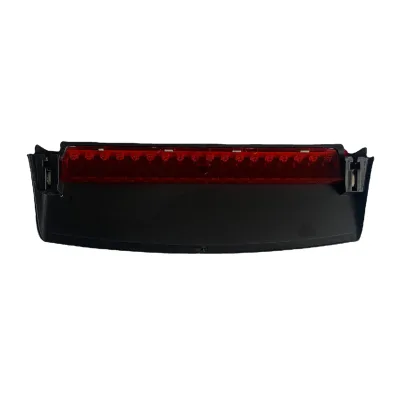


Wholesale LED High-Power High Brightness Reversing Lights and Brake Lights
$2.89 - $3.25
MOQ: 400 Pieces


Factory Price Anti-Flicker and Anti-Flash LED High Brightness Brake Light
$3.26 - $3.67
MOQ: 300 Pieces


Comprehensive Sourcing Guide
Strategic Sourcing Guide for High Mounted Brake Lights
Procuring high mounted brake lights, often referred to as third brake lights or center high-mounted stop lamps (CHMSL), requires a disciplined approach to ensure vehicle safety compliance and operational reliability. These components are critical for rear visibility, signaling deceleration to following traffic, and meeting stringent regulatory standards across various global markets. The following guide synthesizes observed market data and technical attributes to assist procurement professionals in navigating the supply chain for these essential automotive lighting systems.
Technical Specifications and Design Attributes
The engineering of a High-mounted Brake Light is defined by a specific set of physical and optical parameters that distinguish it from standard tail lights or turn signals. Based on current market observations, the primary function of these units is to serve as a high-position brake light, designed specifically for replacement or repair applications on the rear of vehicles. The placement is consistently identified as the "High Mount Brake Light" or "Tailgate," ensuring optimal visibility above the rear window or bumper line.
A critical observation in the current product landscape is the dominance of LED technology. The bulb type is predominantly LED, which offers superior energy efficiency, faster response times compared to incandescent bulbs, and a longer operational lifespan. The light type is categorized specifically as a signal light, with advanced functional capabilities that include driving, flowing turn signals, and strobe brake functions. This multifunctionality is increasingly common in modern automotive designs to enhance communication with other road users.
Physical dimensions vary significantly depending on the vehicle model and mounting constraints. Observed specifications reveal a wide range of sizes. For instance, one observed model measures 250mm in length with a height of 17mm and a width of 28mm, while another larger variant reaches 345mm in length with a 35mm width. More complex units feature detailed dimensions such as 171mm length by 68mm width by 60mm height, or 360mm by 72mm by 85mm, often incorporating specific LED counts like 32 LEDs or 40 LEDs. The housing material is frequently noted as plastic, which provides a balance of durability and weight reduction, though some listings also reference "LED Brake Light" as a material descriptor, indicating the integrated nature of the assembly. The color is uniformly red, adhering to standard traffic signal conventions.
Compliance and Certification Verification
Navigating the regulatory landscape is perhaps the most critical step in sourcing high mounted brake lights. These components are safety-critical and must adhere to strict standards in the destination market. The observed product data indicates a robust set of certifications that buyers should verify for their specific supply chain needs. The most prominent certifications observed include CCC (China Compulsory Certification), E-mark (European Economic Area), DOT (Department of Transportation, USA), GOST (Eurasian Economic Union), SONCAP (Nigeria), PVOC (Saudi Arabia), NRCS (South Africa), GCC (Gulf Cooperation Council), and ARAI (India).
Buyers must understand that the presence of these certifications is not universal across all listed products. The standard for these units is often described as "normal," but the specific certification suite required depends entirely on the target export market. For example, a product intended for the European market must possess a valid E-mark, while units for the United States require DOT compliance. The absence of a specific certification in a product listing does not necessarily imply non-compliance with other standards, but it does indicate a limitation in the product's eligibility for certain markets. Procurement teams should request valid certification documents for the specific batch or model number, such as model L2380 or 408020, to ensure legal importability.
Cost Drivers and Pricing Dynamics
The pricing structure for high mounted brake lights is influenced by several variables, including LED count, housing complexity, and certification status. The observed price range in the market spans from $0.05 to $65.17 USD. This wide disparity suggests a segmentation between basic replacement units and high-end, feature-rich assemblies. The lower end of the spectrum likely corresponds to simple, single-function brake lights with minimal LED counts and standard plastic housings. Conversely, the higher price points are associated with units featuring advanced functions like flowing turn signals, strobe capabilities, and higher LED densities (e.g., 32 or 40 LEDs) which provide greater luminosity and aesthetic appeal.
The Minimum Order Quantity (MOQ) is another significant cost driver. The observed MOQ range extends from 1 unit to 1200 units. While some suppliers offer samples or single-unit purchases, typically at a higher per-unit cost, bulk procurement often requires orders starting at 1000 pieces. This volume threshold is common for custom manufacturing or for accessing the most competitive pricing tiers. Buyers should be aware that the "Free Sample" attribute is available in the market, allowing for quality verification before committing to a large order, though this does not negate the MOQ for production runs.
Typical Applications and Usage Scenarios
High mounted brake lights are primarily designed for the replacement and repair of existing vehicle lighting systems. Their application is almost exclusively on the rear of the vehicle, specifically mounted on the tailgate or the high mount position above the rear window. This placement is mandated by safety regulations in many jurisdictions to ensure that the brake light is visible even when the vehicle's rear is partially obstructed or when the vehicle is in a low-lying position.
The "New" condition of the products indicates that these are direct replacements for damaged or failed units. The functional requirement is to ensure that all LED lights illuminate simultaneously during braking, providing a clear and immediate signal to following drivers. The waterproof rating of IP67 is a standard observation, ensuring that the unit can withstand exposure to rain, car washes, and high-pressure water jets without electrical failure. This makes them suitable for a wide range of environments, from urban commuting to off-road driving. The customization options available in the market allow for adaptation to specific vehicle models, ensuring a precise fit and finish that matches the original equipment manufacturer (OEM) aesthetic.
Supplier Evaluation and Origin Analysis
When evaluating potential suppliers, the origin of the product is a key factor. The majority of the observed products originate from Jiangsu, China, or China (Mainland). This region is a known hub for automotive lighting manufacturing, offering a mature supply chain for LED components and plastic injection molding. However, the origin alone does not guarantee quality. Buyers should look for evidence of standardized production processes, such as the "normal" prod_standard noted in the data, and verify the consistency of the product model numbers, such as L2574 or 408011.
The packaging method is another indicator of supplier professionalism. Observed packing methods include "Box" and "Carton," with some units specifically packed as "1PCS\Side Bliste" (blister pack). Proper packaging is essential to prevent damage during transit, especially for fragile components like LED arrays and plastic lenses. Suppliers who offer carton packaging for bulk orders demonstrate an understanding of logistics requirements, while those offering blister packs may be targeting retail or single-unit replacement markets.
Quality Control and Performance Verification
Ensuring the quality of high mounted brake lights requires a rigorous verification process before mass production. The waterproof rating of IP67 is a critical performance metric that must be validated. Buyers should request test reports confirming that the unit can withstand immersion in water up to 1 meter for 30 minutes without water ingress. Additionally, the "Braking Condition" where all LED lights up simultaneously must be tested to ensure uniform illumination and no dead pixels.
The resistance to environmental factors is paramount. The material, often plastic, must be resistant to UV degradation and temperature fluctuations to prevent yellowing or cracking over time. The "Resistance: Waterproof" attribute observed in the data should be backed by actual test data rather than just a claim. Furthermore, the electrical safety of the LED components must be verified to ensure they do not overheat or cause voltage spikes that could affect the vehicle's electrical system.
Long-Term Procurement Considerations
Sourcing high mounted brake lights is not a one-time transaction but a long-term partnership that requires ongoing quality management. The availability of customization is a significant advantage for buyers looking to differentiate their products or adapt to specific vehicle models. However, this customization must be managed carefully to avoid compromising the core safety functions of the brake light.
Buyers should also consider the lead times and supply chain stability. While specific lead times are not explicitly detailed in the observed data, the MOQ of 1000 pieces suggests that production runs may take time. Establishing a relationship with a supplier who can consistently meet these volume requirements while maintaining the required certifications (CCC, E-mark, DOT, etc.) is essential. The "No" status for OEM (Original Equipment Manufacturer) in some listings indicates that these are aftermarket parts, which is a crucial distinction for buyers sourcing for the replacement market versus those sourcing for vehicle assembly.
In conclusion, successful procurement of high mounted brake lights depends on a thorough understanding of technical specifications, a rigorous verification of certifications, and a strategic approach to supplier evaluation. By focusing on the observed attributes such as LED technology, IP67 waterproofing, and the diverse range of sizes and certifications, buyers can make informed decisions that ensure safety, compliance, and value in their automotive lighting supply chain.
FAQs
What certifications are available for high mounted brake lights?
Available certifications include CCC, E-mark, DOT, GOST, SONCAP, PVOC, NRCS, GCC, and ARAI. Buyers must verify specific certification documents for their target export market, as not every listed product satisfies all standards.
Can I find high mounted brake lights with IP67 waterproof rating?
Yes, the observed products feature an IP67 waterproof rating. This ensures the unit withstands rain and high-pressure water jets, making it suitable for various driving environments without electrical failure.
Which LED bulb types are used in these brake lights?
The bulb type is predominantly LED, offering faster response times and longer lifespans. These units often include advanced functions like flowing turn signals and strobe brake capabilities for enhanced visibility.
What is the minimum order quantity for high mounted brake lights?
The observed MOQ range extends from 1 to 1200 units. While samples are available, bulk procurement often requires orders starting at 1000 pieces to access competitive pricing tiers.
How are high mounted brake lights packaged for shipping?
Packaging options include Box, Carton, and Side Blister packs. Proper packaging prevents damage during transit, with carton packaging typically used for bulk orders and blister packs for retail replacement units.
Where are these high mounted brake lights manufactured?
The majority of products originate from Jiangsu, China, or China (Mainland). This region is a known hub for automotive lighting manufacturing, offering a mature supply chain for LED components.