Source High Performance Gasoline Trowel for Road Finishing
Find and compare 30 High Performance Gasoline Trowel options from verified Chinese manufacturers. Evaluate key specifications such as 900mm diameter, 5.5HP motor power, and hydraulic transmission to select the right concrete finishing machine for your construction projects; compare the available evidence and request quotations based on your requirements.
Key considerations
Products List


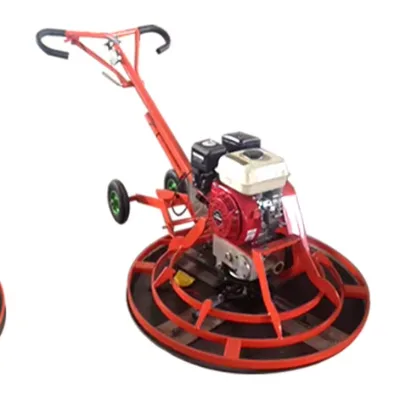


Premium Diesel Hydraulic Concrete Trowel for Smooth Finishing
$4500.00 - $6500.00
MOQ: 1 Pieces
Shandong Roadway Construction Machinery Manufacturing Co., Ltd.

Comprehensive Sourcing Guide
High Performance Gasoline Trowel Sourcing Guide
Buyers evaluating high performance gasoline trowels must first distinguish between rotor-type units designed for large-scale concrete finishing and smaller walk-behind graders that may share similar power sources. The observed market data indicates a clear segmentation where specific models feature a 900mm trowel diameter with a 3kw gasoline power rating, while other listings describe distinct machinery with 9.6/13.0 power outputs and different structural configurations. Understanding this distinction is critical before initiating contact, as the functional requirements for a 900mm rotor trower differ significantly from those of a small grader or a unit with a 970mm disc diameter.
Procurement teams should verify the specific application context against the listed machine type to ensure the selected unit matches the intended concrete finishing workflow. The available data highlights a "Road Trower" function with a productivity rate of 240m³/h, suggesting these units are engineered for high-volume surface leveling rather than general landscaping or small patch repairs. Buyers must confirm whether the observed 70-140r/min rotate speed and 4-piece blade configuration align with the viscosity of the concrete mix and the desired finish quality, as mismatched specifications can lead to inefficient operations or substandard surface results.
Product Scope and Observed Listing Signals
The current market listings for gasoline-powered finishing equipment reveal a wide variance in physical dimensions and operational characteristics that buyers must navigate carefully. While some units are described with a compact 90kg weight and a 1400mm feeding height, others in the same category are listed with weights reaching 3400kg, indicating a potential confusion between portable trowels and heavy-duty industrial graders. This disparity suggests that the keyword "high performance" covers a broad spectrum of machinery, ranging from lightweight, wheeled walking modes to massive, stationary or semi-stationary units requiring specialized transport logistics.
Sourcing professionals should scrutinize the listed packing methods and origin details to gauge the logistical complexity of the purchase. The data shows products shipped in boxes, wooden cases, or iron frames, with origins ranging from Henan province to specific towns in Zhejiang, which implies varying levels of packaging robustness and export readiness. A unit with a 900mm diameter trowel packed in a simple box may be suitable for direct site delivery, whereas a 2000950880mm machine requiring a wooden package likely demands more careful handling and potentially higher freight costs, influencing the total landed cost calculation.
Technical Specifications to Verify
Technical due diligence requires a rigorous cross-check of the powertrain and mechanical transmission systems to ensure the machine can sustain the required operational load. Buyers must confirm the exact motor power, as listings vary between 5.5HP and higher outputs, and verify the engine brand, such as Honda or B&S, to ensure parts availability and serviceability in the target region. The transmission type, whether power-driven or hydraulic, directly impacts the torque delivery to the blades, and the observed 2.6mm vibrating amplitude must be validated against the specific concrete mix properties to prevent surface segregation or inadequate compaction.
Dimensional accuracy is equally critical, particularly regarding the blade size and disc diameter, which dictate the coverage area and finishing efficiency. The observed blade dimensions of 1503401.7mm and disc diameters ranging from 900mm to 970mm require precise matching to the project scale, as undersized blades will increase cycle times while oversized units may be unwieldy for confined spaces. Additionally, the rotor structure and the 4-piece blade configuration must be inspected to ensure they are compatible with the raw material being processed, typically steel bars or concrete aggregates, to prevent premature wear or mechanical failure during high-speed rotation.
Compliance and Safety Documentation
Safety compliance is a non-negotiable aspect of sourcing industrial machinery, and buyers must demand verifiable certification documents that align with international standards. The provided data mentions CE certification, which is a baseline requirement for many markets, but procurement teams should not assume this applies to every listed unit without requesting the specific test reports and conformity declarations for the exact model number. It is essential to verify that the safety guards, emergency stop mechanisms, and operator protection features meet the local regulatory framework of the destination country, as the "New" condition of the machine does not guarantee regulatory adherence.
Documentation regarding the machine's operational safety and maintenance protocols must be reviewed to ensure the operator can safely manage the high-speed rotating components. The hydraulic machining process and the high-efficiency claims require clear instruction manuals that detail safe operating procedures, including the correct handling of the 90kg or 95kg units depending on the specific model. Buyers should also verify that the manufacturer provides a comprehensive safety data sheet and that the machine's design, such as the wheeled walking mode, includes features that minimize the risk of operator fatigue or injury during extended use.
Cost Drivers and Commercial Terms
The price range observed between 100 and 6500 USD reflects significant differences in build quality, power output, and included accessories, requiring buyers to define their budget against specific performance needs. A unit priced at the lower end may be a basic model with a 3kw engine and standard packing, while higher-priced items likely include advanced hydraulic systems, premium engine brands, and reinforced frames suitable for heavy-duty applications. Buyers must analyze the total cost of ownership, including the potential need for spare blades, engine maintenance kits, and specialized transport solutions, rather than focusing solely on the initial purchase price.
Commercial terms such as Minimum Order Quantity (MOQ) and lead times are variable, with observed MOQs ranging from 1 to 10 units, which offers flexibility for small contractors but may limit bulk negotiation leverage. The origin location, whether Henan or Zhejiang, influences shipping costs and delivery timelines, and buyers should clarify whether the quoted price includes export packaging, insurance, and customs clearance. It is advisable to negotiate payment terms that protect the buyer until the machine is verified on-site, especially given the variance in product standards and the potential for discrepancies between the listed specifications and the actual delivered goods.
Supplier Qualification and Quality Control
Supplier qualification should extend beyond the basic listing details to include a thorough assessment of the manufacturer's production capabilities and quality assurance processes. The data indicates that products originate from specific towns and provinces, suggesting a concentration of manufacturing hubs, but buyers must verify the factory's capacity to maintain consistent quality across batches, particularly for critical components like the rotor and blade assembly. Requesting a video audit of the hydraulic machining process and the final assembly line can provide insight into the precision and care taken during production, ensuring the machine meets the advertised high-efficiency standards.
Quality control protocols must be explicitly defined in the purchase agreement to mitigate the risk of receiving units that do not match the observed specifications. Buyers should insist on pre-shipment inspections that verify the weight, dimensions, and functional performance of the machine, such as the 70-140r/min rotate speed and the 240m³/h productivity rate. Establishing a clear acceptance criteria based on the provided product attributes, such as the 900mm diameter and 4-piece blade count, ensures that the delivered equipment performs as expected and reduces the likelihood of costly returns or disputes after the goods have arrived at the destination.
Long-Term Procurement Checks
Establishing a long-term procurement strategy requires a focus on the availability of spare parts and the manufacturer's commitment to after-sales support. The reliance on specific engine brands like Honda or B&S is a positive indicator for parts availability, but buyers must confirm the lead times for critical components such as blades, rotors, and hydraulic seals to minimize downtime during operations. A supplier that offers a comprehensive warranty and a dedicated technical support team is essential for maintaining the high performance of the gasoline trowel over its operational lifespan, especially in demanding construction environments.
Buyers should also monitor the evolution of the product line to ensure that the purchased model remains supported and that upgrades or replacements are available if technology advances. The observed characteristics, such as the high-quality finish and the specific structural design, should be tracked to ensure the supplier continues to adhere to the same standards in future production runs. Regular performance reviews and feedback loops with the supplier can help identify any recurring issues or areas for improvement, fostering a collaborative relationship that benefits both the buyer and the manufacturer in the long term.
FAQs
What is the trowel disc diameter for the JL1000 model?
The JL1000 model features a trowel disc diameter of 900mm. This specification supports efficient surface finishing for concrete roads. The machine operates with a rotor type structure and includes four blades. It is designed for high efficiency and road troweling applications.
Can the machine be customized for specific project requirements?
Yes, customization is available for this High Performance Gasoline Trowel. Buyers can request specific adjustments to meet unique project needs. The product originates from China and holds CE certification. This flexibility ensures the equipment aligns with diverse operational standards and site conditions.
What is the motor power and weight of the JS436A?
The JS436A model has a motor power of 5.5HP and weighs 110kg. It utilizes a gasoline engine for reliable power. The machine is new and packaged in a wooden package. Its compact design facilitates easy transport and operation on various construction sites.
Which suppliers offer the DMR60 small grader with CE certification?
Suppliers offering the DMR60 small grader provide CE certification for compliance. This wheeled machine features a power transmission system. It is available in optional colors and weighs 110kg. Buyers can source this equipment from verified manufacturers in China for road grading tasks.
What is the productivity rate of the gasoline trowel machine?
The gasoline trowel machine achieves a productivity rate of 240m³/h. This high output is supported by a 3kw gasoline power system. The rotating speed ranges from 70 to 140r/min. These specifications ensure efficient concrete finishing for large-scale construction projects.
How is the heavy-duty model packaged for shipping?
The heavy-duty model is packaged in a wooden case with an iron frame. This robust packaging protects the 3400kg machine during transit. The standard size is 1980*1080*1300mm. Secure packaging ensures the equipment arrives in new condition for immediate deployment.