Source High Precision Manual Rotary Microtome for Pathology, Lab, School
Find and compare 30 High Precision Manual Rotary Microtome options for pathology labs, hospitals, and schools. Evaluate models like KD-202 and YD-315 based on section thickness, specimen size, and certifications to select the right tool for your diagnostic needs.
Key considerations
Products List


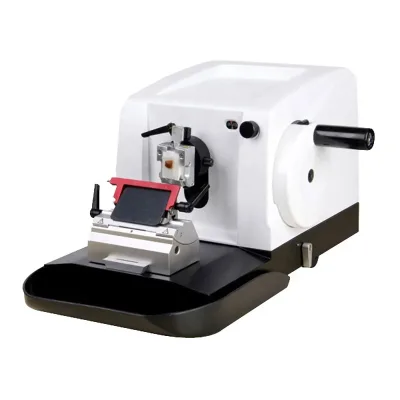


Pathological Histology Lab High Precision Micro Drive Feed Rotary Microtome
$2700.00 - $3000.00
MOQ: 1 Pieces


Comprehensive Sourcing Guide
High Precision Manual Rotary Microtome Sourcing Guide
Sourcing high precision manual rotary microtomes requires a disciplined approach to verifying mechanical accuracy, material compatibility, and regulatory compliance. These instruments are critical for preparing thin tissue sections for histological analysis, and their performance directly impacts the quality of diagnostic or research outcomes. Buyers must navigate a market where specifications vary significantly between models, often blurring the lines between basic laboratory tools and advanced pathology equipment. This guide provides a structured framework for evaluating suppliers, interpreting technical data, and ensuring that the selected microtome meets the specific operational needs of your facility.
The procurement process begins with a clear definition of the intended use case, whether for routine hospital pathology, academic research, or specialized biological diagnostics. The observed market includes a diverse range of products, from standard desktop units to highly customized systems with specific clamping mechanisms and blade options. Understanding the distinction between these variants is essential for avoiding over-specification or under-performance. By focusing on verifiable attributes such as section thickness precision, specimen size capacity, and structural design, buyers can make informed decisions that align with their budget and technical requirements.
Product Scope and Observed Listing Signals
The current market for manual rotary microtomes presents a wide spectrum of options, with observed prices ranging from approximately $599 to $5,900 USD. This significant variance reflects differences in build quality, precision engineering, and included accessories. Buyers should recognize that lower-priced models may offer basic functionality suitable for general education or low-volume use, while higher-priced units typically provide enhanced stability, finer adjustment mechanisms, and broader customization options. The minimum order quantity (MOQ) for these items is generally low, often ranging from 1 to 2 units, which facilitates trial purchases and small-scale procurement for individual laboratories.
Listing signals indicate a strong emphasis on customization and specific structural designs. Many suppliers offer non-customized standard models alongside fully customized solutions, allowing buyers to tailor the instrument to their workflow. Common structural configurations include desktop units designed for stability and ease of use in confined spaces. Additionally, the presence of digital displays on some models suggests a trend toward integrating modern interface elements, even in manual mechanical systems. Buyers should carefully review these listing details to ensure the physical form factor and control mechanisms match their laboratory’s spatial and ergonomic constraints.
Technical Specifications to Verify
Section thickness precision is the most critical technical parameter for any microtome, as it directly affects the quality of tissue sections. Observed specifications indicate a range of capabilities, with some models offering a section thickness of 0-60 microns, while others extend up to 0-600 microns or 0-25 microns depending on the specific application. Buyers must verify the precision error, which is often cited as ±5%, to ensure that the instrument can consistently deliver the required slice thickness. It is also important to confirm the maximum specimen size, which varies from 35x25mm to 55x55mm, to ensure compatibility with the largest tissue blocks your laboratory processes.
The mechanical structure and accessory options play a significant role in the instrument’s versatility and ease of use. Standard accessories often include clamps, cassettes clamps, and disposable blades, which are essential for securing tissue samples and ensuring clean cuts. Some models are specifically designed for pathology applications and may include specialized features like manual rotary mechanisms for smooth operation. Buyers should also consider the power supply requirements, with many units operating on 220V, and verify the physical dimensions, which can range from compact 290x300x220mm units to larger 500x460x300mm systems, to ensure they fit within the designated workspace.
Compliance and Safety Documentation
Regulatory compliance is a non-negotiable aspect of sourcing medical and laboratory equipment. The observed market includes products with various certifications, such as CE, ISO, and FDA, which indicate adherence to specific safety and quality standards. Buyers must verify the specific certification status for each model, as not all microtomes carry the same regulatory approvals. For instance, some units are classified as Type 1 Medical Devices or fall under Biological Diagnostics, which may have different regulatory implications depending on the destination market. It is crucial to request valid certification documents from the supplier to ensure that the equipment meets local legal requirements.
Safety and operational standards are also reflected in the product’s design and packaging. Many suppliers adhere to standard export packaging practices, such as carton or wooden pallet packaging, to protect the instrument during transit. However, buyers should verify that the packaging includes adequate shock absorption and moisture protection, especially for units with sensitive mechanical components. Additionally, the warranty period, which is commonly 1 to 2 years, serves as an indicator of the manufacturer’s confidence in their product’s durability. Buyers should ensure that the warranty covers both parts and labor, and clarify the process for claiming warranty service to avoid unexpected maintenance costs.
Cost Drivers and Commercial Terms
The cost of a High Precision Manual Rotary Microtome is influenced by several factors, including the level of customization, the quality of materials used, and the inclusion of advanced accessories. Customized models, which may feature specific clamping mechanisms or specialized blade holders, typically command a higher price due to the additional engineering and manufacturing effort required. Similarly, units with digital displays or enhanced precision mechanisms may be priced at the higher end of the observed range. Buyers should request detailed quotations that break down the cost of the base unit, accessories, and any customization fees to understand the true value proposition.
Commercial terms such as payment methods, shipping arrangements, and lead times are also critical components of the procurement decision. While specific lead times are not universally disclosed, buyers should inquire about the estimated production and delivery schedule, especially for customized orders. The origin of the product, often listed as Zhejiang, Guangzhou, or generally China, can impact shipping costs and delivery times. Buyers should also consider the total cost of ownership, including maintenance, spare parts availability, and potential downtime, rather than focusing solely on the initial purchase price.
Supplier Qualification and Quality Control
Evaluating supplier qualification is essential to ensure that the microtome meets the required quality standards. Buyers should verify the supplier’s manufacturing capabilities, including their experience in producing laboratory equipment and their adherence to quality management systems. The presence of certifications such as ISO 9001:2008, although noted as low-confidence background information, suggests a commitment to standardized processes. However, buyers should request current and valid certification documents to confirm that the supplier maintains up-to-date quality control practices.
Quality control measures should extend beyond the final product inspection to include raw material sourcing and assembly processes. Buyers should inquire about the testing procedures used to verify the precision and durability of the microtome before shipment. This may include checks on the section thickness accuracy, the smoothness of the rotary mechanism, and the stability of the specimen clamp. Additionally, buyers should assess the supplier’s after-sales support capabilities, including their responsiveness to technical inquiries and their ability to provide timely maintenance and repair services.
Long-Term Procurement Checks
Long-term procurement success depends on the availability of spare parts and the ease of maintenance. Buyers should verify the availability of critical consumables such as microtome blades and replacement clamps, as these are regularly used and need to be replaced. It is also important to ensure that the supplier provides clear maintenance guidelines and training materials to help laboratory staff operate and maintain the instrument correctly. This can help extend the lifespan of the microtome and prevent premature wear and tear.
Finally, buyers should establish a process for periodic performance reviews to ensure that the microtome continues to meet the required standards over time. This may include regular calibration checks and performance evaluations to detect any drift in precision or mechanical issues. By maintaining a proactive approach to maintenance and performance monitoring, laboratories can ensure that their microtomes remain reliable and accurate, supporting high-quality histological analysis and diagnostic outcomes.
FAQs
What certifications are available for high precision manual rotary microtomes?
Available certifications include CE, ISOCE, FDA, and ISO. These documents verify compliance with international safety and quality standards. Buyers should verify specific certificates for their target market. CE marking is common for European distribution. ISO standards ensure consistent manufacturing quality. FDA clearance may be required for US sales. Always request valid certificates from the supplier before purchase.
What is the section thickness range for these microtomes?
Section thickness typically ranges from 0 to 60 microns or up to 600 microns depending on the model. The KD-202 and YD-315 models support precise slicing. Some units offer a range of 0-500 microns for trimming. This variability allows for different tissue preparation needs. Check the specific model specifications for exact limits. Accurate thickness control is critical for high-quality histology slides.
Can high precision manual rotary microtomes be customized?
Yes, customization is available for many models. Buyers can request specific dimensions or packaging options. Standard export packages or wooden pallets are common. Some units allow for customized clamps or blade holders. The YD-335A model supports customized configurations. Contact suppliers directly to discuss specific requirements. Customization may affect lead times and pricing structures.
What are the standard dimensions for these devices?
Standard dimensions vary by model, such as 290x300x220mm or 500x460x300mm. The YD-335A measures approximately 520x450x300mm. Compact designs fit well in limited laboratory spaces. Larger models accommodate bigger specimen sizes up to 55x55mm. Buyers should verify dimensions against their lab setup. Standard export packaging protects these precise instruments during shipping.
What is the warranty period for manual rotary microtomes?
Warranty periods typically range from 1 to 2 years. The KD-202 model includes a 1-year warranty. The YD-315 model offers a 2-year warranty. This coverage protects against manufacturing defects. Buyers should confirm warranty terms with the supplier. Extended warranty options may be available for an additional cost. Proper maintenance can help maximize the device lifespan.
Where are these microtomes manufactured?
Manufacturing origins include Zhejiang, Guangzhou, and other regions in China. These locations are known for medical equipment production. Buyers can filter suppliers by specific origin locations. Proximity to manufacturing hubs may reduce shipping costs. Verify the exact origin on the product listing. Chinese manufacturers often provide competitive pricing and reliable quality.