Source High Precision Mems Tilt Sensor for Robotics, Construction, and Agriculture
Compare 30 listings for High Precision Mems Tilt Sensor with varying interfaces, accuracy, and certifications. Buyers can evaluate models like INC2000 and U3600 for industrial automation, surveying, and vehicle stability applications.
Key considerations
Products List


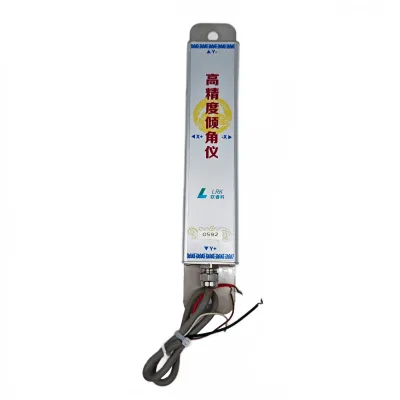


3 Axis Mems Acceleroemter Orientation Sensor for Location of Steel Piles
$2000.00 - $2100.00
MOQ: 3 Pieces


Comprehensive Sourcing Guide
Strategic Sourcing Guide for High Precision MEMS Tilt Sensors
Procuring high-precision MEMS (Micro-Electro-Mechanical Systems) tilt sensors requires a disciplined approach that balances technical performance with supply chain reliability. These components are critical for applications demanding accurate orientation data, such as robotics, industrial automation, and structural monitoring. The market offers a diverse array of models, each with distinct capabilities regarding accuracy, interface protocols, and environmental resilience. Buyers must navigate a landscape where specifications vary significantly between units, ranging from general-purpose industrial sensors to high-end precision instruments. This guide outlines the essential factors for evaluating and sourcing these devices, grounded in observable product attributes and industry standards.
Technical Specifications and Performance Metrics
The core of any sourcing decision lies in the technical specifications that define the sensor's capability. Accuracy is the primary differentiator in high-precision applications. Available data indicates that certain models achieve an accuracy of 0.05 degrees, which is suitable for applications requiring fine angular resolution. Other units may specify accuracy in linear terms, such as less than 1mm, depending on the specific application context and mounting geometry. Buyers must verify that the stated accuracy aligns with their system's tolerance requirements, as this parameter directly impacts the reliability of the final product.
Power supply requirements also vary across the product range. Standard operating voltages observed include a wide range of 5 to 36VDC, offering flexibility for integration into various power systems. Specific models may operate at a fixed 5VDC, necessitating careful voltage regulation in the design phase. The working temperature range is another critical specification; high-performance units are often rated for operation between -40 and +85 degrees Celsius. This wide thermal window ensures functionality in extreme environments, from cold storage facilities to hot industrial machinery.
Physical dimensions and weight are essential for mechanical integration. The market presents a variety of form factors, with standard dimensions observed ranging from compact 5x5x5 mm units to larger assemblies measuring 47x44x14 mm or 93.8x55.5x26 mm. Weight specifications can be as low as 50g, which is vital for mobile or aerospace applications where mass minimization is a priority. Buyers should cross-reference these physical constraints with their mechanical design to ensure proper fit and mounting compatibility.
Interface Protocols and Signal Output
Data transmission is a pivotal aspect of sensor integration, determining how easily the device can communicate with control systems. The interface landscape is diverse, supporting both digital and analog outputs. Common communication protocols include RS485, RS232, and RS422, which are standard for industrial automation and long-distance data transmission. Some advanced models offer a broader suite of interfaces, including TTL, CAN, and Modbus, providing greater flexibility for complex network topologies.
The output signal type is equally important. While some sensors provide analog outputs, others are designed with digital output capabilities, reducing susceptibility to noise and simplifying signal processing. The presence of specific features like "Double Measuring Shaft Quantities" suggests that certain models offer redundant measurement paths or enhanced stability through dual-axis sensing. Buyers must ensure that their control hardware supports the specific interface protocol and signal type of the selected sensor to avoid integration failures.
Environmental Resilience and Certification Standards
Durability in harsh environments is a non-negotiable requirement for many industrial applications. The IP (Ingress Protection) rating is a key indicator of environmental resistance. Products in this category frequently carry an IP67 rating, indicating complete protection against dust and the ability to withstand temporary immersion in water. This level of protection is essential for outdoor equipment or machinery exposed to cleaning processes and moisture.
Certification status provides assurance of compliance with international safety and quality standards. The supply chain includes products certified under ISO standards, which are globally recognized benchmarks for quality management. Additionally, CE certification is observed, indicating conformity with health, safety, and environmental protection standards for products sold within the European Economic Area. Buyers should verify that the specific batch or model they intend to purchase holds the necessary certifications for their target market, as regulatory compliance is mandatory for commercial deployment.
Cost Drivers and Procurement Variables
Understanding the cost structure of high-precision MEMS sensors is vital for budgeting. The observed price range in the market is extensive, spanning from $1 to $27,500. This vast disparity is driven by several factors, including accuracy levels, interface complexity, build quality, and production volume. High-accuracy models with 0.05-degree precision and advanced digital interfaces command a premium compared to basic analog units.
Minimum Order Quantity (MOQ) is another significant variable, ranging from 1 unit to 1,000 units. Small-scale prototyping or low-volume production runs can be accommodated with an MOQ of 1, while large-scale deployments may require negotiating higher volumes to secure favorable pricing. The customization status of the product also influences cost. While some models are available as non-customized standard items, others offer customization options. Customized solutions typically involve higher unit costs and potentially longer lead times due to the specialized manufacturing processes required.
Typical Applications and Use Cases
The versatility of MEMS tilt sensors allows them to serve a wide range of industries. In the construction and civil engineering sectors, these sensors are used for structural health monitoring, ensuring that buildings and bridges maintain their intended alignment. The high accuracy and temperature stability make them ideal for detecting minute shifts in large structures.
In the realm of robotics and automation, tilt sensors provide critical feedback for balance and orientation. Servo-type sensors with high accuracy are particularly valuable in robotic arms and autonomous vehicles, where precise movement is essential. The corrosion-resistant features, often achieved through stainless steel construction, make these sensors suitable for marine environments or chemical processing plants where exposure to corrosive agents is a risk.
Supplier Evaluation and Quality Assurance
When selecting a supplier, buyers must look beyond the product specifications to evaluate the supplier's overall reliability. The origin of the products is predominantly China, a major hub for electronics manufacturing. While this offers access to a vast supply chain, it requires rigorous vetting to ensure quality consistency. Buyers should verify the supplier's track record regarding after-sales service, with 7x24h support being a desirable attribute for minimizing downtime.
Warranty terms are a strong indicator of supplier confidence. A standard 1-year warranty is common, but buyers should clarify the scope of coverage and the process for claims. Quality control processes, such as the "Integration" production process mentioned in some specifications, suggest a focus on manufacturing efficiency and consistency. However, buyers should request specific test data and quality assurance protocols to validate these claims.
Packing standards also reflect the supplier's attention to detail. Products are typically shipped in cartons, boxes, or with sponge packaging to prevent damage during transit. For high-precision instruments, specialized packaging is crucial to maintain calibration and prevent physical shock.
Long-Term Procurement Considerations
Sourcing high-precision sensors is not a one-time transaction but a long-term partnership. Buyers should consider the availability of spare parts and the longevity of the product line. The "Integration" process and the use of durable materials like stainless steel suggest a focus on product lifespan, but buyers must confirm the expected operational life of the specific model.
Supply chain stability is paramount. With MOQs ranging up to 1,000 units, buyers must ensure that the supplier can meet volume demands without compromising quality or lead times. The standard packaging and clear origin information facilitate logistics, but buyers should establish clear communication channels regarding lead times and potential supply disruptions.
In conclusion, sourcing high-precision MEMS tilt sensors requires a meticulous evaluation of technical specifications, environmental ratings, and supplier capabilities. By focusing on accuracy, interface compatibility, and certification, buyers can identify solutions that meet their specific operational needs. The wide range of prices and MOQs offers flexibility, but it also demands careful budgeting and planning. Ultimately, a successful procurement strategy relies on verifying all claims against the actual product data and maintaining a rigorous quality control process throughout the supply chain.
| Feature Category | Observed Specifications | Verification Requirement |
|---|---|---|
| Accuracy | 0.05deg, <1mm | Confirm specific model accuracy for application tolerance. |
| Interface | RS485, RS232, RS422, TTL, CAN, Modbus | Ensure control system compatibility with selected protocol. |
| Power Supply | 5~36VDC, 5VDC | Verify voltage regulation capabilities in the design. |
| Temperature | -40~+85°C | Validate thermal range against operating environment. |
| IP Rating | IP67 | Confirm ingress protection for environmental exposure. |
| Certification | ISO, CE | Check for market-specific regulatory compliance. |
| Material | Stainless Steel | Assess corrosion resistance for specific chemical exposure. |
| Dimensions | 5x5x5 mm to 93.8x55.5x26 mm | Match physical constraints with mechanical design. |
| Customization | Available / Non-Customized | Define requirements for standard vs. custom models. |
| Warranty | 1 Year | Review terms and service support availability. |
FAQs
What accuracy levels are available for high precision mems tilt sensors?
Some models achieve an accuracy of 0.05 degrees, while others specify accuracy in linear terms such as less than 1mm. Buyers must verify that the stated accuracy aligns with their system's tolerance requirements before selection.
Can these sensors operate in extreme temperature environments?
Yes, high-performance units are rated for operation between -40 and +85 degrees Celsius. This wide thermal window ensures functionality in extreme environments, from cold storage facilities to hot industrial machinery.
Which interface protocols do high precision mems tilt sensors support?
Common communication protocols include RS485, RS232, and RS422, with some models offering TTL, CAN, and Modbus. Buyers must ensure their control hardware supports the specific interface protocol to avoid integration failures.
What is the minimum order quantity for purchasing these sensors?
The minimum order quantity ranges from 1 unit to 1,000 units depending on the supplier and model. Small-scale prototyping can be accommodated with an MOQ of 1, while large deployments may require higher volumes.
How are high precision mems tilt sensors protected against environmental damage?
Products frequently carry an IP67 rating, indicating complete protection against dust and temporary water immersion. This level of protection is essential for outdoor equipment or machinery exposed to cleaning processes and moisture.
Are customization options available for high precision mems tilt sensors?
Customization is available for some models, while others are sold as non-customized standard items. Customized solutions typically involve higher unit costs and potentially longer lead times due to specialized manufacturing processes.