Source Floating Waterproof Phone Case for Swimming Diving Beach
Explore 30 Floating Waterproof Phone Case options designed for swimming, diving, and beach activities. Buyers can compare IP8 ratings, material types like PVC and TPU, and customization features across verified suppliers.
Key considerations
Products List
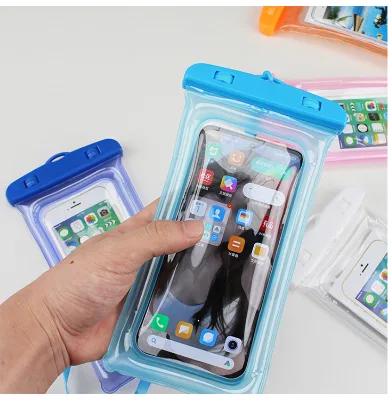

Touchscreen Swimming Waterproof Phone Case
$0.66 - $0.83
MOQ: 122 Pieces
Jinhua Hengyang Cross-Border Trade Limited Liability Company


Floating Waterproof Phone Bag Sport Universal Beach Waterproof Phone Pouch Case
$0.99 - $1.99
MOQ: 1000 Pieces

Universal Transparent Swimming Underwater Waterproof Mobile Phone Bag Case
$0.10 - $1.00
MOQ: 200 Pieces
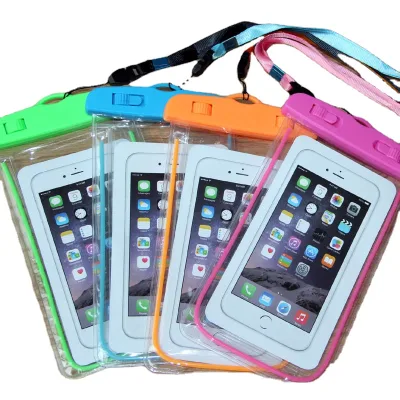

Waterproof Phone Bag for Boating Water Activities Mobile Phone Cover Phone Case
$0.33 - $0.97
MOQ: 1000 Pieces


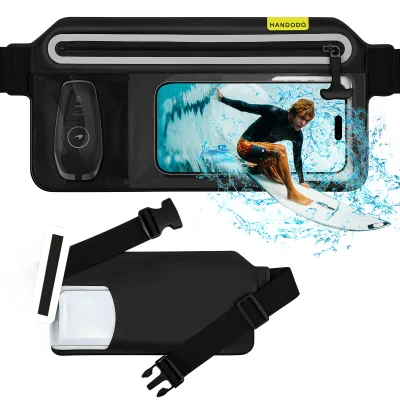
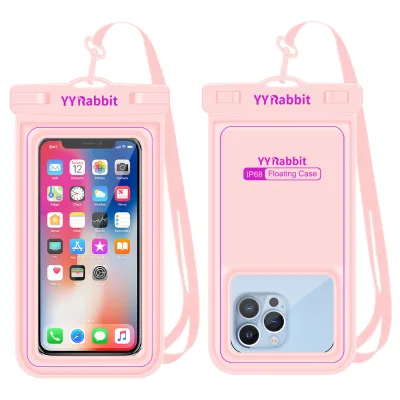


Comprehensive Sourcing Guide
Strategic Sourcing Guide for Floating Waterproof Phone Cases
The global demand for specialized mobile accessories capable of withstanding aquatic environments has driven significant innovation in the Floating Waterproof Phone Case sector. For B2B procurement professionals, sourcing these items requires a nuanced understanding of material science, dimensional tolerances, and supply chain logistics. The market presents a diverse array of options, ranging from standard protective pouches to advanced airbag-integrated solutions designed for extreme sports and commercial diving. This guide synthesizes available product data to provide a structured approach for evaluating suppliers, verifying technical claims, and establishing a resilient procurement strategy for floating waterproof phone cases.
Technical Specifications and Material Composition
The foundation of a reliable Floating Waterproof Phone Case lies in its material composition and structural design. The supplied product data indicates a primary reliance on PVC (Polyvinyl Chloride) and TPU (Thermoplastic Polyurethane). These materials are selected for their flexibility, durability, and inherent water resistance. PVC offers robust protection against abrasion and chemicals, while TPU provides superior elasticity and clarity, which is critical for maintaining touchscreen functionality underwater.
Dimensional consistency is a critical specification for buyers. The observed product sizes vary, with specific listings noting dimensions such as 2211.71.3CM and 22.511.71.3CM. Larger variants are also available, with some specifications listing a standard of 225×125×18mm. It is essential to verify that the internal dimensions of the case accommodate the target device's maximum screen size, as the data suggests compatibility with devices up to 7.5 inches. The single package size is often larger than the product itself to accommodate protective packaging, with observed dimensions of 25X13X3 cm.
The floating capability is a defining feature for this category. While the general term "floating" is used, the specific mechanism often involves an "Airbag version" design. This design element ensures that if the case is dropped in water, it remains buoyant, preventing loss. The data also highlights a "Luminous version," which serves a safety function in low-light aquatic environments. Buyers must confirm whether the floating mechanism is integrated into the material or added as a separate component, as this affects the overall weight and profile of the product.
Waterproof Performance and Certification Verification
Waterproof performance is the primary value proposition for these products. The supplied information cites a "Waterproof Level: IP8" and an advantage of being "Water-resistant to a depth of 30 meters." IP8 is a high standard indicating continuous immersion in water beyond 1 meter, but the specific depth and duration must be validated against the manufacturer's test protocols. The claim of 30 meters is significant and implies a robust sealing mechanism, likely involving heat sealing or high-pressure welding rather than simple zippers.
However, procurement teams must exercise caution when interpreting these claims. The data mentions "No special craft," which may seem contradictory to high-performance waterproofing, suggesting that the effectiveness relies on the material properties and the sealing process rather than complex manufacturing techniques. Buyers should request specific test reports that verify the IP rating under the claimed depth conditions. Without independent verification, a claim of 30 meters remains an observation rather than a guaranteed performance metric.
Compliance with international standards is another critical area. While the data lists a "prod_standard" of 22113cm, this appears to be a dimensional standard rather than a safety certification. Buyers should verify if the products meet relevant regional safety standards for materials used in contact with skin or water, such as REACH or RoHS, particularly if the cases are intended for children or professional use. The absence of explicitly listed certifications in the source data necessitates a proactive inquiry to the supplier regarding third-party testing results.
Cost Drivers and Pricing Dynamics
Understanding the cost structure of floating waterproof phone cases is essential for budgeting and negotiation. The observed price range in the market is 0.1 to 6.11 USD. This wide variance is driven by several factors, including material quality, design complexity, and order volume. The lower end of the spectrum likely corresponds to basic PVC pouches with standard sealing, while the higher end reflects TPU materials, airbag integration, and luminous features.
The Minimum Order Quantity (MOQ) is a significant cost driver. The data shows an MOQ range of 1 to 1000 units, with specific listings indicating an MOQ of 100 PCS. Suppliers offering lower MOQs may charge a premium per unit due to the setup costs associated with smaller production runs. Conversely, larger orders can leverage economies of scale to reduce the unit price. Buyers should also consider the "Selling Units," which are listed as "Single item," meaning the pricing is typically per unit rather than per set, though bulk packaging options like "Carton" or "OPP Bag" are available.
Customization is a major factor influencing cost. The data confirms that "Customization: Available" and "OEM: Welcomed." Adding custom branding, specific color combinations (such as the observed White, Orange, Pink, Black, Yellow, Blue, Green, Purple), or unique packaging designs will increase the unit cost and potentially the lead time. The "Sample: Support Custom Sample" option allows buyers to validate quality before committing to large orders, though sample costs should be factored into the total procurement budget.
Supplier Evaluation and Operational Capabilities
Evaluating suppliers requires a focus on their operational history, location, and communication channels. The product data identifies the place of origin as Guangdong, China, and Fujian, China. These regions are known for their robust manufacturing ecosystems for consumer electronics accessories. Guangdong, in particular, is a hub for high-volume production, while Fujian may offer specialized capabilities for specific material types.
Communication is a key indicator of supplier reliability. The data lists a specific contact person, "Sales Manager: Cassie," which suggests a direct line of communication. Buyers should verify the responsiveness of this contact and their ability to provide detailed technical documentation. The "Delivery time" is listed as 3-7 Working Days, which is relatively fast for international shipping, but this likely refers to production time rather than transit time. Buyers must clarify the distinction between production lead time and shipping duration to avoid supply chain disruptions.
The "Brand name" field lists "HRH/OEM/ODM," indicating that the supplier is capable of both private labeling and original design manufacturing. This flexibility is advantageous for buyers looking to establish their own brand or source generic products for resale. However, buyers should ensure that the supplier has the capacity to handle the required volume without compromising quality. The "Compatible brand: Universal" attribute suggests that the cases are designed to fit a wide range of devices, reducing the risk of inventory obsolescence due to new phone model releases.
Quality Control and Inspection Protocols
Implementing a rigorous quality control (QC) process is vital to ensure that the floating waterproof phone cases meet the promised specifications. Given the critical nature of waterproofing, visual inspection alone is insufficient. Buyers should establish a protocol that includes random sampling and functional testing. The "Feature: Touchscreen" attribute requires that the case material allows for adequate sensitivity underwater, which can be tested by simulating touch interactions while the case is submerged.
The "Included components" list mentions a "Screen Protector," which adds value but also introduces a potential point of failure. Buyers must verify that the screen protector is included and of sufficient quality to prevent scratching during use. The "Package" is listed as "OPP Bag" or "Carton," and the "Single gross weight" is 0.050 kg. These details are important for logistics planning and ensuring that the packaging protects the product during transit.
For high-volume orders, a pre-shipment inspection is recommended. This should focus on the integrity of the seals, the buoyancy of the airbag version, and the clarity of the luminous version. The "Special craft" is noted as "No special craft," which implies that the manufacturing process is standardized. However, buyers should still verify that the sealing process is consistent across all units to prevent leaks. The "Style" options, including "Normal version," "Airbag version," and "Luminous version," should be clearly distinguished in the inspection checklist to prevent mix-ups.
Long-Term Procurement and Market Adaptation
Sourcing floating waterproof phone cases is not a one-time transaction but a strategic partnership that requires long-term planning. The "Suitable Scenes" listed include Swimming, Diving, Beach, Rafting, and Fishing, indicating a broad market applicability. Buyers should monitor trends in these sectors to anticipate demand fluctuations. For instance, an increase in recreational diving or water sports events could drive a surge in demand for high-performance cases.
The "Model number" varies across listings, such as "KHL9162," "6308000409A," and "WB-002." This variety suggests a dynamic product line where suppliers frequently update their offerings. Buyers should maintain a relationship with the supplier to stay informed about new models and design improvements. The "Compatible model: Universal" attribute provides a buffer against rapid changes in smartphone technology, but buyers should periodically verify compatibility with the latest device sizes.
Sustainability is an emerging consideration in the procurement of plastic-based products like PVC and TPU cases. While the data does not explicitly mention eco-friendly materials, buyers should inquire about the recyclability of the materials and the supplier's environmental policies. As global regulations on single-use plastics tighten, suppliers who can offer sustainable alternatives or recycling programs may gain a competitive advantage.
In conclusion, sourcing floating waterproof phone cases requires a balanced approach that weighs technical specifications, cost factors, and supplier reliability. By focusing on material quality, verifying waterproof claims, and establishing clear communication channels, buyers can secure a supply chain that meets the rigorous demands of the aquatic accessories market. The data provided offers a solid foundation for these decisions, but continuous verification and adaptation to market trends remain essential for long-term success.
FAQs
What materials are used for floating waterproof phone cases?
These cases primarily use PVC and TPU materials for flexibility and durability. PVC offers robust protection against abrasion, while TPU provides superior elasticity and clarity to maintain touchscreen functionality underwater.
How deep can these cases withstand water pressure?
The observed products claim water resistance to a depth of 30 meters with an IP8 rating. This high standard indicates continuous immersion capability, though independent test reports should be requested to verify specific depth conditions.
Which phone sizes are compatible with these universal cases?
The cases are designed as universal models compatible with devices up to 7.5 inches. Specific internal dimensions like 22*11.7*1.3CM ensure they fit a wide range of smartphone sizes effectively.
Can I customize the color and branding of these cases?
Customization is available for colors including white, orange, pink, black, yellow, blue, green, and purple. OEM and ODM services are welcomed, allowing buyers to add specific branding and unique packaging designs.
What is the typical lead time for production and delivery?
The standard delivery time is listed as 3-7 working days for production. Buyers should clarify if this includes shipping time, as the origin locations are in Guangdong and Fujian, China.
How do airbag versions ensure the case floats?
The airbag version design ensures buoyancy if the case is dropped in water, preventing loss. This feature is distinct from the normal and luminous versions and is critical for safety during activities like diving or rafting.