Source High Pressure Concrete Nail Gun for Construction, Steel, Iron
Find 30 high pressure concrete nail guns designed for fastening to concrete, iron, and steel. Buyers can compare models like Gcn50s and Gn90L, checking fuel cell types, battery life, and nail lengths to match project needs.
Key considerations
Products List


High Power Gcn50 Gas Concrete Nail Gun Cordless Construction Fastening Tool
$170.00 - $205.00
MOQ: 10 Pieces


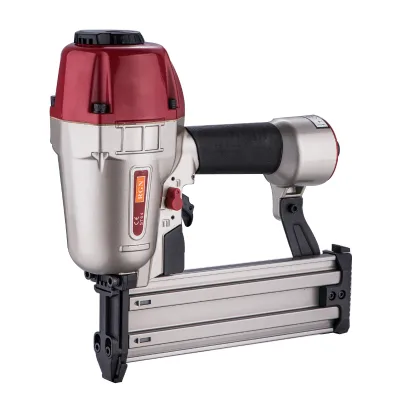
Comprehensive Sourcing Guide
Strategic Sourcing Guide for High Pressure Concrete Nail Guns
Understanding the High-Pressure Gas Nail Gun Market
The procurement of high-pressure concrete nail guns requires a nuanced understanding of the specific tool categories available in the global market. These devices, often referred to as gas-powered or powder-actuated tools, are engineered for fastening materials to concrete, iron, and steel substrates where traditional mechanical fasteners may fail or be impractical. The core keyword "High Pressure Concrete Nail Gun" encompasses a variety of models designed for construction sites and home decoration scenarios. Buyers must distinguish between different operating mechanisms, such as reciprocating types and impact wrenches, as these dictate the tool's suitability for specific heavy-duty applications.
In the current supply landscape, the market offers tools with varying levels of automation, ranging from semi-automatic to fully manual operation. The primary distinction lies in the power source; while some models utilize Li-ion batteries with specific voltage and capacity ratings, others rely on gas fuel cells or manual powder loads. For instance, specific models in the sector are equipped with gas fuel cells like the FC165 and FC154, offering a nail life of 800 to 1000 nails per cell. Conversely, battery-operated variants may feature a 7.2V, 2000mAh Li-ion battery capable of delivering up to 4000 nails per charge. Understanding these power dynamics is the first step in defining procurement requirements, as the choice between gas and electric power significantly impacts operational continuity, maintenance costs, and on-site logistics.
Technical Specifications and Performance Metrics
When evaluating high-pressure nail guns, technical specifications serve as the primary filter for supplier selection. The physical dimensions and weight of the tool are critical factors for operator ergonomics and portability on a construction site. Data from available product listings indicates that these tools typically range in size from approximately 440mm to 455mm in length, with widths between 370mm and 388mm, and heights around 110mm to 120mm. The net weight of these units varies significantly based on the model and material composition, with observed weights ranging from 2.5kg for lighter powder-actuated models to 4.2kg for heavier high-pressure gas variants.
The fastening capability is defined by the nail length and the type of power load used. High-pressure models are generally equipped to drive nails ranging from 15mm to 40mm in length, suitable for various concrete and steel fastening tasks. Some specialized units are designed to handle shooting nails less than 76mm, utilizing specific power loads such as S1jl Power Loads Strips (.27cal./6.8*11mm). The working style is predominantly reciprocating, ensuring consistent driving force. Buyers should verify that the tool's "Degree of Automation" aligns with their workflow; semi-automatic models often require a hand press startup mode, which provides a safety mechanism to prevent accidental discharge while maintaining high speed.
| Specification Category | Observed Range / Common Value | Procurement Verification Point |
|---|---|---|
| Net Weight | 2.5kg – 4.2kg | Verify weight impact on operator fatigue over shifts. |
| Dimensions | 340mm – 455mm (Length) | Ensure fit for tight spaces or specific mounting requirements. |
| Nail Length | 15mm – 40mm (or <76mm) | Confirm compatibility with project-specific fastener needs. |
| Power Source | Gas (FC165/FC154), Li-ion (7.2V), Manual | Assess availability of consumables (gas, batteries, powder). |
| Nail Capacity | 800-1000 (Gas), 4000 (Battery) | Calculate consumable replacement frequency and cost. |
| Material | Plastic + Steel | Check for durability in harsh construction environments. |
Compliance, Certification, and Safety Standards
Safety and regulatory compliance are non-negotiable aspects of sourcing industrial fastening tools. The global market for high-pressure nail guns is governed by a variety of international standards and certifications that ensure the tool meets safety requirements for electrical, mechanical, and environmental performance. Buyers must verify that suppliers can provide documentation confirming adherence to specific standards such as DIN, ANSI, and JIS, which are frequently cited in the industry for mechanical safety and dimensional consistency.
Furthermore, electrical and environmental certifications are crucial for tools containing batteries or electronic components. Common certifications observed in the sector include GS, CE, CCC, and RoHS. The CE mark indicates conformity with health, safety, and environmental protection standards for products sold within the European Economic Area, while RoHS compliance ensures the restriction of hazardous substances. The CCC mark is specific to the Chinese market, indicating that the product meets national safety requirements. For buyers operating in other jurisdictions, it is essential to confirm that the tool's certification status is valid for the target region. The "Quality Grade" of the tool is often described as "Professional Level," suggesting that these units are built to withstand rigorous industrial use, but this claim must be backed by the aforementioned third-party certifications.
Cost Drivers and Pricing Variables
The pricing of high-pressure concrete nail guns is influenced by a complex matrix of factors, including the power source, material quality, and level of customization. The observed price range in the market spans from $1 to $500 USD, a wide variance that reflects differences in technology and build quality. Lower-priced units may be basic manual or semi-automatic models with simpler construction, while higher-priced units often incorporate advanced battery systems, superior materials, or specialized customization options.
Customization is a significant cost driver. Many suppliers offer "Customized" options, allowing buyers to tailor the tool to specific brand requirements or functional needs. The availability of customization can increase the unit price but may reduce long-term operational costs by improving efficiency or compatibility with existing workflows. Additionally, the Minimum Order Quantity (MOQ) plays a role in the effective cost per unit. The observed MOQ range is between 1 and 1000 units. Buyers purchasing small quantities may face a higher per-unit cost, whereas bulk orders can leverage economies of scale. It is important to note that the "Inventory" status of suppliers, often described as "Enough," suggests that immediate availability is common, but lead times may vary for customized orders.
Typical Applications and Operational Scenarios
High-pressure concrete nail guns are designed for specific high-intensity applications where speed and reliability are paramount. The primary application scenarios include construction sites and home decoration projects. These tools are specifically engineered for fastening to concrete, iron, and steel, making them indispensable in structural framing, metal stud installation, and heavy-duty anchoring tasks. The "Scene" of operation is typically a construction site, where the tool's "High Speed" capability allows for rapid installation of fasteners.
The versatility of these tools is enhanced by their ability to handle different substrates. Whether attaching wooden framing to concrete foundations or securing metal tracks to steel beams, the high-pressure mechanism ensures a secure hold. The "Main Feature" of some models, such as the ability to attach emission nails, further expands their utility in specialized fastening tasks. Buyers should assess whether the tool's "Working Style," such as the reciprocating type, aligns with the specific fastening patterns required by their projects. For instance, a reciprocating action may be preferred for continuous fastening tasks, while an impact mechanism might be better suited for occasional, high-force applications.
Supplier Evaluation and Quality Control
Selecting the right supplier requires a rigorous evaluation process that goes beyond price comparisons. Buyers should prioritize suppliers who demonstrate a commitment to quality and transparency. The "Quality Grade" of the product should be verified as "Professional Level," and the supplier should be able to provide evidence of this through technical datasheets and certification documents. The "Material" composition, typically a combination of plastic and steel, should be scrutinized to ensure durability and resistance to wear and tear.
Quality control measures should be a central part of the procurement agreement. Buyers must verify that the supplier has established protocols for testing the "Nail Length," "Battery Life," and "Fuel Cell Life" to ensure they meet the advertised specifications. For example, the "Battery Life" of 4000 nails per charge and "Fuel Cell Life" of 800-1000 nails should be validated through independent testing or supplier-provided test results. The "Packing" method, whether "1PCS/Woven Bag" or "Plastic Box," also serves as an indicator of the supplier's attention to detail and protection of the product during transit. A supplier that offers robust packaging is more likely to deliver products in pristine condition, reducing the risk of damage and returns.
Long-Term Procurement and Maintenance Considerations
Sourcing high-pressure concrete nail guns is not merely a transactional purchase but a long-term investment in operational efficiency. Buyers must consider the availability of consumables and spare parts. The "Fuel Cell Type" (FC165, FC154) and "Equipped Power Loads" (S1jl Power Loads Strip) are specific consumables that must be readily available to maintain continuous operation. If a supplier cannot guarantee a steady supply of these consumables, the tool's utility is severely compromised.
Maintenance is another critical factor. The "Degree of Automation" and "Screwdriver Startup Mode" (Hand press) influence the maintenance schedule and the skill level required for operation. Semi-automatic tools may require more frequent calibration and cleaning than fully automatic models. Buyers should also evaluate the "Folded" status of the tool; while most models are "Unfolded" for operation, understanding the storage requirements is essential for on-site logistics. Finally, the "Origin" of the product, often listed as "China," should be considered in the context of supply chain resilience and potential trade tariffs. By focusing on these long-term factors, buyers can ensure a sustainable procurement strategy that minimizes downtime and maximizes the return on investment.
FAQs
What power sources are available for high pressure concrete nail guns?
These tools operate using gas fuel cells, Li-ion batteries, or manual powder loads. Gas models use FC165 or FC154 cells for 800 to 1000 nails, while battery versions feature 7.2V packs delivering up to 4000 nails per charge.
Which certifications should I verify for industrial safety compliance?
Look for GS, CE, CCC, and RoHS certifications to ensure safety and environmental standards. These marks confirm the tool meets international requirements for electrical safety and hazardous substance restrictions in professional construction environments.
How does the net weight affect operator ergonomics on site?
Net weights range from 2.5kg to 4.2kg depending on the specific model and material composition. Lighter units reduce fatigue during extended use, while heavier models may offer increased stability for heavy-duty fastening tasks.
Can I customize the product for specific brand or functional needs?
Yes, customization is available for many High Pressure Concrete Nail Gun models. Buyers can tailor specifications to match existing workflows, though this may impact the unit price and minimum order quantity requirements.
What is the typical nail length capacity for these fastening tools?
Standard models accommodate nail lengths between 15mm and 40mm for concrete and steel fastening. Some specialized units can handle shooting nails less than 76mm when equipped with specific power load strips.
Which packing methods are used to protect the tool during shipping?
Products are typically packed in 1PCS woven bags or plastic boxes, with cartons holding 5 pieces. Robust packaging ensures the tool arrives in pristine condition, minimizing the risk of damage during transit.
What is the origin location for these construction machinery products?
The majority of these high pressure concrete nail guns originate from China. This location influences supply chain logistics and potential trade considerations for international buyers sourcing professional level equipment.