Source High Power Nail Drill for Home, Salon, and Commercial Use
Compare 30 High Power Nail Drill options featuring adjustable speeds up to 40,000 rpm and CE certifications. Buyers can evaluate models like the UV401 and ND8003 for manicure and pedicure applications in home or salon settings.
Key considerations
Products List


Brushless Motor Cordless Power Nail Drill for Precision Drilling Operations
$18.99 - $23.99
MOQ: 100 Sets


Compact Design Cordless Power Nail Drill for Narrow Space Drilling Tasks
$18.99 - $23.99
MOQ: 100 Sets

Professional Grade Cordless Power Nail Drill for Industrial Construction Jobs
$18.99 - $23.99
MOQ: 100 Sets


Duofu Versatile Nail Drill: Small, Powerful, and Available in Various Colors
$17.99 - $22.99
MOQ: 1 Pieces


Comprehensive Sourcing Guide
Strategic Sourcing Guide for High Power Nail Drill Equipment
The global demand for professional-grade manicure and pedicure equipment has driven a significant evolution in the nail drill market, with a specific focus on high-power units capable of handling both natural and artificial nail enhancements. For B2B procurement officers, sourcing these devices requires a nuanced understanding of technical specifications, regulatory compliance, and supply chain reliability. The following guide provides a structured approach to evaluating high-power nail drill machines, ensuring that procurement decisions are grounded in verifiable data and industry best practices rather than marketing assertions.
Technical Specifications and Performance Metrics
When evaluating high-power nail drills, the primary differentiator is the motor's rotational speed and torque consistency. In the current market, units are frequently categorized by their maximum rotation speeds, which directly correlate with their ability to file down thick acrylics or gel extensions efficiently. Observed specifications for professional-grade units indicate a wide range of adjustable speeds, typically spanning from 0 to 40,000 revolutions per minute (rpm). This high-speed capability is essential for reducing filing time and minimizing heat generation, which can damage the natural nail plate if not managed correctly.
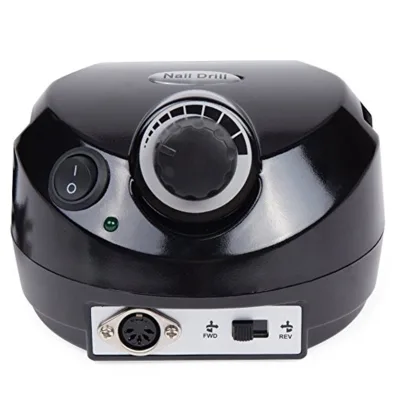
Power consumption is another critical technical parameter. High-performance models often feature power ratings between 24W and 30W, with battery capacities ranging from 2600mA/H to 4000mA/H for cordless variants. The distinction between wired and cordless operation is vital for commercial settings; while cordless units offer mobility, the power density must be sufficient to maintain consistent speed under load. Furthermore, the rotary direction is a standard feature in professional models, allowing for both forward and reverse operations. This bidirectional capability is necessary for precise detailing and the removal of drill bits without damaging the surrounding skin.
The physical dimensions and weight of the unit also impact usability. Professional handheld drills often weigh approximately 0.65kg, providing a balance between portability and stability. The main machine dimensions typically range around 15cm in length, with a compact form factor that fits easily into a technician's kit. However, buyers must verify these specifications against the specific model number, as variations exist between different product lines, such as the UV401, UV801, and HX-P10 series. The inclusion of accessories, such as four pieces of nail drill bits, is common, but the quality and material of these bits are equally important for the overall performance of the system.
Compliance and Certification Verification
In the B2B sector, regulatory compliance is not merely a formality but a prerequisite for market access and liability protection. When sourcing high-power nail drills, buyers must rigorously verify that the equipment meets international safety standards. The most frequently observed certifications in this category include CE (Conformité Européenne) and RoHS (Restriction of Hazardous Substances). These certifications indicate that the product adheres to strict guidelines regarding electromagnetic compatibility, electrical safety, and the restriction of hazardous materials like lead and mercury.
The presence of CE and RoHS markings should be validated against the specific model's documentation. For instance, certain models explicitly list CE & RoHS as their certification status, while others may only list CE. It is crucial for procurement teams to request the official test reports or certificates of conformity from the supplier rather than relying solely on product descriptions. The absence of these certifications can lead to customs delays, product recalls, or legal liabilities in regulated markets. Additionally, buyers should be aware that while some products claim compliance, the actual manufacturing standards must be verified to ensure that the safety protocols are consistently applied across the production batch.
Cost Drivers and Pricing Structures
The pricing of high-power nail drills is influenced by a complex interplay of factors, including motor quality, battery capacity, material durability, and the level of customization offered. The observed price range for these products in the market spans from $2.50 to $159.90 USD, reflecting a broad spectrum of product tiers. Lower-priced units often target the entry-level or hobbyist market, potentially sacrificing motor longevity and speed consistency. In contrast, high-end professional models command higher prices due to advanced features such as adjustable speed controls, enhanced cooling systems, and premium packaging.
Minimum Order Quantity (MOQ) is another significant cost driver. The observed MOQ range for these products varies from 1 unit to 500 units. Suppliers with lower MOQs may offer more flexibility for small businesses or trial orders but might have higher per-unit costs. Conversely, bulk orders often benefit from economies of scale, reducing the unit price significantly. Buyers should also consider the packaging costs, as some suppliers offer gift box packaging or separate individual boxes, which can add to the overall cost but enhance the product's retail value. Payment terms, such as T/T, PayPal, and Western Union, also play a role in the financial logistics of the transaction, with different terms potentially affecting the final negotiated price.
Typical Applications and Usage Scenarios
High-power nail drills are designed for a diverse range of applications, catering to both professional and home use. The primary usage scenarios include manicure and pedicure services in commercial salons, as well as home-based beauty routines. Professional-grade drills are essential for salons where high volume and efficiency are required. These units are often used for shaping, buffing, and removing artificial nail enhancements, requiring the robust power and speed control mentioned in the technical specifications.
The versatility of these tools is further highlighted by their application on different body parts. While many models are specifically designed for finger use, others are versatile enough to handle toe applications, making them suitable for comprehensive pedicure services. The classification of these tools often includes "Nail Care" and "Electric Nail Filer," indicating their specialized function. However, buyers must be cautious of misclassification; some listings may incorrectly categorize these devices under "Impact Drill" or "Building and Industrial" applications, which is a clear indicator of a data error or a generic listing. True nail care tools are distinct from industrial impact drills, which utilize a ball-type structure and are designed for construction tasks rather than delicate cosmetic procedures.
Supplier Evaluation and Product Differentiation
Evaluating suppliers for high-power nail drills requires a focus on product consistency and transparency. The market features a variety of models, each with unique specifications. For example, the UV401 and UV801 models are distinct from the HX-P10 and ND8003 series, each offering different power outputs and speed ranges. Buyers should compare these models based on their specific needs, such as the required rotation speed (ranging from 20,000 to 40,000 rpm) and power consumption.
Packaging and origin are also key indicators of supplier reliability. Products originating from Guangzhou or Guangdong are common in this sector, and the packaging standards vary from simple cartons to elaborate gift boxes. The standard packaging dimensions, such as 28.596cm or 198.57.3cm, can provide insights into the product's size and the supplier's attention to detail. Suppliers that provide clear, detailed specifications for each model, including the exact dimensions and weight, are generally more trustworthy. Additionally, the availability of customization options, such as branded packaging or specific color schemes, can be a significant differentiator for buyers looking to build a unique brand identity.
Quality Control and Long-Term Procurement Considerations
Ensuring long-term success in sourcing high-power nail drills involves establishing robust quality control (QC) protocols. Buyers should implement pre-shipment inspections to verify that the products match the agreed-upon specifications, including speed, power, and certification status. The condition of the product upon arrival should be "New," and the impact drill structure, if applicable, should be free from defects. For models with battery components, testing the charge retention and discharge rate is essential to ensure the product performs as advertised over time.
Long-term procurement considerations also include the availability of spare parts and accessories. The inclusion of drill bits and the ease of replacing them are critical for maintaining the operational efficiency of the equipment. Suppliers that offer a consistent supply of compatible accessories and provide clear instructions for maintenance will reduce downtime and extend the lifespan of the drills. Furthermore, buyers should consider the lead times and the flexibility of the supplier to handle fluctuations in demand. A reliable supplier will have the capacity to scale production without compromising quality, ensuring a steady supply of high-power nail drills for the buyer's business needs.
Conclusion
Sourcing high-power nail drill equipment requires a meticulous approach that balances technical performance, regulatory compliance, and cost efficiency. By focusing on verified specifications such as rotation speed, power ratings, and certification status, buyers can make informed decisions that align with their business objectives. The diverse range of models available, from the UV series to the HX and ND series, offers opportunities for customization and differentiation in the market. However, the key to success lies in rigorous supplier evaluation, thorough quality control, and a clear understanding of the specific applications for which these tools are intended. As the market continues to evolve, maintaining a focus on data-driven procurement strategies will ensure that buyers secure high-quality products that meet the demands of both professional salons and home users.
FAQs
What is the maximum rotation speed for high power nail drills?
The maximum rotation speed reaches 40,000 rpm on adjustable professional models. Some units offer lower ranges like 35,000 rpm or 20,000 rpm depending on the specific model selected for your needs.
Which certifications are standard for these nail care devices?
Most high power nail drills carry CE and RoHS certifications to ensure safety compliance. Some models may list only CE certification, so verifying the specific documentation for each unit is essential before purchase.
Can these drills be used for both finger and toe applications?
Yes, many professional models are designed for use on both fingers and toes. This versatility makes them suitable for comprehensive manicure and pedicure services in commercial salons or home settings.
How does the power rating affect performance in nail drills?
Power ratings typically range from 12W to 30W, with battery capacities between 2600mA/H and 4000mA/H. Higher power ensures consistent speed under load, which is critical for filing thick artificial nails efficiently.
What customization options are available for these nail care machines?
Customization is available for branding and packaging, allowing buyers to create unique product identities. Suppliers often offer gift box packaging or separate individual boxes to enhance retail value for different market segments.
Which models offer adjustable rotary direction for detailed work?
Several models like the ND8001 and ND8003 support forward and reverse rotary directions. This feature allows for precise detailing and safe removal of drill bits without damaging the surrounding skin or nail plate.
Where are these high power nail drills typically manufactured?
These products are primarily manufactured in Guangzhou and Guangdong regions of China. Buyers should verify the specific origin listed for each model to ensure supply chain reliability and consistent quality standards.