Source High Pressure Horizontal Centrifugal Pump for Water Supply, Circulating, Slurry
Find 30 High Pressure Horizontal Centrifugal Pump options from Jiangsu, China. Compare models like KZ-W, KXG, and EAZ Series with varying pressures, temperatures, and materials including cast iron and stainless steel for industrial applications.
Key considerations
Products List

$500.00 - $50000.00
MOQ: 1 Pieces


High Pressure Double Suction Horizontal Centrifugal Pump with a Factory Price
$1780.00 - $2350.00
MOQ: 1 piece


Horizontal Single Stage Centrifugal Pump with Large Flow Rate High Efficiency
$199.00 - $1999.00
MOQ: 1 Pieces


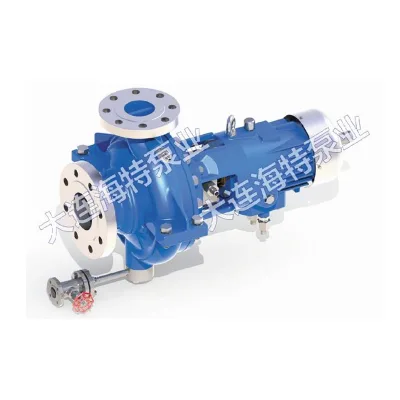

Comprehensive Sourcing Guide
Strategic Sourcing Guide for High Pressure Horizontal Centrifugal Pumps
Understanding Technical Specifications and Configuration
When sourcing high-pressure horizontal centrifugal pumps, buyers must first navigate a complex landscape of technical configurations that define performance and suitability. The core keyword implies a machine designed to generate significant head, yet the market data reveals a spectrum of designs ranging from single-stage to multistage configurations. A critical observation in the current supply base is the variation in impeller types. While some units are characterized as single-suction pumps, others are explicitly defined as double-suction pumps. This distinction is vital for balancing axial thrust and flow capacity. Furthermore, the impeller design itself varies between closed and semi-open types. Closed impellers generally offer higher efficiency for clean fluids, whereas semi-open designs are often preferred for applications involving slurries or fluids with suspended solids.
The physical orientation of the pump is a non-negotiable specification for this category. The data confirms that the position of the pump shaft is consistently horizontal, which aligns with the "Horizontal Split Pumps" casing design observed in the inventory. This configuration facilitates easier maintenance as the casing can be split horizontally to access the internal rotor assembly without disturbing the piping or the motor foundation. The mounting height is another variable; while some listings reference specific irrigation or suction centrifugal mounting heights, the general category supports a flexible installation profile. Buyers must verify the specific mounting requirements against their site's civil engineering constraints.
Performance ranges in the observed market are broad. Flow rates have been recorded spanning from 0.2 to 400 cubic meters per hour, while the lift range extends from 3 to 120 meters. It is important to note that while the core search term is "high pressure," the actual product listings include both low-pressure and high-pressure variants. The working pressure classification is not uniform across all inventory; therefore, a buyer must explicitly confirm the pressure rating of the specific unit to ensure it meets the system's head requirements. Temperature capabilities also vary, with some units rated for temperatures below 130°C and others specifying a broader range that includes operational parameters up to 260°C, though the latter unit's temperature specification in the data appears to be associated with power units (kw) rather than fluid temperature, requiring careful verification of the fluid medium's thermal limits.
Compliance, Standards, and Certification Verification
Navigating the regulatory and standards landscape is essential for ensuring that a high-pressure horizontal centrifugal pump meets international safety and quality benchmarks. The supply base demonstrates adherence to several distinct standards, which buyers must cross-reference against their project specifications. The data indicates the presence of products compliant with ISO 2825, a standard often associated with centrifugal pumps, as well as API 610 and GB3215-1982, which are critical for the oil, gas, and petrochemical industries. API 610, in particular, represents a rigorous benchmark for centrifugal pumps used in refinery and chemical plant applications, covering design, material, and testing requirements.
In addition to industry-specific standards, regional standards such as DIN 24255 and EN 733 are observed in the product listings. These European standards often dictate dimensions, flange connections, and performance curves. For buyers operating in regions requiring strict compliance, verifying that the pump's design documentation explicitly references these standards is a mandatory step. The presence of CE and ISO certifications in the market data suggests that many suppliers adhere to European safety directives and international quality management systems. However, buyers should treat these as observed attributes rather than universal guarantees. Each supplier must provide valid, current certification documents for the specific model being procured.
Material standards are equally critical for high-pressure applications. The observed material specifications include Cast Iron, Stainless Steel 304 (SS304), Stainless Steel 316 (SS316), SS316L, and Duplex Stainless Steel. The choice of material directly impacts the pump's resistance to corrosion and its ability to withstand high pressures and temperatures. For instance, SS316L offers superior corrosion resistance compared to standard SS304, making it suitable for more aggressive chemical environments. Duplex stainless steel provides a balance of strength and corrosion resistance, often required for high-pressure seawater or brine applications. Buyers must ensure that the material certificates provided by the supplier match the specific grade required for the fluid being pumped, as the standard "Cast Iron" option may not be sufficient for high-pressure corrosive services.
Cost Drivers and Pricing Variables
The pricing structure for high-pressure horizontal centrifugal pumps is influenced by a multitude of factors, resulting in a wide observed range from $1 to $80,000. This variance is not arbitrary but is driven by the complexity of the engineering, the materials of construction, and the specific performance capabilities of the unit. The most significant cost driver is the material composition. A pump constructed entirely of cast iron will be significantly less expensive than one fabricated from SS316L or Duplex Stainless Steel. The latter materials are not only costlier in raw form but also require more specialized welding and machining techniques, increasing the manufacturing labor cost.
Performance specifications also play a pivotal role in pricing. Units capable of higher pressures and larger flow rates, such as those approaching the upper limits of the observed 400 m³/h flow and 120 m lift, generally command higher prices. Multistage pumps, which are designed to achieve higher heads by stacking multiple impellers, are inherently more complex and expensive than single-stage counterparts. The customization level is another variable; while customization is available in the market, bespoke designs involving unique shaft lengths, special seal arrangements, or custom motor integrations will incur additional engineering and tooling costs.
The Minimum Order Quantity (MOQ) is a critical financial consideration. The observed MOQ range spans from 1 to 100 units. For buyers requiring a single unit for a pilot project or a specific replacement, suppliers with an MOQ of 1 offer a lower barrier to entry, though the unit price may be higher due to the lack of economies of scale. Conversely, buyers planning large-scale industrial deployments can leverage the higher MOQ tiers to negotiate better unit economics. Additionally, the packaging method, observed as plywood boxes or export-standard wooden crates, adds to the overall cost, particularly for international shipments where heavy-duty packaging is required to prevent damage during transit. Buyers should factor these packaging costs into their total landed cost calculations.
Typical Applications and Operational Context
High-pressure horizontal centrifugal pumps serve a diverse array of industrial applications, driven by their ability to move large volumes of fluid against significant resistance. The primary usage categories identified in the market include water supply, circulating systems, and specialized fluid handling such as condensate and slurry pumping. In water supply scenarios, these pumps are often deployed in municipal infrastructure or large-scale agricultural irrigation systems where consistent high-pressure delivery is required. The horizontal split design makes them particularly suitable for these applications as it allows for easy inspection and maintenance without dismantling the entire piping system.
In industrial settings, the versatility of these pumps is evident in their use as circulating pumps. They are integral to cooling water systems in power plants, where they must handle large flow rates at elevated pressures to maintain thermal efficiency. The ability to handle temperatures up to 130°C or higher makes them suitable for hot water circulation in district heating systems or industrial process loops. Furthermore, the presence of slurry pump configurations indicates their utility in mining and mineral processing, where they must transport abrasive mixtures of water and solid particles. In these applications, the choice of impeller type (semi-open vs. closed) and material (wear-resistant alloys) is critical to extending the service life of the equipment.
Condensate pumping is another specialized application where high-pressure horizontal centrifugal pumps are essential. In power generation and steam systems, condensate pumps must operate reliably to return condensed steam to the boiler feed system. The high-pressure capability ensures that the condensate can be pushed through the system against the boiler pressure. The horizontal orientation is advantageous here as it minimizes the footprint in tight plant layouts and simplifies the alignment with the drive motor. Buyers should also consider the voltage and frequency requirements, as the market offers units compatible with 220V, 380V, 410V, 460V, and high-voltage systems, as well as 50Hz and 60Hz frequencies, ensuring compatibility with global electrical infrastructure.
Supplier Evaluation and Selection Criteria
Selecting the right supplier for high-pressure horizontal centrifugal pumps requires a rigorous evaluation process that goes beyond simple price comparison. The first step is to verify the supplier's origin and manufacturing capabilities. The data indicates a concentration of suppliers in Jiangsu, China, a region known for its robust manufacturing base. However, buyers should not limit their search to a single location but should evaluate the supplier's ability to meet specific technical requirements regardless of geography. The presence of a "Customization" attribute in the market suggests that many suppliers are willing to adapt standard designs to meet unique client needs, a capability that is highly valuable for complex industrial projects.
Quality assurance is a paramount criterion. Buyers should request detailed documentation regarding the manufacturing process, including material traceability, welding procedures, and non-destructive testing records. The observation of standards like API 610 and DIN 24255 in the product listings provides a starting point, but buyers must confirm that the specific supplier has the internal quality control systems to consistently meet these standards. Certification status, such as CE and ISO, should be verified through valid certificates rather than assumed based on product descriptions. The supplier's track record in delivering pumps for similar high-pressure applications should also be assessed through case studies or references from previous clients.
Logistical capabilities are another key factor. The observed packaging standards, including export wooden crates and plywood boxes, indicate a focus on protecting the product during transit. However, buyers should confirm the supplier's lead times and their ability to handle expedited shipping if project timelines are tight. The MOQ flexibility is also a significant differentiator; suppliers offering an MOQ of 1 provide greater flexibility for small projects, while those requiring higher volumes may offer better pricing for bulk orders. Buyers should also evaluate the supplier's after-sales support, including the availability of spare parts, technical assistance, and warranty terms. A supplier with a strong support network ensures minimal downtime in the event of maintenance or repair needs.
Quality Control and Long-Term Procurement Considerations
Ensuring the long-term reliability of high-pressure horizontal centrifugal pumps requires a proactive approach to quality control and procurement planning. The initial quality control phase should involve a thorough review of the pump's design documentation, material certificates, and factory acceptance test (FAT) reports. Buyers should verify that the impeller balance, shaft alignment, and casing pressure ratings meet the specified standards. For high-pressure applications, hydrostatic testing of the casing is a critical step that must be documented and verified before the pump leaves the factory. The observed temperature ranges and pressure ratings must be validated against the actual operating conditions of the intended application to prevent premature failure.
Long-term procurement considerations extend beyond the initial purchase to include lifecycle management and maintenance planning. The availability of spare parts is a crucial factor; buyers should ensure that the supplier maintains an inventory of critical components such as impellers, mechanical seals, and bearings. The material composition of the pump, whether cast iron or stainless steel, dictates the maintenance schedule and the types of wear parts required. For pumps handling abrasive slurries, the wear life of the impeller and casing liners will be a primary concern, and buyers should negotiate for extended warranties or replacement guarantees on these components.
The environmental and operational conditions of the installation site must also be considered. The voltage and frequency compatibility of the pump motor must match the local power grid to avoid the need for expensive transformers or variable frequency drives. The color coding of the pump, observed as blue, yellow, green, or red, may be relevant for safety and identification purposes in industrial facilities, though this is often a secondary consideration. Finally, buyers should establish a clear communication channel with the supplier for ongoing technical support. Given the complexity of high-pressure systems, having access to expert advice for troubleshooting and optimization can significantly extend the operational life of the pump and ensure consistent performance over the long term.
FAQs
What standards do high pressure horizontal centrifugal pumps meet?
These pumps comply with standards such as ISO 2825, API 610, GB3215-1982, DIN 24255, and EN 733. Buyers must verify specific model documentation to ensure the unit meets project requirements for oil, gas, or general industrial applications.
Which materials are available for pump construction?
Available materials include Cast Iron, SS304, SS316, SS316L, and Duplex Stainless Steel. The selection depends on fluid corrosiveness and pressure needs, with stainless steel grades offering superior resistance for aggressive chemical environments.
Can the pump voltage be customized for different regions?
Yes, voltage is customizable to match local infrastructure, including 220V, 380V, 410V, 460V, and high voltage options. Frequency support typically covers both 50Hz and 60Hz to ensure global compatibility for industrial and water supply systems.
What is the minimum order quantity for these pumps?
The minimum order quantity can be as low as one unit, though ranges up to 100 exist. Single-unit purchases are available for pilot projects, while larger orders may offer better unit economics through economies of scale.
How are these pumps packaged for international shipping?
Pumps are packaged in plywood boxes or export-standard wooden crates to ensure safety during transit. This heavy-duty packaging protects the horizontal split casing and internal components from damage while meeting export requirements for global delivery.
What flow and lift ranges are available for these pumps?
Flow rates range from 0.2 to 400 cubic meters per hour, with lift capabilities between 3 and 120 meters. These ranges support diverse applications from small water supply systems to large industrial circulating and slurry pumping operations.