Source High Productivity Bagel Machine for Bread, Cake, Pizza
Find a High Productivity Bagel Machine from 30 verified listings. Compare electric models with capacities up to 5000 pcs/h and stainless steel construction. Evaluate options for bread, cake, and pizza production lines with customizable features and CE certification; compare the available evidence and request quotations based on your requirements.
Key considerations
Products List

High Efficiency Bagel Forming Boiling Machine / Bagel Production Line
$29859.00 - $34339.00
MOQ: 1 Sets

Bread Production Machine / Bagel Forming Machine / Bagel Production Line
$29859.00 - $34339.00
MOQ: 1 Sets


Electric Bagel Molding Machine / Bakery Oven Equipment / Bagel Making Machine
$29859.00 - $34339.00
MOQ: 1 Sets


Stainless Steel Bakery Equipment / Bagel Machine / Bagel Forming Machine Price
$1589.00 - $2589.00
MOQ: 1 set


Bagel Line Automatic High Efficient Bread Bagels Making Machine Production Line
$37520.22 - $37835.82
MOQ: 1 Sets


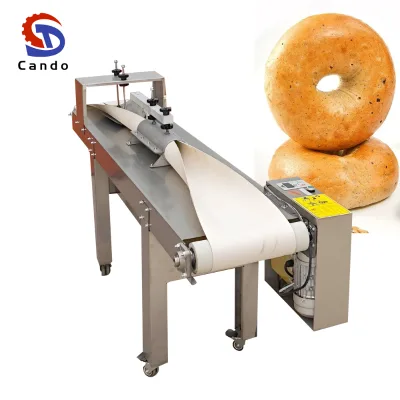
Industrial Bagel Machine Bagel Forming Machine Commercial Bagel Machine Bagel Rolling Machine
$2500.37 - $2571.81
MOQ: 1 pieces


Comprehensive Sourcing Guide
High Productivity Bagel Machine Sourcing Guide
Buyers evaluating high productivity bagel machines must first distinguish between forming units and complete thermal processing lines, as observed listings show distinct capabilities ranging from 1,000 to 5,000 pieces per hour. The market presents options with varying power requirements, from 0.55kW units suitable for smaller batches to 73.7kW systems designed for industrial-scale output. Understanding this spectrum is critical before initiating contact, as the intended production volume dictates whether a compact 125kg unit or a massive 3,363kg system is the appropriate starting point for your facility.
Procurement decisions should also account for the specific customization status of available machinery, as some models are explicitly listed as non-customized while others offer tailored configurations. This distinction impacts the timeline and integration complexity, particularly when the machine must interface with existing dough preparation or packaging lines. Buyers should verify if the observed capacity of 1500-2000 pieces per hour aligns with their peak demand or if the higher 4000-5000 PCS/H models are necessary to avoid future bottlenecks in their production workflow.
Product Scope and Observed Listing Signals
The observed product scope includes specialized equipment for bread, cake, pizza, and biscuit production, indicating that many high-productivity units are versatile rather than single-purpose. Listings confirm the presence of timing devices in some configurations while others operate without them, requiring buyers to match the machine's automation logic to their specific dough handling protocols. The material composition is consistently noted as stainless steel or stainless steel 304, ensuring durability and hygiene compliance for food contact surfaces across the various models available in the current market.
Listing signals reveal significant variations in physical dimensions and weight, with standard sizes ranging from compact 1300mm widths to large 2680mm footprints. Buyers must carefully review the stated capacity ranges, such as 70-130g or 30-150g per piece, to ensure the machine can handle their specific product weight requirements without compromising speed. The packaging methods, including fumigation-free wooden cases and neutral packing, also serve as indicators of the supplier's export readiness and the level of protection provided during international transit.
Technical Specifications to Verify
Technical verification must begin with power source and voltage compatibility, as observed data shows electric types operating at 380V with power ratings spanning from 0.55kW to 12.5kW and up to 73.7kW for heavy-duty lines. Buyers should confirm that their facility's electrical infrastructure can support the specific voltage and amperage requirements of the selected model to prevent operational failures or safety hazards during high-speed production cycles. The distinction between automatic and semi-automatic grades further influences the staffing needs, with some units requiring only 2-3 units per person while others demand more intensive oversight.
Capacity metrics require rigorous validation against actual production targets, as observed ranges vary from 1000-3000 units per minute to 4000-5000 pieces per hour depending on the specific model configuration. Buyers should verify the working width and timing device integration, as these factors directly impact the throughput consistency and the ability to maintain uniform bagel shapes. Additionally, the thermal processing capabilities must be confirmed to ensure the machine can handle the full range of dough types, from standard bread to specialized pizza or cake applications, without requiring external ovens.
Compliance and Safety Documentation
Compliance verification is essential for high-productivity machinery, with observed listings explicitly citing CE certification and ISO standards as key indicators of regulatory adherence. Buyers must request current certification documents to confirm that the equipment meets the safety and environmental standards required for operation in their specific jurisdiction, particularly when importing from regions like Henan or Guangzhou in China. The presence of TUV certification in some listings further suggests a higher tier of quality assurance that may be necessary for large-scale commercial operations or export markets with strict safety regulations.
Safety documentation should also include detailed operational manuals and maintenance guides that address the specific risks associated with high-speed forming and thermal processing. Buyers need to ensure that the supplier provides clear instructions on emergency stops, guarding mechanisms, and electrical safety protocols, especially for machines with power ratings exceeding 12.5kW. The absence of specific safety claims in some listings necessitates a proactive request for third-party test reports or safety audit results to validate the machine's compliance with local occupational health and safety laws.
Cost Drivers and Commercial Terms
Cost drivers for high-productivity bagel machines are heavily influenced by power consumption, material grade, and the level of automation integrated into the system. Units constructed with stainless steel 304 and featuring advanced timing devices or thermal processing capabilities command higher price points, as evidenced by the observed range of 1589 to 116900 USD. Buyers should analyze the total cost of ownership, including energy efficiency and maintenance requirements, rather than focusing solely on the initial purchase price, as high-power models may incur significantly higher operational expenses over time.
Commercial terms must be scrutinized regarding minimum order quantities and lead times, as observed data indicates a standard MOQ of 1 unit for most listings. However, the lead time and delivery conditions, such as fumigation-free wooden case packaging, can vary based on the supplier's location and the complexity of the customization requested. Buyers should negotiate clear terms for shipping, insurance, and installation support, ensuring that the supplier provides a detailed timeline for production and delivery to align with their production schedule and avoid costly delays.
Supplier Qualification and Quality Control
Supplier qualification should prioritize manufacturers with a proven track record in food processing equipment, as indicated by the specific origins in Henan and Guangzhou, China. Buyers must verify the supplier's ability to provide after-sales support, including spare parts availability and technical assistance, given the complexity of high-power electric systems and automated forming mechanisms. The presence of multiple certifications like CE, ISO, and TUV suggests a commitment to quality, but direct engagement with the supplier to discuss their quality control processes is essential to ensure consistent product performance.
Quality control measures must extend beyond the initial inspection to include ongoing performance monitoring and maintenance protocols. Buyers should request evidence of factory acceptance tests and performance data for the specific models they are considering, particularly regarding capacity consistency and weight accuracy. Establishing a clear communication channel for troubleshooting and support is critical, as high-productivity machines require precise calibration to maintain the 1000-5000 pieces per hour output rates observed in the market without frequent downtime.
Long-Term Procurement Checks
Long-term procurement checks should focus on the scalability and adaptability of the selected machinery to future production needs. Buyers must assess whether the machine can be upgraded or modified to handle new product lines, such as expanding from bread to pizza or cake, as observed usage data suggests versatility is a key feature of many high-productivity units. The ability to adjust the working width and timing parameters will be crucial for maintaining efficiency as market demands evolve and production volumes fluctuate over the lifespan of the equipment.
Sustainability and energy efficiency should also be part of the long-term evaluation, particularly for high-power models consuming up to 73.7kW. Buyers should inquire about the availability of energy-saving modes or retrofit options that can reduce operational costs and environmental impact over time. Regular audits of the machine's performance against the original specifications, including weight range and capacity, will help identify any degradation in performance and ensure that the investment continues to deliver the expected return on investment throughout its operational life.
FAQs
What is the production capacity of high productivity bagel machines?
Production capacity varies by model, ranging from 1000 to 5000 units per minute or 1500 to 2000 pieces per hour. Specific machines like the HT-BG2000L offer 1500-2000 pieces per hour, while others reach 4000-5000 pieces per hour depending on the configuration and automation level selected.
Can these machines be customized for specific production needs?
Yes, customization is available for certain models to meet specific requirements. Some units are fully customized, while others are non-customized standard models. Buyers should verify the specific customization options available for each model before placing an order to ensure it fits their production line.
What materials are used to construct these bagel forming machines?
Most high productivity bagel machines are constructed from Stainless Steel 304 or general Stainless Steel to ensure durability and hygiene. This material choice supports thermal processing applications and ensures the equipment meets food safety standards required for bread, cake, and biscuit production lines.
Which certifications do these machines typically hold for safety?
Many models carry CE certification, and some include ISO and TUV certificates as well. These certifications indicate compliance with international safety and quality standards. Buyers should check the specific product specifications to confirm which certifications apply to the exact machine model they intend to purchase.
How much power do these electric bagel machines consume?
Power consumption varies significantly by model, ranging from 0.55kw to 73.7kw. Smaller units may operate at 0.55kw, while larger industrial machines can require up to 73.7kw. The specific voltage is often 380V, so buyers must match the machine power requirements to their facility's electrical supply.
What is the typical weight range for these industrial machines?
The weight of these machines varies by capacity and model, ranging from 125kg to 3363kg. Smaller units weigh around 125kg, while larger high-efficiency models can weigh up to 3363kg. This weight difference impacts shipping costs and the floor space required for installation in a bakery facility.
Where are these bagel machines typically manufactured?
These machines are primarily manufactured in China, with origins in Henan and Guangzhou. Buyers can find suppliers from these regions offering various models with different capacities and specifications. The specific origin may affect shipping logistics and lead times for international orders.