Source High Recovery Ratio Shaking Table for Gold, Tin, and Coal
Source a High Recovery Ratio Shaking Table from 30 verified listings to compare specifications for gold, tin, and coal concentration. Evaluate options based on deck size, feeding density, and power consumption to find the optimal gravity separator for your mining application.
Key considerations
Products List


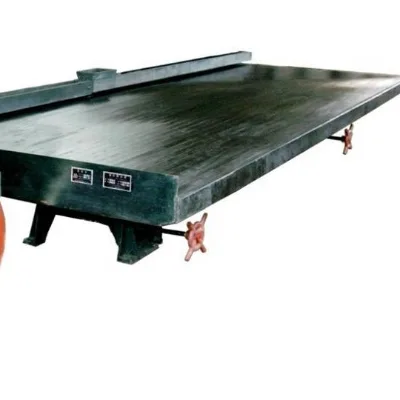


High Rate Recovery Shaker Table of Gold Gravity Recovery Processing Plant
$5000.00 - $18000.00
MOQ: 1 set

High Rate Recovery Separator Shaking Table of Gravity Concentration Plant
$5000.00 - $18000.00
MOQ: 1 set


High Rate Recovery Equipment Shaker Table of Gravity Concentration Plant
$5000.00 - $18000.00
MOQ: 1 set
Comprehensive Sourcing Guide
High Recovery Ratio Shaking Table Sourcing Guide
Selecting a gravity separator with a high recovery ratio requires a disciplined approach to verifying mechanical design, operational parameters, and supplier transparency. Buyers must distinguish between marketing claims and observable listing signals, ensuring that every technical specification aligns with the specific mineralogy and feed characteristics of their operation. This guide provides a structured framework for evaluating these machines, focusing on the critical intersection of engineering precision and commercial reliability.
The procurement process for shaking tables, particularly those marketed for high-efficiency mineral separation, demands rigorous attention to detail. By adhering to evidence-based verification steps, buyers can mitigate the risk of performance shortfalls and ensure that the selected equipment delivers consistent concentration results. The following sections outline the essential considerations for sourcing, technical validation, compliance, cost analysis, supplier qualification, and long-term operational checks.
Product Scope and Observed Listing Signals
The market for gravity separators includes various models, such as the 6S series and gemini shaking tables, which are designed for mining concentration and mineral separation applications. Observed listings indicate a wide range of product attributes, including feeding sizes from 0.02mm to 2mm and deck sizes varying significantly to accommodate different throughput requirements. Buyers should note that while some units are described as "Energy Saving" and "New," others may feature multi-layer configurations or specific deck types like coarse sand, fine sand, or slime decks, depending on the intended material processing.
Listing signals also reveal variations in physical dimensions and packaging, with some units packed in nude or container formats while others are noted for their large size requiring non-packed shipping. The observed price range spans from $12 to $300,000, reflecting the diversity in scale and complexity, from small laboratory-scale units to large industrial installations. Minimum Order Quantities (MOQ) typically start at 1 set, allowing for flexible procurement, but buyers must carefully correlate these commercial terms with the specific model numbers and standard dimensions provided in the product descriptions.
Technical Specifications to Verify
Verifying the technical specifications is paramount to ensuring the shaking table meets the required recovery ratio and throughput. Key parameters to confirm include the feeding density, which can range from 10% to 50%, and the power consumption, with observed values such as 1.1kw for certain models. The deck grooves are a critical design element, with options for 46, 60, 88, 110, 120, or 138 grooves in rectangular, saw-tooth, or triangular shapes, all of which directly influence the separation efficiency and the final concentrate grade.
Buyers must also verify the voltage requirements, with 380V being a common specification, and the overall weight of the unit, which can vary from under 1 ton to 2 tons or more for larger installations. The model designations, such as Gt60, Gt250, and Gt1000, often correlate with specific deck dimensions and capacity ranges, such as 0.3-1.2t/H for certain configurations. It is essential to match these technical details with the actual feed material characteristics, including particle size distribution and density, to ensure optimal performance.
Compliance and Safety Documentation
Compliance with international standards is a critical factor in the procurement of industrial mining equipment. Observed certifications include CE and ISO9001, which indicate adherence to specific safety and quality management principles. Buyers should request valid certification documents to verify that the equipment meets the regulatory requirements of their destination country, particularly regarding electrical safety and mechanical integrity. The presence of these certifications suggests a baseline level of quality control, but they do not guarantee performance outcomes.
In addition to certifications, buyers should inquire about the testing services provided by the supplier. Some listings indicate that testing is supplied, which can be a valuable resource for validating the machine's performance before shipment. It is advisable to request detailed test reports or performance data that demonstrate the recovery rate, which can range from 80% to 95% in some observed cases. This documentation provides objective evidence of the machine's capabilities and helps in making an informed procurement decision.
Cost Drivers and Commercial Terms
The cost of a shaking table is influenced by several factors, including the size of the deck, the complexity of the groove design, and the materials used in construction, such as stainless steel components. The observed price range is broad, reflecting the difference between small-scale units and large industrial systems. Buyers should analyze the cost structure in relation to the expected throughput and recovery efficiency, ensuring that the investment aligns with the projected return on investment for their specific mining operation.
Commercial terms, such as delivery dates and warranty periods, also play a significant role in the total cost of ownership. Some listings indicate a delivery date of 5 days for in-stock items, while others may have longer lead times depending on customization requirements. Warranty periods vary, with observed terms of 1 year or 2 years, which can impact long-term maintenance costs. Buyers should negotiate clear terms regarding spare parts availability and technical support to minimize downtime and operational risks.
Supplier Qualification and Quality Control
Supplier qualification involves assessing the manufacturer's capability to produce consistent, high-quality equipment. Buyers should verify the place of origin, with Jiangxi and Henan being common locations for such manufacturing in China. The brand name, such as Gelin, may indicate a specific manufacturer, but buyers should conduct due diligence to confirm the supplier's reputation and track record in the industry. Customization options are available, allowing for tailored solutions, but this requires close collaboration with the supplier to ensure that the modifications do not compromise the machine's integrity.
Quality control measures should be clearly defined in the procurement contract. Buyers should request information on the manufacturing processes, including material sourcing and assembly standards. The observed standards, such as ISO9001 and CE, provide a framework for quality management, but buyers should also inquire about specific quality checks performed during production. This may include dimensional inspections, electrical testing, and performance trials to ensure that the delivered unit meets the agreed-upon specifications.
Long-Term Procurement Checks
Long-term procurement success depends on establishing a reliable supply chain and maintaining ongoing performance monitoring. Buyers should consider the availability of spare parts and the supplier's ability to provide timely technical support. The warranty period, whether 1 or 2 years, should be clearly understood, along with the procedures for claiming warranty services. Regular maintenance and inspection of the shaking table are essential to sustain high recovery ratios and prevent premature wear of critical components like the deck grooves and drive mechanisms.
Furthermore, buyers should establish a feedback loop with the supplier to address any operational issues that arise during the initial phases of use. This may involve adjusting the feeding density, groove configuration, or voltage settings to optimize performance. By maintaining open communication and documenting performance data, buyers can ensure that the shaking table continues to meet their production goals and provides a reliable return on investment over its operational lifespan.
FAQs
What is the recovery rate for high recovery ratio shaking tables?
The recovery rate typically ranges from 80 to 95 percent for these units. This performance depends on the specific deck type selected, such as coarse sand or slime decks, and the feeding density maintained between 10 and 30 percent during operation.
Can I customize the shaking table for specific mining needs?
Yes, customization is available for various mining concentration applications. Buyers can select different deck types like coarse sand or slime decks, and choose groove shapes including rectangular, saw-tooth, or triangle options to match their specific ore processing requirements.
Which certifications do these gravity separators hold?
These gravity separators commonly hold CE and ISO9001 certifications. The products are manufactured in China, specifically in regions like Jiangxi and Henan, ensuring they meet international quality standards for mineral separation equipment used in industrial mining operations.
How fast can I receive a High Recovery Ratio Shaking Table?
Delivery is available within 5 days for items currently in stock. For custom orders or specific models like the 6S or Gemini types, the lead time may vary, but the standard availability allows for rapid deployment in mining concentration facilities.
What is the minimum order quantity for these machines?
The minimum order quantity is one set for most models. This low entry point allows buyers to test the equipment's performance with feeding sizes ranging from 0.02 to 2mm before committing to larger bulk purchases for their mining operations.
What power consumption does the shaking table require?
The standard power consumption is 1.1kw for efficient energy saving. This low power requirement supports continuous operation while maintaining a capacity of 0.3 to 1.2 tons per hour, making it suitable for various mineral separation tasks in new condition units.