Source High Quality Timing Chain Kit for Ford, Toyota, and Kia
Find and compare a High Quality Timing Chain Kit across 30 listings for Ford, Toyota, and Kia applications. Evaluate OE numbers, materials, and packaging options to select the right component for your vehicle maintenance needs.
Key considerations
Products List


$6.88 - $16.88
MOQ: 100 Sets


$6.88 - $16.88
MOQ: 100 Sets


High Performance Timing Chain Parts Wholesale Timing Chain Kit for Ford 7079280
$8.00 - $12.00
MOQ: 100 Pieces


Engine Parts Timing Chain Parts Wholesale Timing Chain Kit for Toyota 13506-13020
$8.00 - $12.00
MOQ: 100 Pieces
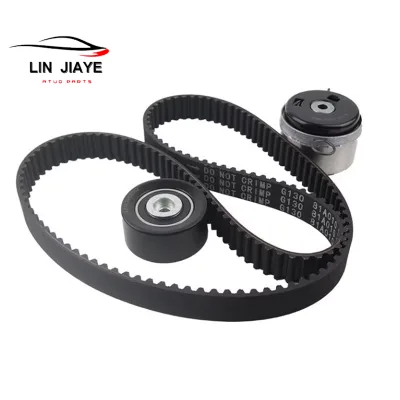

Comprehensive Sourcing Guide
High Quality Timing Chain Kit Sourcing Guide
Procuring high-quality timing chain kits requires a disciplined approach that balances technical precision with commercial reliability. These components are critical for engine synchronization, and their failure can lead to catastrophic engine damage. Buyers must prioritize suppliers who demonstrate consistent manufacturing standards and transparent supply chain practices. This guide outlines the essential steps for evaluating products, verifying technical specifications, and ensuring long-term procurement success.
The following sections provide a structured framework for sourcing decisions. By focusing on observable listing signals, technical verification, compliance documentation, cost structures, supplier qualification, and long-term checks, buyers can mitigate risk and secure reliable inventory. Each section is designed to address specific procurement challenges, offering actionable guidance rather than generic advice.
Product Scope and Observed Listing Signals
Buyers should begin by analyzing the breadth of applications supported by the product listings to ensure compatibility with their target market. The observed data indicates a diverse range of vehicle applications, including Ford models such as the 300 5.7L V8 from 2005-2008 and the 300 3.3L L6 from 1963, as well as Toyota Corolla 2.4L L4 engines from 2009-2012. Additionally, listings cover Hyundai Sonata 2.4L L4 engines from 2006-2007 and Nissan 720 2.4L L4 engines from 1984-1986. This variety suggests that suppliers may offer extensive catalogs, but buyers must verify that specific part numbers align with their intended vehicle platforms to avoid inventory mismatches.
Observing the listed price range and minimum order quantities (MOQ) provides insight into the supplier’s operational scale and pricing strategy. The observed price range spans from $0.01 to $999, which is unusually wide and may indicate a mix of individual components, complete kits, or placeholder pricing. Similarly, the MOQ range of 1 to 300 units suggests flexibility for both small-scale testers and larger bulk purchasers. Buyers should treat these figures as observations rather than fixed commitments, as actual pricing and order requirements often depend on customization, volume, and specific packaging needs.
Technical Specifications to Verify
Technical verification is paramount when sourcing timing chain kits, as minor deviations can lead to engine failure. Key attributes to verify include the camshaft layout, valve layout, and material composition. The observed data highlights variations such as mid-mounted camshafts and underneath-mounted camshafts, as well as top-mounted valve layouts. Buyers must ensure that the selected kit matches the specific engine architecture of their target vehicles. Additionally, the material is typically steel, which offers durability, but buyers should confirm the grade and heat treatment processes to ensure longevity under high-stress conditions.
Part numbers and OE references serve as critical identifiers for compatibility and quality assurance. The observed listings include specific OE numbers such as 1141A040, 13506-47030, 13559-21010, and 13566-40020, alongside model codes like TCK90167, TCK90169, and TCK90264. Buyers should cross-reference these numbers with official manufacturer databases to confirm fitment. Furthermore, verifying the component type, such as a valve driving assembly or timing chain kit, ensures that all necessary parts are included. The estimated weight of the kits, ranging from 0.01kg to 0.4kg, can also serve as a quick check for completeness, as significant discrepancies may indicate missing components.
Compliance and Safety Documentation
Compliance with international standards is essential for ensuring product quality and market acceptance. The observed data mentions ISO certification and OEM standard size specifications, which are strong indicators of a supplier’s commitment to quality management systems. Buyers should request valid ISO certificates and verify that the timing chain kits adhere to OEM standard sizes. This ensures that the components will fit correctly without requiring modifications, reducing the risk of installation errors and subsequent engine damage.
Safety and quality classifications also play a crucial role in procurement decisions. The observed listings reference "Class a" quality and a one-year warranty, which provide some assurance of product reliability. However, buyers should not rely solely on these labels and should instead request detailed quality control reports and test results. Understanding the supplier’s quality assurance processes, including inspection protocols and defect rates, helps buyers assess the true reliability of the products. Additionally, verifying the condition of the products as "New" ensures that buyers receive fresh inventory rather than refurbished or aged stock.
Cost Drivers and Commercial Terms
Understanding the cost drivers and commercial terms is vital for accurate budgeting and negotiation. The observed data indicates that the price term is EXW (Ex Works), meaning buyers are responsible for transportation costs from the supplier’s location. This structure can significantly impact the total landed cost, especially for international buyers. Buyers should factor in shipping, insurance, and customs duties when calculating the final cost per unit. Additionally, the estimated weight of the products, ranging from 0.01kg to 0.4kg, influences shipping costs, so accurate weight data is essential for logistics planning.
Payment terms and lead times are other critical commercial factors. The observed payment options include T/T, PayPal, and Western Union, offering flexibility but also varying levels of security. Buyers should prefer secure payment methods and negotiate terms that protect their interests, such as partial payments or escrow services. The observed lead time of 45 days is a significant factor that buyers must account for in their supply chain planning. Delays in production or shipping can disrupt inventory levels, so buyers should establish clear communication channels with suppliers to monitor production progress and anticipate potential delays.
Supplier Qualification and Quality Control
Supplier qualification is a multi-step process that goes beyond reviewing product listings. Buyers should assess the supplier’s manufacturing capabilities, including their production facilities and quality control systems. The observed data mentions standard export pallets and various packaging options such as neutral, original, or customized packaging. Buyers should verify that the packaging protects the components during transit and meets their branding requirements. Additionally, the supplier’s origin, listed as China or Guangzhou, should be considered in the context of regional manufacturing strengths and logistical advantages.
Quality control measures should be rigorously evaluated to ensure consistent product quality. Buyers should request samples for testing and inspection before placing large orders. The observed data mentions a customization option, which suggests that suppliers may offer tailored solutions. Buyers should clarify the customization process, including any additional costs or lead times associated with custom packaging or specifications. Furthermore, verifying the supplier’s ability to provide after-sales support, such as warranty claims and technical assistance, is crucial for long-term partnership success.
Long-Term Procurement Checks
Long-term procurement success depends on continuous monitoring and relationship management. Buyers should establish regular performance reviews with their suppliers to assess product quality, delivery reliability, and customer service. The observed data mentions a warranty of one year, which provides a baseline for product reliability. Buyers should track warranty claims and analyze the reasons for any failures to identify potential quality issues. This data-driven approach helps buyers make informed decisions about continuing or adjusting their supplier relationships.
Adapting to market changes and technological advancements is also essential for long-term procurement. Buyers should stay informed about industry trends, such as new engine designs or material innovations, that may impact the demand for timing chain kits. The observed data includes a wide range of applications, from older models like the 1963 Ford to newer models like the 2009 Toyota Corolla. Buyers should diversify their product portfolio to cover a broad range of applications, reducing the risk of obsolescence. Additionally, maintaining open communication with suppliers about future needs and market expectations helps ensure that the supply chain remains agile and responsive to changing demands.
FAQs
What is the lead time for High Quality Timing Chain Kit orders?
The standard lead time is 45 days for most orders. This duration applies to production and preparation before shipment, ensuring quality checks are completed for each batch.
Can I request customization for the timing chain kit packaging?
Yes, customization is available for packaging needs. Buyers can choose between neutral, original, or customized packing options to suit their specific branding or logistical requirements.
Which certification does the High Quality Timing Chain Kit hold?
The product holds ISO certification to ensure quality standards. This certification verifies that the manufacturing process meets international requirements for reliability and safety in automotive components.
What is the minimum order quantity for this timing chain kit?
The minimum order quantity is 100 pieces for standard orders. This threshold ensures efficient production runs while allowing flexibility for buyers to start with manageable inventory levels.
How is the High Quality Timing Chain Kit packed for export?
Items are packed using standard export pallets or polybags with boxes and plywood cases. This robust packaging protects the steel components during long-distance shipping and handling.
What payment methods are accepted for the timing chain kit?
Accepted payment methods include T/T, Paypal, and Western Union. These options provide flexibility for international buyers to complete transactions securely and efficiently according to their preferences.
Which vehicle models are compatible with this timing chain kit?
The kit fits various models including Ford 300, Toyota Corolla, and Kia Sonata. Specific applications range from 2005 to 2012 depending on the engine size and configuration required.