Source High Strength Fluorocarbon Fishing Line for Sea and Bench
Find and compare High Strength Fluorocarbon Fishing Line options for sea and bench applications. This sourcing guide covers 26 products with varying tensile strengths, diameters, and buoyancy characteristics to help buyers identify suitable main lines for their specific fishing needs.
Key considerations
Products List


High Abrasion Resistant Fishing Wire Transparent Fluorocarbon Fishing Lines
$12.77 - $15.32
MOQ: 100 Pieces


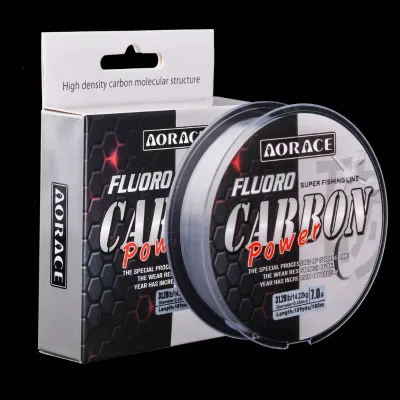
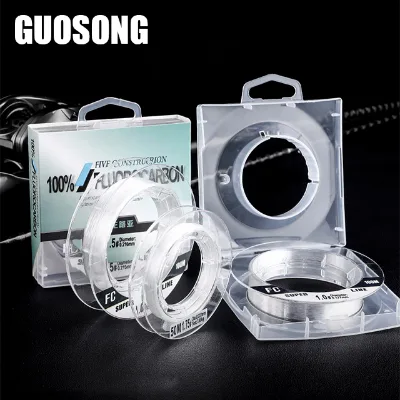


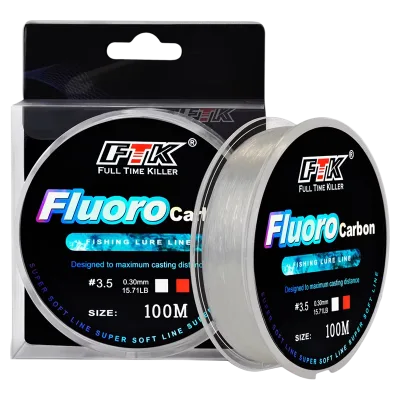
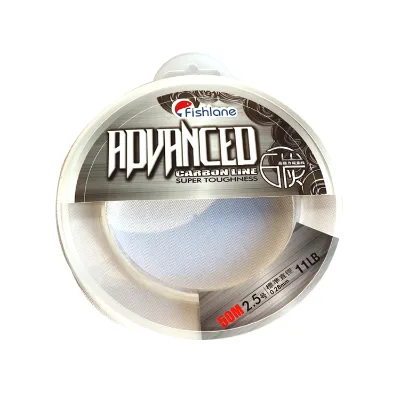
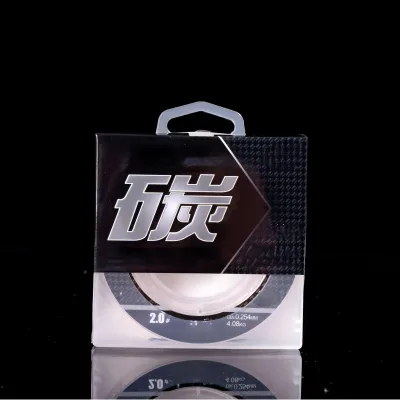
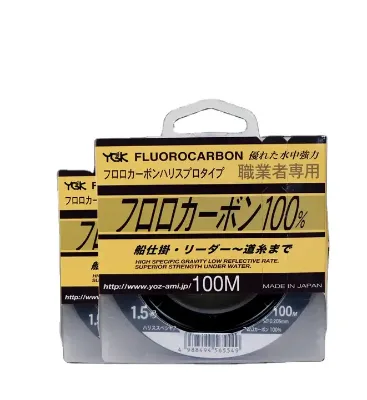
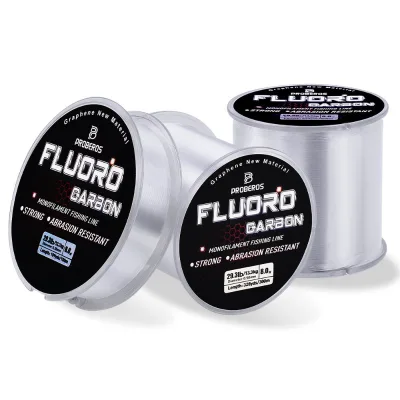
Comprehensive Sourcing Guide
High Strength Fluorocarbon Fishing Line Sourcing Guide
Procuring high-strength fluorocarbon fishing lines requires a nuanced understanding of material density and tensile performance, as these lines are engineered to sink rapidly and remain virtually invisible underwater. The core value proposition for buyers lies in the material's refractive index, which closely matches that of water, offering superior stealth compared to monofilament alternatives. When sourcing, it is critical to distinguish between general fluorocarbon lines and those specifically rated for high-strength applications, where tensile limits can range significantly from light tackle requirements to heavy-duty sea fishing scenarios.
Buyers must navigate a market where product attributes vary widely, with observed listings indicating strength ratings that span from light lines at 7.1 pounds to heavy-duty options reaching 111 pounds or even higher in specialized configurations. The sourcing strategy should prioritize suppliers who explicitly define their material composition, such as those utilizing fluorocarbon lines with specific density characteristics, rather than relying on generic descriptions. This differentiation ensures that the purchased inventory meets the rigorous demands of professional anglers and commercial fishing operations where line failure is not an option.
Product Scope and Observed Listing Signals
The product scope for high-strength fluorocarbon lines encompasses a diverse range of configurations, including main lines designed for deep-sea applications and specialized variants with multi-color options for visibility in specific conditions. Observed listing signals indicate that manufacturers offer lines with buoyancy characteristics ranging from sink lines to floating lines, allowing buyers to select the exact hydrodynamic profile required for their target species. The material composition is consistently identified as fluorocarbon, though some listings also reference nylon blends or specific grades like a/B, necessitating careful verification of the primary polymer content to ensure true fluorocarbon performance.
Commercial listings reveal a wide spectrum of packaging and customization options, with suppliers offering customer-made packages, narrow spools, and carton or PVC box configurations to suit different distribution needs. The availability of OEM and ODM services is a prominent signal in the market, with many suppliers welcoming custom branding and specific line number specifications to align with private label strategies. Buyers should note that while some products are standardized, others allow for significant customization in length, color, and packaging, which can impact the final unit cost and lead time for large-scale orders.
Technical Specifications to Verify
Technical verification must begin with the tensile strength rating, as observed data shows a broad spectrum of capabilities from 1.9 pounds up to 400 pounds, with specific high-strength variants rated at 68.3, 77.7, and 111 pounds. Buyers should demand clear documentation of the line number and corresponding diameter, as standards observed in the market include specific measurements such as 0.216mm, 0.393mm, 0.813mm, and 0.85mm, which directly correlate to the line's breaking strength and abrasion resistance. It is essential to cross-reference these diameter specifications with the stated strength to ensure the product meets the intended load-bearing requirements without compromising on flexibility or knot strength.
Beyond strength and diameter, the physical characteristics of the line, such as its buoyancy and color, must be verified against the specific fishing environment. While many high-strength lines are designed as sink lines with transparent or multi-color finishes, some listings indicate floating line capabilities or specific purity levels like 99.5%, which may be relevant for specialized applications. The length specifications, often provided in meters or as a count per box (e.g., 6 pieces, 10 pieces, or bulk 30/50/100m), must be confirmed to ensure the inventory matches the operational needs of the end-user, particularly for deep-sea fishing where line length is a critical factor.
Compliance and Safety Documentation
While specific certification names are not universally standardized in the provided data, buyers must request documentation that verifies the material purity and safety of the fluorocarbon line for environmental and user safety. The presence of high purity claims, such as 99.5%, suggests a manufacturing process that minimizes impurities, which is crucial for maintaining the line's transparency and resistance to UV degradation over time. Procurement teams should seek evidence of quality control processes that ensure the line meets the stated standards, particularly regarding the consistency of the diameter and the uniformity of the tensile strength across the entire spool.
Safety documentation should also address the handling and disposal of the fishing line, ensuring that the product complies with relevant environmental regulations regarding plastic waste. Although specific environmental certifications are not explicitly listed in the observed facts, the sourcing guide implies a need for suppliers to demonstrate responsible manufacturing practices, especially given the global focus on reducing marine pollution. Buyers should verify that the supplier can provide material safety data sheets (MSDS) or equivalent documentation that confirms the line is free from harmful substances that could leach into the water or pose risks during handling.
Cost Drivers and Commercial Terms
The cost of high-strength fluorocarbon fishing lines is driven by several factors, including the raw material grade, the complexity of the manufacturing process, and the level of customization required. Suppliers offering OEM/ODM services and customer-made packaging often command higher prices due to the additional labor and tooling involved, whereas standard bulk packaging may offer more competitive unit costs. The observed payment terms, which include Wire Transfer, Paypal, L/C, and Alipay, provide flexibility but also introduce varying levels of financial risk and transaction costs that must be factored into the total cost of ownership.
Commercial terms such as FOB, CIF, CNF, EXW, DDP, and DDU significantly influence the final landed cost and the logistics responsibilities of the buyer. For high-strength lines, which may be heavy or require careful handling to prevent damage, terms like DDP (Delivered Duty Paid) can simplify the supply chain by transferring shipping and customs risks to the supplier. However, buyers must carefully evaluate the trade-offs between these terms, as the lowest unit price may not reflect the true cost when accounting for shipping, insurance, and potential duties under different Incoterms.
Supplier Qualification and Quality Control
Supplier qualification should focus on verifying the origin of the product, as the majority of observed listings indicate production in China or China Mainland, which is a major hub for fishing tackle manufacturing. Buyers must assess the supplier's capacity to maintain consistent quality across large orders, particularly given the wide range of strength ratings and diameters available. The presence of sample availability is a positive indicator, allowing procurement teams to physically test the line for knot strength, abrasion resistance, and transparency before committing to a bulk purchase.
Quality control protocols must be established to ensure that the delivered products match the specified standards, such as the observed diameters of 0.216mm to 0.85mm and strength ratings up to 111 pounds. Suppliers should be required to provide batch testing reports that confirm the tensile strength and diameter consistency of the line, as variations in these parameters can lead to line failure during critical fishing operations. Additionally, the packaging method, whether it be carton, PVC box, or narrow spool, should be verified to ensure it protects the line from damage during transit and storage.
Long-Term Procurement Checks
Long-term procurement success depends on establishing a reliable supply chain that can consistently deliver high-strength fluorocarbon lines that meet evolving market demands. Buyers should implement a system for regular performance reviews of the supplier, focusing on their ability to maintain the specified material properties and adhere to agreed-upon delivery schedules. The flexibility of the supplier to accommodate changes in order volume, such as the observed MOQ range of 1 to 100 pieces, is a critical factor in maintaining a resilient supply chain that can adapt to seasonal fluctuations in demand.
Continuous monitoring of market trends and technological advancements in fluorocarbon materials is essential to ensure that the sourced products remain competitive. Buyers should stay informed about new developments in line technology, such as improved purity levels or enhanced strength-to-diameter ratios, and engage with suppliers who are proactive in adopting these innovations. By maintaining a close relationship with suppliers and conducting periodic audits, buyers can ensure that their high-strength fluorocarbon fishing lines continue to meet the highest standards of quality and performance.
FAQs
What is the tensile strength range for this fluorocarbon line?
The product offers a wide tensile strength range from 1.9 lbs to 400 lbs. Specific variants include strengths of 7.1 lbs, 18.5 lbs, 68.3 lbs, 77.7 lbs, and 111 lbs. This variety allows buyers to select the appropriate line for different fishing conditions and target species.
Can I customize the packaging for bulk orders?
Yes, customization is available for packaging. Options include customer-made packages, cartons, narrow spools, PVC boxes, and neutral or OEM packaging. The standard packing often involves 6 or 10 pieces per box, but specific requirements can be accommodated through OEM services.
What are the available specifications for line diameter?
Available specifications include diameters of 0.216mm, 0.393mm, 0.813mm, 1.016mm, and 0.85mm. These dimensions cater to various fishing techniques. The material is primarily fluorocarbon, with some nylon options available, ensuring durability and low visibility in water.
Is OEM service supported for this fishing line?
OEM and ODM services are welcome. Buyers can request custom branding and packaging solutions. The supplier accepts OEM requests, allowing businesses to brand the fluorocarbon lines with their own logos and designs. This supports private labeling strategies for retailers and distributors.
What payment terms are accepted for transactions?
Accepted payment terms include Wire Transfer, PayPal, L/C, and Alipay. These flexible options facilitate international trade. Buyers can choose the method that best suits their financial processes, ensuring secure and convenient transactions for both small sample orders and large bulk purchases.
What is the minimum order quantity for this product?
The minimum order quantity is typically 100 pieces. However, some listings indicate an MOQ of 1 piece, suggesting flexibility for samples or small trials. Buyers should verify the specific MOQ for their desired specification and packaging configuration before placing an order.
Where is this fluorocarbon line manufactured?
The product originates from China or the China Mainland. This location is a major hub for fishing tackle manufacturing. Buyers can expect competitive pricing and established supply chains. Shipping terms like FOB, CIF, and EXW are available to accommodate different logistics preferences.