Source High Temperature Insulation Clay Brick for Kilns, Furnaces, and Boilers
Find 30 High Temperature Insulation Clay Brick options with varying alumina content and refractoriness. Buyers can compare specifications like bulk density, cold crushing strength, and apparent porosity from suppliers in China to match kiln and furnace requirements.
Key considerations
Products List


High Porosity Lightweight Insulation Clay Brick for Superior Thermal Insulation
$165.00 - $270.00
MOQ: 1 Tons

High Purity Lightweight Refractory Insulation Clay Brick for Ceramic Kilns
$165.00 - $270.00
MOQ: 1 Tons

Lightweight Insulation Clay Brick with Low Thermal Expansion for Crack Resistance
$165.00 - $270.00
MOQ: 1 Tons

1650° C Heat Resistant Lightweight Insulation Clay Brick for Thermal Equipment
$165.00 - $270.00
MOQ: 1 Tons
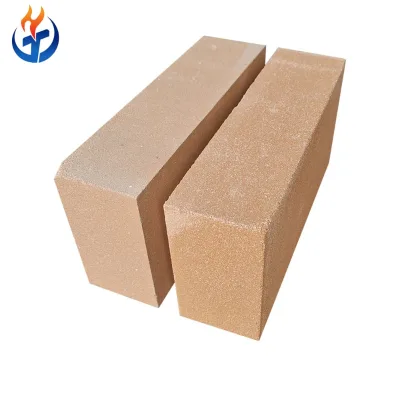


High Fire Resistance Good Price Insulation Refractory Lightweight Clay Brick
$175.00 - $195.00
MOQ: 5 Tons

Nice Quality Raw Materials Refractory Fire Brick Low Porosity Fire Clay Brick
$180.00 - $205.00
MOQ: 5 Tons

Good Thermal Shock Resistance Performance Refractory Lightweight Inuslation Clay Brick
$185.00 - $205.00
MOQ: 5 Tons

Good Thermal Insulation Brick Lightweight Silica Insulating Bricks for High Temp Kiln
$400.00 - $500.00
MOQ: 1 Tons


Thermal Insulating Block Light Weight Hot Sale Refractory Fire Clay Insulation Brick
$170.00 - $180.00
MOQ: 2 Tons

High Temperature Alumina Silicate Thermal Insulation Refractory Fire Brick
$200.00 - $300.00
MOQ: 1 Pieces


Comprehensive Sourcing Guide
Strategic Sourcing Guide for High Temperature Insulation Clay Brick Procurement
Understanding Material Classifications and Technical Specifications
When sourcing High Temperature Insulation Clay Brick, buyers must first navigate the complex landscape of material classifications and technical specifications. The market offers a diverse range of products, primarily categorized by their alumina content and physical properties. Based on available industry data, these materials are often classified as "High-Alumina" or standard "Clay" types, with the specific classification depending heavily on the aluminum oxide (Al2O3) concentration. The observed Al2O3 content in the market ranges significantly, with some high-performance variants listing content between 48% and 85%, while other standard insulation bricks may fall within the 35% to 45% range. This variation directly impacts the thermal stability and structural integrity of the brick under extreme heat.
The physical characteristics of these bricks are equally critical for procurement decisions. Buyers should expect to encounter products with varying bulk densities, typically observed between 2.0 and 2.5 g/cm³ for standard high-alumina variants, and slightly lower ranges for specific insulation grades. The apparent porosity is another key metric, with observed values spanning from 13% to 26% depending on the specific model and intended application. For applications requiring superior thermal shock resistance, the apparent porosity should be carefully selected to balance insulation efficiency with mechanical strength. The cold crushing strength (CCS) is a vital indicator of durability, with market observations showing a wide range from 20 MPa up to 70 MPa. High-strength variants, often designated for heavy-duty industrial use, may exhibit strengths between 40 and 70 MPa, whereas lighter insulation bricks might fall toward the lower end of this spectrum.
Refractoriness, or the ability of the material to withstand high temperatures without melting or deforming, is a primary selection criterion. The observed refractoriness for these products generally falls between 1580°C and 1770°C. Furthermore, the Refractoriness Under Load (RUL) at 0.2 MPa provides insight into how the brick performs under structural stress at high temperatures. Data indicates RUL values can range from a minimum of 1250°C to over 1420°C. Buyers must verify these specific thresholds against their operational requirements, as a furnace operating at 1400°C under load requires a brick with a significantly higher RUL than one operating at the same temperature in a non-load-bearing application. The thermal linear expansion and reheating linear change are also measurable attributes, typically ranging from 0.1% to 0.6%, which influence the design of expansion joints in the final installation.
Compliance, Certification, and Standard Verification
Ensuring that high temperature insulation clay bricks meet international and local compliance standards is a non-negotiable aspect of B2B procurement. While specific certification statuses can vary by manufacturer, the industry standard for quality management systems often includes ISO 9001. Buyers should explicitly request and verify the validity of such certificates to ensure the supplier maintains consistent quality control processes. Additionally, product-specific certifications such as CE marking may be present, indicating compliance with European safety, health, and environmental protection requirements. However, buyers must treat these certifications as observations of specific batches rather than universal guarantees for all listed products.
Dimensional standards are another critical area of compliance. While many suppliers offer customization to meet specific project needs, standard dimensions are frequently cited in the market. A common standard size observed is 230 x 114 x 65 mm, which serves as a baseline for many industrial kiln and furnace designs. However, the market also supports "customizable" standards, allowing for bespoke dimensions to fit unique architectural or industrial configurations. When evaluating suppliers, procurement teams should verify if the supplier adheres to international standard dimensions or if they specialize in custom molding services. The processing services offered, such as punching, cutting, and moulding, should align with the buyer's specific installation requirements to minimize on-site labor and material waste.
Packaging standards also play a role in compliance and logistics. Products may be packed according to international standards to ensure safe transport, or customized according to customer requirements to optimize shipping volume and protection. Buyers should confirm that the packaging method prevents moisture absorption and physical damage during transit, as clay bricks are susceptible to environmental factors. The origin of the product, often traced to regions like China Henan or specific industrial zones, can also influence the perceived reliability of the supply chain, though the specific origin should be verified against the purchase order rather than assumed based on general market trends.
Cost Drivers and Pricing Dynamics
The pricing of high temperature insulation clay bricks is influenced by a multitude of factors, creating a wide observed range from $0.20 to $1,650 per unit or batch. This vast disparity is not indicative of quality alone but rather reflects differences in material composition, production complexity, order volume, and logistical costs. The primary cost driver is the Al2O3 content; bricks with higher aluminum oxide percentages (e.g., 85%) command a premium over those with lower content (e.g., 35-45%) due to the cost of raw materials like high alumina bauxite. Additionally, the manufacturing process, including the specific molding and firing techniques required to achieve certain density and porosity levels, adds to the production cost.
Minimum Order Quantity (MOQ) is another significant factor affecting the effective unit price. The market observes MOQs ranging from 1 unit to 1,000 units. Buyers purchasing small quantities may face higher per-unit costs due to the fixed costs of production setup and logistics, whereas bulk orders often benefit from economies of scale. Lead times, while not explicitly quantified in all listings, are implied to vary based on customization requirements. Standard items may have shorter lead times, while custom-molded bricks with specific refractoriness or strength requirements may require extended production schedules.
It is crucial for buyers to understand that the lowest price does not necessarily equate to the best value. A brick priced at the lower end of the spectrum may have lower refractoriness or compressive strength, potentially leading to premature failure in high-temperature environments. Conversely, the highest-priced items may offer superior thermal stability and longevity, reducing long-term maintenance and replacement costs. Buyers should analyze the total cost of ownership, factoring in the expected lifespan of the brick, energy efficiency gains from better insulation, and the cost of downtime associated with refractory failure.
Typical Applications and Performance Requirements
High temperature insulation clay bricks are engineered for a variety of demanding industrial applications, with the specific choice of brick depending on the operational environment. The primary application observed is in reverberatory furnaces, where the bricks must withstand intense heat and chemical exposure. Beyond furnaces, these materials are utilized in kilns, industrial ovens, and various high-temperature processing equipment. The classification of the brick as a "Fire Brick" or "Heat-Resistant Material" underscores its suitability for environments where thermal shock and structural integrity are paramount.
The physical form of the brick, typically a "Block" or "Brick" shape, allows for versatile installation in walls, roofs, and floors of industrial structures. Some products are specifically designed as "Light Bricks" or "Insulating Bricks," offering reduced bulk density to improve thermal efficiency and reduce the structural load on the supporting framework. These lighter variants are particularly useful in applications where heat retention is critical, and the weight of the refractory lining must be minimized. The feature of being "Long Time Materials" suggests durability for continuous operation, while "Instant Materials" may refer to rapid installation capabilities or quick heat-up properties.
In terms of performance, the bricks must resist acid corrosion and provide effective heat insulation. The observed feature set includes "Acid Resistance" and "Heat Insulation," indicating that these products are suitable for environments with corrosive gases or fluctuating thermal loads. The compressive strength and cold crushing strength ensure that the bricks can support the weight of the furnace lining and resist mechanical stress during operation. Buyers should match the specific application requirements, such as the maximum operating temperature and the presence of corrosive agents, with the technical specifications of the brick to ensure optimal performance and safety.
Supplier Evaluation and Quality Assurance
Evaluating suppliers for high temperature insulation clay bricks requires a rigorous approach to ensure reliability and product consistency. Buyers should prioritize suppliers who demonstrate transparency in their production processes and material sourcing. The raw material, often identified as "High Alumina Bauxite," should be sourced from reputable suppliers to ensure the chemical composition remains consistent. The processing services offered, such as punching, cutting, and moulding, should be evaluated for their precision and ability to meet custom specifications.
Quality control is paramount in the refractory industry. Buyers should request detailed test reports that verify key performance indicators such as apparent porosity, bulk density, cold crushing strength, and refractoriness. The observed ranges for these metrics should be used as a benchmark to verify that the supplier's products fall within the expected parameters. For instance, a supplier claiming a cold crushing strength of 40-70 MPa should provide test data confirming this range for the specific batch being supplied. Additionally, the supplier's ability to provide certifications like ISO 9001 and CE should be verified through official channels.
The origin of the product, often cited as China Henan or other industrial regions, can provide insight into the supplier's capabilities. However, buyers should not rely solely on the region of origin but should assess the supplier's track record, production capacity, and ability to meet delivery schedules. Customization capabilities are also a key differentiator; suppliers who can offer tailored solutions for specific project needs are often better equipped to handle complex procurement challenges. Buyers should engage in direct communication with suppliers to discuss their specific requirements and verify the supplier's ability to deliver products that meet those needs.
Long-Term Procurement Considerations and Strategic Planning
Sourcing high temperature insulation clay bricks is not merely a transactional activity but a strategic decision that impacts long-term operational efficiency and safety. Buyers should consider the lifecycle of the refractory materials, including their expected service life and the frequency of replacement. High-quality bricks with superior refractoriness and mechanical strength may have a higher initial cost but can significantly reduce the frequency of maintenance and downtime, leading to lower total operating costs over time. The ability of the supplier to provide consistent quality across multiple orders is essential for maintaining the integrity of the furnace or kiln lining.
Future-proofing the procurement strategy involves staying informed about advancements in refractory technology and material science. As industrial processes evolve, the demand for bricks with higher thermal stability, better insulation properties, and enhanced resistance to chemical attack will likely increase. Buyers should maintain a relationship with suppliers who are committed to research and development and can offer innovative solutions to emerging challenges. Additionally, the flexibility of the supplier to adapt to changing project requirements, such as custom dimensions or specific chemical compositions, is a valuable asset in a dynamic market.
Sustainability is also becoming an increasingly important factor in procurement decisions. Buyers should inquire about the environmental impact of the production process, including energy consumption and waste management practices. Suppliers who adhere to strict environmental standards and offer eco-friendly products can help organizations meet their corporate sustainability goals. Finally, establishing a robust supply chain that includes multiple qualified suppliers can mitigate risks associated with supply disruptions, ensuring a steady flow of high-quality refractory materials for critical industrial operations.
FAQs
What is the Al2O3 content range for these bricks?
The aluminum oxide content ranges from 35% to 85% depending on the specific model. High alumina variants typically contain between 48% and 85%, while standard insulation bricks may fall between 35% and 45%.
Which certifications do the suppliers usually hold?
Suppliers typically hold ISO 9001 and CE certifications for quality management and safety compliance. These certifications verify consistent production processes but should be verified for each specific batch.
How is the refractoriness temperature defined for these products?
The refractoriness temperature generally falls between 1580°C and 1770°C for standard high alumina bricks. Specific models may also list a refractoriness under load of at least 1420°C at 0.2 MPa.
Can I request custom dimensions for my kiln project?
Yes, customization is available for dimensions and shapes according to customer requirements. Standard sizes like 230 x 114 x 65 mm are common, but processing services allow for specific molding and cutting.
What is the minimum order quantity for these bricks?
The minimum order quantity ranges from 1 unit to 1000 units depending on the supplier. Bulk orders often benefit from economies of scale, while small quantities may have higher per-unit costs.
Where are these high alumina bricks typically manufactured?
These bricks are primarily manufactured in China, with specific origins noted in Henan and Rongsheng regions. The origin can influence supply chain reliability and logistics planning for international buyers.