Source High Torque Waterproof Stepper Motor for CNC, Robotics, and Automation
Compare 30 High Torque Waterproof Stepper Motor options from verified Chinese manufacturers. Buyers can evaluate specifications like torque, phase, and insulation to find suitable units for industrial automation and robotics applications.
Key considerations
Products List
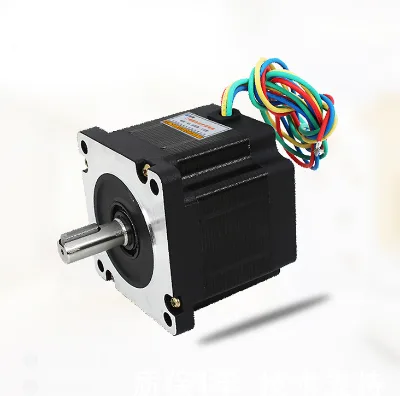

$8.00 - $10.00
MOQ: 25 pieces


Comprehensive Sourcing Guide
Strategic Sourcing Guide for High Torque Waterproof Stepper Motors
Procuring high torque waterproof stepper motors requires a rigorous approach that balances mechanical performance, environmental resilience, and electrical compatibility. In the B2B market, the term "high torque" often implies specific holding torque thresholds that exceed standard NEMA frame capabilities, while "waterproof" necessitates rigorous sealing standards that are not always explicitly detailed in generic product listings. Buyers must navigate a landscape where product attributes vary significantly between models, even within the same supplier catalog. This guide provides a structured framework for evaluating potential suppliers and products based on verified technical data, ensuring that procurement decisions are grounded in observable facts rather than marketing assertions.
Technical Specification Analysis and Performance Verification
The foundation of a successful procurement lies in a granular analysis of technical specifications. High torque performance is primarily driven by the motor's phase configuration, current rating, and step angle. In the observed market data, distinct configurations exist, such as 2-phase hybrid motors with a step angle of 1.8 degrees and a current rating of 4A per phase, which deliver a holding torque of 8Nm. Conversely, 3-phase hybrid models are available with a finer step angle of 1.2 degrees, a current rating of 4.3A per phase, and a significantly higher holding torque of 12Nm. These variations indicate that torque density is not uniform across all offerings.
When evaluating waterproof capabilities, buyers must look beyond the general descriptor. The insulation strength and resistance are critical indicators of environmental durability. Verified data points to an insulation strength of 1000VAC at 50Hz with a leakage current limit of 1mA per minute, alongside an insulation resistance of 100mΩ. These metrics suggest a robust internal construction capable of withstanding electrical stress, which is a prerequisite for waterproof designs. Furthermore, the temperature rise range of -40°C to +55°C defines the operational envelope. A motor operating at the upper limit of this range requires effective thermal management to prevent insulation degradation, which is classified as B Class in the provided specifications.
The physical dimensions and mass also play a pivotal role in system integration. A 57mm motor width is associated with a mass of 0.6kg and a rotor inertia of 8.6kg·cm², suitable for lighter load applications. In contrast, larger frames may exhibit a mass of 5.5kg or 6.5kg, indicating a substantial increase in torque capacity and inertia. The choice between these models depends on the specific acceleration and deceleration requirements of the application. Additionally, the inductance values, ranging from 3.8mH to 11.9mH, influence the motor's dynamic response and the required driver voltage. High inductance generally correlates with smoother operation at higher speeds but requires higher voltage drivers to overcome the back EMF.
Compliance, Certification, and Environmental Standards
Compliance with international standards is non-negotiable for industrial applications, particularly when motors are deployed in harsh or wet environments. The presence of CE certification in the product data confirms that the manufacturer adheres to specific European safety, health, and environmental protection requirements. However, buyers must verify if this certification covers the specific waterproof rating (IP code) required for their application. The term "waterproof" is often used loosely; precise IP ratings (e.g., IP65, IP67) define the exact level of protection against dust and water ingress.
In the absence of explicit IP ratings in the provided text, procurement teams must request detailed test reports from the supplier. The insulation grade of B Class is a standard benchmark, but for waterproof applications, the sealing of the shaft and cable entry points is equally critical. The standard product packing, described as polyfoam within a cardboard carton, suggests standard industrial packaging, but this does not guarantee the motor's internal sealing integrity during transit or operation.
Buyers should also investigate the origin of the product. While the data indicates origins in Beijing, China, and general production in China, the specific manufacturing facility's quality management system certification (such as ISO 9001) is a vital factor. The "1*1" standard listed in the specifications is ambiguous and requires clarification. It is essential to confirm whether this refers to a specific industry standard or a proprietary internal code. Without clear standard definitions, the buyer must demand third-party validation of the motor's performance claims to ensure it meets the rigorous demands of high-torque, wet-environment operations.
Cost Drivers and Economic Factors in Procurement
The cost of high torque waterproof stepper motors is influenced by a complex interplay of materials, electrical components, and manufacturing complexity. The observed price range in the market spans from $1 to $25,000, a variance that reflects differences in torque output, frame size, and certification levels. A motor with a 12Nm torque and 3-phase configuration will inherently cost more than a 2-phase 8Nm unit due to the increased copper content, larger magnets, and more complex driver requirements.
Minimum Order Quantity (MOQ) is another significant economic factor. The observed MOQ range of 1 to 1000 units allows for flexibility, but larger orders often unlock better pricing tiers. For customizations, such as specific shaft lengths or unique connector types, the MOQ may increase, and the unit price will rise due to the setup costs involved. The availability of customization is a key differentiator; while some models are listed as "Non-Customized," others explicitly welcome customization. This flexibility can reduce long-term costs by allowing the motor to be tailored exactly to the application, minimizing the need for external adapters or mechanical modifications.
Lead times and warranty terms also impact the total cost of ownership. A warranty period ranging from 3 months to 1 year is standard, but the specific duration should be negotiated based on the criticality of the application. A longer warranty often indicates higher confidence in the product's reliability, potentially reducing the risk of costly downtime. Additionally, the required adapter driver, such as the Dm542 or Zd-3he2254ml(220VAC), represents an additional cost component. Buyers must ensure that the driver is compatible with the motor's voltage and current ratings to avoid inefficiencies or premature failure.
Typical Applications and Operational Context
High torque waterproof stepper motors are indispensable in industries where precision and environmental resistance are paramount. The 8Nm to 12Nm torque range makes these motors suitable for heavy-duty automation tasks. In the food and beverage industry, for instance, motors must withstand frequent washdowns with high-pressure water and cleaning chemicals. The B Class insulation and robust sealing are essential to prevent corrosion and electrical shorts in these environments.
Similarly, in outdoor automation and agricultural machinery, the temperature range of -40°C to +55°C is critical. Motors used in cold storage facilities or exposed to direct sunlight must maintain performance across this wide spectrum. The open-loop structure mentioned in the specifications is ideal for applications where feedback systems are not required, such as conveyor systems or positioning stages. However, for applications requiring absolute precision, the integration of a closed-loop system might be necessary, though the provided data focuses on open-loop configurations.
The "Automatic Control" function and "Program" task capabilities suggest these motors are designed for integration into complex control systems. The input voltage range of 18V-80VDC or 24V-110VDC offers versatility in power supply selection, allowing the motor to be used in various industrial settings with different power infrastructures. The suitability for NEMA 43 series motors indicates compatibility with standard mounting patterns, facilitating easy replacement and integration into existing machinery.
Supplier Evaluation and Quality Assurance Protocols
Evaluating a supplier for high torque waterproof stepper motors requires a multi-faceted approach. The brand name "YINFAN" appears in the data, but buyers should not rely solely on brand recognition. Instead, they must verify the supplier's ability to provide consistent quality across batches. The "Quality Guarantee: 1 Year" is a positive indicator, but it must be backed by a clear service level agreement (SLA) that defines the process for handling defects or failures.
Quality control protocols should include a review of the supplier's testing procedures. While specific test results are not provided in the general data, buyers should request sample test reports that verify the insulation resistance, step angle accuracy, and torque consistency. The "Customized: Welcome" attribute suggests the supplier is willing to engage in a collaborative design process, which is a strong indicator of technical competence. However, buyers must ensure that the customization process includes rigorous validation to prevent introducing new failure points.
The supplier's location, specifically Beijing, China, may influence logistics and communication. Buyers should assess the supplier's ability to provide timely support and spare parts. The "Adapter Driver" compatibility is another area for scrutiny; the supplier should provide documentation confirming that the recommended drivers are fully compatible with the motor's electrical characteristics. A lack of clear driver specifications can lead to integration issues and suboptimal performance.
Long-Term Procurement and Lifecycle Management
Sourcing high torque waterproof stepper motors is not a one-time transaction but a long-term partnership. The "3months-1year" warranty range highlights the need for a clear maintenance and replacement strategy. Buyers should establish a relationship with the supplier that includes access to technical support and spare parts for the entire lifecycle of the equipment. The "Polyfoam, Cardboard Carton" packing suggests standard handling, but for long-term storage, additional protective measures may be necessary to prevent moisture ingress during storage.
Future-proofing the procurement strategy involves considering the scalability of the solution. As applications evolve, the need for higher torque or different environmental ratings may arise. The "Customization: Available" feature is a strategic asset, allowing the buyer to adapt the motor to new requirements without switching suppliers. However, buyers must ensure that the customization process is documented and standardized to maintain consistency across different production runs.
Finally, the total cost of ownership extends beyond the initial purchase price. Energy efficiency, maintenance costs, and downtime risks must be factored into the decision-making process. A motor with a higher initial cost but superior insulation and sealing may prove more economical over time by reducing failure rates and maintenance intervals. Buyers should conduct a comprehensive lifecycle analysis to identify the most cost-effective solution for their specific operational needs.
Summary of Key Technical Parameters
To assist in the evaluation process, the following table summarizes the key technical parameters observed in the market data. This comparison highlights the diversity of options available and the importance of matching specifications to application requirements.
| Parameter | Model A (2-Phase) | Model B (3-Phase) | Model C (High Torque) |
|---|---|---|---|
| Step Angle | 1.8° | 1.2° | N/A |
| Phase | 2 | 3 | N/A |
| Current/Phase | 4A | 4.3A | N/A |
| Holding Torque | 8Nm | 12Nm | N/A |
| Motor Width | 57mm | N/A | N/A |
| Mass | 0.6kg | 5.5kg | 6.5kg |
| Inductance | 3.8mH | 11.9mH | N/A |
| Insulation Grade | B Class | B Class | B Class |
| Insulation Strength | 1000VAC | 1000VAC | 1000VAC |
| Temperature Range | -40°C to +55°C | -40°C to +55°C | -40°C to +55°C |
| Certification | CE | CE | CE |
| Structure | Open-Loop | Open-Loop | Open-Loop |
| Customization | Available | Welcome | N/A |
This structured approach ensures that buyers can make informed decisions based on verified data, minimizing risks and maximizing the performance of high torque waterproof stepper motors in their specific applications.
FAQs
What is the holding torque of the 2-phase hybrid motor?
The 2-phase hybrid motor provides a holding torque of 8Nm. This performance is achieved with a step angle of 1.8 degrees and a current rating of 4A per phase for standard applications.
Which motor offers higher torque, 2-phase or 3-phase?
The 3-phase hybrid stepper motor offers higher torque at 12Nm. It operates with a finer step angle of 1.2 degrees and draws 4.3A per phase compared to the 2-phase variant.
Can these motors operate in extreme temperature conditions?
Yes, the motors are designed for a temperature rise range of -40°C to +55°C. This operational envelope ensures reliability in cold storage or hot industrial environments with B Class insulation.
What insulation strength do these high torque motors have?
The motors feature an insulation strength of 1000VAC at 50Hz with a leakage current limit of 1mA per minute. This rating supports robust electrical performance in demanding industrial settings.
Are customization options available for these stepper motors?
Customization is available for many models in this product line. Buyers can request specific modifications, though some models are listed as non-customized depending on the specific configuration required.
What is the warranty period for these stepper motors?
The warranty period ranges from 3 months to 1 year depending on the specific model and supplier agreement. A 1-year quality guarantee is available for certain high-torque configurations.