Source Holiday Ribbon for Gift Wrapping, Cake Ties, and Christmas Decorations
Find 30 verified options for Holiday Ribbon including woven polyester, printed polypropylene, and metallic plastic varieties. Buyers can compare widths, colors, and customization availability for gift wrapping, cake ties, and Christmas decorations.
Key considerations
Products List
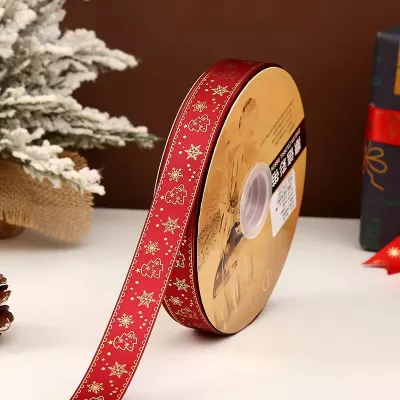
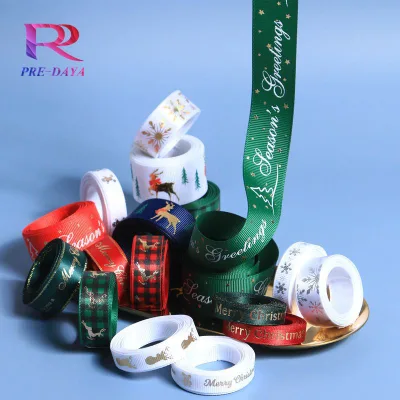
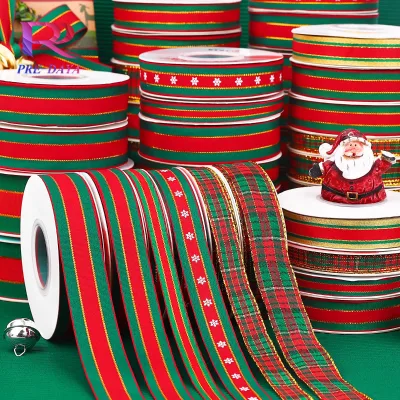


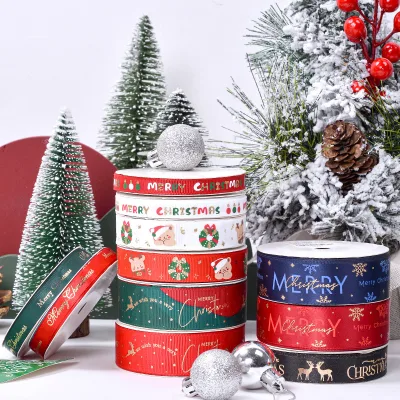


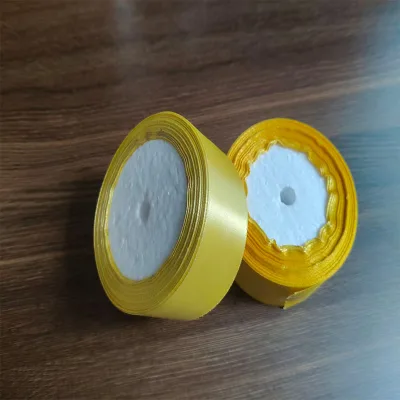


High Quality Decorative Printed Christmas Ribbons for Holiday Decoration
$0.30 - $2.00
MOQ: 2000 Yards


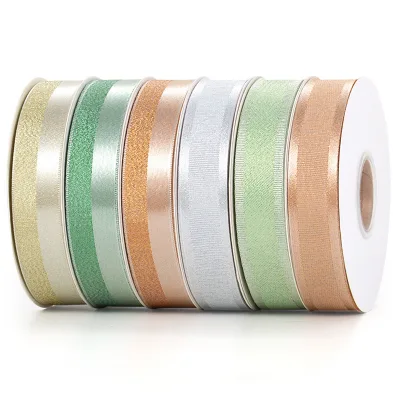

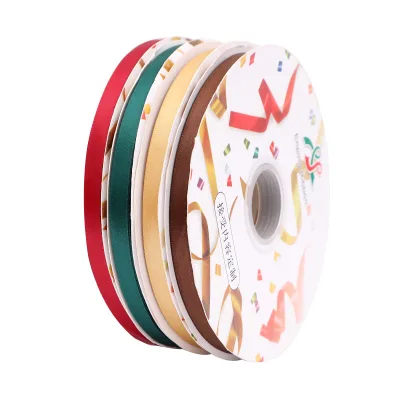
Holiday Ribbons for Gift Wrapping Wreath Bows Xmas Tree Decoration Crafts
$0.53 - $0.66
MOQ: 100 Rolls


Comprehensive Sourcing Guide
Strategic Sourcing Guide for Holiday Ribbon Procurement
The global market for Holiday Ribbon presents a complex landscape where aesthetic versatility meets rigorous industrial requirements. For procurement professionals, the core keyword "Holiday Ribbon" encompasses a diverse array of products ranging from simple decorative trims to high-performance industrial fasteners. Sourcing decisions in this sector must be grounded in a precise understanding of material composition, technical specifications, and supply chain reliability. The following guide synthesizes available market data to provide a disciplined framework for evaluating suppliers and selecting products that align with specific application needs, ensuring that procurement strategies are both cost-effective and compliant with operational standards.
Material Composition and Technical Specifications
The foundation of any successful Holiday Ribbon procurement strategy lies in the accurate identification of material composition. The market data reveals a significant divergence in raw materials, primarily driven by the intended application. A substantial portion of the inventory is constructed from 100% Polyester, offering a balance of durability and aesthetic finish suitable for general decorative purposes. In contrast, specific industrial or heavy-duty applications utilize Polyester / Nylon blends or Polypropylene entirely. The presence of Plastic as a material category indicates a segment focused on rigid or semi-rigid decorative elements, often associated with specific seasonal themes.
Technical specifications further differentiate these products. Width is a critical dimension, with observed standard offerings ranging from 1 inch to 1-1/2 inches, while other variants specify narrower dimensions such as 1 cm or 2 cm. Length specifications vary widely, with standard rolls observed at 100 yards or 1000 meters, and custom cut lengths like 18 cm or 100 yards depending on the supplier's standard. The manufacturing Technics also play a pivotal role; products are categorized as either Woven or Printed. Woven ribbons, often featuring Striped or Plaid patterns, typically offer superior structural integrity and abrasion resistance. Printed variants may offer more complex color gradients but require verification of colorfastness.
| Attribute Category | Observed Variants | Typical Application Context |
|---|---|---|
| Material | 100% Polyester, Polyester/Nylon, Polypropylene, Plastic | Apparel, Gift Wrapping, Industrial Fastening |
| Width | 1", 1-1/2", 1cm, 2cm, 3cm | Clothing trim, Gift ties, Packaging |
| Technics | Woven, Printed | Durable goods, Decorative accents |
| Pattern | Striped, Plaid, Custom | Seasonal themes, Uniforms, Branding |
| Style | Elastic, Metallic, Standard | Stretchable packaging, Luxury gifts, General |
Compliance, Certification, and Safety Standards
When sourcing Holiday Ribbon, particularly for applications involving children, food contact, or export to regulated markets, compliance verification is non-negotiable. The supplied data indicates that many products carry an Eco-Friendly attribute, suggesting a potential alignment with sustainability initiatives. However, buyers must not assume certification status based solely on marketing labels. The absence of specific certification names in the provided facts necessitates a proactive verification process. Procurement teams should request documentation confirming adherence to international safety standards such as REACH, CPSIA, or specific fire-retardant ratings, depending on the destination market.
Furthermore, the Scope of Application listed in the data includes Clothing, Apparel, Home Textile, and Industrial uses. This broad categorization implies that a single ribbon product may be marketed for multiple purposes, yet the compliance requirements for each differ significantly. A ribbon suitable for Gift Wrapping or Cake Tie usage must meet different safety thresholds than one intended for Industrial applications. Buyers should explicitly verify that the prod_standard (product standard) listed by the supplier matches the regulatory requirements of their target market. For instance, while some standards are listed as specific dimensions like 5cm18cm8loops, these are dimensional specifications rather than safety certifications. The buyer must ensure that the material, whether Polypropylene or Polyester, has been tested for toxicity and flammability relevant to the end-use environment.
Cost Drivers and Pricing Dynamics
Understanding the cost structure of Holiday Ribbon is essential for budget management and negotiation. The observed listed price range in the market data spans from 0.01 to 4.4 USD. This wide variance is not indicative of a single product tier but rather reflects the cumulative effect of multiple cost drivers. The primary determinant of price is the Material. 100% Polyester and Polypropylene generally offer different cost points compared to specialized blends or metallic finishes. The Style also influences pricing; Metallic ribbons, often used for high-end gift wrapping, command a premium over standard Coloured or White variants.
The MOQ (Minimum Order Quantity) is another significant factor, with observed ranges from 1 to 3800 units. Suppliers offering low MOQs (e.g., 1 unit) often charge a higher unit price to cover setup and handling costs, whereas high-volume orders (approaching 3800 units) typically benefit from economies of scale. The Customization availability is a critical cost variable. While Customization is listed as Available for many items, including specific color requests like Sapphire, Navy blue, or Golden, custom orders invariably incur additional tooling or setup fees. The prod_packing method, whether Standard Export Carton, 1PS/OPP, or Box, also impacts the final landed cost. Complex packaging requirements for retail-ready products will increase the unit price compared to bulk industrial packing.
Typical Applications and Usage Scenarios
The versatility of Holiday Ribbon is evident in the diverse Scope of Application and Usage fields. The data explicitly categorizes usage into Gift Wrapping, Cake Tie, Candy Wrap, and Gift Wrap. These applications prioritize aesthetic appeal, with a strong emphasis on Color options such as Red, Green, Rose red, and Wine red, which are traditional holiday palettes. The Season attribute is noted as Whole Year, suggesting that while these products are marketed for holidays, they have year-round utility in home textiles and apparel.
Beyond consumer goods, the Industrial scope indicates that these ribbons serve functional roles in manufacturing and logistics. The High Tenacity and Abrasion Resistance features highlight suitability for heavy-duty applications where standard decorative ribbons would fail. In the Apparel sector, the Elastic style and Woven technics suggest use in garment construction, potentially for waistbands or decorative trim. The Single package size of 10X5X4 cm and a Single gross weight of 0.050 kg indicate that these products are lightweight and compact, facilitating efficient shipping and storage for both small retailers and large industrial distributors.
Supplier Evaluation and Origin Verification
Selecting the right supplier requires a rigorous evaluation of their operational capabilities and geographical footprint. The Place of Origin data points to China as the primary manufacturing hub, with specific mentions of Guangzhou and Dongguan, Guangdong. These regions are known for their textile and packaging infrastructure, but buyers must verify the specific factory capabilities rather than relying on regional generalizations. The Lead Time for sample orders is noted as 7 days, which serves as a benchmark for evaluating supplier responsiveness. However, this should be distinguished from full production lead times, which are not explicitly defined in the provided facts and must be negotiated.
Supplier reliability can be assessed through their prod_packing standards. The mention of Standard Export Carton suggests an adherence to international shipping norms, which is crucial for preventing damage during transit. Conversely, 1PS/OPP or Box packing may indicate a focus on retail presentation. Buyers should also scrutinize the Customization capabilities. While Customization is available, the extent of this service—whether it includes color matching, width adjustment, or pattern design—must be clarified. The prod_model numbers (e.g., SD8001532, SD8001548, pull bow) serve as unique identifiers for cataloging and quality tracking. A supplier that maintains a robust model numbering system is more likely to have a structured quality control process.
Quality Control and Long-Term Procurement Considerations
Maintaining consistent quality in Holiday Ribbon procurement requires a proactive approach to quality control (QC). The observed attributes such as Eco-Friendly, High Tenacity, and Abrasion Resistance are performance claims that must be validated through testing. Buyers should implement a sampling protocol that verifies the Pattern consistency (e.g., Striped vs. Plaid) and the Color accuracy against the provided swatches or digital images. The Feature list includes Eco-Friendly, which implies a need for verification of the environmental claims, potentially through third-party testing reports.
For long-term procurement, establishing a relationship with suppliers who offer Support for sample orders is vital. The 7 days sample order lead time indicates a capacity for rapid prototyping, which is essential for adapting to changing market trends. However, buyers must also consider the Selling Units, which are listed as Single item. This suggests that the market is fragmented, with many suppliers catering to small orders. For large-scale procurement, buyers should negotiate consolidated shipping and standardized packaging to reduce logistics costs. The prod_standard variations, such as 50cm*1000m or 3cm*100yds, highlight the need for clear specification sheets to avoid receiving incorrect dimensions.
In conclusion, sourcing Holiday Ribbon requires a meticulous balance between aesthetic requirements and technical performance. By focusing on material composition, verifying compliance, understanding cost drivers, and rigorously evaluating suppliers, procurement professionals can navigate the complexities of this market. The data provided underscores the importance of detailed specification management and the need for continuous quality assurance to ensure that the final product meets the expectations of both the end consumer and the regulatory bodies.
FAQs
What materials are used for Holiday Ribbon?
Holiday ribbons are primarily made from 100% Polyester, Polyester/Nylon blends, Polypropylene, or Plastic. The specific material depends on the intended application, such as apparel, gift wrapping, or industrial fastening, with woven variants offering higher durability.
Which width options are available for these ribbons?
Standard width options range from 1 inch to 1-1/2 inches, with other variants available in 1 cm, 2 cm, or 3 cm. Lengths typically come in rolls of 100 yards or 1000 meters, though custom cut lengths like 18 cm are also possible.
Can I customize the color and pattern of the ribbon?
Customization is available for specific colors like Sapphire, Navy blue, and Golden, as well as patterns such as Striped or Plaid. Buyers should note that custom orders may involve additional setup fees and require verification of colorfastness standards.
What is the lead time for sample orders?
The lead time for sample orders is typically 7 days. This allows for rapid prototyping and quality verification before committing to larger production runs, though full production lead times must be negotiated separately with the supplier.
How does the minimum order quantity affect pricing?
The minimum order quantity ranges from 1 to 3800 units, directly influencing the unit price. Lower MOQs often carry higher per-unit costs to cover setup, while high-volume orders near 3800 units benefit from economies of scale and lower pricing.
Where are these holiday ribbons manufactured?
Products originate from China, with specific manufacturing hubs located in Guangzhou and Dongguan, Guangdong. Buyers should verify the specific factory capabilities in these regions to ensure they meet required quality and compliance standards for their target market.
Are these ribbons suitable for industrial applications?
Yes, many ribbons feature High Tenacity and Abrasion Resistance, making them suitable for industrial uses alongside apparel and home textiles. The scope of application includes clothing, gift wrapping, and heavy-duty industrial fastening depending on the material and construction.