Source Home Incline Decline Weight Bench for Gym, Home, and Club
Compare 30 Home Incline Decline Weight Bench options from verified Chinese manufacturers. These steel strength training units support bodybuilding and muscle exercise with customizable features for commercial and residential fitness centers.
Key considerations
Products List
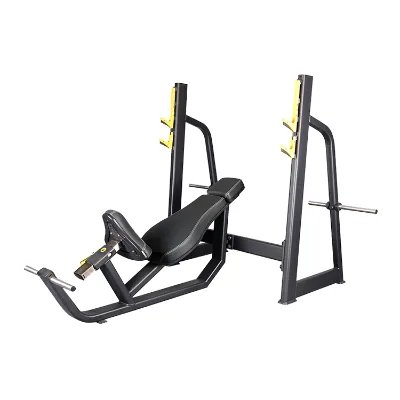


Gym Equipment Adjustable Weight Bench Decline Commercial Weight Bench
$120.00 - $138.00
MOQ: 10 Pieces

Weight Bench Foldable Home Use Bench Press Home Use Gym Use Decline Bench
$120.00 - $138.00
MOQ: 10 Pieces


Cheap Price Home Gym Exercise Equipment Weight Bench Foldable Weight Bench
$110.00 - $135.00
MOQ: 1 Pieces

Hotselling Gym Fitness Equipment Incline Decline Flat Adjustable Weight Bench
$36.00 - $40.00
MOQ: 25 Pieces

Height Adjustable Body Exercise Weight Bench Sports Gym Home Weight Bench
$49.00 - $65.00
MOQ: 100 Pieces


Comprehensive Sourcing Guide
Strategic Sourcing Guide for Home Incline Decline Weight Benches
Understanding Product Categories and Functional Scope
When sourcing equipment under the core keyword of "Home Incline Decline Weight Bench," buyers must first distinguish between single-purpose benches and integrated training systems. The market offers a spectrum of products ranging from simple adjustable benches to complex multi-station units. Based on current product observations, the category includes distinct functional classifications such as "Incline Bench," "Integrated Gym Trainer," and "Multi Weightlifting Decline Exercise Weight Bench." These variations dictate the intended utility of the equipment. A standard incline decline bench is typically designed for targeted muscle isolation, whereas an "Integrated Gym Trainer" or "Abdominal Exerciser" suggests a broader scope of motion, potentially incorporating resistance mechanisms or additional attachment points for full-body conditioning.
The application scope is equally diverse. While the primary keyword emphasizes "home" usage, the observed data indicates that these products are frequently marketed for "Commercial Use," "Fitness Center," "Gymnasium," and "Community" settings. This overlap suggests that manufacturers often produce units with commercial-grade durability intended for residential markets. Buyers should verify the specific "Appliance" designation of the unit they are purchasing. Some listings explicitly state "Home, Gymnasium, Community," while others focus solely on "Professional Gym and Club." Understanding this distinction is critical, as a unit rated for high-traffic commercial environments will generally offer superior longevity for a home user, but may come with a higher price point and different logistical requirements.
Technical Specifications and Dimensional Analysis
Technical specifications form the backbone of any procurement decision for heavy gym equipment. The physical dimensions of the bench are paramount, particularly for home environments where space is often constrained. Observed data reveals significant variance in size, with specific models like the EM1039 measuring 195017801460mm, while other standards, such as the HQ-1041, list dimensions of 205517351225mm. Conversely, some listings indicate "Customized" size options, which implies a potential for bespoke manufacturing but requires careful verification of shipping constraints.
Weight is another critical specification that influences both stability and portability. The observed weight range for these units spans from 81kg to 85kg, with some models supporting a maximum load of 150kg. This load capacity is a vital safety metric; a bench supporting 150kg is generally suitable for serious strength training, whereas lighter units may be intended for light conditioning or rehabilitation. The material composition is consistently identified as "Steel," which is the industry standard for structural integrity. However, buyers should inquire about the specific steel grade and wall thickness. One observed specification mentions a "Thickness: 3mm," which is a reasonable baseline for commercial-grade frames, but this figure should be confirmed for every specific model to ensure it meets the intended load-bearing requirements.
The surface finish and coating are also essential for durability. Observations note a "2 Layers" painting process, which suggests a double-coat system designed to resist chipping, rust, and wear from sweat and heavy use. The color options are typically "Optional" or "Customized," allowing buyers to match existing decor or branding, though "Black" is a common standard offering.
Compliance, Certification, and Safety Standards
In the realm of fitness equipment, compliance and certification are not merely marketing points but essential indicators of safety and manufacturing quality. Buyers must verify that the equipment meets recognized international standards. The observed data frequently cites "CE," "ISO9001," "ISO," and "RoHS" certifications. The presence of CE certification indicates conformity with health, safety, and environmental protection standards for products sold within the European Economic Area. ISO9001 certification suggests that the manufacturer adheres to a quality management system, ensuring consistent production processes.
However, buyers should exercise caution and not assume that every listed product possesses these certifications without verification. The term "Certification Available" implies that the manufacturer can provide documentation, but it does not guarantee that every unit in a specific order batch is certified. Similarly, while "RoHS" (Restriction of Hazardous Substances) is mentioned, it specifically relates to the restriction of certain hazardous materials in electrical and electronic equipment. Since many weight benches are "Manual" power source devices without complex electronics, the relevance of RoHS may vary depending on the specific components used, such as hydraulic systems or electronic consoles if present.
Buyers should request valid, up-to-date certificates from the supplier before finalizing an order. It is also important to check for local regulatory compliance in the destination country, as CE and ISO do not automatically satisfy all local safety codes. The "Standard" field in product listings sometimes contains numerical values that appear to be dimensions rather than regulatory standards (e.g., 205517351225mm). Buyers must distinguish between physical specifications and actual regulatory standards like EN or ASTM to ensure the equipment meets the necessary safety criteria for their specific market.
Cost Drivers and Pricing Dynamics
The pricing structure for home incline decline weight benches is influenced by several factors, including material quality, functional complexity, and customization options. The observed price range in the market spans from $17 to $566 USD. This wide disparity indicates a segmentation between basic, entry-level benches and high-end, feature-rich integrated trainers. The lower end of the spectrum likely corresponds to simpler, single-function benches with minimal padding and basic steel frames. The higher end likely reflects units with advanced adjustability, integrated resistance systems, or premium finishes.
Several specific cost drivers can be identified from the product attributes. "Customization" is a significant factor; options for "Customized Color," "Customers Logo Available," and "Customized Logo Availabled" (customized logo available) often incur additional tooling or setup fees. The "Factory Price" advantage mentioned in some listings suggests that buying directly from the manufacturer can reduce costs, but this depends on the order volume. The "MOQ" (Minimum Order Quantity) ranges from 1 piece to 100 pieces. A buyer seeking a single unit for personal use can access the lower MOQ range, but bulk buyers may negotiate better unit prices by meeting higher volume thresholds.
Logistics also play a major role in the final landed cost. The "Packaging Details" often involve "Wooden Case" or "Plywood Case," which are robust but heavy and voluminous. The "Port of dispatch" is typically listed as "Qingdao" or "Tianjin," which are major Chinese ports. Buyers must factor in ocean freight, insurance, and inland transportation costs, which can significantly impact the total cost of ownership, especially for heavy items weighing over 80kg. The "Supply Ability" of 1000 sets per month indicates that the manufacturer has the capacity to handle large orders, but lead times should still be confirmed based on current production schedules.
Supplier Evaluation and Operational Capabilities
Evaluating a supplier requires a deep dive into their operational capabilities and reliability. The "Place of Origin" for the observed products is consistently "Shandong, China," a region known for its manufacturing base in fitness equipment. While this provides a geographic context, it does not guarantee quality. Buyers should assess the supplier's "Supply Ability," which is listed as 1000 sets per month in some cases. This figure helps determine if the supplier can meet demand spikes or large procurement contracts without significant delays.
The "Selling Units" are typically listed as "Single item," which is favorable for small buyers, but the "MOQ" of 1PCS to 100PCS varies by supplier. Buyers should verify if the supplier offers tiered pricing or if the single-unit price is inflated to compensate for low volume. The "Adventage" (Advantage) of "Factory Price" is a common claim, but buyers should validate this by comparing the unit price against the total cost including packaging and shipping.
Another critical aspect of supplier evaluation is the "Packing" method. The use of "Wooden Case with Assemble Package" or "Plywood Case" suggests a focus on protecting the product during transit. However, the complexity of the assembly required upon arrival should be considered. Some units are shipped "Unfolded," while others may require assembly. The "Feature: Eco-Friendly" claim should be scrutinized; buyers should ask for specific details regarding the materials used, such as the type of steel or the eco-friendly nature of the padding and paint, to ensure the claim is substantiated.
Quality Control and Long-Term Procurement Considerations
Ensuring long-term value requires a robust quality control (QC) strategy. The "Feature: Durable" and "Eco-Friendly" attributes are observations that must be validated through physical inspection or third-party testing. The "2 Layers" painting process is a positive indicator of corrosion resistance, but the quality of the underlying steel and the welding integrity are equally important. Buyers should request photos or videos of the welding points and the frame construction to assess workmanship.
For long-term procurement, the "Application" scope is vital. A unit marketed for "Home, Gymnasium, Community" suggests versatility, but the "Fit Area: Professional Gym and Club" designation implies a higher tolerance for wear and tear. If the equipment is intended for a home gym that may see heavy use, selecting a unit with commercial-grade specifications is advisable. The "Max Loaded: 150kgs" specification provides a clear safety margin, but buyers should ensure that the dynamic load (the force exerted during movement) does not exceed the static load rating.
The "Customization" options, including "Logo" and "Color," offer branding opportunities but can introduce variability in quality. If a buyer orders customized units, they should ensure that the customization process does not compromise the structural integrity of the bench. The "Power Source: Manual" classification simplifies maintenance, as there are no electronic components to fail, but the mechanical adjustment mechanisms should be tested for smooth operation and durability.
Finally, the "Product Name" and "Model Number" (e.g., EM1039, HQ-1041, HQ-6628) serve as unique identifiers for tracking and warranty purposes. Buyers should maintain a record of these model numbers to ensure compatibility with replacement parts or accessories in the future. The "Age Group: Adult" and "Gender: Unisex" specifications confirm the target demographic, but the design ergonomics should be evaluated to ensure they accommodate a wide range of body types and fitness levels. By focusing on these technical and operational details, buyers can make informed decisions that balance cost, quality, and long-term utility.
FAQs
What certifications are available for this equipment?
CE, ISO9001, and RoHS certifications are available for this equipment. Buyers should verify that specific units carry valid documentation, as certification availability does not guarantee every batch is certified without prior confirmation.
How much weight can the bench support safely?
The bench supports a maximum load of 150kg. This capacity ensures safety for serious strength training, but buyers must confirm the dynamic load limits relative to the static rating for specific models.
Can I customize the color and logo of the bench?
Customized color and customer logos are available for this product. These options often incur additional fees and require careful verification to ensure customization does not compromise the structural integrity of the steel frame.
What is the minimum order quantity for purchasing?
The minimum order quantity ranges from 1 piece to 100 pieces depending on the supplier. Single-item purchases are possible, but bulk buyers may negotiate better unit prices by meeting higher volume thresholds.
Where are these benches manufactured and shipped from?
These benches originate from Shandong, China, and are dispatched from Qingdao or Tianjin ports. Buyers must factor in ocean freight and inland transportation costs, which significantly impact the total landed cost of the heavy equipment.
What materials are used to construct the frame?
The frame is constructed from steel with a thickness of 3mm. This material provides structural integrity, but buyers should inquire about specific steel grades to ensure the frame meets intended load-bearing requirements.
Is the bench suitable for commercial gym use?
Yes, the bench is suitable for commercial gyms, fitness centers, and community settings. Units marketed for professional clubs generally offer superior longevity for home users, though they may come with higher price points.