Source Home Gym Power Rack With Lat Pull Down for Training
Compare 30 home gym power rack with lat pull down options from China. These steel units support arm and waist exercises for adults in gyms or community spaces. View specifications, packaging details, and customization availability for your facility needs; compare the available evidence and request quotations based on your requirements.
Key considerations
Products List


Comprehensive Sourcing Guide
Home Gym Power Rack with Lat Pull Down Sourcing Guide
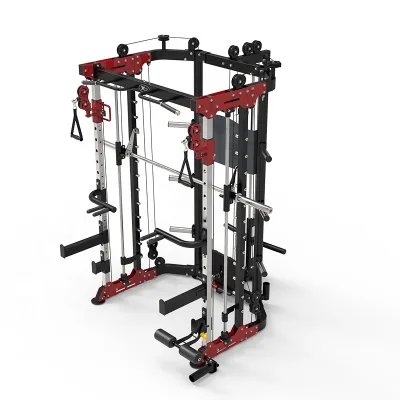
Procuring a home gym power rack with an integrated lat pull-down station requires careful evaluation of structural integrity and functional versatility. These units serve as the cornerstone of a comprehensive strength training environment, allowing users to perform compound lifts such as squats and deadlifts alongside isolation movements like lat pulldowns. The primary objective is to secure a piece of equipment that offers universal applicability for adult users while maintaining stability during high-intensity exercises. Buyers must prioritize racks that support significant weight loads without compromising safety, ensuring the frame can handle dynamic movements typical in home or small commercial settings.
The market offers various configurations, ranging from basic steel frames to more complex systems with multiple attachment points. Observations indicate that manufacturers often provide customization options, including logo placement and color variations, to align with specific brand identities or interior design preferences. It is crucial to verify the power source, as most traditional power racks are manual, relying on user strength rather than electric motors. Understanding the specific exercise parts targeted, such as arms or waist, helps in selecting a rack that complements the intended training regimen, ensuring the equipment meets the diverse needs of unisex users in both home and community gym environments.
Product Scope and Observed Listing Signals
Current market listings reveal a wide spectrum of product attributes, with observed price ranges extending from low-cost entry-level models to premium heavy-duty systems. The minimum order quantities (MOQ) typically start at one unit for individual buyers but can rise to fifty pieces for bulk commercial orders, reflecting the scalability of manufacturing operations. Supply abilities vary, with some manufacturers capable of producing three hundred sets per month, indicating a robust production capacity for larger procurement projects. Buyers should note that while some listings advertise universal applications, the specific structural capabilities and weight capacities differ significantly between models, necessitating a detailed review of each product’s technical data sheet.
Color and material specifications are prominent factors in product selection, with steel being the predominant material due to its durability and load-bearing properties. Listings frequently mention colors such as red, black, or customized options, allowing for aesthetic integration into various gym spaces. Packaging details also vary, with options including wooden boxes, cartons, or wooden cases, which directly impact shipping costs and protection during transit. The port of dispatch is often listed as Qingdao, a major shipping hub in Shandong, China, which is a key region for fitness equipment manufacturing. Understanding these logistical signals helps buyers estimate total landed costs and delivery timelines accurately.
Technical Specifications to Verify
When evaluating technical specifications, the model number and physical dimensions are critical for ensuring the rack fits the intended space. Observed models include identifiers such as DY-6000A, PRA-1100, and JG-D22A, each corresponding to distinct structural designs and feature sets. Dimensions can vary widely, with some units measuring approximately 2080x1730x2230mm, while others are more compact, such as 240x450x260mm. Buyers must verify the tube size, with observations noting dimensions like 75x75x2.5mm, which indicates the thickness and strength of the steel frame. Larger single package sizes, such as 180x80x250cm, suggest that the product may be shipped in multiple crates or requires special handling due to its bulk.
Weight capacity and counterweight systems are essential for safety and performance. Some listings specify a standard weight capacity of 80kg or 500kg, while others mention counterweights of 80kg per side, which are crucial for smooth lat pull-down operations. The gross weight of the product, observed at up to 580kg for certain models, highlights the substantial mass required for stability during heavy lifting. Buyers should also check the folded status, as most power racks are sold in an unfolded state, requiring assembly upon arrival. Verifying these specifications ensures the selected rack can support the user’s maximum lift weight and provides a stable platform for all exercises.
Compliance and Safety Documentation
Safety compliance is non-negotiable when sourcing fitness equipment, particularly for power racks that support heavy loads. Buyers should request certification documents such as CE, ISO, and RoHS, which indicate adherence to European and international safety and environmental standards. These certifications ensure that the materials used are free from harmful substances and that the manufacturing processes meet rigorous quality benchmarks. It is important to verify that the certifications are current and applicable to the specific model being purchased, as standards can vary by region and product type. Documentation should be obtained directly from the supplier to confirm authenticity and coverage.
In addition to certifications, buyers must assess the structural safety features of the rack, such as safety bars, spotter arms, and secure attachment points for the lat pull-down mechanism. The appliance classification, whether for home, gymnasium, park, or community use, influences the required safety margins and durability standards. For instance, equipment intended for community or park use may need to withstand higher usage frequencies and environmental factors. Buyers should inquire about the testing procedures used by the manufacturer to validate the rack’s stability and load-bearing capacity, ensuring that the product meets the necessary safety requirements for its intended application.
Cost Drivers and Commercial Terms
Several factors influence the final cost of a home gym power rack with a lat pull-down station, including material quality, customization options, and packaging requirements. Steel is a primary cost driver, with thicker tubes and higher-grade steel increasing the price but enhancing durability. Customization, such as adding a customized logo or specific color schemes, may incur additional fees, especially for smaller order quantities. Packaging also plays a role, with wooden cases offering superior protection but adding to the shipping weight and cost compared to standard cartons. Buyers should request a detailed breakdown of costs to understand how each component contributes to the final price.
Commercial terms, including MOQ and supply ability, significantly impact procurement strategy. While some suppliers offer an MOQ of one piece, others require fifty pieces or more, which can affect inventory management and cash flow. Supply abilities, such as three hundred sets per month, indicate the supplier’s capacity to fulfill large orders within a reasonable timeframe. Buyers should negotiate clear terms regarding payment methods, shipping responsibilities, and warranty coverage. Understanding these commercial terms helps in planning the procurement budget and ensuring a smooth transaction process, minimizing unexpected costs or delays.
Supplier Qualification and Quality Control
Evaluating supplier qualification is essential to ensure a reliable partnership and consistent product quality. Buyers should verify the supplier’s production capabilities, including their facility size, equipment, and workforce expertise. A supplier with a strong supply ability, such as three hundred sets per month, likely has established processes for maintaining quality and meeting deadlines. It is also important to check the supplier’s history and reputation in the industry, looking for feedback from previous clients and any relevant industry awards or recognitions. A qualified supplier will be transparent about their manufacturing processes and willing to provide samples or factory audits.
Quality control measures should be clearly defined and enforced throughout the production process. Buyers should inquire about the inspection protocols used by the supplier, including raw material checks, in-process inspections, and final product testing. Specific attention should be paid to the welding quality, surface finish, and assembly accuracy of the power rack. Suppliers who offer customization should have robust systems in place to ensure that custom features, such as logos or colors, are applied correctly and consistently. Establishing a clear quality control agreement helps in maintaining high standards and reducing the risk of receiving defective or substandard products.
Long-Term Procurement Checks
Long-term procurement success depends on establishing ongoing relationships with suppliers who can support future needs and adaptations. Buyers should regularly review supplier performance, including on-time delivery rates, product quality consistency, and responsiveness to issues. Maintaining open communication channels allows for timely resolution of any problems and facilitates continuous improvement. It is also important to stay updated on industry trends and technological advancements in fitness equipment, which may influence future purchasing decisions. A proactive approach to supplier management ensures that the procurement process remains efficient and aligned with business goals.
Additionally, buyers should periodically reassess their product specifications and market requirements to ensure continued relevance and competitiveness. This may involve evaluating new models, materials, or features that could enhance the value proposition for end-users. Regularly updating the supplier qualification criteria helps in identifying new partners who may offer better value or innovation. By maintaining a flexible and informed procurement strategy, buyers can adapt to changing market conditions and secure high-quality home gym power racks with lat pull-down stations that meet the evolving needs of their customers.
FAQs
What is the standard material for this power rack?
The standard material for this power rack is steel, ensuring durability for heavy use. This construction supports the specified dimensions of 2080 by 1730 by 2230 millimeters. It is designed for universal application in gymnasiums and home settings.
Can I customize the logo on the equipment?
Yes, you can customize the logo on the equipment as customization is available. The product supports customized logos and colors to meet specific branding needs. This feature allows buyers to personalize the power rack for their facility or brand identity.
What is the minimum order quantity for this item?
The minimum order quantity for this item is 50 pieces. This MOQ applies to the standard power rack models listed. Buyers should note that the supply ability is 300 sets per month, which may affect bulk order fulfillment timelines.
Which certifications does the product hold?
The product holds CE, ISO, and RoHS certifications. These standards ensure safety and compliance for international markets. The certifications apply to the steel construction and are verified for the specific models like DY-6000A and PR-1100.
How is the product packaged for shipping?
The product is packaged in wooden boxes or cartons depending on the specific model. Some units are packed in wooden cases to ensure safe transport. The single package size can reach up to 180 by 80 by 250 centimeters for larger units.
What is the power source for this rack?
The power source for this rack is manual, requiring no electricity. It relies on gravity and counterweights, such as the 80kg per side weight system. This design ensures reliable operation in any gymnasium or home environment without power dependency.
Where is the product manufactured and shipped from?
The product is manufactured in Shandong, China, and shipped from the port of Qingdao. This origin ensures consistent quality for the steel construction. Buyers can expect dispatch from this location for all orders placed through the supplier network.