Source Horizontal Electric Cement Silo for Construction, Farms, and Manufacturing
Explore 30 verified options for the Horizontal Electric Cement Silo designed for construction sites, farms, and manufacturing plants. Buyers can compare specifications like volume, safety valves, and control systems from suppliers in China to find the right fit.
Key considerations
Products List


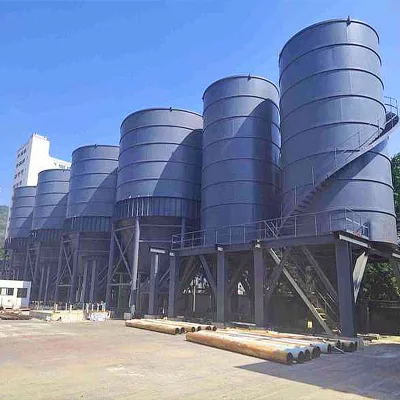

Horizontal Silo for Grain Storage for Farm Use Also for Cement Cereal Silos
$6999.00 - $10000.00
MOQ: 1 Sets


Mobile Cement Steel Silo with CE&ISO Certification for Construction Sites
$9000.00 - $10000.00
MOQ: 1 Sets


Comprehensive Sourcing Guide
Strategic Sourcing Guide for Horizontal Electric Cement Silos
Procuring a Horizontal Electric Cement Silo requires a rigorous understanding of technical specifications, regulatory compliance, and supply chain logistics. These storage units are critical infrastructure for construction, manufacturing, and agricultural sectors, designed to store bulk cement while maintaining material integrity through automated systems. The following guide synthesizes available product data to assist buyers in evaluating potential suppliers and selecting equipment that meets specific operational needs.
Technical Specifications and Structural Design
The physical and operational characteristics of a Horizontal Electric Cement Silo define its suitability for a specific project. Based on observed product data, the industry standard for dimensions often aligns with containerized transport requirements, with a common standard size of 6058mm in length, 2438mm in width, and 2591mm in height. This specific footprint suggests that many units are designed to fit within standard shipping containers, facilitating global logistics without requiring specialized transport permits.
The structural integrity of these silos is typically achieved through a cylinder type design, which offers superior pressure distribution compared to rectangular alternatives. The material composition is predominantly galvanized steel, a choice that provides essential resistance against corrosion and environmental degradation, ensuring longevity in harsh industrial environments. The internal volume is a critical variable; observed data indicates capacities ranging from 27 cubic meters to larger configurations capable of handling 30 to 1000 tons of material. This wide range allows buyers to select a unit that matches their daily consumption rates, whether for a small construction site or a large-scale manufacturing plant.
The discharge mechanism is another vital technical aspect. The system often utilizes air power to assist cement flow, ensuring that the material moves quickly and consistently without bridging or rat-holing. This is supported by the inclusion of specific components such as a 100mm inlet pipe and an air compressor unit. To further manage material flow, some models incorporate oil-wol vibrators, with observed configurations including six units per system. These vibrators help break up compacted material, ensuring a steady discharge rate. The discharging process itself is often customizable, allowing buyers to specify requirements based on their downstream processing equipment.
Compliance, Certification, and Safety Standards
Navigating the regulatory landscape is essential for international procurement. High-confidence data indicates that compliant units frequently carry CE and ISO9001 certifications. The ISO9001:2000 standard, in particular, suggests adherence to established quality management systems, which is a strong indicator of a supplier's commitment to consistent manufacturing processes. The presence of the CE mark confirms that the product meets EU safety, health, and environmental protection requirements, a crucial factor for buyers operating in or exporting to European markets.
Safety features are integrated directly into the design to protect operators and the facility. A stainless steel pressure relief valve is a standard safety component, designed to prevent over-pressurization within the silo, which could lead to structural failure or hazardous conditions. Additionally, the control systems often utilize Siemens components, known for their reliability in industrial automation. The electrical systems typically operate on a 24V DC level indicator, providing a safe and stable power source for monitoring internal levels.
The power type for these units is electric, which simplifies integration into facilities with standard electrical grids. However, the specific power requirements are often base-dependent on the cement silo configuration, meaning buyers must verify the exact power load against their site's electrical capacity. For buyers concerned with environmental compliance, the inclusion of a dust collector with air jet and auto-cleaning capabilities is a significant feature. This system minimizes particulate emissions during filling and discharging, helping facilities meet local air quality regulations.
Cost Drivers and Pricing Variables
Understanding the cost structure of horizontal electric cement silos is complex due to the high degree of customization available. The observed price range in the market is extremely broad, spanning from $1 to over $1,000,000. This variance is not indicative of product quality differences alone but reflects the massive differences in capacity, material thickness, and auxiliary equipment included. A unit with a 27 cubic meter capacity will naturally cost significantly less than a 1000-ton bolted silo system.
Key cost drivers include the total volume capacity, which can range from 30 tons up to 1000 tons or more. The choice of material, specifically the grade of galvanized steel, also impacts the final price. Furthermore, the complexity of the control system and the number of auxiliary components, such as the quantity of oil-wol vibrators or upper level sensors, will influence the overall cost. The standard packing method, often a container standard packing or waterproof plastic film with a wooden box, adds to the logistics cost but ensures the product arrives undamaged.
Buyers should also consider the "customization" factor. While many units are available as standard models like the CS35C or CS27B, the ability to customize dimensions, discharge mechanisms, and sensor configurations allows for a perfect fit but often incurs additional engineering and manufacturing time. The weight of the unit, observed at approximately 4794.8kg for certain models, is another factor that affects shipping costs, particularly for air freight or specialized road transport.
Typical Applications and Industry Suitability
Horizontal electric cement silos are versatile assets designed for a wide array of industrial applications. The data confirms their suitability for manufacturing plants, farms, and construction works. In the construction sector, these silos are indispensable for storing cement on-site, ensuring a continuous supply for concrete mixing and pouring operations. The "Work on Ship" attribute highlights a specialized application where these units are deployed on marine vessels, likely for onboard concrete production or repair operations, demonstrating their robustness and adaptability to mobile environments.
For farms, the silos may be used to store feed or cement for infrastructure maintenance, though the primary focus remains on construction and heavy industry. The "Applicable Industries" data explicitly lists these sectors, indicating that the design parameters are optimized for the dust, vibration, and throughput requirements of these environments. The stackable nature of some units, capable of stacking five layers or more, offers a solution for facilities with limited floor space, allowing for vertical expansion of storage capacity.
The versatility extends to the type of material stored. While the core keyword is "cement silo," the design supports the storage of other dry bulk powders. The dry shotcrete type attribute suggests that these units are also compatible with shotcrete applications, which are common in tunneling and mining. The ability to handle volumes from 50 to 2000 tons, as seen in bolted silo specifications, makes them scalable for large infrastructure projects that require massive, centralized storage.
Supplier Evaluation and Quality Assurance
When evaluating potential suppliers, buyers must look beyond the basic product listing and assess the supplier's ability to deliver quality and support. The presence of "Field Installation, Commissioning and Training" as an after-sales service is a critical differentiator. This indicates that the supplier is not just a manufacturer but a partner capable of ensuring the equipment is correctly integrated into the buyer's operations. A supplier that offers video outgoing-inspection provides transparency, allowing buyers to verify the condition and assembly of the unit before it leaves the factory.
The condition of the product is consistently listed as "New," which is the standard expectation for industrial machinery. However, buyers should verify the manufacturing origin, with Zhengzhou City, China, being a noted hub for this equipment. While the origin is a fact, the specific supplier's reputation, financial stability, and track record in the global market should be independently verified. The availability of customization is a positive sign of a flexible manufacturing capability, but it requires clear communication of specifications to avoid misunderstandings.
Quality control should be a priority, especially given the high-pressure nature of cement storage. Buyers should request documentation regarding the welding standards, the quality of the galvanized coating, and the testing procedures for the pressure relief valves. The use of core components like pumps and Siemens control systems suggests a reliance on reputable sub-suppliers, which is a good indicator of overall product quality. However, buyers must ensure that the final assembly meets the specific standards required for their local jurisdiction.
Long-Term Procurement and Maintenance Considerations
The lifecycle of a Horizontal Electric Cement Silo extends well beyond the initial purchase. Long-term procurement considerations include the availability of spare parts, the ease of maintenance, and the potential for future expansion. The modular nature of bolted silos, which can be specified in sizes like 50t, 100t, 150t, 200t, 300t, 500t, and 1000t, offers significant flexibility. If a buyer's needs grow, the silo can potentially be expanded or modified rather than replaced entirely.
Maintenance is facilitated by the design features such as the auto-cleaning dust collector and the accessible level indicators. The 24V DC level indicator system simplifies troubleshooting and reduces the risk of electrical hazards during routine checks. The inclusion of upper level sensors, typically three units per system, ensures redundant monitoring, which is crucial for preventing overfilling and maintaining safety.
Buyers should also consider the lead time and logistics. The standard packing in containers suggests that shipping is a primary mode of transport, which has predictable lead times but requires careful planning for port handling. The "Customization: Available" status implies that lead times may vary depending on the complexity of the order. For standard models, delivery may be faster, while fully customized units will require additional time for engineering and fabrication.
Comparative Analysis of Silo Configurations
To assist in decision-making, the following table compares key attributes of the observed silo configurations. This comparison highlights the diversity in capacity, standard, and structural type available in the market.
| Feature | Container Silo (CS35C/CS27B) | Bolted Silo (SNC100/FMCS-50) | FM-CS Series |
|---|---|---|---|
| Standard Size | 6058x2438x2591mm | Customized | 30-500T / 50-2000T |
| Volume Capacity | 27m³ | 30t~1000t | 50-2000T |
| Structure Type | Cylinder Type | Bolted | Customized |
| Material | Galvanized Steel | Galvanized Steel | Galvanized Steel |
| Certification | CE, ISO9001 | CE | CE, ISO9001:2000 |
| Packing | Container | Container Standard | Waterproof Film/Wooden Box |
| Control System | Siemens | Base on Silo | Base on Silo |
| Key Accessories | Air Jet Dust Collector, Vibrators | Pump, Level Sensors | Pump, Customized Accessories |
This table illustrates that while the Container Silo offers a fixed, transport-friendly dimension, the Bolted and FM-CS series provide scalability for larger operations. The choice between them depends entirely on the buyer's specific volume requirements and site constraints.
Final Procurement Recommendations
In conclusion, sourcing a Horizontal Electric Cement Silo requires a balanced approach that weighs technical specifications against logistical and financial constraints. Buyers should prioritize units that offer the necessary certifications, such as CE and ISO9001, to ensure safety and compliance. The customization options available allow for tailored solutions, but they require clear communication of requirements to avoid delays.
The robust design features, including stainless steel safety valves, air-assisted flow systems, and reliable control components, indicate that these silos are built for demanding industrial environments. By carefully evaluating the supplier's after-sales support, including installation and training services, buyers can ensure a smooth deployment and long-term operational success. The wide range of capacities and the modular nature of the designs mean that there is a suitable solution for almost any bulk storage need, from small construction sites to massive industrial complexes.
FAQs
What certifications do horizontal electric cement silos typically have?
Most units carry CE and ISO9001 certifications to ensure regulatory compliance. The ISO9001:2000 standard indicates adherence to quality management systems, while the CE mark confirms safety standards for European markets.
How is the structural design of these silos configured?
The silos typically feature a cylinder type structure made from galvanized steel for corrosion resistance. This design offers superior pressure distribution and is often built to fit standard shipping containers for easier transport.
Can these silos be customized for specific project needs?
Yes, customization is available for dimensions, discharge mechanisms, and sensor configurations. Buyers can specify capacities ranging from 30 tons up to 1000 tons or more to match their operational requirements.
What safety features are included in the control systems?
Safety includes a stainless steel pressure relief valve and a 24V DC level indicator. The control systems often utilize reliable Siemens components to manage operations and prevent over-pressurization or electrical hazards.
Which industries are suitable for using these cement silos?
These units are suitable for manufacturing plants, farms, and construction works. They are also designed to work on ships, making them versatile for marine concrete production or repair operations in various environments.
What is the standard packing method for shipping these units?
Standard packing usually involves container standard packing or waterproof plastic film with a wooden box. This ensures the equipment arrives undamaged, though specific packaging may vary based on the model and size.
How does the air power system assist cement flow?
Air power helps cement flow fastly by preventing bridging or rat-holing in the silo. This system often includes an air compressor and oil-wol vibrators to ensure a steady discharge rate for dry materials.