Source Organic Florasulam Herbicide for soil, leaf, and crop use
Compare 30 listings of Organic Florasulam Herbicide from Chinese manufacturers offering customizable packaging and formulations. Buyers can evaluate specifications like WDG, SC, and SE types for selective weed control in various agricultural applications.
Key considerations
Products List
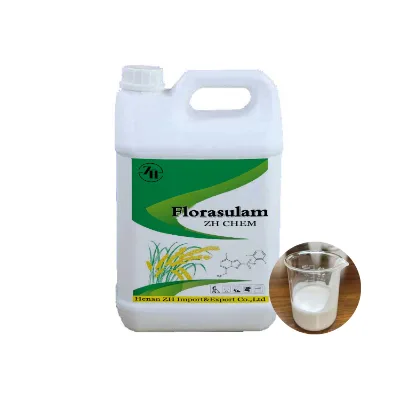


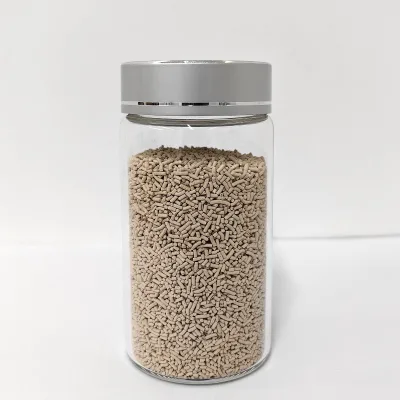


Wheat Field Broadleaf Weed Weedicide Systemic Herbicide Florasulam 50 G/L Sc
$1.00 - $10.00
MOQ: 1000 Liter


Yellow Grass Killer Agricultural Chemicals Herbicide Florasulam 50g/L Sc Products
$1.00 - $10.00
MOQ: 1000 Liter


Comprehensive Sourcing Guide
Strategic Sourcing Guide for Organic Florasulam Herbicide
Procuring Organic Florasulam Herbicide requires a disciplined approach that balances chemical efficacy with rigorous supply chain verification. The global market for selective herbicides is characterized by a complex array of formulations, ranging from granular and powder forms to liquid suspensions. For buyers targeting the specific active ingredient identified by CAS No. 145701-23-1 and molecular formula C12H8F3N5O3S, the procurement process must navigate significant variations in product state, packaging, and origin. This guide outlines the critical factors for sourcing this specific agrochemical, ensuring that buyers can identify compliant suppliers without relying on unverified market assumptions.
Technical Specifications and Formulation Variability
The primary challenge in sourcing florasulam lies in the diversity of physical states and formulations available in the market. While the core active ingredient remains consistent, the product attributes observed in supply listings vary significantly. Buyers must first determine the required physical state for their specific agricultural application. The market offers the substance in Powder, Granular, and Liquid forms. Some listings describe the product as Oil Based, while others specify a White coloration. These variations are not merely aesthetic; they dictate the method of application and the necessary equipment for field deployment.
The formulation type is equally critical. Specifications indicate the existence of WDG (Water Dispersible Granule) and WG (Wettable Granule) forms, alongside SC (Suspension Concentrate) variants, specifically noted as Florasulam 50 G/L Sc. The choice between these forms depends on the target crop and the desired mode of action. For instance, the Method of Application can range from Cauline Leaf treatment to Soil Treatment Agent usage. Buyers must verify that the selected formulation aligns with the intended application method, as a soil treatment agent may not be suitable for foliar spraying without specific adjuvants or formulation adjustments.
Furthermore, the Composition of the product is a key differentiator. While the active ingredient is an organic synthesis product, some listings describe the composition as Inorganic, which may refer to the carrier or filler materials used in the granular or powder forms. Understanding this distinction is vital for regulatory compliance and environmental safety assessments. The Specific Conductivity is also a variable attribute, with some sources describing the product as having transmitting properties, while others label it as a tag-type herbicide. These descriptors suggest different mechanisms of uptake and translocation within the plant system, which must be matched to the specific weed spectrum the buyer intends to control.
Regulatory Compliance and Certification Verification
When sourcing from China, particularly from regions like Jiangsu, Hebei, and Shanghai, verifying regulatory compliance is paramount. The Place of Origin influences the regulatory framework under which the product is manufactured and exported. Buyers must ensure that the supplier holds valid certifications that align with the destination country's agricultural and chemical regulations. Observed certification marks include CCC, ISO, CE, and RoHS. However, the presence of these marks on a product listing does not guarantee universal compliance; they must be validated against the specific import requirements of the buyer's region.
The Standard of the product is another critical compliance factor. Listings indicate that the prod_standard can be Customizable, with specific references to standards such as 100L, 250ML, 500ML, 1L, and 20L drum capacities, as well as specific concentration standards like 459g/l SE. It is essential to verify that the "Customizable" standard offered by the supplier meets the legal concentration limits for florasulam in the target market. Additionally, the Classification of the product as a Herbicide necessitates adherence to strict labeling and safety data sheet (SDS) requirements.
Buyers should also scrutinize the Toxicological Effect and Toxicity claims. While some sources list the product as having a Low Toxicity of Reagents, others mention a Nerve Poison effect. This discrepancy highlights the importance of independent verification of toxicological data. The Mode of action is described as a Stomach Agent, which implies ingestion by the target organism, but this must be cross-referenced with the intended weed type. Relying solely on the supplier's label without independent testing can lead to regulatory penalties or ineffective pest control.
Cost Drivers and Pricing Structures
The pricing of Organic Florasulam Herbicide is influenced by several dynamic factors, including formulation complexity, packaging requirements, and order volume. The observed price range in the market spans from 0.99 to 220 USD, a wide variance that reflects differences in product concentration, packaging size, and the level of customization required. A unit price of 0.99 USD likely corresponds to a small sample or a basic granular form, whereas prices approaching 220 USD may indicate bulk liquid concentrates or specialized custom formulations.
The MOQ (Minimum Order Quantity) is a significant cost driver, with observed ranges from 1 to 1000 units. Buyers seeking small quantities for testing or pilot programs may find suppliers offering single-item units, but these often carry a higher per-unit cost. Conversely, bulk orders can leverage economies of scale, reducing the cost per liter or kilogram. The Selling Units are typically listed as Single item, but for commercial procurement, buyers should negotiate for bulk pricing tiers.
Packaging costs also play a role in the final price. Options range from Standard Export Packing to Three-Layer Corrugated boxes, and various drum sizes including 500ml, 1L, 5L, 20L, and 200L drums. Customized packaging, such as Customized 10mL to 200L containers, adds to the production cost but may be necessary for specific logistics or branding requirements. Buyers must factor in the cost of Customized Label printing and the logistics of shipping via Sea or Air, as these can significantly impact the total landed cost.
Typical Applications and Agricultural Suitability
Understanding the application profile of florasulam is essential for matching the product to the buyer's agricultural needs. The herbicide is classified as Selective, meaning it targets specific weed species while sparing the crop. The Method of Application includes Cauline Leaf Treatment and Soil Treatment Agent usage. This versatility allows for broad application in various cropping systems, but the specific formulation must be chosen to match the application method. For example, a Liquid or SC formulation is typically preferred for foliar spraying, while Granular or Powder forms may be more suitable for soil incorporation.
The Appearance of the product, whether Powder, Liquid, or Oil Based, affects its handling and mixing properties. Granular forms are often easier to handle in dry conditions, while Liquid formulations require careful mixing to ensure uniform distribution. The State of the product, such as Granular or Liquid, also influences the storage requirements. Buyers must ensure that their storage facilities can accommodate the specific physical state of the herbicide to prevent degradation or clumping.
The Quality of the product is often described as High Effective, but this is a subjective claim that requires verification through field trials. The Source of the active ingredient is listed as Organic Synthesis, which implies a controlled chemical manufacturing process. However, the purity of the final product, listed as 25% in some contexts, must be verified to ensure it meets the required efficacy standards for the target weed spectrum.
Supplier Evaluation and Origin Verification
Evaluating suppliers for Organic Florasulam Herbicide requires a deep dive into their operational capabilities and geographic location. The Place of Origin is a critical factor, with major production hubs identified in Jiangsu, Hebei, and Shanghai. Each region may have different regulatory environments and manufacturing standards. Buyers should verify the specific factory location and request documentation proving the origin of the product.
The Brand Name associated with the product, such as Essence, can be a factor in brand recognition, but it should not be the sole criterion for selection. Buyers must focus on the supplier's ability to provide Customization services, including Customized Package and Customized Label options. The availability of Sample for Quality Assurance is a strong indicator of a supplier's confidence in their product quality and their willingness to engage in a transparent procurement process.
Suppliers should also demonstrate a clear understanding of the Model Number and prod_model variations. Specific model numbers like HER20250409 or Florasmul 50 G/L Sc indicate specific product lines or batches. Buyers should request detailed specifications for these models to ensure they match the required technical parameters. The Standard of the product, whether WDG, SC, or 459g/l SE, must be clearly defined in the supplier's catalog to avoid confusion during the ordering process.
Quality Control and Long-Term Procurement Strategy
Establishing a robust quality control protocol is essential for long-term procurement success. The Storage requirements, typically a Dry Place, must be strictly adhered to by both the supplier and the buyer to maintain product integrity. Buyers should implement a sampling and testing regime to verify the Purity, Composition, and Toxicological Effect of each batch received. The Specific Conductivity and Other Names (such as florasulame) should be cross-referenced with the product documentation to ensure consistency.
Long-term procurement considerations include the stability of the supply chain and the ability of the supplier to scale production. The Packagings offered, ranging from small bottles to large drums, should be evaluated for their suitability for the buyer's logistics network. The Method of Application and Mode of action should be reviewed periodically to ensure they remain effective against evolving weed resistance patterns.
Buyers should also consider the Customization capabilities of the supplier. The ability to adjust the Model Number, Standard, and Packaging to meet specific market needs is a valuable asset. However, customization should not compromise the core quality of the product. Regular audits and quality assurance checks are necessary to maintain the High Effective status of the herbicide and to ensure that the product continues to meet the required regulatory and performance standards.
Summary of Key Product Attributes
To facilitate quick reference during the sourcing process, the following table summarizes the key attributes observed in the market for Organic Florasulam Herbicide. Buyers should use this as a checklist to verify supplier claims against their specific requirements.
| Attribute Category | Observed Values / Options | Verification Requirement |
|---|---|---|
| Physical State | Powder, Granular, Liquid, Oil Based | Confirm state matches application method |
| Formulation Type | WDG, WG, SC (50 G/L), SE (459g/l) | Verify concentration and type |
| Origin Locations | Jiangsu, Hebei, Shanghai, China | Validate factory location and export license |
| Packaging | 10mL-200L, Drums, Corrugated Boxes | Check compatibility with logistics |
| Certifications | CCC, ISO, CE, RoHS | Cross-reference with local import laws |
| CAS No. | 145701-23-1 | Mandatory verification for all batches |
| Molecular Formula | C12H8F3N5O3S | Confirm chemical identity |
| Application Method | Cauline Leaf, Soil Treatment | Ensure alignment with crop needs |
| Toxicity Profile | Low Toxicity, Nerve Poison (Variable) | Independent toxicological testing required |
| Customization | Available for Label, Package, Standard | Define scope and cost implications |
By adhering to these guidelines and maintaining a rigorous approach to verification, buyers can successfully source high-quality Organic Florasulam Herbicide that meets their specific agricultural and regulatory needs. The complexity of the market demands diligence, but the strategic selection of the right supplier and product formulation can lead to effective and sustainable weed management solutions.
FAQs
What physical states are available for Organic Florasulam Herbicide?
The product is available in powder, granular, and liquid states. Some listings also describe it as oil-based or white in color. Buyers must verify the specific state required for their application method, such as soil treatment or foliar spraying.
Which certifications are commonly listed for these herbicide suppliers?
Commonly listed certifications include CCC, ISO, CE, and RoHS. Buyers should verify that these marks align with their destination country's regulations, as their presence does not guarantee universal compliance for all batches or specific import requirements.
How does the minimum order quantity affect the pricing structure?
The minimum order quantity ranges from 1 to 1000 units. Smaller quantities often carry higher per-unit costs, while bulk orders can leverage economies of scale. Prices observed in the market span from 0.99 to 220 USD depending on volume and packaging.
Can suppliers provide customized packaging and labeling options?
Yes, customization is available for packaging and labels. Options range from standard export packing to customized drums and boxes, with sizes from 10mL to 200L. Customized labels are also offered to meet specific branding or regulatory needs.
What are the primary application methods for this selective herbicide?
Application methods include cauline leaf treatment and soil treatment agent usage. The choice depends on the formulation type, such as suspension concentrate for foliar spraying or granular forms for soil incorporation. Buyers must match the method to the specific weed spectrum.
Which Chinese provinces are identified as production origins for this product?
Major production origins include Jiangsu, Hebei, and Shanghai. Each region operates under different regulatory frameworks, so buyers should verify the specific factory location and request documentation proving the origin to ensure compliance with local and international standards.
What is the typical purity level reported for this active ingredient?
Some product listings report a purity level of 25%. Buyers must verify this figure through independent testing as it may vary by batch. The active ingredient is derived from organic synthesis, but the final composition depends on the specific formulation and carrier materials used.