Source Hot Dip Galvanized Steel Conservatory for Greenhouses
Find 30 Hot Dip Galvanized Steel Conservatory options for commercial greenhouses, farmland applications, and agricultural structures. Compare models like NT203 and NT214, featuring H-section steel frames, film covers, and customizable sizes to meet specific production needs; compare the available evidence and request quotations based on your requirements.
Key considerations
Products List


Hot DIP Galvanized Steel Greenhouse Framework Prefabricated Greenhouse Structure
$7.00 - $10.00
MOQ: 1000 Square Meters

Galvanized Steel Greenhouse Structure Agricultural Greenhouse Frame
$7.00 - $10.00
MOQ: 1000 Square Meters

Factory Customized Galvanized Greenhouse Structure Large Greenhouse Building Material
$7.00 - $10.00
MOQ: 1000 Square Meters

Wholesale Greenhouse Accessory High Strength Greenhouse Galvanized Structure
$7.00 - $10.00
MOQ: 1000 Square Meters


Durable Hot DIP Galvanized Steel Structure for Industrial Parks
$50.00 - $80.00
MOQ: 100 Square Meters


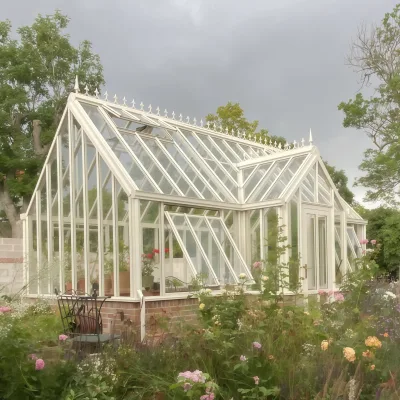


Hydroponic Greenhouse Galvanized Steel Heater System Plastic Greenhouse
$4.00 - $7.00
MOQ: 120 Square Meters


Greenhouse Multi Span Multi-Span Greenhouses Greenhouse Structure Galvanized Steel
$5.00 - $8.00
MOQ: 320 Square Meters

Comprehensive Sourcing Guide
Hot Dip Galvanized Steel Conservatory Sourcing Guide
Procuring a Hot Dip Galvanized Steel Conservatory requires distinguishing between agricultural production structures and commercial greenhouse applications, as the supplied data indicates a primary focus on farmland usage. Buyers must verify that the selected unit features a hot-dip galvanized steel frame, which is explicitly listed as a core structural attribute for these products. This specific material treatment is critical for ensuring the longevity of the structure in outdoor environments where exposure to moisture and soil chemicals is constant.
The observed product listings reveal a diverse range of customization options, including specific model numbers like NT203 and NT214, alongside fully customizable dimensions. While some entries specify a standard size of 30x100ft, others indicate that sizes can be customized to meet specific site requirements. This variability necessitates a clear definition of the intended application place, whether it is a large-scale commercial agricultural operation or a specialized production greenhouse, to ensure the frame structure aligns with the intended load and span requirements.
Product Scope and Observed Listing Signals
The market for these structures presents a wide price range, observed from 1.2 to over 11,000 USD, reflecting significant differences in scale, material thickness, and included features. Buyers should interpret this variance as an indicator of the specific configuration, such as the choice between a fixed installation method or a support installation system, rather than a simple price per square meter. The presence of a minimum order quantity ranging from one to 5000 units further suggests that procurement strategies must be tailored to the project scale, from single-unit pilot farms to large industrial complexes.
Listing signals also highlight the availability of various cover materials, with film being a prominent option for the primary enclosure. The structural integrity is often supported by H-section steel and cold-drawn steel molding methods, which contribute to the high intensity and earthquake resistance observed in the product features. When evaluating listings, buyers must confirm that the silver color and standard export packaging are consistent with the specific model, such as GG-002, to ensure the delivered product matches the visual and logistical expectations of the project.
Technical Specifications to Verify
Technical verification must begin with the connection form, as the data indicates both welded and bolted connections are available in the market. Buyers need to confirm which method is specified for their order, as this impacts the on-site assembly process and the structural rigidity of the frame. The presence of a welded connection may offer a more seamless aesthetic and potentially higher shear strength, while bolted connections might provide easier disassembly and transport flexibility, a critical factor for projects requiring modular expansion or relocation.
The roof and wall panel specifications are equally critical, with options including PU, EPS, Rock Wool, and Fiber Glass sandwich panels. These materials directly influence the thermal insulation and light transmission properties of the conservatory, which are vital for maintaining optimal growing conditions. Additionally, the purlin structure is typically offered in C or Z type sections, and the buyer must verify that the chosen section aligns with the span requirements, such as the 8m span mentioned in specific product standards, to prevent structural sagging under snow or wind loads.
Compliance and Safety Documentation
Compliance verification should prioritize the ISO9001 certification, which is explicitly listed as a standard for several of the available products. This certification indicates that the manufacturer adheres to a recognized quality management system, providing a baseline assurance for the consistency of the hot dip galvanizing process and the structural integrity of the steel frame. Buyers should request current certification documents to ensure the supplier's quality control processes have not lapsed and that the specific batch of steel columns and beams meets the required carbon structural steel grade.
Safety documentation must also address the specific standards applied to the galvanizing process, such as the GB standard referenced in the product attributes. While background knowledge suggests standards like ISO 1461 or EN 10348, the primary verification should focus on the explicit GB standard mentioned in the listings to ensure the anti-corrosion properties meet the local regulatory requirements of the installation site. Confirming that the warranty period, observed as 15 years in some listings, is backed by valid technical data sheets will further validate the long-term durability claims of the anti-corrosion treatment.
Cost Drivers and Commercial Terms
Cost drivers in this sector are heavily influenced by the customization level and the specific steel type selected, such as H-section steel versus standard pipes. The observed price range suggests that factors like the thickness of the steel, which can vary from 1 to 5mm, and the choice of sandwich panel insulation significantly impact the final unit cost. Buyers must analyze the trade-off between initial capital expenditure and long-term operational savings, as higher-grade materials with features like earthquake resistance and high intensity may offer better value over the 15-year warranty period.
Commercial terms regarding the minimum order quantity and lead time are variable, with MOQs ranging from single units to 5000 units. The production origin, primarily located in Shandong and Chongqing, China, implies that logistics and shipping costs will be a major component of the total landed cost. Buyers should negotiate terms that account for the standard export package or customer-specific requirements, ensuring that the delivery schedule aligns with the construction timeline to avoid storage costs or project delays associated with the fixed installation method.
Supplier Qualification and Quality Control
Supplier qualification should focus on the ability to provide detailed engineering drawings, including CAD, Tekla, 3D Model, and Pkpm files, which are listed as available attributes. These documents are essential for verifying that the proposed frame structure, including the steel columns and purlins, will fit the specific site conditions and meet the required span and load calculations. A qualified supplier must demonstrate the capability to translate these digital models into physical components that adhere to the specified cold-drawn steel molding methods and connection forms.
Quality control processes must be verified through the supplier's adherence to the standard export packaging and their ability to handle custom requirements. The presence of a 15-year warranty suggests a high level of confidence in the product's durability, but buyers should request evidence of the testing procedures used to validate the anti-corrosion and high-intensity features. Ensuring that the supplier can provide traceability for the carbon structural steel grade and the hot dip galvanizing process is crucial for maintaining the structural integrity and safety of the conservatory throughout its service life.
Long-Term Procurement Checks
Long-term procurement checks should include a review of the recyclability and environmental impact of the materials used, as the product features explicitly list recyclability as a key attribute. This consideration is increasingly important for commercial and agricultural projects aiming to meet sustainability goals, ensuring that the steel frame and sandwich panels can be effectively recycled at the end of their service life. Buyers should verify that the supplier has a clear plan for the disposal or recycling of the materials, particularly for the film cover and insulation panels.
Finally, buyers must establish a protocol for ongoing maintenance and support, leveraging the "Support Installation" attribute observed in the listings. Even with a fixed installation method and a long service life, the structural components may require periodic inspection, especially in harsh agricultural environments. Procurement contracts should include provisions for technical support and the availability of replacement parts, such as specific purlins or connection hardware, to ensure the conservatory remains operational and safe for the full duration of the warranty period.
FAQs
What is the standard structure material for these greenhouses?
The standard structure material is hot-dip galvanized steel frame, often utilizing H-section steel for columns. This construction provides high intensity and anti-corrosion properties, ensuring long service life for commercial and agricultural applications in farmland settings.
Can the greenhouse size be customized to specific requirements?
Yes, customization is available for various sizes, including specific spans like 30x100ft or square meter standards. Buyers can request customized dimensions, and the supplier supports installation with options for CAD or 3D model drawings to ensure precise fit for the application place.
Which certifications do the manufacturers typically hold?
Manufacturers typically hold ISO9001 certification, ensuring quality management standards are met during production. This certification applies to the fabrication of the hot-dip galvanized pipes and structural components, providing buyers with confidence in the reliability and consistency of the supplied greenhouse frames.
What is the typical warranty period for the structure?
The typical warranty period for the structure is 15 years. This coverage applies to the hot-dip galvanized steel frame and connections, protecting against corrosion and structural failures under normal agricultural use conditions, provided the installation method is fixed and correct.
How are the steel components connected during assembly?
Steel components are connected using either welded or bolted connection forms. The hot-dip galvanized pipes and H-section columns are assembled to create a stable frame structure, often supported by wall supports or independent foundations, ensuring earthquake resistance and easy installation for the buyer.
Where are these greenhouses primarily manufactured and shipped from?
These greenhouses are primarily manufactured and shipped from China, with specific origins noted in Shandong and Chongqing regions. The products are packed in standard export packages or customer requirements, ensuring safe transit for large-sized agricultural structures destined for global farmland applications.