Source Hydraulic Lifting Car Service Ramps for repair shops, garages, and mobile services
Compare 30 Hydraulic Lifting Car Service Ramps from verified Chinese manufacturers. Buyers can evaluate lifting capacities ranging from 2 to 5 tons, weight specifications, and customization options for professional automotive repair applications.
Key considerations
Products List

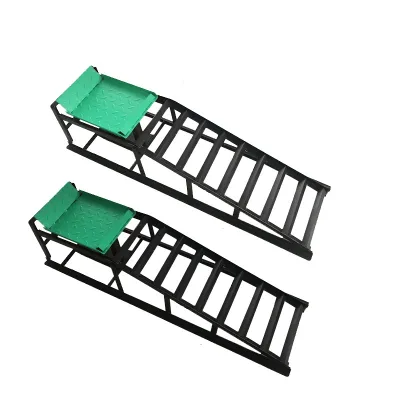
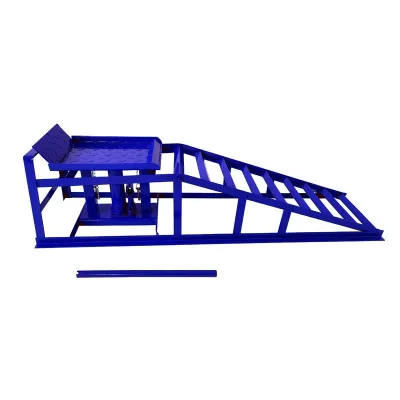
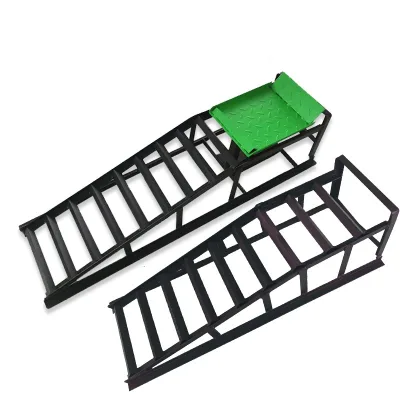
Heavy Duty Car Ramps Hydraulic Car Lifting Service Ramp Car Loading Ramps
$65.00 - $67.00
MOQ: 100 Pieces


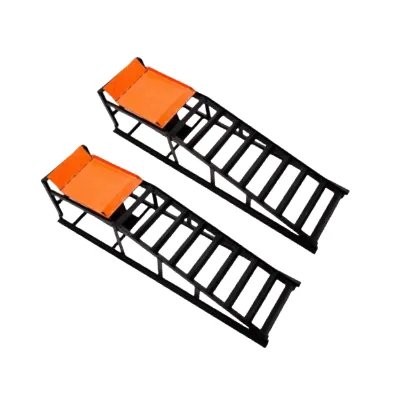
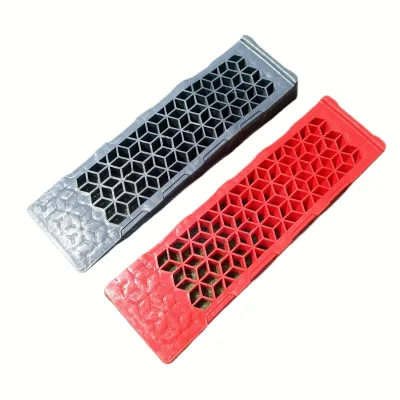
2.5ton Plastic Car Ramps Hydraulic Car Lifting Truck Service Ramp Car Loading Ramps
$20.00 - $22.00
MOQ: 100 Pieces


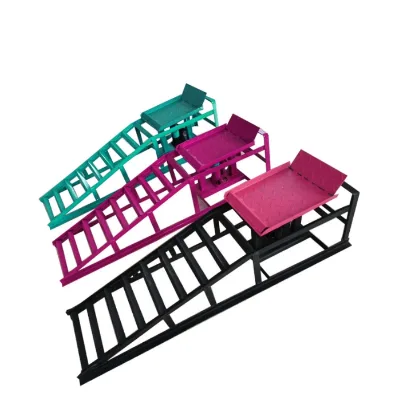
Auto Car Lift Service Ramp Heavy Duty Truck Trailer Garage Lift Repair Car Ramp
$15.00 - $17.35
MOQ: 50 Pieces






Comprehensive Sourcing Guide
Strategic Sourcing Guide for Hydraulic Lifting Car Service Ramps
Understanding Technical Specifications and Variability
When sourcing Hydraulic Lifting Car Service Ramps, buyers must first navigate the significant variance in technical specifications that exists within this product category. The market does not offer a single standardized unit; rather, it presents a spectrum of designs tailored to different load capacities, physical dimensions, and operational requirements. A critical observation from current market data reveals that lifting capacities range from 2 tons to 5 tons, with specific models explicitly rated for 2.5 tons. This variance dictates the suitability of a ramp for specific vehicle types, from standard passenger cars to heavier light commercial vehicles.
Physical dimensions are equally critical and vary substantially between models. Buyers will encounter units with a minimum height of 260mm and a maximum height of 365mm, while other configurations offer a lifting height of up to 2 meters. The footprint of the equipment is defined by measurements such as 1163634cm or 933431.5cm, which directly impacts storage and deployment logistics. Furthermore, the maximum tire width compatibility is a specific constraint; some ramps are engineered to accommodate tires up to 240mm, while others are limited to 210mm. Ignoring these specific measurements can lead to procurement of equipment that physically cannot support the intended vehicle or fit within the designated service bay.
The material composition also plays a pivotal role in performance. The majority of robust hydraulic ramps are constructed from steel, providing the necessary structural integrity for heavy lifting. However, auxiliary components, such as loading ramps, may utilize materials like PU (Polyurethane) or PP (Polypropylene) to ensure durability and grip. Buyers must verify the specific material mix for each component, as a steel frame with a plastic ramp serves a different function than a fully steel assembly. Additionally, the distinction between foldable and non-foldable designs is essential for space-constrained workshops. While some units are explicitly marked as not foldable, others may offer collapsible features to optimize storage, a factor that must be confirmed before finalizing a purchase order.
Compliance, Certification, and Safety Standards
In the realm of automotive service equipment, compliance and certification are not merely administrative hurdles but fundamental indicators of safety and reliability. The primary certification observed in the current market for these hydraulic units is the CE mark, which signifies conformity with health, safety, and environmental protection standards for products sold within the European Economic Area. For buyers operating in other jurisdictions, the presence of CE certification is often a baseline requirement, but it should be viewed as a starting point rather than a comprehensive guarantee of global compliance.
Beyond the CE mark, other certifications such as ISO standards may be present, particularly for manufacturers based in specific industrial hubs like Sanmen or Zhejiang, China. These certifications often relate to quality management systems rather than the specific mechanical safety of the ramp itself. Buyers must exercise caution and verify that the certification applies to the specific model being purchased, as suppliers may hold general company certifications that do not automatically extend to every product variant in their catalog.
Safety standards regarding load capacity are paramount. The observed data indicates a "Lifting Capacity" of 2.5 tons and a "Load Capacity" of 5 tons for different models. It is imperative for buyers to understand that these figures represent the maximum rated load, not the recommended operational load. Operating a ramp at its absolute limit without a safety factor can lead to catastrophic failure. Furthermore, the "Condition" of the product is consistently listed as "New," which implies that the equipment has not undergone prior stress or fatigue. However, buyers should request specific test results or pressure test certificates to validate the hydraulic system's integrity under load, as these documents are often not automatically included in standard product listings.
Cost Drivers and Pricing Structures
The pricing structure for Hydraulic Lifting Car Service Ramps is influenced by a complex interplay of factors, including material costs, manufacturing complexity, and logistical expenses. The observed price range in the market spans from $3.79 to $6,500, a disparity that reflects the vast difference between simple car ramps and full-scale hydraulic lifting systems. The lower end of this spectrum typically corresponds to basic, non-hydraulic ramps or smaller, single-cylinder units with lower load capacities. Conversely, the higher price points are associated with heavy-duty, multi-cylinder systems, advanced hydraulic mechanisms, and larger lifting heights.
Material costs are a primary driver of price variation. Steel construction, which is standard for the main frame, incurs higher costs than composite materials used for ramps or accessories. The inclusion of high-grade hydraulic fluid, seals, and cylinders also contributes to the final price. Buyers should be aware that a unit priced at the lower end of the spectrum may utilize lower-grade steel or less robust hydraulic components, which could compromise longevity and safety.
Minimum Order Quantity (MOQ) is another significant cost driver. The market data shows an MOQ range from 1 to 290 units. Purchasing a single unit for immediate use will likely incur a higher per-unit cost compared to bulk orders. However, for buyers with large-scale requirements, negotiating an MOQ closer to the upper limit can significantly reduce the unit price. The packaging method, often listed as "Carton," also affects shipping costs. Larger units with dimensions like 1222739cm require more robust packaging and may incur higher freight charges, which should be factored into the total cost of ownership.
Typical Applications and Operational Context
Hydraulic Lifting Car Service Ramps are designed for a diverse range of applications, primarily centered around automotive repair and maintenance. The "Usage" field in product specifications frequently cites "Car Repair," indicating their primary function in professional garages, service centers, and dealership workshops. These ramps are essential for elevating vehicles to allow technicians access to the undercarriage for oil changes, brake inspections, suspension repairs, and exhaust system maintenance.
The versatility of these ramps extends beyond standard repair shops. The "Market" designation of "Global" suggests that these products are adaptable to various international contexts, from urban service stations to rural mobile repair units. The specific application often dictates the required specifications. For instance, a workshop dealing with heavy trucks may require a ramp with a 5-ton capacity and a lifting height of 2 meters, whereas a standard passenger car service bay might only need a 2.5-ton unit with a lower profile.
The "Application" field often specifies "Car," but the functionality can vary. Some units are designed specifically for "Protection," acting as a barrier or a stable platform to prevent vehicle damage during lifting. Others, like the "Car Ramp" items, are designed for easy loading and unloading. The "Function" of protecting the vehicle or providing a stable lifting surface is a key consideration for buyers who need to minimize vehicle damage during routine maintenance. Additionally, the "Items" listed as "Car Ramp" often include accessories like plastic loading ramps, which facilitate the entry of vehicles onto the lifting platform, particularly for low-clearance vehicles.
Supplier Evaluation and Geographic Considerations
Evaluating suppliers for Hydraulic Lifting Car Service Ramps requires a thorough understanding of the geographic and industrial context of the manufacturers. The data indicates that a significant portion of these products originates from Zhejiang, China, a region known for its robust manufacturing capabilities in machinery and automotive parts. Specific locations within this region, such as Sanmen, are also noted as points of origin, suggesting a concentration of specialized factories.
When evaluating suppliers, buyers should prioritize those who provide transparent information about their production location and capabilities. The "prod_origin" field is a critical data point, as it allows buyers to assess the logistical implications of shipping and the potential for supply chain disruptions. Suppliers based in established industrial zones like Zhejiang often have access to better raw materials and a more skilled workforce, which can translate to higher quality products.
However, geographic origin alone is not a sufficient metric for supplier selection. Buyers must also consider the supplier's ability to meet specific customization requirements. The "Customization" attribute is listed as "Available," indicating that many manufacturers are willing to tailor products to specific client needs. This could include modifications to dimensions, load capacities, or branding. Buyers should inquire about the extent of these customization options and the associated lead times, as custom orders often require longer production cycles than standard stock items.
Quality Control and Long-Term Procurement Strategy
Ensuring the quality of Hydraulic Lifting Car Service Ramps is a continuous process that extends beyond the initial purchase. The "Quality" attribute is often described as "High" in product listings, but this is a subjective claim that requires objective verification. Buyers should implement a rigorous quality control protocol that includes pre-shipment inspections, pressure testing, and load testing. The "Measurement" and "Standard" fields provide a baseline for physical inspection, ensuring that the delivered product matches the ordered specifications.
Long-term procurement considerations involve assessing the durability and maintenance requirements of the equipment. The "Material" composition, such as steel or PU/PP, determines the lifespan of the ramp and its resistance to wear and tear. Buyers should also consider the availability of spare parts, such as hydraulic seals or cylinders, which are essential for long-term maintenance. The "N.W" (Net Weight) and "G.W" (Gross Weight) figures are useful for estimating shipping costs and handling requirements, but they also provide insight into the density and robustness of the materials used.
To mitigate risks, buyers should establish clear communication channels with suppliers regarding warranty terms and after-sales support. The "Certification" and "Standard" fields should be cross-referenced with local regulatory requirements to ensure compliance. Finally, buyers should maintain a detailed record of all procurement activities, including model numbers, specifications, and test results, to facilitate future ordering and quality assurance. By adopting a disciplined approach to quality control and long-term planning, buyers can ensure the reliable and safe operation of their Hydraulic Lifting Car Service Ramps.
FAQs
What is the lifting capacity of these hydraulic ramps?
Lifting capacities range from 2 tons to 5 tons depending on the specific model. Some units are rated for 2.5 tons while others support up to 5 tons, so verify the exact load capacity before purchase.
Which certifications do these hydraulic lifting ramps hold?
Products often carry CE certification for European safety standards and ISO certification for quality management. Buyers should confirm that the specific model holds the required certification for their local jurisdiction.
Can I customize the dimensions of the hydraulic lift?
Customization is available for many models to meet specific workshop requirements. Buyers can request adjustments to dimensions or specifications, though this may affect lead times and minimum order quantities.
What materials are used to construct these car service ramps?
The main frames are typically constructed from steel for structural integrity. Auxiliary components like loading ramps may utilize PU or PP materials to ensure durability and grip during vehicle loading.
How does the minimum order quantity affect pricing?
Minimum order quantities range from 1 to 290 units, significantly impacting the per-unit cost. Bulk orders near the upper limit often secure lower pricing compared to single-unit purchases.
Where are these hydraulic lifting ramps manufactured?
Most units originate from Zhejiang, China, with specific factories located in Sanmen. This geographic concentration offers access to robust manufacturing capabilities and established supply chains for automotive service equipment.