Source Hydraulic Trailer Mounted Concrete Pump for Building, Infrastructure, and Mining
Find and compare 30 Hydraulic Trailer Mounted Concrete Pump options for stationary construction projects. Evaluate key specifications such as productivity, conveying distance, and power type to select the right equipment for your site requirements.
Key considerations
Products List

$18000.00 - $35000.00
MOQ: 1 sets


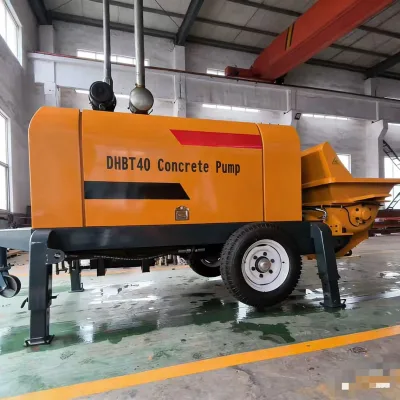


High Quality Concrete Pump Machinery Concrete Pump Concrete Trailer Pump Factory Price
$3414.00 - $7854.00
MOQ: 1 Sets

Concrete Pump Guaranteed Quality Proper Price Yellow Price Trailer Small Concrete Pump
$2800.00 - $5800.00
MOQ: 1 Sets


Mini Concrete Pump Price Diesel 8013-132 Trailer Mounted Concrete Pump
$22000.00 - $28000.00
MOQ: 1 Pieces


Comprehensive Sourcing Guide
Hydraulic Trailer Mounted Concrete Pump Sourcing Guide
Procuring hydraulic trailer-mounted concrete pumps requires a disciplined approach to aligning technical performance with project-specific constraints. These machines are engineered for stationary or semi-stationary concrete placement, offering a robust alternative to truck-mounted units when mobility is less critical than power and output consistency. Buyers must navigate a market where specifications vary significantly, particularly regarding conveying distances, aggregate sizes, and power sources. The following guide outlines the essential verification steps, compliance checks, and commercial considerations necessary to secure reliable equipment that meets operational demands without exposing the procurement team to unnecessary risk.
Product Scope and Observed Listing Signals
The current market landscape for hydraulic concrete pumps reveals a diverse range of configurations, primarily categorized by their mounting type and operational mode. Listings indicate a strong presence of stationary-type pumps, including those explicitly identified as trailer-mounted or semi-dry shotcrete variants. Buyers should observe that while the core function remains concrete pumping, the specific application can shift between standard building projects and specialized shotcrete operations. The observed product count suggests a healthy supply base, but the variation in attributes such as "Cylinder Type" structures and "Wet" versus "Semi-Dry" shotcrete types necessitates careful filtering to match the exact material handling requirements of the job site.
Price and minimum order quantity (MOQ) signals provide initial insights into the tier of equipment being offered. The observed price range spans from approximately $1,500 to $600,000, reflecting a spectrum from smaller, possibly used or entry-level units to high-capacity, new industrial systems. Notably, the MOQ is consistently observed as 1 unit, indicating that suppliers are generally willing to sell single units, which is typical for heavy machinery procurement. However, the wide price disparity underscores the importance of verifying the condition of the equipment, whether new or used, and ensuring that the listed price includes all necessary hydraulic components, power units, and control systems before committing to a purchase.
Technical Specifications to Verify
When evaluating the technical capabilities of a hydraulic trailer-mounted concrete pump, the conveying distance and output capacity are paramount. Buyers must verify the maximum horizontal and vertical conveying distances, as these metrics directly impact the pump’s suitability for the specific building project. For instance, some units may offer a horizontal distance of up to 1,500 meters, while others are limited to 300 meters. Similarly, vertical conveying capabilities can range from 30 meters to over 200 meters. It is crucial to cross-reference these distances with the pump’s productivity rate, which may vary from 35 cubic meters per hour to 50 cubic meters per hour, to ensure the machine can keep pace with the concrete pouring schedule without causing bottlenecks.
The physical dimensions and power specifications are equally critical for site logistics and operational efficiency. The weight of the unit, which can range from 2,600 kg to 5,000 kg, affects transportation requirements and site stability. Buyers should also inspect the engine power, which may be listed as 56 kW or higher, and confirm the power type, typically diesel for these heavy-duty applications. Additionally, the hopper capacity, observed at 600L or 700L, and the maximum aggregate size, which should be less than 40mm for many models, must align with the concrete mix design. Verifying the chassis model, whether it includes a trailer or is a stationary base, is essential for determining the ease of relocation between sites.
Compliance and Safety Documentation
Certification and safety documentation are non-negotiable elements in the procurement of industrial machinery. Buyers should prioritize suppliers who provide recognized certifications such as ISO9001 and CE, which indicate adherence to international quality management and safety standards. The presence of a machinery test report is another key indicator of a supplier’s commitment to quality assurance, providing evidence that the pump has undergone rigorous performance testing before shipment. These documents not only facilitate customs clearance in many jurisdictions but also serve as a baseline for insurance and regulatory compliance on construction sites.
Beyond certifications, buyers must ensure that the equipment comes with comprehensive after-sales support documentation. This includes video technical support availability, which can be invaluable for troubleshooting hydraulic issues or optimizing pump settings during the initial phases of operation. The warranty of core components, often listed as one year, should be clearly defined in the contract, specifying which parts are covered and under what conditions. Buyers should also verify the availability of spare parts and technical manuals, ensuring that the supplier can provide ongoing support to minimize downtime and maintain the pump’s operational efficiency throughout its lifecycle.
Cost Drivers and Commercial Terms
The total cost of ownership for a hydraulic trailer-mounted concrete pump is influenced by several factors beyond the initial purchase price. The power type, typically diesel, and the engine power rating are significant drivers of operational costs, as fuel consumption and maintenance requirements will vary based on the intensity of use. Buyers should also consider the packaging and shipping costs, as units are often shipped in nude packing with anti-rain cloth, which may require additional protective measures during transit. The origin of the product, such as Hunan, China, can impact logistics costs and lead times, so it is essential to factor in freight charges and potential tariffs when calculating the final landed cost.
Commercial terms, including delivery pressure and delivery height, also play a role in the overall value proposition. A delivery pressure of 10 MPa, for example, indicates the pump’s ability to handle high-resistance concrete mixes, which may justify a higher price point for projects requiring long-distance or high-elevation pumping. Buyers should negotiate clear terms regarding the delivery of the machine, including any installation or commissioning services that may be included. Additionally, the marketing type, whether classified as an ordinary product or a specialized solution, can affect the availability of discounts or promotional offers, so it is advisable to compare multiple quotes to ensure competitive pricing.
Supplier Qualification and Quality Control
Supplier qualification is a critical step in mitigating procurement risk, particularly when dealing with heavy machinery from international markets. Buyers should verify the supplier’s production capabilities and quality control processes, looking for evidence of standardized manufacturing practices and rigorous testing protocols. The availability of customization options is a positive indicator, suggesting that the supplier can tailor the pump to specific project requirements, such as adjusting the feeding height or modifying the hydraulic system. However, buyers must ensure that any customizations do not compromise the structural integrity or safety of the machine.
Quality control should extend beyond the supplier’s internal checks to include third-party inspections if necessary. Buyers should request detailed specifications and performance data for the core components, such as the hydraulic cylinders and pumps, to ensure they meet the required standards. The unique selling points of the equipment, such as high operating efficiency or high power engines, should be substantiated by technical data sheets and test results. By conducting thorough due diligence on the supplier’s reputation and track record, buyers can establish a reliable partnership that ensures the delivery of high-quality, durable concrete pumps.
Long-Term Procurement Checks
Long-term procurement success depends on establishing a framework for ongoing performance monitoring and maintenance planning. Buyers should implement a schedule for regular inspections of the hydraulic system, engine, and structural components to prevent unexpected failures and extend the machine’s lifespan. The warranty of core components, typically one year, should be leveraged to address any early-life defects, but buyers must also plan for post-warranty maintenance costs, including the replacement of wear parts such as valves and pipes. Keeping a detailed log of maintenance activities and performance metrics will help in predicting future needs and optimizing operational efficiency.
Furthermore, buyers should maintain a close relationship with the supplier for continuous technical support and updates. The provision of video technical support is a valuable resource for resolving issues quickly, but buyers should also explore the availability of online training or on-site service options for more complex problems. As technology evolves, staying informed about new features or upgrades that can enhance the pump’s performance or safety is essential. By adopting a proactive approach to procurement and maintenance, buyers can ensure that their hydraulic trailer-mounted concrete pumps remain a reliable and efficient asset for their construction projects.
FAQs
What is the productivity of this hydraulic concrete pump?
The hydraulic concrete pump offers a productivity of 50 cubic meters per hour. This high output ensures efficient concrete placement for large-scale construction projects. The machine is designed for continuous operation, making it suitable for demanding site conditions where rapid pouring is required to maintain workflow and project timelines.
Can the pump handle aggregates larger than 40mm?
No, the maximum aggregate size is less than 40mm. This specification ensures smooth pumping without blockages in the hydraulic system. Users must ensure concrete mix designs comply with this limit to maintain optimal performance and prevent wear on the cylinder and delivery pipes during stationary or trailer-mounted operations.
What is the maximum horizontal conveying distance?
The maximum horizontal conveying distance ranges from 100 to 1500 meters. This wide range allows flexibility for various site layouts. The hydraulic system supports long-distance pumping, enabling concrete delivery to remote areas of a construction site without the need for additional transfer equipment or intermediate pumping stations.
Is customization available for this concrete pump model?
Yes, customization is available for this hydraulic concrete pump. Buyers can request specific modifications to meet unique project requirements. This flexibility allows for tailored solutions regarding power type, dimension, or functional adjustments, ensuring the equipment integrates seamlessly into existing construction workflows and site-specific operational constraints.
What certifications does the concrete pump hold?
The concrete pump holds ISO9001 and CE certifications. These standards verify quality management and safety compliance for international markets. The equipment is in new condition and meets rigorous manufacturing standards, providing buyers with confidence in the reliability and regulatory adherence of the hydraulic machinery for global construction applications.
What after-sales service is provided for this pump?
Video technical support is provided for after-sales service. This remote assistance helps users troubleshoot operational issues quickly without immediate on-site visits. The support ensures minimal downtime during critical construction phases, allowing operators to resolve hydraulic or mechanical questions efficiently through guided visual demonstrations and expert advice.