Source Hygienic Design Dry Bath Incubator for Lab Hospital School
Compare 30 Hygienic Design Dry Bath Incubator models with varying temperature ranges, power ratings, and block configurations. These units support heating and cooling functions for laboratory, hospital, and school applications with LCD displays and customizable options; compare the available evidence and request quotations based on your requirements.
Key considerations
Products List


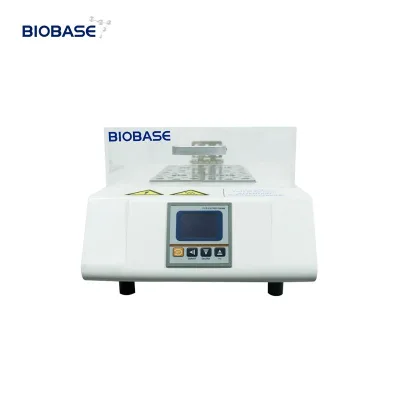
Laboratory Dual Zone Temperature Controlled Metal Bath Dry Bath Incubator
$300.00 - $2500.00
MOQ: 1 unit


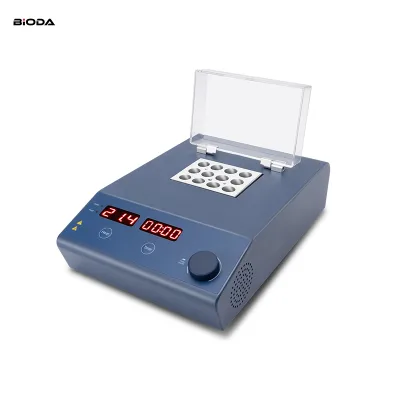
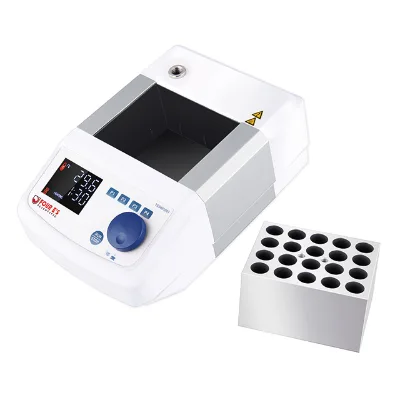
Lab Digital Temperature Controlled Heating Block Dry Bath Incubator Price
$285.00 - $400.00
MOQ: 1 sets


Comprehensive Sourcing Guide
Hygienic Design Dry Bath Incubator Sourcing Guide
Procuring dry bath incubators requires a careful balance between thermal precision and material durability, particularly when the application demands strict hygienic standards. These devices serve as critical laboratory equipment for maintaining consistent temperatures for biological samples, reagents, and diagnostic assays without the need for liquid baths. The core value proposition lies in their ability to provide uniform heating with minimal risk of cross-contamination, making them indispensable in clinical diagnostics, research institutions, and hospital laboratories. Buyers must prioritize units that offer robust construction alongside precise temperature control to ensure sample integrity and operational safety.
The market offers a variety of configurations, ranging from single-block desktop units to multi-block systems designed for high-throughput environments. Key differentiators include the material composition of the heating block, the type of digital interface, and the specific temperature range capabilities. While some models focus on basic heating functions, others integrate advanced features such as timed operation modes and enhanced cooling capabilities. Understanding these variations is essential for aligning procurement decisions with specific laboratory workflows, ensuring that the selected equipment meets both current operational needs and future scalability requirements.
Product Scope and Observed Listing Signals
Current market listings indicate a diverse range of dry bath incubators with varying technical specifications and price points. The observed price range spans from approximately one to two thousand five hundred US dollars, reflecting differences in power output, block quantity, and additional features like LCD displays or cooling functions. Most suppliers list a minimum order quantity of one unit, suggesting that these products are typically sold as individual pieces rather than in bulk industrial batches. This structure allows laboratories to purchase single units for immediate deployment or small batches for pilot testing without significant financial commitment.
Technical attributes observed in listings include temperature settings ranging from ambient plus five degrees Celsius up to one hundred sixty degrees Celsius, with some models offering a broader range from negative ten to one hundred degrees Celsius. Power consumption varies significantly, with options available at one hundred, two hundred, three hundred, four hundred, and six hundred watts. These variations allow buyers to select units that match their specific thermal requirements and electrical infrastructure. Additionally, many models feature LCD screens for precise temperature monitoring and operation modes that support continuous or timed heating up to ninety-nine hours and fifty-nine minutes, enhancing operational flexibility.
Technical Specifications to Verify
When evaluating technical specifications, buyers should prioritize the temperature control range and accuracy to ensure suitability for sensitive biological applications. Many models offer a temperature setting range from room temperature plus five degrees Celsius to one hundred fifty degrees Celsius, with some providing a wider span from negative ten to one hundred degrees Celsius. It is crucial to verify the temperature increment capability, as some units offer fine control with increments as small as zero point one degrees Celsius. This level of precision is vital for experiments requiring strict thermal stability, preventing sample degradation or inconsistent results due to temperature fluctuations.
Another critical specification is the physical dimension and weight of the unit, which impacts laboratory space planning and portability. Common dimensions observed include measurements around two hundred sixty millimeters in length, two hundred twenty millimeters in width, and one hundred millimeters in height, with weights approximately five point five kilograms. Buyers should also confirm the voltage compatibility, as many units support dual voltage standards of one hundred to one hundred twenty volts or two hundred to two hundred forty volts at fifty or sixty hertz. Ensuring electrical compatibility with local infrastructure prevents operational issues and ensures safe, reliable performance in diverse laboratory environments.
Compliance and Safety Documentation
Compliance with international safety and quality standards is a non-negotiable requirement for laboratory equipment procurement. Buyers must verify that the dry bath incubators carry recognized certifications such as ISO and CE, which indicate adherence to stringent manufacturing and safety protocols. Some suppliers also mention compliance with TUV standards, providing an additional layer of assurance regarding product safety and quality management. These certifications are essential for maintaining regulatory compliance in hospital and research settings, where equipment failure or safety hazards can have significant operational and legal consequences.
In addition to certifications, buyers should request detailed documentation regarding the materials used in construction, particularly the heating block and external casing. While some listings specify plastic components, others highlight stainless steel construction, which offers superior durability and ease of cleaning. Verifying the material composition is crucial for ensuring that the equipment can withstand frequent cleaning and disinfection processes without degrading. Furthermore, understanding the operating temperature range of the device, typically between ten and forty degrees Celsius for the external environment, helps in assessing its suitability for various laboratory conditions and ensuring long-term reliability.
Cost Drivers and Commercial Terms
Several factors influence the final cost of dry bath incubators, including power output, block quantity, and additional features. Units with higher power ratings, such as four hundred or six hundred watts, typically command higher prices due to increased energy consumption and more robust heating elements. Similarly, multi-block configurations, such as those with two blocks, offer greater throughput but come at a premium compared to single-block units. Buyers should carefully assess their sample processing volume to determine whether investing in higher-capacity models provides a sufficient return on investment through improved efficiency and reduced processing time.
Commercial terms also play a significant role in the total cost of ownership. Most suppliers offer standard packing, such as strong packaging or one piece per pack, which affects shipping costs and handling requirements. Buyers should inquire about warranty terms, after-sales support, and availability of replacement parts, as these factors contribute to long-term operational costs. Additionally, understanding the lead times for delivery and any potential customs duties or import taxes is essential for accurate budgeting. Transparent communication with suppliers regarding these commercial terms helps in avoiding unexpected expenses and ensures a smooth procurement process.
Supplier Qualification and Quality Control
Selecting a reliable supplier is critical for ensuring the quality and longevity of dry bath incubators. Buyers should prioritize suppliers based in established manufacturing hubs, such as Changzhou City in Jiangsu Province, China, which is known for its concentration of laboratory equipment manufacturers. Verifying the supplier’s production capabilities and quality control processes is essential, as these factors directly impact the consistency and reliability of the products. Suppliers who adhere to international standards like ISO 13485, although noted as low-confidence background information, may offer additional assurance regarding their quality management systems.
Quality control measures should include rigorous testing of temperature accuracy, uniformity, and stability across the heating block. Buyers should request test reports or certification documents that demonstrate the unit’s performance under various operating conditions. Additionally, inspecting the build quality, including the durability of the LCD display, the responsiveness of control buttons, and the integrity of the power cord, is crucial. Suppliers who provide comprehensive documentation and are willing to accommodate customization requests, such as specific voltage configurations or block types, often demonstrate a higher level of professionalism and customer focus.
Long-Term Procurement Checks
Long-term procurement success depends on establishing a sustainable relationship with suppliers who can provide consistent quality and support. Buyers should implement regular performance reviews of the installed equipment, monitoring for any deviations in temperature accuracy or signs of wear and tear. Establishing a preventive maintenance schedule, including regular cleaning and inspection of the heating block and electrical components, can extend the lifespan of the equipment and prevent unexpected failures. Keeping a record of maintenance activities and any issues encountered helps in identifying patterns and addressing potential problems proactively.
Furthermore, buyers should stay informed about technological advancements and new product offerings in the dry bath incubator market. As laboratory requirements evolve, newer models may offer enhanced features such as improved energy efficiency, better user interfaces, or additional safety mechanisms. Regularly reviewing supplier catalogs and engaging in discussions about future needs can help in planning for equipment upgrades or expansions. By maintaining a proactive approach to procurement and equipment management, laboratories can ensure that their dry bath incubators continue to meet operational demands and support scientific excellence over the long term.
FAQs
How wide is the temperature control range of these dry bath incubators?
The temperature control range depends on the model listed. Some desktop units offer -5 to 110 degrees Celsius with heating and cooling functions, while block-style models cover room temperature plus 5 degrees up to 150 or 160 degrees Celsius, and cooling-capable versions reach down to -10 degrees Celsius. Temperature increments of 0.1 degree allow fine adjustment, and one model specifies an output accuracy of about plus or minus 0.3 degree between 25 and 90 degrees Celsius.
What certifications do the listed dry bath incubators carry?
The listed products indicate ISO and CE certification, and at least one model family is associated with CE, ISO, and TUV documentation. Certification coverage can vary by specific model, so buyers should confirm which certificate applies to the exact item being quoted before ordering. Certification documents are normally requested during the sourcing process, and the products also state non-customized configuration with a desktop structure intended for lab, hospital, and school applications.
Can the incubators run timed programs or only continuous operation?
Selected models support both continuous operation and timed operation up to 99 hours 59 minutes, with a minimum time setting of 1 minute. Timed mode is useful for enzymatic reactions, sample preheating, and repeatable protocols that need a fixed duration. Operation mode is selected on the LCD panel, and buyers who need timed runs should confirm this feature on the specific model number, since settings may differ across the listed range.
What power supply requirements should buyers prepare for?
The listed units are built for dual voltage configurations: 100-120V and 200-240V at 50Hz or 60Hz, so buyers in most regions can use standard mains power with the correct cord selected at ordering. Rated power differs by model, spanning roughly 100W to 600W across the range. Confirm the voltage and plug type for your destination when requesting a quotation so the shipment matches your local electrical standard.
Which models are suitable for low-temperature cooling applications?
Models offering heating and cooling functions handle low-temperature work, with setting ranges reaching -5 to 110 degrees Celsius on some units and -10 to 100 degrees Celsius on others, including one compact model with 150W power and dimensions of 260 by 195 by 150 millimeters. These suit sample storage, enzyme control, and chilled reactions. Heated-only block units are lighter duty and focus on the room-temperature-plus to 150 or 160 degree range.
Can buyers request customization or extra blocks for these incubators?
Customization is marked as available on at least one listed model, so buyers can discuss modifications during quotation, though the general product attribute states a non-customized configuration. One listed unit is a two-block model operating at AC110-220V 50-60Hz, weighing 5.5 kilograms, which supports multiple tube formats. Always confirm block quantity, dimensions, and any customization terms directly with the supplier before placing an order, since availability varies by model.