Find Compare Source In Sugar Canned Baby Corn for Restaurants
Explore 30 listings for In Sugar Canned Baby Corn with options from China. Buyers can compare specifications, packaging types, and processing methods to select suitable suppliers for food manufacturing and retail distribution needs.
Key considerations
Products List




Comprehensive Sourcing Guide
Strategic Sourcing Guide for In Sugar Canned Baby Corn
The global market for processed vegetables continues to evolve, with canned baby corn representing a significant segment due to its versatility, extended shelf life, and consistent quality. For procurement professionals targeting "In Sugar Canned Baby Corn," the sourcing strategy must move beyond simple price comparison to a rigorous evaluation of processing methods, ingredient integrity, and supply chain reliability. This guide synthesizes available product attributes and industry standards to provide a structured approach for acquiring high-quality canned baby corn suitable for OEM and private label applications.
Understanding Product Specifications and Processing Variations
The core of any successful procurement strategy begins with a precise definition of the product specifications. In the context of canned baby corn, the term "in sugar" implies a specific brine formulation where sugar is a primary ingredient alongside water and salt. The supplied data indicates that the ingredient profile for these products typically includes fresh sweet corn, water, salt, and sugar. This composition is critical for buyers to verify, as it directly impacts the flavor profile and suitability for specific culinary applications.
Processing methods vary significantly among suppliers, and understanding these distinctions is vital. The available data highlights several processing states: "In Brine," "In Water," and "Canned." While the core keyword specifies "in sugar," the broader category often includes variations where sugar is added to a brine solution or used in a specific syrup. Buyers must confirm whether the product is processed "In Brine" with added sugar or if it falls under a different preservation method. The data also notes that the product is a concentrate in some contexts, though for canned vegetables, this usually refers to the density of the packing medium rather than a concentrated extract.
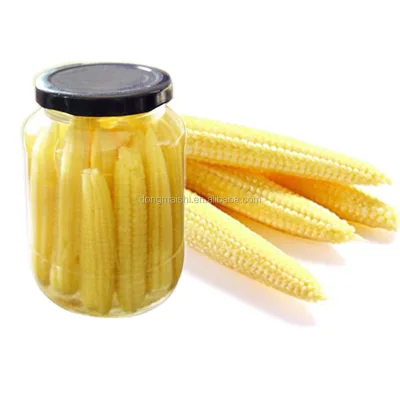
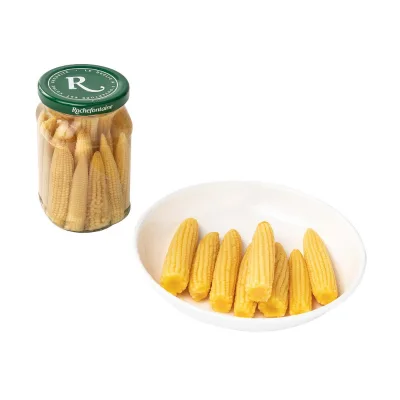
Packaging is another critical specification. The observed data lists multiple packaging materials, including "Metal," "Tin," "Glass Jars," and "Box." The standard packaging for this product often involves tins with an inner coating to prevent corrosion, placed within an outer carton. Specific models such as "CV16," "CC08," and "DBCV-BB2840" suggest that manufacturers offer various can sizes and configurations. For instance, standard net weights observed in the data include 340g, 425g, and 2840g (likely a bulk tin size), with carton configurations varying from 24 tins per carton to 6 tins per carton. Buyers should verify the exact net weight and the number of units per master carton to ensure compatibility with their logistics and storage infrastructure.
Compliance, Certification, and Regulatory Standards
Navigating the regulatory landscape is essential for international trade, particularly when sourcing food products from China. The supplied facts confirm that high-confidence suppliers in this category often hold certifications such as HACCP, FDA, ISO, and BRC. These certifications are not merely marketing labels but are indicative of a supplier's commitment to food safety management systems.
HACCP (Hazard Analysis and Critical Control Points) is fundamental for identifying and controlling food safety hazards. FDA registration is crucial for products intended for the US market, ensuring that the facility meets US food safety standards. ISO certification, likely referring to ISO 22000 or similar quality management standards, demonstrates a systematic approach to managing food safety. BRC (British Retail Consortium) certification is a globally recognized standard that is often a prerequisite for supplying major retailers in Europe and other regions.
When evaluating potential suppliers, buyers must request valid, up-to-date copies of these certificates. It is important to note that the presence of a certification on a product page does not guarantee that every specific batch or model meets the standard; rather, it indicates the facility's general compliance capability. Buyers should verify that the certification scope explicitly covers "canned vegetables" or "canned baby corn." Additionally, the product origin is listed as China, with specific mentions of Fujian as a production hub. Fujian is a known region for canned vegetable production, but buyers should confirm the specific factory location to assess logistical efficiency and potential risks associated with regional supply chain disruptions.
Cost Drivers and Pricing Dynamics
The pricing of canned baby corn is influenced by a complex interplay of raw material costs, processing methods, packaging choices, and order volume. The observed price range in the market spans from $1 to $18.4 USD, a wide variance that reflects differences in can size, packaging material, and order quantity. For example, a single unit price will differ significantly from a bulk carton price. The data indicates a Minimum Order Quantity (MOQ) range of 1 to 3200 units, with a specific observation of 100 cartons as a standard MOQ for certain models.
Several factors drive the cost structure. First, the choice of packaging material is a primary cost driver. Metal tins are standard, but glass jars may command a higher price due to material costs and breakage risks. The type of lid, such as a "Normal Lid" versus an "Easy Open Lid," also affects the unit cost. Second, the processing method influences price; products processed "In Brine" with sugar may have different cost structures compared to those in water, depending on the cost of raw sugar and the complexity of the syrup preparation.
Volume is the most significant lever for cost reduction. The data suggests that larger orders, potentially up to 3200 units, can access lower price points. Buyers should structure their procurement to balance inventory holding costs with the economies of scale offered by higher MOQs. Payment terms, such as "LC" (Letter of Credit), are common in this sector and can impact the overall financial cost of the transaction, especially for international buyers dealing with currency exchange risks.
Typical Applications and Market Utilization
Canned baby corn, particularly those prepared with sugar and salt, serves a diverse range of applications in the food industry. Its sweet and crunchy profile makes it a popular ingredient in Asian cuisine, stir-fries, salads, and appetizers. The "OEM" designation in the product data suggests that many manufacturers offer private labeling services, allowing retailers and food service companies to brand the product under their own names. This is a significant opportunity for buyers looking to develop their own product lines without investing in manufacturing infrastructure.
The product's stability and long shelf life, noted as greater than 12 months, make it ideal for distribution channels that require extended storage times. The "Normal" storage method requirement simplifies logistics, as the product does not require refrigeration until opened. This characteristic is particularly valuable for emergency food supplies, institutional catering, and retail distribution networks. The "Prompt" shipment and "by Sea" transport options indicate that this product is well-suited for international trade, where sea freight is the most cost-effective method for moving large volumes of heavy canned goods.
Supplier Evaluation and Quality Control Protocols
Selecting the right supplier requires a multi-faceted evaluation process that goes beyond the initial product listing. Buyers should prioritize suppliers who demonstrate transparency in their production processes and quality control measures. The availability of "Customization" options is a strong indicator of a supplier's flexibility and ability to meet specific buyer requirements, such as custom labeling, specific can sizes, or tailored ingredient profiles.
Quality control should be a continuous process. Buyers must verify that the supplier adheres to the "prod_standard" specifications, such as "340/250g" or "425g*24tins/carton." The data mentions specific models like "CV22" and "CC04," which likely correspond to specific product lines with unique attributes. It is essential to request sample batches to verify the physical characteristics of the corn, including texture, color (noted as "Yellow"), and the consistency of the sugar brine.
The "Fermentable" attribute is listed as "Not Fermentable," which is a positive quality indicator for canned goods, suggesting that the product has been properly processed to prevent spoilage. However, buyers should still conduct their own sensory and microbiological testing to ensure the product meets their specific quality benchmarks. The use of a "Paper Label" and "Normal Carton" for outer packaging should be verified for durability during sea transport, as damage to the outer carton can lead to product loss.
Long-Term Procurement Considerations and Logistics
Sourcing canned baby corn is not a one-time transaction but a long-term partnership that requires careful planning. The "Delivery Time" of about 2 weeks after order confirmation is a critical factor in supply chain planning. Buyers must account for this lead time, along with shipping duration, to maintain optimal inventory levels. The "Prompt" shipment attribute suggests that suppliers are generally efficient, but delays can occur due to external factors such as port congestion or raw material shortages.
The choice of transport method, primarily "by Sea," necessitates a robust logistics strategy. Buyers should consider the impact of sea freight on the product's condition, particularly regarding temperature fluctuations and humidity. While the product is stable, extreme conditions can affect the integrity of the packaging and the quality of the contents. The "Dw" (Drying Weight) or net weight specifications, such as "1850g or Customized" or "250g or Customized," should be clearly defined in the contract to avoid disputes over quantity.
Furthermore, the ability to customize the product, including the "Lid" type and "Packing" configuration, offers long-term value. As market trends shift, buyers may need to adjust their product offerings, and a supplier with flexible customization capabilities can adapt quickly. The "LC" payment term is standard for large international orders but requires careful financial management to ensure smooth transactions.
In conclusion, sourcing In Sugar Canned Baby Corn requires a balanced approach that combines technical knowledge, regulatory compliance, and strategic supplier management. By focusing on the specific attributes provided, such as ingredient composition, packaging standards, and certification status, buyers can make informed decisions that ensure product quality and supply chain reliability. The wide range of models and customization options available in the market provides ample opportunity for buyers to find a supplier that aligns with their specific business needs and strategic goals.
FAQs
What ingredients are used in In Sugar Canned Baby Corn?
The product typically contains fresh sweet corn, water, salt, and sugar. This specific ingredient profile ensures a sweet and crunchy flavor suitable for various culinary applications while maintaining the required preservation standards.
Which certifications do suppliers of this product usually hold?
High-confidence suppliers often hold HACCP, FDA, ISO, and BRC certifications. These credentials indicate compliance with international food safety management systems and are essential for verifying the quality and safety of the canned goods.
How long is the shelf life of canned baby corn?
The shelf life exceeds 12 months when stored under normal conditions. This extended stability makes the product ideal for long-term inventory management and distribution channels that require durable food supplies without refrigeration.
Can I customize the packaging for In Sugar Canned Baby Corn?
Yes, customization is available for packaging materials and configurations. Buyers can choose between metal tins, glass jars, or specific carton arrangements, with options for normal or easy-open lids to suit their logistical needs.
What is the typical delivery time for orders?
Delivery time is about 2 weeks after order confirmation. This lead time allows for efficient production scheduling, though buyers should account for additional shipping duration when planning their overall supply chain logistics.
Which processing methods are used for this vegetable product?
Products are processed using methods such as in brine, in water, or general canning. The specific method determines the preservation medium, with sugar often added to the brine to achieve the desired sweet flavor profile.