Source In Water Canned Bamboo Shoot for Soups, Salads, Stir-Fry
Find reliable In Water Canned Bamboo Shoot options from verified Chinese manufacturers. Compare 30 products featuring HACCP, FDA, and ISO certifications. Evaluate specifications like net weight, drained weight, and packaging materials to select the best fit for your food processing needs.
Key considerations
Products List




Comprehensive Sourcing Guide
In Water Canned Bamboo Shoot Sourcing Guide
Procuring in water canned bamboo shoots requires distinguishing between products preserved in plain water versus those in brine or acid solutions. The supplied data indicates that specific listings offer "In Water" processing alongside "In Brine" and "Acid Citric" variants, necessitating precise specification checks to ensure the buyer receives the intended preservation method. This distinction is critical because the flavor profile and culinary application differ significantly between water-preserved shoots, which offer a neutral taste, and those treated with citric acid or brine, which introduce salty or sub-acid notes.
Buyers must verify the exact ingredient list on the product label to confirm the absence of unintended additives like sugar or excessive salt if a pure water preservation is required. The observed facts list "Fresh Bamboo Shoot, Water, Acid Citric" as a common combination, while other entries specify "Fresh Bamboo Shoot, Sugar" or "In Brine" processing. Consequently, procurement teams should request sample batches to validate that the final product matches the "In Water" designation without hidden flavor modifiers that could alter the intended dish's balance.
Product Scope and Observed Listing Signals
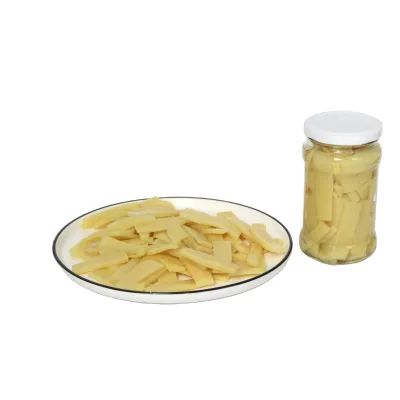
The market for canned bamboo shoots presents a wide range of packaging formats, including metal tins, glass jars, and various carton configurations. Observed listings reveal that packaging materials are predominantly metal, with specific mentions of "Tin or Canned" and "by Tin" options, though some entries also note "by Glass Jar" availability. This variability requires buyers to explicitly state their preferred container type in purchase orders, as the structural integrity and shelf-life characteristics of glass versus metal can impact logistics and storage requirements differently.
Shelf life and storage conditions are consistent across the observed data, with most products boasting a shelf life exceeding 12 months and requiring normal storage methods. However, specific entries cite a shelf life of up to three years, suggesting that formulation and sealing quality may vary between suppliers. Buyers should treat these duration claims as observations rather than universal guarantees, ensuring that the specific batch received meets the required storage stability for their distribution channels before committing to large volume orders.
Technical Specifications to Verify
Net weight and drained weight are critical technical parameters that directly influence the cost-per-unit and the yield of the final dish. The data indicates a wide spectrum of standard weights, ranging from small retail sizes like 425g and 567g to large industrial cans of 2840g and 2950g. Procurement teams must specify the exact net weight and the minimum drained weight percentage, as one listing notes a drained weight of at least 40%, which is a vital metric for calculating the actual edible yield versus the liquid content.
The physical characteristics of the bamboo shoots, including color and taste, must be aligned with the buyer's quality standards. Observed attributes describe the product as having a "Light Yellow" color and a "Salty" or "Sub-acid" taste, depending on the processing method used. Since the raw material is defined as "100% Fresh Bamboo Shoot," buyers should verify that the color remains consistent and that the taste profile matches the specific processing method, whether it is water-preserved or acid-treated, to ensure culinary consistency.
Compliance and Safety Documentation
Food safety certifications are a primary indicator of a supplier's ability to meet international market requirements. The supplied facts list several high-confidence certifications, including HACCP, FDA, ISO, BRC, and ISO 22000:2005. Buyers should request valid, current certificates for these specific standards rather than accepting generic claims, as the presence of multiple certifications suggests a robust quality management system capable of handling export requirements for diverse markets.
Origin and traceability are equally important for regulatory compliance and brand transparency. All observed listings identify the product origin as China, with specific references to a "China Factory" supplier. Procurement contracts should mandate that the supplier provides batch-specific traceability records linking the finished canned product back to the raw fresh bamboo shoots. This ensures that the "100% Fresh Bamboo Shoot" claim is verifiable and that the supply chain adheres to the safety protocols required by the destination country's food safety authorities.
Cost Drivers and Commercial Terms
Pricing and minimum order quantities (MOQ) are significant variables that affect the total cost of ownership for this category. The observed price range spans from $0.15 to $15 per unit, while MOQs vary widely from 1 to 1800 units, with a specific listing noting an MOQ of 100 cartons. Buyers must clarify whether the price is per can, per carton, or per metric ton, and confirm if the MOQ applies to a single SKU or can be aggregated across different sizes and packaging types to optimize order efficiency.
Payment terms and logistics lead times are essential for cash flow planning and inventory management. The data indicates that Letter of Credit (LC) is an accepted payment method, and delivery times are estimated at about two weeks after order confirmation. However, the shipment method is specified as "by Sea," which implies a longer transit time than air freight. Buyers should negotiate clear Incoterms that define who bears the risk during sea transport and ensure that the "Prompt" shipment claim is backed by a written schedule to prevent supply chain disruptions.
Supplier Qualification and Quality Control
Supplier qualification should extend beyond basic certification checks to include an assessment of their processing capabilities and customization options. The data confirms that customization is available, allowing buyers to tailor packaging, labeling, and potentially the preservation method to their specific brand needs. It is advisable to conduct a virtual or on-site audit to verify that the "Concentrate" and "In Water" processing lines are maintained with the same rigor as the "In Brine" lines to ensure consistent product quality.
Quality control protocols must address the specific risks associated with canned vegetables, such as seal integrity and microbial stability. Given that the product is preserved in water or acid, the supplier must demonstrate a validated thermal processing cycle to prevent spoilage. Buyers should request recent third-party test results for the specific "Canned Bamboo Shoots" model, focusing on seal strength and pH levels, to ensure that the "Premium" quality claim is substantiated by objective performance data rather than marketing assertions.
Long-Term Procurement Checks
Sustaining a reliable supply chain for canned bamboo shoots requires regular re-verification of supplier performance and product consistency. Buyers should establish a schedule for periodic quality audits that includes sampling from new production batches to check for deviations in color, taste, and drained weight. Since the raw material is fresh bamboo shoots, seasonal variations in the harvest could impact the final product's texture and flavor, necessitating ongoing dialogue with the supplier to manage these natural fluctuations.
Commercial relationships should be formalized with clear agreements on how changes in packaging, standards, or logistics will be communicated and managed. The observed data shows multiple product models and standards, such as 567g/304g or 425g/567g/800g, indicating that the supplier offers a flexible range. Long-term contracts should include clauses that require advance notice for any changes to these specifications or certifications, ensuring that the buyer's inventory and marketing materials remain accurate and compliant throughout the partnership.
FAQs
What ingredients are used in In Water Canned Bamboo Shoot?
The product contains fresh bamboo shoots, water, and citric acid. Some variations may include sugar instead of acid. These ingredients ensure the bamboo shoots remain fresh and safe for consumption while maintaining their natural texture and flavor profile for extended periods.
How long is the shelf life of canned bamboo shoots?
The shelf life exceeds twelve months and can reach up to three years depending on storage conditions. Proper storage at normal temperatures ensures the product remains safe and retains its quality. This longevity makes it suitable for long-term inventory management and global distribution.
Which certifications do the manufacturers hold for this product?
Manufacturers hold HACCP, FDA, ISO, BRC, and ISO 22000:2005 certifications. These standards verify that production processes meet international safety and quality requirements. Buyers can rely on these credentials to ensure the product complies with strict regulatory frameworks for food safety.
Can buyers request customization for the canned bamboo shoot packaging?
Yes, customization is available for packaging and product specifications. Buyers can choose from tin cans, boxes, or glass jars with various net weights like 425g or 567g. This flexibility allows suppliers to tailor the product to specific market needs and branding requirements.
What is the minimum order quantity for In Water Canned Bamboo Shoot?
The minimum order quantity is 100 cartons, though some listings show ranges from 1 to 1800 units. Buyers should confirm specific MOQs with the supplier as they vary by packaging type and order volume. This threshold ensures efficient production scheduling and logistics planning.
How is the product shipped and what is the lead time?
Products are shipped by sea with prompt delivery options available. The lead time is approximately two weeks after order confirmation. This timeline allows for efficient planning while ensuring the product arrives in optimal condition for international markets and distribution networks.