Source Indonesia Office Paper for printing, writing, and copying
Find 30 listings for Indonesia Office Paper from suppliers in Indonesia and China. Compare specifications like 80gsm, A4 size, and virgin wood pulp to select the right copy paper for your business needs.
Key considerations
Products List


High Quality Cheap A4 Paper One 80 GSM 70 Gram Copy Paper Bond Paper in Indonesia
$1.86 - $2.08
MOQ: 8000 Reams
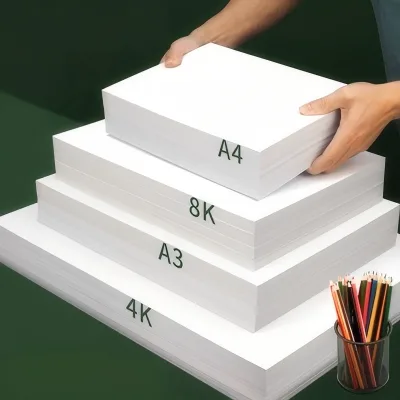
Comprehensive Sourcing Guide
Strategic Sourcing Guide for Indonesia Office Paper
Understanding the Product Landscape and Origin Dynamics
When sourcing office paper under the core keyword "Indonesia Office Paper," buyers must first navigate a complex landscape where origin data and product attributes vary significantly across listings. The supply chain for this category is characterized by a mix of domestic production and regional trade flows. Data indicates that a significant portion of listings attributes origin to Indonesia, specifically pinpointing West Sumatra and the city of Padang as key production hubs. These locations suggest a supply chain rooted in local forestry resources, with processing facilities potentially leveraging regional wood pulp availability. However, a critical observation in the current market data is the presence of conflicting origin information, with some entries explicitly listing China as the country of origin. This discrepancy requires immediate verification by the procurement team to ensure that the "Indonesia" label is not merely a marketing term for re-exported goods or a mislabeled entry.
The product type is consistently identified as "Stock item," which implies immediate availability for standard orders, contrasting with made-to-order manufacturing runs. The primary material composition is uniformly described as "100% virgin wood pulp," a critical differentiator for office paper quality. Virgin pulp ensures the absence of recycled fibers that can degrade print clarity and cause paper jams in high-speed laser printers. The pulping process is further detailed as "Chemical-Mechanical Pulp," a method that balances yield and fiber strength, though buyers should verify if this aligns with their specific sustainability or brightness requirements. The "Paperline gold" and "IK Plus" brands appear in the dataset, alongside "Ik yellow," suggesting a fragmented brand landscape where generic and branded options coexist. Understanding these origin and material nuances is the first step in filtering viable suppliers from those offering inconsistent or misleading product descriptions.
Technical Specifications and Performance Standards
The technical profile of Indonesia Office Paper is defined by specific dimensional and weight standards that must be strictly adhered to for compatibility with modern office equipment. The most prevalent specification observed is the A4 size, with a standard weight of 80 GSM (grams per square meter). This 80 GSM standard is widely recognized as the industry baseline for general office correspondence, printing, and copying. The dataset also notes a quantitative range of 60-120 GSM, indicating that suppliers may offer lighter or heavier variants for specialized applications. For standard office use, the 80 GSM specification is the primary target, but buyers must confirm the exact weight tolerance, as variations can affect feed reliability in high-volume printers.
Dimensional standards are equally critical. The standard sheet size is listed as 210mm by 297mm, which corresponds to the ISO 216 A4 standard. However, the data also mentions "Roll" and "Reel" formats, as well as a net paper width of 1575mm, which suggests that some suppliers offer bulk roll stock for industrial printing or specialized binding processes. The coating status is predominantly "Uncoated," which is the default for standard office paper to ensure optimal ink absorption and toner fusion. A notable attribute is the "Antistatic" feature, which is essential for preventing paper jams in laser printers and copiers, particularly in dry environments. Furthermore, the "Fourdrinier Wire" sheet former type is mentioned, a standard industrial machine for paper formation that typically yields a uniform sheet structure. Buyers should verify if the "Thick Paper" classification applies to their specific needs, as this may indicate a higher basis weight or a specific grade intended for heavy-duty use rather than standard A4 printing.
Compliance, Certification, and Quality Assurance
Navigating the compliance landscape for Indonesian office paper requires a rigorous verification of certifications and management systems. The dataset highlights "ISO" as a recurring management system certification and product quality attribute. While this is a strong indicator of a structured quality management framework, the specific ISO standard (e.g., ISO 9001 for quality, ISO 14001 for environment) is not explicitly defined in the provided facts. Buyers must request the specific certificate numbers and validity dates from potential suppliers to ensure the certification is current and relevant to paper manufacturing. Additionally, the "CE" certification is listed, which is a mandatory conformity mark for products sold within the European Economic Area. The presence of CE on office paper listings suggests that the product meets specific safety and environmental requirements, but buyers should confirm if this applies to the paper itself or the manufacturing machinery.
Quality assurance extends beyond certifications to the physical attributes of the paper. The "Virgin" pulp style and "100% virgin wood pulp" material claim are critical for maintaining high brightness and opacity. However, the dataset also includes attributes like "Anti-Counterfeit," "Holographic," and "Heat Sensitive," which are typically associated with security paper rather than standard office copy paper. This suggests that some listings may be for specialized security documents or that the supplier offers a broad range of paper types. For standard office procurement, buyers should focus on the "White" color attribute and the "Uncoated" finish, ensuring that the paper does not contain the security features unless specifically required. The "New" condition of the product is a standard expectation for new goods, but the "Customized" and "Customization: Available" attributes indicate that suppliers are willing to adapt specifications, such as branding or packaging, which can be a valuable service for large corporate buyers.
Cost Drivers and Procurement Economics
The economic landscape for sourcing Indonesia Office Paper is influenced by a wide range of factors, including volume, packaging, and logistics. The observed price range in the market data is exceptionally broad, spanning from $0.50 to $320,000 USD. This variance likely reflects the difference between a single ream of standard A4 paper and bulk industrial orders of raw pulp or specialized security paper. For standard office procurement, the unit cost will be driven primarily by the order volume and the specific GSM weight. The Minimum Order Quantity (MOQ) is a significant cost driver, with observed values ranging from 1 to 8,000 units. The specific data point of 8,000 Reams as an MOQ suggests that some suppliers operate on a bulk-industrial model, requiring buyers to consolidate demand or share containers to meet these thresholds.
Payment terms are another critical economic factor. The dataset lists "T/T" (Telegraphic Transfer) and "L/C" (Letter of Credit) as accepted payment types. T/T is common for established relationships and smaller orders, offering speed but requiring trust. L/C provides security for both parties in large international transactions but involves banking fees and administrative complexity. Lead times are also a variable cost; a delivery deadline of 7 days is noted, which is relatively fast for international shipping but may depend on the stock status of the "Stock item." Packaging plays a role in cost as well, with options ranging from "500 sheets/Pack, 5 pack/Carton" for standard reams to "Wooden Case and Plastic Film" for bulk or heavy-duty shipments. The latter adds to the shipping weight and cost but offers superior protection for long-distance logistics. Buyers must calculate the total landed cost, including freight, insurance, and duties, rather than focusing solely on the unit price.
Supplier Evaluation and Operational Capabilities
Evaluating suppliers for Indonesia Office Paper requires a deep dive into their operational capacity and logistical reliability. The data indicates a production capacity of 15 tons per day (15t/D), which provides a baseline for assessing whether a supplier can meet large-scale demand. This capacity figure should be cross-referenced with the supplier's actual output history and inventory levels. The "Automatic" automation level suggests a modern manufacturing process, which generally correlates with consistent quality and higher throughput. However, buyers should verify the age and maintenance status of the "Fourdrinier Wire" machinery to ensure it can maintain the tight tolerances required for 80 GSM paper.
The origin of the product is a primary evaluation criterion. While the keyword is "Indonesia Office Paper," the presence of "China" as an origin country in some listings necessitates a rigorous due diligence process. Buyers must request proof of origin, such as a Certificate of Origin, to confirm that the goods are actually manufactured in Indonesia, specifically in West Sumatra or Padang. This verification is crucial for avoiding customs issues and ensuring that the product meets any trade agreements or preferential tariffs associated with Indonesian imports. Furthermore, the "Customization: Available" attribute indicates that suppliers are flexible, but buyers should assess the lead time impact of custom orders. While standard stock items have a 7-day delivery deadline, customized orders may require longer production cycles. The ability to provide samples before bulk ordering is also a key indicator of supplier confidence and reliability.
Long-Term Procurement and Application Strategy
For long-term procurement, buyers should consider the versatility and application scope of the paper. The "Applicable Models" listed include "Laser Printer," confirming suitability for standard office environments. However, the "Usage" field also mentions "Paper Printer, Packaging Film," which suggests that some suppliers may offer multi-purpose paper or that the listing encompasses a broader range of paper products. For organizations with high-volume printing needs, the "Antistatic" feature becomes a strategic asset, reducing downtime caused by paper jams. The "Type: Cultural Paper" classification further reinforces the product's suitability for writing, printing, and general office tasks.
Sustainability and supply chain resilience are also long-term considerations. The reliance on "Virgin Wood Pulp" raises questions about the sourcing of the raw wood. Buyers should inquire about the forestry management practices of the Indonesian suppliers, particularly those in West Sumatra, to ensure compliance with environmental regulations and sustainable forestry standards. The "ISO" management system certification is a good starting point, but specific environmental certifications would provide greater assurance. Additionally, the "Customized" nature of the product allows for future adaptability, such as changing paper weights or sizes as office technology evolves. By establishing a relationship with suppliers who offer flexible packaging and customization, buyers can better manage inventory levels and respond to changing market demands. Ultimately, a successful sourcing strategy for Indonesia Office Paper hinges on balancing the technical specifications, verifying the origin, and ensuring that the supplier's operational capabilities align with the buyer's long-term volume and quality requirements.
FAQs
What is the standard weight for this office paper?
The standard weight is 80 GSM, which is the industry baseline for general office correspondence. Suppliers also offer a quantitative range from 60 to 120 GSM for specialized applications, so buyers must confirm the exact weight tolerance for their specific printer requirements.
Which certifications do these paper products hold?
Products commonly hold ISO management system certification and CE certification for safety compliance. While ISO indicates a structured quality framework, buyers should request specific certificate numbers to verify validity, and CE marks suggest adherence to European safety standards for the product or machinery.
Can I customize the packaging or branding of the paper?
Yes, customization is available for branding and packaging specifications. While standard stock items have a 7-day delivery deadline, customized orders may require longer production cycles, so buyers should assess the lead time impact before placing bulk orders for specific corporate needs.
How fast can suppliers deliver standard stock items?
The typical delivery deadline for stock items is 7 days. This fast turnaround applies to standard orders, but actual lead times may vary depending on the specific supplier location and whether the order requires customization or special packaging like wooden cases.
What is the minimum order quantity for bulk purchases?
The minimum order quantity can be as high as 8000 reams for some suppliers. This bulk-industrial model requires buyers to consolidate demand or share containers, though other listings may accept lower quantities, so verifying the specific MOQ unit is essential for budgeting.
Where are the primary manufacturing locations for this paper?
Primary production hubs are located in West Sumatra and Padang, Indonesia. However, some listings explicitly state China as the origin, so buyers must request proof of origin to ensure the goods are actually manufactured in Indonesia and to avoid customs issues.
What payment terms are accepted for international orders?
Accepted payment types include T/T and L/C. T/T is common for established relationships and smaller orders, while L/C provides security for large international transactions but involves banking fees, so buyers should calculate the total landed cost including these administrative expenses.