Source Indoor Ab Bench for Home, Gymnasium, and Fitness Training
Find 30 Indoor Ab Bench options from China suppliers with steel construction and CE certifications. Buyers can compare models like TZ-6027 and FW-2008, noting variations in weight, dimensions, and delivery times for home or gymnasium use.
Key considerations
Products List


Indoor Commercial Fitness Equipment Adjustable Decline Abdominal Bench
$132.80 - $135.00
MOQ: 1 Pieces


Adjustable Bench Fitness Equipment Gym Use Machine Commercial Gym Bench
$230.00 - $250.00
MOQ: 1 Pieces

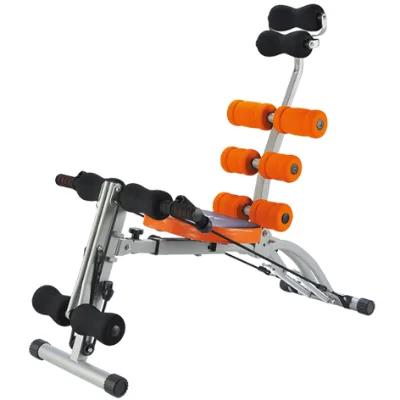


Fitness Equipment Weight Benches Adjustable Bench Adjustable Weight Bench
$120.00 - $136.00
MOQ: 5 pieces
Comprehensive Sourcing Guide
Strategic Sourcing Guide for Indoor Ab Benches
Procuring indoor ab benches for commercial gyms, fitness studios, or home training facilities requires a rigorous approach to technical verification and supplier validation. The market offers a diverse array of equipment, ranging from lightweight portable units to heavy-duty commercial stations. Buyers must navigate a landscape where specifications vary significantly between models, affecting durability, user safety, and long-term operational costs. This guide synthesizes available product data and industry standards to provide a structured framework for evaluating potential vendors and selecting equipment that meets specific operational needs.
Technical Specifications and Structural Integrity
The foundation of a reliable ab bench lies in its structural composition and dimensional accuracy. Based on observed product attributes, the primary construction material for high-quality units is steel, specifically utilizing oval or square steel tubes. For instance, specific models utilize 60120mm oval steel tubes, while others employ 8040mm square tubes. The thickness of these tubes is a critical determinant of load-bearing capacity; observed data indicates a tube thickness of 3mm, which is a standard benchmark for commercial-grade equipment capable of withstanding dynamic loading during intense abdominal workouts.
Dimensions vary widely depending on the intended application and user demographic. Observed size specifications include 15506751200mm, 14207451000mm, and 180010501260mm. Buyers must align these dimensions with the available floor space in their facility. A unit measuring 1800mm in length may be necessary for users requiring full range of motion, whereas a 1420mm unit might suffice for compact home gyms. Weight is another significant factor; observed weights range from 20kg to 65kg. Heavier units, such as those weighing 65kg, generally offer greater stability and reduced vibration during use, which is essential for commercial environments. Lighter units, around 20kg, may be more suitable for portable applications but require careful assessment of their stability during high-intensity exercises.
The surface components also dictate user comfort and safety. High-density sponge is the standard padding material observed in the market, ensuring durability and resistance to compression over time. The handle and pulley systems, where applicable, are frequently constructed from aluminum alloy to balance strength with weight reduction. Understanding these material specifications is the first step in filtering out substandard products that may fail under regular use.
Compliance and Certification Verification
In the B2B fitness equipment sector, compliance is non-negotiable. Buyers must verify that suppliers provide valid documentation for international safety and quality standards. The observed product data highlights specific certifications, including CE, ISO, and RoHS. The CE mark indicates conformity with health, safety, and environmental protection standards for products sold within the European Economic Area. Similarly, ISO certification, specifically ISO9001, suggests that the manufacturer adheres to a quality management system that ensures consistent product quality.
It is crucial to distinguish between general certifications and specific product testing. While some listings mention "Commercial Standard," this is a descriptive term rather than a specific regulatory code. Buyers should request the actual test reports that validate the CE and ISO claims. The presence of these certifications is particularly important for the export market, as many regions require proof of compliance before allowing equipment entry. Furthermore, the product origin is consistently listed as China, with specific mentions of Shandong Dezhou as a manufacturing hub. While this provides geographical context, it does not replace the need for individual product verification. Buyers should ensure that the specific batch of equipment being purchased carries the same certification status as the sample or catalog listing, as manufacturing consistency can vary.
Cost Drivers and Pricing Dynamics
The pricing of indoor ab benches is influenced by a complex interplay of factors, including material quality, manufacturing complexity, and order volume. The observed price range in the market spans from $22 to $996 USD. This wide disparity reflects the difference between basic, lightweight models and heavy-duty, feature-rich commercial units. The lower end of the spectrum likely corresponds to units with thinner tubing, simpler padding, and minimal customization options. Conversely, the higher price points are associated with robust steel construction, advanced adjustability features, and comprehensive certification packages.
Minimum Order Quantity (MOQ) is another significant cost driver. The observed MOQ ranges from 1 to 350 units. Buyers purchasing single units for personal or small studio use may face higher per-unit costs due to the lack of economies of scale. In contrast, large procurement orders that meet or exceed the 350-unit threshold can leverage bulk pricing and reduced shipping costs per unit. Additionally, customization options, which are listed as available, will invariably increase the unit price. Customization may involve specific branding, color variations, or tailored dimensions. Buyers must weigh the cost of these customizations against the branding value they provide to their facility.
Typical Applications and User Demographics
Understanding the intended application is vital for selecting the correct equipment configuration. The observed product attributes indicate that these ab benches are designed for both home and gymnasium use. The "Home" application suggests a need for compact, potentially foldable designs, although the observed data notes that many units are "Unfolded," implying a permanent or semi-permanent installation. The "Gymnasium" application demands higher durability, stability, and capacity for continuous use by multiple users.
The target demographic is primarily adults, with specific models noted for "Men." This suggests that the equipment is engineered to support a specific range of body weights and strength levels. However, the term "Men" in product listings often refers to the primary marketing demographic rather than a strict exclusion of other users. Buyers should verify the maximum weight capacity of the unit to ensure it accommodates all intended users safely. The "Adjustable" nature of some benches, such as the FW-2008 model, adds versatility, allowing the equipment to serve a broader range of exercises beyond just abdominal work, such as sit-ups, leg raises, and back extensions.
Supplier Evaluation and Origin Analysis
Evaluating suppliers requires a focus on their track record, logistical capabilities, and transparency. The observed data identifies several potential supplier names and branding strategies, such as "Realleader Fitness-China Exporter" and "Tianzhan." While these names appear in the product listings, buyers should conduct independent due diligence to verify the legitimacy and financial stability of these entities. The origin of the products is consistently listed as China, with a specific focus on the Shandong Dezhou region. This region is known for its manufacturing base, but buyers should not assume that all products from this location meet the same quality standards.
Key evaluation criteria should include the supplier's ability to provide detailed technical drawings, material certificates, and after-sales support. The "Customized" attribute suggests that suppliers are willing to engage in bespoke manufacturing, which requires a higher level of communication and project management. Buyers should assess the supplier's responsiveness and their willingness to provide samples before committing to a large order. Additionally, the "Export Market: Global" attribute indicates that the suppliers have experience with international logistics, but buyers must still clarify specific shipping terms and responsibilities.
Quality Control and Inspection Protocols
Implementing a robust quality control (QC) protocol is essential to mitigate the risks associated with importing fitness equipment. Given the variations in observed specifications, such as tube thickness and padding density, buyers should establish clear acceptance criteria before production begins. A pre-shipment inspection should verify that the physical dimensions match the agreed-upon specifications, such as the 15506751200mm or 14207451000mm sizes. Structural integrity checks should include testing the welds on the steel tubes and ensuring that the 3mm thickness is consistent throughout the frame.
Packaging is another critical aspect of quality control. The observed data mentions "Plywood Packing" and "Wooden Box" as standard packaging methods. These are essential for protecting the equipment during long-distance shipping, particularly for heavy units weighing up to 65kg. Buyers should verify that the packaging is sufficient to prevent damage during transit and that it complies with international shipping regulations. Furthermore, the "Condition: New" attribute must be strictly enforced to ensure that buyers receive brand-new equipment rather than refurbished or used items.
Long-Term Procurement and Logistics Considerations
Long-term procurement success depends on reliable logistics and clear communication regarding delivery timelines. The observed lead times vary, with some suppliers offering delivery within 25 days after receiving the deposit, while others indicate a lead time of within 45 working days. These discrepancies highlight the importance of confirming the production schedule before signing a contract. Buyers should also clarify the port of loading, which is observed as Tianjin, to accurately calculate shipping costs and transit times to their destination.
The "Commercial Standard" and "1350540470mm" standard mentioned in the data suggest that there are baseline expectations for product performance. However, buyers should not rely solely on these generic terms. Instead, they should define specific performance metrics, such as the number of cycles the equipment must withstand without failure. The "Folded: Unfolded" attribute also requires clarification; buyers must determine if the equipment is designed for permanent installation or if it requires a folding mechanism for storage. Finally, the "Color: Black" and "Color: Color" attributes indicate that color options may be available, but buyers should confirm the availability of specific colors and any associated cost implications before finalizing the order.
Comparative Analysis of Product Models
To facilitate decision-making, the following table summarizes the key specifications of the observed product models. This comparison highlights the diversity in dimensions, weight, and model numbers, aiding buyers in selecting the most appropriate unit for their specific needs.
| Product Model | Dimensions (mm) | Weight (kg) | Tube Specification | Standard | Origin |
|---|---|---|---|---|---|
| TZ-6027 | 15506751200 | 42 | 60*120 Oval Steel | Commercial Standard | China |
| TZ-6027A | 14207451000 | 50 | Not Specified | Not Specified | China |
| TZ-4007 | 180010501260 | 65 | Not Specified | Not Specified | China |
| TZ-X6027 | Not Specified | Not Specified | Not Specified | Not Specified | China |
| TZ-1020B | Not Specified | 20 | Not Specified | Not Specified | China |
| FW-2008 | 1600X720X1260 | Not Specified | 80X40 Square | 1350540470mm | China |
This table underscores the necessity of verifying specific details for each model, as not all attributes are uniformly listed across the product range. Buyers should use this data as a starting point for deeper inquiry, ensuring that every selected unit meets their exact operational requirements. By adhering to these rigorous evaluation standards, buyers can secure high-quality indoor ab benches that enhance their facility's value and ensure user safety.
FAQs
What certifications do indoor ab benches typically have?
Indoor ab benches typically carry CE, ISO, and RoHS certifications. These marks indicate compliance with international safety and quality standards, which is essential for global export markets and commercial gym installations.
How much does an Indoor Ab Bench weigh?
The weight of an Indoor Ab Bench ranges from 20kg to 65kg depending on the model. Heavier units like the 65kg version offer greater stability for commercial gyms, while lighter 20kg models suit portable home use.
Which tube thickness ensures durability for commercial use?
A tube thickness of 3mm is the standard benchmark for commercial-grade durability. This specification, found in models using 80x40mm square or 60x120mm oval steel tubes, ensures the frame withstands dynamic loading during intense workouts.
Can buyers request customization for indoor ab benches?
Yes, customization is available for indoor ab benches. Buyers can request specific branding, color variations, or tailored dimensions, though these options will increase the unit price and may affect the standard lead time.
What is the lead time for Indoor Ab Bench orders?
Lead times vary between 25 days and 45 working days after receiving the deposit. The specific duration depends on the supplier's production schedule and whether the order includes customized features or standard commercial models.
How are indoor ab benches packaged for shipping?
Indoor ab benches are packaged in plywood boxes or wooden crates to ensure safety during transit. This robust packaging protects the heavy steel frames and high-density sponge padding from damage during long-distance international shipping.