Source Industrial Air Chipping Hammer for Demolition, Mining, Construction
Find and compare 30 Industrial Air Chipping Hammer options from verified suppliers. Evaluate key specifications such as BPM, pressure, and weight to select the right tool for demolition, mining, and construction projects.
Key considerations
Products List

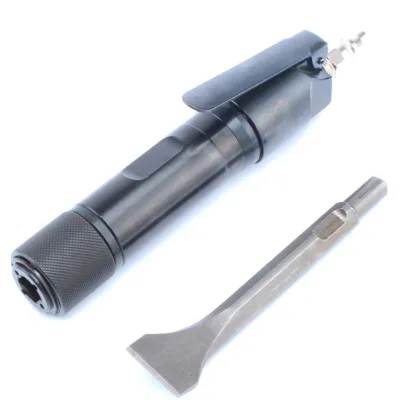


Air Operated Chipping Hammer for Chipping Metals C4
$1.00 - $10.00
MOQ: 10 Pieces
Ningbo Yinzhou Yongdun Pneumatic Tool Manufacturing Co., Ltd.

$1.30 - $1.40
MOQ: 10 Pieces


C41 Series Integrated Separated Air Chipping Hammer Pneumatic Forging Air Hammer
$1600.00 - $2200.00
MOQ: 1 Pieces


Comprehensive Sourcing Guide
Industrial Air Chipping Hammer Sourcing Guide
The Industrial Air Chipping Hammer is a critical pneumatic tool designed for heavy-duty surface preparation, weld seam cleaning, and concrete demolition in demanding environments. Procurement teams must distinguish these high-impact tools from lighter-duty paint sprayers or garden equipment, as the core keyword specifically targets machinery capable of delivering high-frequency blows to remove rust, scale, and old coatings from metal structures. The observed market data indicates a diverse range of offerings, including models explicitly labeled as "Flux Chipper" or "Airless Spray Gun," which necessitates rigorous filtering to isolate the correct pneumatic chipping technology for mining, demolition, and construction applications.
Buyers should prioritize suppliers who clearly define the tool's intended usage, such as the specific mention of "Mining, Demolition, Construction" in product attributes, to ensure the equipment matches the operational intensity required. The presence of varying specifications, such as different bore sizes and air consumption rates, suggests that a single procurement order may require multiple SKUs to cover different job site requirements. Understanding the distinction between a standard chipping hammer and a specialized flux chipper is essential, as the latter may involve different mechanical tolerances and material handling capabilities that affect long-term durability and performance.
Product Scope and Observed Listing Signals
When scanning supplier listings, buyers must carefully parse product titles and descriptions to avoid confusion between pneumatic chipping hammers and unrelated pneumatic devices like airless spray guns or hopper guns. The provided data reveals a mix of product types, including items with "Airless Spray Gun" in their classification and others identified as "Flux Chipper," which highlights the importance of verifying the specific "Type" attribute before placing an order. A reliable sourcing strategy involves cross-referencing the "Usage" field to confirm the tool is intended for chipping or demolition rather than painting or gardening, ensuring the purchased unit aligns with the core keyword's functional requirements.
The observed listing signals also include significant variations in packaging and physical dimensions, ranging from simple cartons to heavy-duty plywood cases, which directly impacts logistics planning and cost estimation. Some entries list a "Single package size" of 1x1x1 cm, which is likely a placeholder or error, while others specify a "Single gross weight" of 3.500 kg or a net weight of 5.7kg, indicating that actual product dimensions and weights must be confirmed with the supplier. Buyers should treat these observed values as initial data points rather than definitive specifications, requiring a request for detailed packing lists and dimensional drawings to accurately calculate shipping volumes and handling requirements.
Technical Specifications to Verify
Technical verification begins with the pneumatic interface, specifically the air inlet size and air consumption rates, which dictate the compressor capacity required for optimal tool performance. The data shows an "Air Inlet" of 1/4" and an "Air Hose" size of 3/8", alongside an "Air Consumption" of 7 CFM @ 90PSI, but these figures may vary significantly across different models like the GT-JD or TY62420. Procurement teams must confirm that the site's compressed air system can sustain the required flow rate and pressure, typically around 0.63MPa as noted in some listings, to prevent tool stalling or excessive wear on the internal piston mechanism.
The mechanical core of the tool, including the bore size, shank dimensions, and blow frequency, determines its effectiveness in heavy demolition tasks. Listings reference a "Bore" of 3/4", a "Shank" of 1/2", and a "Blow Per Minute" rate of 2500 BPM, yet other entries suggest different metrics such as 4200 BPM or a "Speed" of 1440rpm for related machinery. Buyers must explicitly verify the "Tip Type" and "Tip Width" specifications, as these directly influence the tool's ability to handle specific materials like steel or concrete. Ensuring the "Forging Tolerance" is within acceptable limits, such as +/-0.1mm, is also critical for maintaining the alignment and longevity of the chipping mechanism under high-stress conditions.
Compliance and Safety Documentation
Safety compliance is paramount when sourcing industrial pneumatic tools, as these devices operate under high pressure and generate significant vibration and noise. The observed data includes certifications such as "ISO 9001:RoHS,CE" and "ISOCE," which serve as indicators of a manufacturer's adherence to quality management and safety standards. However, buyers should not assume all listed products possess these certifications; instead, they must request valid, up-to-date certification documents for the specific model being purchased to ensure the tool meets the regulatory requirements of the destination market.
Beyond general certifications, specific safety features like "Low Vibration Design" are essential for protecting operators from Hand-Arm Vibration Syndrome (HAVS) during prolonged use. The presence of a "Vibration Control" attribute in some listings suggests that advanced models may offer ergonomic benefits, but this feature must be verified through technical data sheets or third-party test reports. Procurement teams should also verify that the "Heat Treatment" process, such as "Tempering," has been applied to critical components to ensure they can withstand the mechanical stress of repeated impacts without fracturing or failing prematurely.
Cost Drivers and Commercial Terms
The cost of an Industrial Air Chipping Hammer is influenced by a complex mix of material quality, manufacturing processes, and commercial terms like Minimum Order Quantity (MOQ). The observed price range spans from $0.32 to $5000, a variance that likely reflects differences between individual components, complete units, or bulk industrial machinery rather than a single product category. Buyers must investigate the "Material" composition, such as "Steel" or specific handle materials, and the "Molding Technics" like "Pressure Casting" or "Forging," as these factors significantly drive the unit price and overall value proposition.
Commercial terms such as "Delivery Time" and "Selling Units" also play a crucial role in the total cost of ownership and project scheduling. Listings indicate a "Delivery Time" of 10 Days and "Selling Units" as a "Single item," but these figures may change based on order volume or customization requests. The "Customization" availability and "Customized" status of some products suggest that tailored specifications can incur additional costs or extended lead times. Buyers should negotiate clear terms regarding the "Prod Packing," whether it is a standard "Carton" or a specialized "Plywood Case," as packaging costs can add up significantly for large orders.
Supplier Qualification and Quality Control
Supplier qualification requires a deep dive into the manufacturing capabilities and quality control processes of the potential vendor. The data indicates origins in "Zhejiang, China (Mainland)" and "Shandong, China," regions known for industrial manufacturing, but buyers must verify the specific factory's capacity to produce "Flux Chipper" or "Airless Spray Gun" type equipment with the required precision. The "Molding Style" of "Forging" and the "Processing Object" of "Metal" suggest a focus on heavy-duty production, but the buyer must confirm that the supplier has the necessary machinery and expertise to maintain consistent quality across batches.
Quality control should extend beyond the final product to include the "Forging Tolerance" and "Application" suitability for specific machinery parts. Buyers should request evidence of the "Heat Treatment" process and the "Anvil weight" or "Motor" specifications if the tool is part of a larger system, ensuring that the components are manufactured to the exact "Standard" required. The "Weight" of the tool, ranging from 4.4 lbs to 1880kgs for different machinery, highlights the need for a clear definition of the product scope to avoid receiving a unit that is either too light for the task or too heavy for the operator.
Long-Term Procurement Checks
Establishing a long-term procurement relationship involves regular audits of the supplier's ability to maintain consistent product attributes and performance standards. Buyers should monitor the "Condition" of the products, ensuring they are consistently "New" and not refurbished or used, and verify that the "Brand Name" remains consistent across all shipments. The "Model Number" and "SKU" should be tracked meticulously to prevent mix-ups, especially given the diverse range of models like C41-25 and TY62420 observed in the market.
Future procurement checks must also focus on the durability of the tool under real-world conditions, specifically regarding the "Application" in mining and demolition. Buyers should establish a feedback loop to track the "Blow Per Minute" consistency and the "Pressure" stability over time, ensuring the tool continues to meet the "Low Vibration Design" expectations. Regular reviews of the "Certification" status and "Standard" compliance will help maintain a high-quality supply chain, preventing the introduction of substandard tools that could compromise safety and operational efficiency on the job site.
FAQs
What is the air consumption rate for this Industrial Air Chipping Hammer?
The air consumption rate is 7 CFM at 90 PSI. This specification ensures efficient operation when paired with compatible air hoses and compressors meeting the 1/4 inch inlet requirement.
Can the product be customized for specific industrial applications?
Yes, customization is available for this Industrial Air Chipping Hammer. Buyers can request tailored solutions to meet unique machinery parts or mining demolition needs while maintaining standard steel construction.
Which certifications does the manufacturer hold for this equipment?
The equipment holds ISO 9001, RoHS, and CE certifications. These standards verify compliance with international safety and quality requirements for machinery parts used in construction and demolition environments.
How long is the delivery time for orders of this hammer?
The delivery time is 10 days for standard orders. This lead time applies to single items packed in plywood cases or cartons depending on the specific model configuration selected by the buyer.
What is the weight of the single package for shipping?
The single gross weight is 3.500 kg per package. This weight includes the hammer and its packaging materials, ensuring safe transport for the 4.4 lbs unit to global destinations.
Which origin location supplies this Industrial Air Chipping Hammer?
The product originates from Zhejiang and Shandong provinces in China. These locations are known for manufacturing steel machinery parts with pressure casting and tempering processes for durability.
What is the BPM rating for the air chipping hammer operation?
The blow per minute rating is 2500 BPM for the specific model. This high-frequency impact capability is designed for effective metal processing in mining and demolition applications requiring low vibration.