Source Industrial 4G Mobile Router with Modular Ports for Enterprise, SOHO, Border
Source 30 Industrial 4G Mobile Router with Modular Ports options featuring single bus master-slave CPU, dual SIM, and PoE support. Compare specifications for enterprise, SOHO, and border router applications with line-rate performance and customizable serial interfaces; compare the available evidence and request quotations based on your requirements.
Key considerations
Products List


4G Unlock Ethernet Port Router Industrial Grade Gateway for IoT Solution
$60.00 - $80.00
MOQ: 1 Pieces


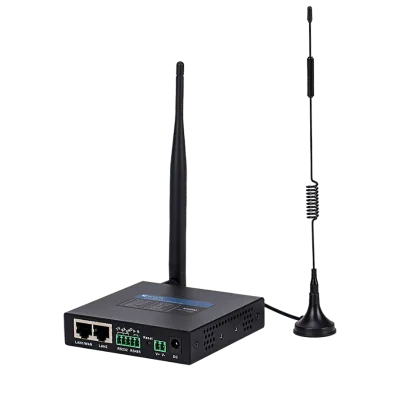
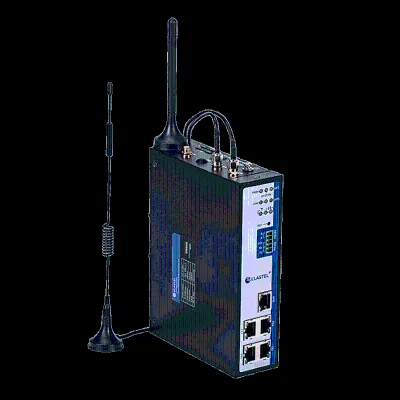


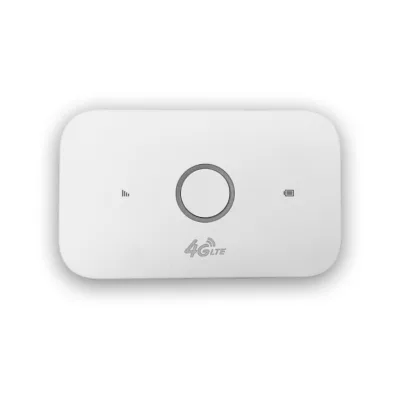


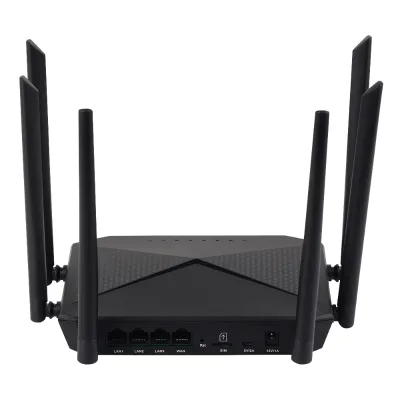
Comprehensive Sourcing Guide
Industrial 4G Mobile Router with Modular Ports Sourcing Guide
Procuring industrial 4G mobile routers with modular ports requires a strategic approach to ensure network resilience and operational continuity in demanding environments. These devices serve as critical border routers for enterprise networks, offering line-rate performance that supports high-throughput data transmission without latency bottlenecks. The modular port structure allows for flexible configuration, enabling buyers to adapt hardware to specific site requirements without replacing the entire unit. This adaptability is particularly valuable for large-scale deployments where uniformity must be balanced with localized connectivity needs.
Buyers must carefully evaluate the architecture, which typically features a single bus master-slave CPU design to manage complex routing tasks efficiently. The inclusion of advanced firewall capabilities ensures that data integrity is maintained across public and private network boundaries. By selecting routers with these robust internal architectures, organizations can mitigate risks associated with network congestion and security breaches. This foundational hardware design supports the seamless integration of wired and wireless connections, forming a reliable backbone for industrial IoT applications.
Product Scope and Observed Listing Signals
The current market landscape for industrial 4G routers reveals a diverse range of models, each tailored to specific deployment scenarios. Listings indicate a price range of one to two hundred fifty US dollars, with minimum order quantities varying from one to one thousand units. This variability suggests that suppliers cater to both small-scale pilot projects and large-scale enterprise rollouts. Buyers should observe that models like the H720t-W and H820t-W-G-P1 offer distinct port configurations, such as one WAN and four LAN ports, or mixed Gigabit and Fast Ethernet interfaces, to suit different bandwidth requirements.
Observed product attributes highlight significant variations in cellular and wireless capabilities. Some units support dual SIM slots for carrier redundancy, while others offer single SIM options. Wireless connectivity ranges from standard 2.4 GHz Wi-Fi to advanced Wi-Fi 6 or Wi-Fi 7 standards, depending on the model. Additionally, power options include standard 5-40V inputs with optional 5-60V ranges, ensuring compatibility with various industrial power systems. These signals help buyers narrow down selections based on their specific environmental and connectivity constraints.
Technical Specifications to Verify
Verifying technical specifications is crucial for ensuring that the selected router meets the operational demands of the intended application. Buyers should confirm the presence of essential ports, such as RS232 or RS485 serial interfaces, which are often required for legacy industrial equipment integration. The inclusion of digital inputs and outputs, typically four DI/DO channels, enables direct control of external devices, enhancing the router’s utility in automation scenarios. Additionally, verifying the GNSS support for Galileo, GPS, Beidou, and Glonass ensures accurate location tracking for mobile assets.
Network performance metrics must also be rigorously checked, particularly the transfer rate capabilities. While some models support 10/100 Mbps, others offer Gigabit Ethernet speeds, which are essential for high-bandwidth applications. The presence of Power over Ethernet (PoE) support, either as PD or PSE, simplifies installation by reducing cabling complexity. Buyers should also verify the antenna type, noting that external replaceable antennas offer better signal reception in challenging environments compared to internal options. These details directly impact the reliability and coverage of the industrial network.
Compliance and Safety Documentation
Compliance with international standards is non-negotiable for industrial equipment deployed in regulated markets. Buyers must ensure that the routers carry necessary certifications, including CE, RoHS, UKCA, UL, TUV, Anatel, FCC, RU, and ETL. These certifications demonstrate that the devices meet specific safety, electromagnetic compatibility, and environmental requirements in their respective regions. The presence of these marks reduces legal risks and facilitates smoother customs clearance for international shipments, ensuring that the procurement process remains uninterrupted.
Beyond certifications, buyers should verify the material composition and physical durability of the router casing. Metal cases are commonly observed, providing superior protection against electromagnetic interference and physical damage in harsh industrial settings. The standard packaging, typically a box, should be inspected to ensure it offers adequate protection during transit. Additionally, confirming that the product adheres to relevant standards, such as CE and RoHS, ensures that the device is environmentally safe and compliant with global regulatory frameworks. This documentation is essential for maintaining corporate compliance and operational integrity.
Cost Drivers and Commercial Terms
Understanding the cost drivers associated with industrial 4G routers helps buyers negotiate better commercial terms and budget effectively. Key factors influencing price include the complexity of the port structure, the inclusion of advanced Wi-Fi standards, and the presence of optional features like DIN-rail mounting or extended power ranges. Models with Gigabit Ethernet ports and Wi-Fi 6/7 capabilities typically command higher prices due to their enhanced performance and future-proofing capabilities. Buyers should also consider the impact of customization availability, which may incur additional costs but offers tailored solutions for specific needs.
Commercial terms, such as minimum order quantities and lead times, vary significantly among suppliers. While some suppliers offer low MOQs for testing purposes, others require larger orders to achieve optimal pricing. Buyers should negotiate clear terms regarding warranty, support, and return policies to mitigate financial risks. Additionally, understanding the currency fluctuations and shipping costs is essential for accurate total cost of ownership calculations. By aligning commercial terms with project timelines and budget constraints, buyers can optimize their procurement strategy and avoid unexpected expenses.
Supplier Qualification and Quality Control
Supplier qualification is a critical step in ensuring the reliability and consistency of industrial 4G router supplies. Buyers should verify the supplier’s manufacturing capabilities, focusing on their ability to produce modular port structures and integrate advanced networking features. Quality control processes, including rigorous testing of cellular connectivity, Wi-Fi performance, and firewall functionality, are essential to prevent field failures. Suppliers with established quality management systems are more likely to deliver products that meet the stringent requirements of industrial applications.
Additionally, buyers should assess the supplier’s after-sales support and technical assistance capabilities. Responsive support is crucial for troubleshooting network issues and ensuring minimal downtime in industrial environments. Suppliers that provide comprehensive documentation, including installation guides and configuration manuals, facilitate easier integration and management. Verifying the supplier’s origin, such as Shenzhen, China, can also provide insights into their supply chain efficiency and manufacturing expertise. A qualified supplier ensures that the procurement process is smooth and that the delivered products meet all specified requirements.
Long-Term Procurement Checks
Long-term procurement checks involve monitoring the performance and reliability of industrial 4G routers over their operational lifespan. Buyers should establish metrics for network uptime, data throughput, and error rates to assess the ongoing performance of the devices. Regular audits of the supplier’s quality control processes and product updates ensure that the routers remain compliant with evolving industry standards and security requirements. This proactive approach helps identify potential issues before they impact critical operations, maintaining network stability and efficiency.
Furthermore, buyers should evaluate the supplier’s ability to provide firmware updates and technical support for emerging threats and technologies. The rapid evolution of cellular and Wi-Fi standards necessitates continuous adaptation to maintain optimal performance. Establishing a long-term partnership with a reliable supplier ensures access to the latest innovations and support services. By regularly reviewing procurement strategies and supplier performance, buyers can optimize their industrial network infrastructure and achieve sustained operational excellence. This continuous improvement cycle is vital for long-term success in industrial IoT deployments.
FAQs
What customization options are available for this industrial 4G router?
Customization is available for this industrial 4G router to meet specific enterprise needs. You can select modular port structures and choose between single or dual SIM configurations. Additional options include external replaceable antennas and various power input ranges from 5 to 60 volts for flexible deployment scenarios.
Which certifications does this industrial 4G mobile router hold?
This industrial 4G mobile router holds multiple international certifications including CE, RoHS, FCC, UL, and TUV. These standards ensure compliance for global deployment in enterprise environments. Additional certifications like UKCA, Anatel, and ETL are also supported to facilitate entry into diverse regional markets without regulatory hurdles.
How many SIM slots does the H720t-W model support?
The H720t-W model supports dual SIM slots for enhanced connectivity reliability. This feature allows seamless switching between networks to maintain uptime in critical industrial applications. Users can configure the device for optimal performance based on local carrier availability and specific network redundancy requirements.
Can this router support PoE for power delivery?
Yes, this router supports Power over Ethernet for simplified installation in remote locations. The device can function as a PoE PD or PSE depending on the specific model configuration. This capability reduces cabling complexity and allows deployment in areas where direct power access is limited or unavailable.
What is the transfer rate for the Ethernet ports?
The Ethernet ports support transfer rates up to 1000Mbps for high-speed data transmission. Some models offer 10/100Mbps while others provide Gigabit Ethernet capabilities. This ensures compatibility with various network infrastructures and supports demanding enterprise applications requiring low latency and high throughput performance.
Which wireless standards are supported by this industrial router?
This industrial router supports 802.11 a/b/g/n standards with 2.4GHz frequencies. Advanced models may also support Wi-Fi 6 or Wi-Fi 7 for up to 300Mbps speeds. These standards ensure robust wireless connectivity for IoT devices and mobile endpoints within the industrial facility or outdoor environment.
What management protocols are available for network administration?
Network administration is supported via E-Lins NMS, Web interface, SSH, Telnet, and SNMP protocols. Users can also manage the device through SMS or command-line interfaces for remote troubleshooting. These options provide flexible control over the router configuration and monitoring capabilities for large-scale industrial deployments.